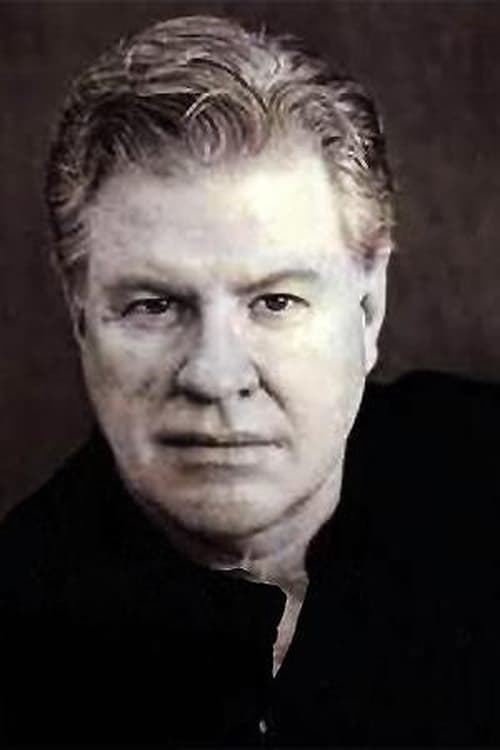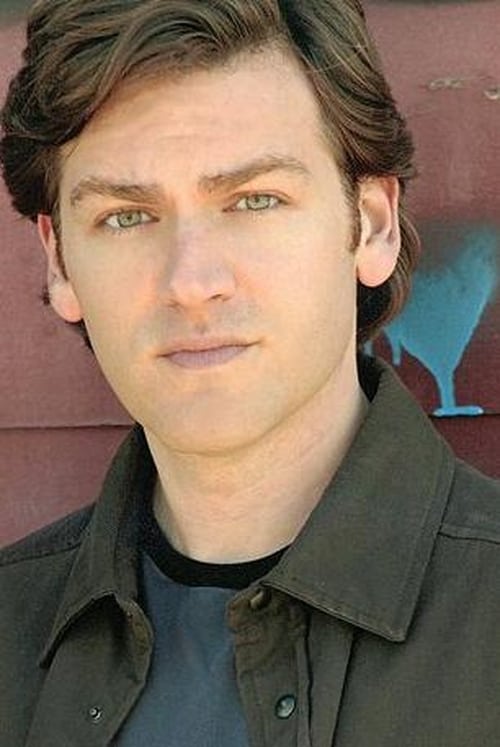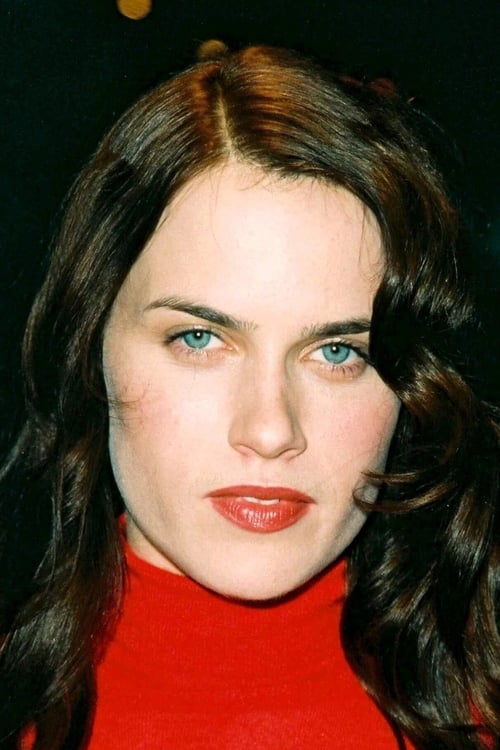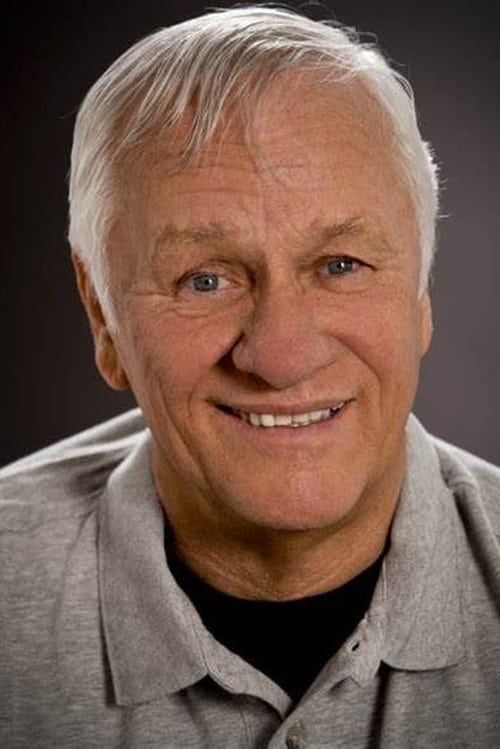




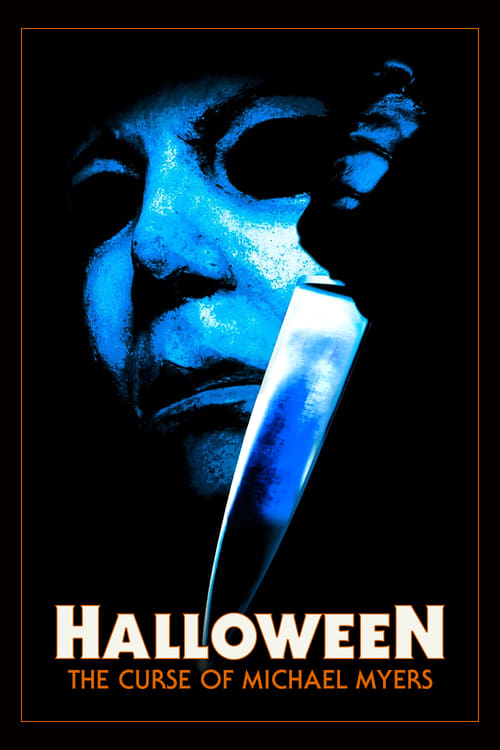
Halloween: The Curse of Michael Myers is a 1995 American slasher film directed by Joe Chappelle, written by Daniel Farrands, and starring Donald Pleasence, Paul Rudd, Marianne Hagan, and Mitch Ryan. The sequel to Halloween 5: The Revenge of Michael Myers and the sixth installment in the Halloween film series, the plot depicts Michael Myers hunting down the infant son of his niece, Jamie Lloyd. It expands significantly upon the supernatural horror elements that were sparsely introduced in the previous film, mainly the subplot of a cult that controls Myers and drives him to murder his bloodline using the ancient Celtic rune of Thorn. It marks the final appearance of Pleasence as Dr. Sam Loomis before his death, as well as the feature film debut of Rudd, who portrays an adult Tommy Doyle from the original Halloween (1978). This also marks the last major role of George P. Wilbur before his death in 2023.
Halloween: The Curse of Michael Myers had a protracted development that spanned several years, comprising numerous revisions, drafts, and contributions from different screenwriters, including Daniel Farrands and Scott Rosenberg. Farrands ultimately completed the final version of the screenplay shortly before filming began in Salt Lake City in the fall of 1994. The film also had a troubled post-production: Its original cut performed poorly with test audiences, leading to the film undergoing a series of reshoots and edits. The finished film was distributed by Dimension Films, who would go on to distribute the rest of the series until 2009's Halloween II. Pleasence died on February 2, 1995, seven months before the film was released. The film was dedicated to his memory.
Halloween: The Curse of Michael Myers was released on September 29, 1995, grossing $15.1 million at the domestic box office on a budget of $5 million. It was lambasted by critics, with criticism focused on its weak story, ending, Rudd's performance, and the origin story given to Michael Myers, though Pleasence's performance and the look of Michael Myers were better received. After the film's home media release, the original workprint of the film, which featured 45 minutes of alternative footage and a different ending, was discovered by fans of the series. This version, dubbed the Producer's Cut, developed a cult following, with bootleg DVD copies sold on eBay and online petitions targeting for an official release of it. In September 2014, the Producer's Cut received its first official home media release by Scream Factory as part of a Blu-ray box set of the Halloween series.
Halloween: The Curse of Michael Myers was followed by Halloween H20: 20 Years Later in 1998, which does not contain any references to the Jamie Lloyd storyline of the prior three films (although they were featured in the original script and comic book tie-ins published by Chaos! Comics), instead serving as a direct sequel to Halloween II (1981).
Contents
Plot
Six years after escaping Haddonfield's police station, Michael Myers and his niece Jamie Lloyd have been abducted by the Man in Black and his Druid-like cult at an unknown facility with medical staff. By Halloween Eve, a now fifteen-year-old Jamie has been impregnated and gives birth. With a help of a nurse, who soon becomes Michael's first victim, she escapes with her baby in a stolen pickup truck with Michael in pursuit.
Meanwhile, a now retired Dr. Loomis is visited by his friend Dr. Terence Wynn, the chief administrator of Smith's Grove Sanitarium, where Michael had been incarcerated as a boy. As Wynn asks Loomis to return to Smith's Grove, they overhear Jamie's plea for help on a local radio station. Michael catches up with Jamie and kills her, only to find that she has hidden her child elsewhere.
In Haddonfield, the old Myers house is now owned by relatives of Laurie Strode's adoptive family: John and Debra Strode, their adult children Kara and Tim, and Kara's six-year-old son Danny, who is tormented by visions of the Man in Black telling him to kill. At the Blankenship boarding house across the street lives Tommy Doyle, the boy Laurie babysat in 1978, now a recluse obsessed with Michael's motives. Also hearing Jamie's cry for help, Tommy tracks the call down to a bus station and finds the baby, whom he names Steven. Tommy crosses paths with Loomis, who visits Debra to warn her. After Loomis leaves, Michael kills Debra with an ax.
Tommy locates Kara and Danny and takes them to safety at the boarding house. He tells Kara that he believes Michael is under the influence of Thorn, an ancient Druid curse that drives a person to kill their family on Halloween, and that Steven will be his final sacrifice. Tommy then leaves to meet Loomis at the local harvest festival. Michael electrocutes John in his home before going to the harvest festival and killing shock jock Barry Simms, after which he follows Kara's brother Tim and his girlfriend Beth back to the house.
Meanwhile, Mrs. Blankenship recounts the history of Halloween to Danny and tells Kara she was babysitting Michael the night he killed his sister in which he heard a voice telling him to do so. Mrs. Blankenship also states how Danny hears the same voice, implying that Danny is to follow down the same path. The Man in Black beckons Danny to the Myers house. Kara rescues Danny, discovering the corpses of Tim, Beth, and Debra upstairs, and is pursued by Michael. Upon returning to the boarding house, they discover the Man in Black to be Dr. Wynn. Cult members burst in and, with the help of Mrs. Blankenship, abduct Kara, Danny, and Steven and take them to Smith's Grove. Kara is locked in a maximum-security ward while the boys are kept in an operating room.
Production
Development and screenplay
After an unfavorable critical and commercial response to Halloween 5: The Revenge of Michael Myers which came out only a year after Halloween 4: The Return of Michael Myers, producer Moustapha Akkad put the Halloween series on hold to re-evaluate its potential. Akkad felt Halloween 5 had strayed too far from Halloween 4 and the box office response was much lower than expected. As early as 1990, both Danielle Harris and Don Shanks were expected to return as Jamie Lloyd and The Shape, with the possibility of Donald Pleasence and Wendy Kaplan reprising their roles as well. That same year, screenwriter and long-time Halloween fan Daniel Farrands set out to write the sixth entry in the Halloween series. Farrands gave his horror film scripts to the producer of Halloween 5, Ramsey Thomas; impressed by his writing, Thomas set a meeting for Farrands with executive producer Moustapha Akkad.
Farrands, who knew the films, as well as Dennis Etchison's novelizations intimately, constructed a bible of the entire franchise and presented it to the studio. The film lingered in development as a planned October 1990 release was missed, but Akkad persisted and began courting Michele Soavi in 1992. Soavi would reject the offer and not long after the producers entered a series of complicated legal battles which delayed plans for a sequel; eventually Miramax Films (via its Dimension Films division) bought the rights to the Halloween series. Concurrently with the legal battle, series co-creator John Carpenter had teamed up with New Line Cinema to outbid Miramax. Carpenter's proposal saw the film take place on a space station.
Following Miramax's acquisition of the series, the studio hoped to start production by October 1993, but again, this did not materialize. Bob Weinstein subsequently hired Gary Fleder to direct, with Phil Rosenberg becoming the first writer hired for the project. Rosenberg's screenplay, titled Halloween 666: The Origin, follows a Chicago news reporter who arrives in Haddonfield to cover the town's first Halloween celebration in five years, during which a series of killings begins. Akkad expressly disliked the screenplay, but Miramax responded to it favorably and opted to continue moving forward until Fleder eventually dropped out, citing "creative differences".
Miramax then approached Quentin Tarantino, who had recently completed Pulp Fiction (1994) for the studio. Though a screenplay was never completed, Tarantino pitched a story idea involving Michael Myers and the Man in Black fleeing Haddonfield together and going on a road trip down Route 66 while murdering people, events which bear resemblance to those depicted in his screenplay for Natural Born Killers, which he was pitching to Miramax Films at the same time. Tarantino ultimately declined the offer, but suggested Evil Dead II co-writer Scott Spiegel as a potential director. Spiegel was unenthusiastic about Phil Rosenberg's screenplay and ultimately departed the project.
Casting
Pleasence returned to play Samuel Loomis, in what would be one of his final film performances; according to Farrands, Pleasence was fond of the script. Danielle Harris, who was seventeen at the time, contacted producer Paul Freeman about reprising her role as Jamie Lloyd, and went so far as completing paperwork to become legally emancipated in order to shoot the film. She was officially cast in the role, but Dimension Films could not come to an agreement over her salary; Harris alleges that Dimension offered her a scaled $1,000 to shoot the part over the course of a week, which was less than the amount of money she had paid for her emancipation. Farrands and Freeman both had wanted Harris for the part, but at that point "had their hands tied".
According to Harris, the head of the casting department refused to negotiate her salary, stating that she was a "scale character who dies in the first twenty minutes". This ultimately led to her dropping out of the project. "People automatically assume I wanted some crazy amount of money, or something," Harris commented in 2014, "[but] it's not like I [was] demanding of anything, really ... When you've been asked to do something and then they insult you by saying, "You're a piece of shit, you die in the first act—I don't give a fuck that you were in two other Halloween movies, who cares?"... I was in shock." Actress J. C. Brandy was cast as Harris's replacement.
The producers initially wanted Brian Andrews to reprise his role as Tommy. However, with Andrews not having an agent, they were unable to contact him. Paul Stephen Rudd was cast in the part of Tommy, which marked his first starring role before he appeared in Clueless (1995). The leading female role, Kara, was given to Marianne Hagan; however, Hagan has since stated that Miramax executives Bob and Harvey Weinstein did not favor her for the part, and made aesthetic criticisms about her being "too thin" and her chin being "too pointy". Farrands, however, had wanted Hagan for the part because he felt she possessed an "every-girl" quality of having "lived a little, and had a hard time", and likened her screen presence to that of Jamie Lee Curtis. According to Hagan, she and Rudd both signed letters of intent upon their casting, agreeing to appear in a pending sequel to the film for the Weinsteins: "We thought, 'Why are they making us do this? We don't know where we are going to be two or three years from now. And who says we're even going to want to do it?'"
The filmmakers also approached Howard Stern to make a cameo appearance as the radio DJ Barry Sims, but he declined in order to appear in Private Parts. Instead, Leo Geter was cast in the role of Simms.
Filming
Filming began on October 31, 1994 in Salt Lake City, Utah. Within the first week of shooting, however, the city experienced an early winter snowstorm, which complicated the production. As a result, several scenes which were supposed to take place on exterior locations had to be transferred to interiors. The original hospital scenes were shot at the abandoned Old Primary Children's Hospital in The Avenues section of Salt Lake City.
Special effects artist John Carl Buechler created the mask for the film, which was based heavily on the mask featured in the poster for Halloween 4: The Return of Michael Myers. Buechler hand-crafted the mask over actor George P. Wilbur's face.
Producer Paul Freeman and director Chappelle reportedly rewrote the ending on-set, even from shot-to-shot as production deadlines loomed. Freeman also sent the crew home when crucial scenes needed to be shot; deleted scripted scenes indiscriminately; rewrote dialogue and action sequences; and assumed the responsibility of directing second-unit shots and the supervision of post-production of the original cut. These complications resulted in Dimension Films' parent company (and the film's co-production company) Miramax, taking over the film's production, and ordering many of the reworked sequences to be reshot.
Associated producer Malek Akkad explained the film's lack of a cohesive "vision" being the result of director Chappelle "answering" to the visions of the distributor, Dimension Films; Moustapha Akkad's production company, Nightfall Productions; and writer Daniel Farrands. Tensions between what Dimension, Nightfall, and Farrands envisioned for the film resulted in a finished product that had needed "more forethought", according to Akkad.
Post-production
In early 1995, after filming and editing was completed, Halloween: The Curse of Michael Myers was given a test screening in New York City which, as described by actress Marianne Hagan, "consisted primarily of fourteen-year-old boys". During the Q&A afterward, one of the audience members expressed great displeasure at the ending of the film, which entailed a Celtic ritual and the passing on of the "Curse of Thorn" to Loomis. Fangoria published an unfavorable review of the film by an intern who attended the test screening, which landed the magazine in "some hot water" with the Weinsteins.
As a result of the audience's disapproval toward the film's finale, the film was rushed back into production, this time without Pleasence, who died on February 2, 1995. Pleasence had been in ill health during the initial shoot. Reshoots took place in Los Angeles in the summer of 1995. At this time, the Akkads were sidelined as Dimension Films took over the film. With only three months out from the film's release date, Farrands and Chappelle concurrently rewrote the script. Chappelle's revisions recharacterized Kara as a "machine gun-toting heroine", similar to "Linda Hamilton in Terminator 2: Judgment Day". Farrands dropped the recharacterization of Kara as well as "thunderous voices of God" added into a newly scripted climax. Meanwhile, a subplot involving a group of doctors seeking to harness "scientifically-engineered evil" was added into the rewrites and survived into the finished film. Farrands' pages would be dropped in favor for Rand Ravich, who previously rewrote Hellraiser: Bloodline for the studio and Chappelle just one month prior. The ending of the theatrical cut stems from Ravich's rewrites, which added an extended chase sequence, the higher body count, and Tommy's fight with Myers. However, Ravich's rewritten ending, which saw Tommy hoisting The Shape in the air with chains, was never fully adapted from the script. During the last night of filming, the crew were far behind schedule and decided to save on overtime payments, the yet-to-be-shot pages were scrapped entirely and instead the final shot of Michael's mask on the ground was done at the last minute.
Lerner replaced Wilbur in the role of Michael Myers, as the studio executives wanted him to appear less bulky. This resulted in continuity errors as the last third of the film features a slimmer Myers. Some of the additional footage incorporated into the finale of the film was shot at Queen of Angels Hospital in Los Angeles.
In addition to the re-shoots prompted by the poor test screening, the film also underwent significant editing in post-production, resulting in brisker pacing and a "flashier" cinematic style that favored "blood and guts", but, according to Farrands, ultimately resulted in a "more confusing" movie. According to writer Farrands, the stylized flash cuts prominent in the final theatrical cut of Halloween: The Curse of Michael Myers were not originally intended, and he likened the style of the final product to an "MTV video rather than a Halloween film". Composer Alan Howarth similarly called the final product a "fix job", with numerous elements of the production being in flux both during and after principal photography. In addition to Howarth's score being redone, the film's sound design was also significantly altered from Howarth's original "minimalist" design.
Music
Alan Howarth composed the original musical score for Halloween: The Curse of Michael Myers, which was released on CD by Varèse Sarabande on October 24, 1995.
Release
The troubled production history of Halloween: The Curse of Michael Myers resulted in two cuts of the film, which prompted a legal battle between the film's production company, Nightfall, who wanted to release the original cut, and its distributor, Dimension Films, who had incorporated reshoots and additional material. Ultimately, Dimension Films won the dispute, and their cut of the film was officiated for theatrical release.
An early teaser trailer for the film employed the title Halloween 666: The Origin of Michael Myers, which according to Daniel Farrands, came before an official title had been decided, and that the trailer title was a combination of an earlier script titled The Origin of Michael Myers by another writer, and Farrands' original script titled Halloween 666. At one point, executive producer Moustapha Akkad asked Farrands for a title, who suggested The Curse of Michael Myers as a joke referencing the film's turbulent production. Although Farrands's comment was in jest, Akkad took the name to heart and decided upon it. Farrands also added that this coincidentally made the subtitles similar to those in The Pink Panther films, which also used Return, Revenge, and Curse subtitles as Halloween's fourth, fifth and sixth films, respectively.
Dimension Films released Halloween: The Curse of Michael Myers in the United States on September 29, 1995. It was released the same day in Canada, distributed by Alliance Atlantis.
Alternate versions
The original workprint cut of the film that screened for test audiences became known colloquially as The Producer's Cut, and features approximately 45 minutes of alternate footage and numerous other differences, ranging from scores and musical cues to substantial shifts in plot, particularly in the film's conclusion. In a retrospective interview, Farrands described the finale in this cut of the film as "creepy" and "Gothic", but conceded that it lacked intensity. According to Wayne Byrne, author of You Can't Kill the Boogeyman: The Ongoing Halloween Saga—13 Movies and Counting (2025), neither the theatrical cut nor The Producer's Cut reflect screenwriter Farrands's original vision of the film.
In the finale of The Producer's Cut, Kara awakens at Smith's Grove Sanitarium on a concrete slab, surrounded by the cult's members, including Mrs. Blankenship, Wynn's secretary Dawn, and other Haddonfield residents. Wynn conducts a ceremony in which Michael will kill Steven as a final sacrifice of innocent blood, after which the curse will pass on to Danny with Kara as his first sacrifice. Kara stalls by appealing to Michael with the revelation that Steven is his biological child. Tommy takes Wynn hostage and forces the cult to free Kara and the children. Pursued by Michael, they run through the sanitarium to a locked gate. Tommy uses the power of the ancient runes to stop Michael in his tracks as Loomis helps them escape. After telling the others he has unfinished business, Loomis finds what appears to be Michael lying on the floor. He removes the mask to reveal Wynn, with whom Michael switched clothes and then escaped. As he dies, Wynn passes on the Thorn symbol, which appears on Loomis' wrist. Realizing that he is the new cult leader, Loomis screams in despair (this is heard as ambient noise in the final frame of the theatrical cut). Michael is shown escaping into the night in Wynn's Man in Black outfit.
Another substantial difference in The Producer's Cut is the death of Jamie Lloyd: she does not die at the beginning of the film, but survives being stabbed by Michael in the barn. She remains in a coma and is taken to the hospital, where Loomis and Wynn visit her. Midway through the film, a "Gothic" montage occurs, which reveals in fragmented detail the conception of Jamie's child among the cult. After the sequence, an unseen person, later revealed to be Wynn, shoots the unconscious Jamie in the head with a silenced pistol. Additionally, John's death scene in The Producer's Cut is shorter; in the theatrical cut, an additional shot (completed during the reshoots) was incorporated of his head graphically exploding from an electrical power surge. Other various transitional shots throughout The Producer's Cut version were extracted or truncated in the theatrical cut.
Home media
Halloween: The Curse of Michael Myers first released for home media on VHS and LaserDisc on September 10, 1996, from Miramax Home Entertainment. A DVD followed on October 10, 2000. In January 2010, the film was released for the first time on Blu-ray in Canada from Alliance Films alongside Halloween H20: 20 Years Later and Halloween: Resurrection. The film was released on Blu-ray and again on DVD in the United States on May 10, 2011, by Echo Bridge Home Entertainment.
Anchor Bay Entertainment and Scream Factory once again released the film on Blu-ray on September 23, 2014, as a part of their 15-disc box set containing every film in the franchise, up to Rob Zombie's Halloween II (2009). This release features both the theatrical cut of the film and The Producer's Cut (marking the first official release of the latter), and contained extensive bonus features. On September 15, 2015, Lionsgate released a standalone Blu-ray edition of The Producer's Cut. On October 4, 2022, Scream Factory reissued both the theatrical and Producer's Cut editions on 4K UHD Blu-ray in a box set also featuring Halloween H20: 20 Years Later and Halloween: Resurrection.
Reception
Box office
Halloween: The Curse of Michael Myers earned $7,308,529 during its opening weekend, coming in second to serial killer thriller Seven. It was the first film in the series to be on par with Halloween II's opening weekend gross, as both Halloween 4 and 5 had earned under $7 million. It earned $2.5 million during its second weekend, with its ranking falling to number eight at the U.S. box office.
The film was a modest financial success, going on to gross a total of $15,116,634 at the U.S. box office, with an estimated $5 million budget. With approximately 3,475,088 tickets sold during its initial theatrical run, the film is the second-lowest grossing entry in the franchise, ahead of only Halloween 5.
Critical response
On the review aggregator website Rotten Tomatoes, 8% of 38 critics' reviews are positive, with an average rating of 3.7/10. The website's consensus reads: "Halloween: The Curse of Michael Myers trades the simple, brutal effectiveness of the original for convoluted mysticism, with disastrously dull results." On Metacritic, the film holds a 10/100 based on 13 reviews, signifying as "overwhelming dislike". It is the lowest rated Halloween film on both sites.
Daniel Kimmel of Variety called the film "tired" and "run-of-the-mill", while Mick LaSalle of the San Francisco Chronicle said the film lacked suspense and said that "not even the presence of the late, gloriously histrionic Donald Pleasence can liven things up", deeming it "bland", "deadening", and "by far the worst in the series". Jim Bray of the Ottawa Citizen found the film "fairly predictable" and noted that the cast's "acting skills seem barely above the level of Myers (George P. Wilbur), who never talks. But then they're not given much of a chance to act. They're too busy running from Myers, who commits one gory murder after another."
Stephen Holden of The New York Times called the film's script "impossibly convoluted", and wrote that "shock effects are applied with such hamfisted regularity that they quickly backfire". Josh Hartl of The Seattle Times criticized the film's conventionality, writing: "instead of sending up the current glut of serial-killer movies, the filmmakers trot out the old slasher tactics." Jack Mathews of the Los Angeles Times similarly criticized the film's lack of originality, comparing it negatively to its predecessors and describing it as a "body count" film. Tom Maurstad of The News-Press gave the film a half-star rating out of four, criticizing it for its lack of plot and emphasis on gore: "The movie, as directed by fresh-from-film-school Joe Chappelle, tosses out a few odd snippets of storyline... but there is no follow through, no real attempt at story."
Richard Harrington of The Washington Post also criticized the script, writing: "While director Joe Chapelle and writer Daniel Farrands took advantage of a clearance sale at the Horror Cliche Emporium, they forgot to stop in at Plots R Us." The Time Out London film guide deemed the film "A series of competently engineered shock moments jollied along by a jazzed-up version of John Carpenter's original electronic score: slicker than crude oil and just as unattractive." The Salt Lake Tribune's Sean Means made a similar assessment of the screenplay, observing that "the mayhem is presented routinely, with little imagination or even logic. Even the promised explanation for Michael's evil is muddled. The mix of runic stones, Satan-worship, DNA testing and old-fashioned boogyman stories never gels."
Modern assessment
Halloween: The Curse of Michael Myers is widely regarded by fans as one of the most divisive films in the franchise. Byrne attributes the "schismatic" response to it over the years as a result of "[the fact] that there has never truly been a definitive version of the film to exist." John Kenneth Muir writes in his book Horror Films of the 1990s (2011) that Halloween: The Curse of Michael Myers is "a well-intentioned sequel so determined to answer questions, fill in details, and enrich the mythology that at times it forgets to present a cogent narrative of characters the audience can care about." In their comprehensive book The Films of the Nineties (2001), however, writers Robert and Gwendolyn Nowlan positively describe the film as an "atmospheric and suspenseful thriller".
In a 2022 ranking of every film in the Halloween franchise by IndieWire, Halloween: The Curse of Michael Myers was ranked number five, with writer Jamie Righetti praising the film: "The Curse of Thorn. The return of Tommy Doyle. Even more members of the Strode family. A final goodbye to the unforgettable Donald Pleasance [sic] and his irascible Dr. Loomis. Halloween: The Curse of Michael Myers really does have it all, and it's one of the most underrated sequels in the franchise."
Some fans and film critics have argued that the Producer's Cut is the superior version of the film. Writing in a Bloody Disgusting retrospective, Alex DiVincenzo noted that the Producer's Cut benefits from its more significant featuring of the Dr. Loomis character, and that it is ultimately a better film. Jessica Beebe of Screen Rant made a similar assessment, noting that the cult of Thorn subplot is more clearly presented in the Producer's Cut, and that its finale better contextualizes the cult. Muir, however, alternately described The Producer's Cut version of the film "still decidedly mediocre" despite "some interesting moments".
Related works
Screenwriter Farrands originally pitched a followup to Halloween: The Curse of Michael Myers that had Tommy Doyle returning, and concluded with a revelation in which Laurie Strode had impersonated Michael Myers and committed a series of murders herself. This sequel went undeveloped. Instead, the film was followed by Halloween H20: 20 Years Later (1998), which retroactively abandoned the Jamie Lloyd storyline initiated in Halloween 4: The Return of Michael Myers (1988), instead serving as a direct sequel to Halloween II (1981) and follows Laurie Strode, who is pursued by Myers twenty years after the events depicted in the first two films. Jamie Lee Curtis reprised her role of Laurie Strode in the film.
A comic book tie-in trilogy released by Chaos! Comics in 2001, however, did incorporate the Jamie Lloyd storyline as well as depict events from Halloween: The Curse of Michael Myers, with Farrands contributing to the writing.