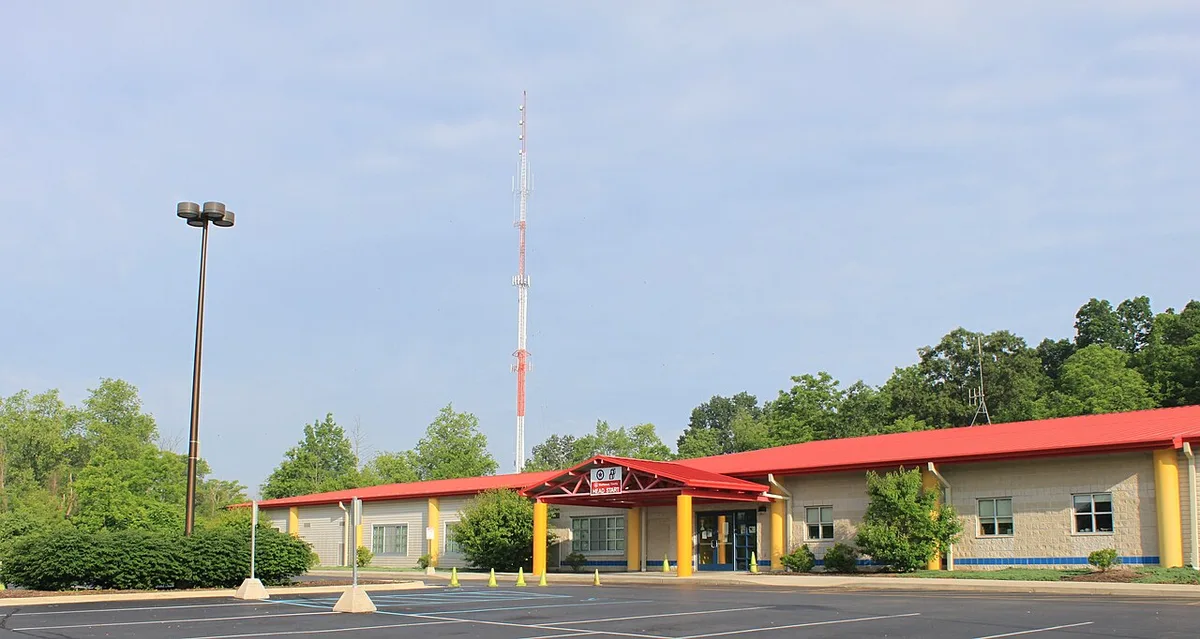
Head Start is a program of the United States Department of Health and Human Services since 1965 that provides comprehensive early childhood education, health, nutrition, and parent involvement services to low-income children and families. It is the oldest and largest program of its kind. The program's services and resources are designed to foster stable family relationships, enhance children's physical and emotional well-being, and establish an environment to develop strong cognitive skills. The transition from preschool to elementary school imposes diverse developmental challenges that include requiring the children to engage successfully with their peers outside the family network, adjust to the space of a classroom, and meet the expectations the school setting provides.
Launched in 1965 by its creator and first director Jule Sugarman and Bernice H. Fleiss, Head Start was originally conceived as a catch-up summer school program that would teach low-income children in a few weeks what they needed to know to start elementary school. The Head Start Act of 1981 expanded the program. The program was revised and reauthorized in December 2007. As of late 2005, more than 22 million children had participated. The current acting director of Head Start is Tala Hooban.
Contents
History
Head Start began as part of President Lyndon B. Johnson's Great Society campaign. Its justification came from the staff of the President's Council of Economic Advisers. Stan Salett, civil rights organizer, national education policy adviser, and creator of the Upward Bound Program, is also credited with initiating the Head Start program.
Johnson started the War on Poverty shortly after President Kennedy's assassination. The murder shook the nation, and Johnson attempted to gain public trust by passing legacy legislation during the subsequent months. Johnson received an initial briefing from Walter Heller, who informed Johnson of Kennedy's poverty program. By March 1964, the legislation, now known as the Economic Opportunity Act of 1964, had been prepared for Congress. The legislation included training, educational, and service programs for communities, including the Job Corps.
In 1965, President Lyndon B. Johnson, commissioned Dr Edmund W. Gordon, to help design the Head Start Program.
The Office of Economic Opportunity's Community Action Program launched Project Head Start as an eight-week summer program in 1965. The program was led by Dr. Robert Cooke, a pediatrician at Johns Hopkins University, and Dr. Edward Zigler, a professor of psychology and director of the Yale Child Study Center. They designed a comprehensive child development program intended to help communities meet the needs of disadvantaged preschool children. Rather than proceeding with a smaller pilot program, the decision was made to roll it out on a large scale with the enrollment of 500,000 children in 2,500 communities. The following year it was authorized by Congress as a year–round program. In 1968, Head Start began funding a television series that would eventually be called Sesame Street, operated by the Carnegie Corporation Children's Television Workshop (CTW).
In 1969, Head Start was transferred to the Office of Child Development in the Department of Health, Education, and Welfare (later the Department of Health and Human Services (DHHS)) by the Nixon Administration. Today the program is in the Administration for Children and Families (ACF) division of DHHS.
In 1994, the Early Head Start program was established to serve children from birth to age three, in an effort to capitalize on research evidence that showed that the first three years are critical to children's long-term development.
Policy Council
The Head Start Policy Council makes up part of the Head Start governing body. The Policy Council must be composed of two types of representatives: parents of currently enrolled children and community representatives. At least 51% of the members of this group must be the parents of currently enrolled children (see 45 CFR 1306.3(h) for a definition of a Head Start Parent). All parent members of the Policy Council stand for election or re-election annually through individual parent groups. Grantees/Delegates are required to provide proportionate representation to parents in all program options and settings. If agencies operate programs serving different geographical regions or ethnic groups, they must ensure that all groups being served will have an equal opportunity to serve on the Policy Council. The Policy Council is required to meet once each month. The term follows the federal government fiscal year, running November–November. Service on the Policy Council board is limited to at most five one year terms. The meetings are conducted in accordance with Robert's Rules. The meeting day and time is agreed upon during the first meeting of the term year and may be adjusted as needed.
The Policy Council approval is needed for several program functions, from new hires to the program, as well as for the budget and spending. The Council can serve the program in ways that the others in the program cannot, as it is the only body that is part of Head Start that can do fundraising. In addition to monthly meetings, the Policy Council may at times need to hold special or emergency meetings or have a phone vote. Policy Council representatives are required to attend classroom meetings and report back to the Policy Council with issues and needs of the classroom. They may also be asked to sit in on interviews as Head Start requires that a Policy Council representative be present for all interviews. The officers of the Policy Council include vice-chairperson, secretary, and vice-secretary. Classrooms are also able to elect alternate Policy Council reps in case the main rep is unable to attend the meetings.
Services and programs
Head Start serves over 1 million children and their families each year in urban and rural areas in all 50 states, the District of Columbia, Puerto Rico and the U.S. territories. Related health services include health screenings and check-ups, eye examinations and dental check-ups. Meals and snacks are also provided, which can help ease financial pressure on families and improve children's diets. Family advocates assist parents in accessing community resources. All services are specific to each family's culture and experience. Head Start programs also seek to support children's social emotional development.
Programs and services include:
Early Head Start promotes healthy prenatal outcomes, healthy families, as well as infant and toddler development beginning as early as birth.
Head Start helps to create healthy development and early childhood education in low-income children ages three to five.
Family and Community Partnerships engage and support parents to identify and meet their own goals, nurture their children, and advocate for communities that support children and families.
Migrant and Seasonal services are for children of migrant and seasonal farm workers. Service hours are longer and programs extend for fewer months than traditional Head Start.
Head Start serves indigenous Americans with centers on reservations and in urban communities.
Homeless children were included explicitly as subjects with the 2007 re-authorization. Programs must identify and provide services to homeless children of all ages within a reasonable period. The McKinney-Vento Homeless Assistance Act of 2001 also requires access to early childhood education such as Head Start for homeless children and families.
Eligibility
Eligibility is largely income-based, although each local program includes other eligibility criteria, such as disabilities and services needed by other family members. Families must earn less than 100% of the federal poverty level. Programs may accept up to 10% of the total children over poverty given the program has unfilled spots and the over poverty is less than 130%.
The federal poverty line measure is not absolute, and it changes yearly to account for inflation. Families may also qualify under a categorical eligibility category—receipt of Temporary Assistance to Needy Families (TANF) funds, Supplemental Nutrition Assistance Program (SNAP), Supplemental Security funds, or Homeless, as per the McKinney-Vento Act. Up to 10% of any funded program's enrollment can be from higher income families or families experiencing emergency situations. All programs are required to provide services to children with disabilities, who must comprise 10% of their total enrollment. Per the Head Start Act (2007), programs may elect to serve families whose income is between 100-130% under certain circumstances. Programs must also complete additional reporting requirements if this is appropriate for their community.
Military families stationed abroad can apply for Sure Start. Sure Start is the military version of Head Start and is overseen by the Department of Defense Education Activity. There are four priority tiers for Sure Start, and like Head Start, not all eligible families are guaranteed a spot. The tiers are based on the sponsor's rank and are, in order, E1-E4, E5, E6-E7, and E8-E9.
Budget and funding
The 2011 federal budget for Head Start was $8.1 billion. 85% was to be devoted to direct services and no more than 15% on administration, serving approximately one million students. The budget was $12 billion in 2023.
Local grantees must provide a 20% cash/in-kind match. Each local grantee is required to obtain an annual financial audit, if it receives more than $500,000 in federal support.
Grants are awarded by the Administration for Children and Families (ACF) Regional Offices and the American Indian – Alaska Native and Migrant and Seasonal Program Branches directly to local public agencies, private organizations, Indian tribes and school systems.
The individual Head Start classrooms/centers "repay" the grant through a program known as InKind. The Inkind program is a way to get their parents and their students working together on out of class studies.
Teachers
All lead teachers must have a bachelor's degree or be working towards one. Most have completed six or more courses in early-childhood education. By 2013, all teachers were to have associate degrees in a related field and half must have bachelor's degrees.
As of 2003, the average Head Start teacher made $21,000 per year, compared to the public school teacher average of $43,000.
Teachers are also required to complete a Child Development Associate (CDA) certificate.
Operations
While Head Start is a national program, the implementation is up to individual states. Head Start programs typically operate independently from local school districts. Most often they are administered through local social-services agencies. Classes are generally small, with fewer than ten enrollees per adult staff member. Individual programs develop their own academic and social curricula, following federal performance standards.
Impact
According to a 2024 article published in Science, long term studies of Head Start have had "discouraging" results. While early boosts in literacy were observed, these disappeared after several years, and:
"In the third-grade assessments of children who were 4 years old when they entered the lottery for Head Start slots, none of the 11 literacy and math achievement-related measures was statistically significant at the P < 0.05 level. Of 19 socioemotional outcomes, only one survived multiple testing adjustments, and in that case, teachers reported that children who were offered a Head Start slot displayed more emotional symptoms than children who lost the lottery."
A 2020 study found that cohorts that attended Head Start had higher incomes and years of education as adults than similar children who did not attend. A 2021 study found that the children exposed to more generous Head Start funding had substantially improved test scores relative to children that were not exposed to generous Head Start funding. Another 2021 study found that students enrolled in Head Start ended up having substantially higher high school completion, college enrollment and college completion rates than comparable children who were not enrolled in Head Start. The authors of the study concluded that "these estimates imply sizable, long-term returns to investments in means-tested, public preschool programs." A 2009 study, which compared siblings, found that those who attended Head Start showed stronger academic performance as shown on test scores for years afterward, were less likely to be diagnosed as learning-disabled, less likely to commit crime, more likely to graduate from high school and attend college, and less likely to suffer from poor health as an adult. This study was replicated in a 2020 study which looked at 10 additional birth cohorts, and found a negligible impact.
A 2022 study found that Head Start increased the employment and earnings of single mothers.
In 2015, CCR Analytics, formerly Child Care Analytics, published the results of their Family Outcomes Survey completed by nearly 11,600 California Head Start and Early Head Start parents. 90% of parents surveyed said that Head Start helped them to get or keep a job. 92% of parents surveyed said that Head Start helped them to enroll in an educational or training program. 99% of families surveyed said that Head Start helped them to improve their parenting skills, such as responding to children's misbehavior and helping their children to learn. These results indicate that Head Start has a positive impact on the whole family, beyond the individual children who attend the program.
Access
There is not enough government funding to provide Head Start for all eligible families, so to enroll in Head Start, families must apply and then be chosen. In 2017, there were 1 million children enrolled in Head Start and Early Head Start, but there were about 19 million children under five in the United States and around 3 million children under five living in poverty.
Head Start covers families living below the federal poverty line, but there 65% of children under the age of 6 having both their parents (or one parent, if they are a single parent) in the workforce. Hotz and Wiswall's research found that for two-parent households, childcare is the most expensive cost outside their rent or mortgage; in perspective, the median percent of income that goes towards childcare is 30%.