The Iran–Iraq War, also called the First Imposed War by Iran, began with the Iraqi invasion of Iran in September 1980. After eight years of conflict, both countries accepted a ceasefire deal brokered by the United Nations, which became effective in August 1988. The war caused around 500,000 deaths (excluding numbers from the related Anfal campaign), making it the deadliest conventional war ever fought between regular armies of developing countries.
In starting the war, the Iraqi government—led by President Saddam Hussein—primarily wanted to prevent Ruhollah Khomeini, Iran's leader following the 1979 Iranian Revolution, from exporting Iran's new state ideology to Iraq. Iraq also feared that Iran, being a theocratic state mostly composed of Shia Muslims, would rally Iraq's Shia majority against the Sunni Muslim-controlled Baʽathist government. Iraq also wished to replace Iran as the main national power in the Persian Gulf. The war followed a long-running history of border disputes between the two states, as a result of which Iraq planned to retake the eastern bank of the Shatt al-Arab river that it had ceded to Iran in the 1975 Algiers Agreement.
The conflict involved large-scale trench warfare, and deliberate attacks on civilians, including Iraqi chemical attacks. At the start of the war, Iraq expected a decisive victory, considering Iran's post-revolutionary chaos, but their invasion had stalled by December 1980. The Iranian military then gained momentum, and recaptured all their territory by June 1982. Having pushed Iraqi forces back to the pre-war borders, Iran launched an invasion of Iraq, which created a five-year offensive. In mid-1988, Iraq launched a series of counter-offensives that created the military stalemate present at the war's end.
Iraq was aided by the National Council of Resistance of Iran, the United States, the United Kingdom, the Soviet Union, France, Italy, Yugoslavia, and most Arab countries. Iran was aided by the Kurdistan Democratic Party, the Patriotic Union of Kurdistan, Syria, Libya, North Korea, China, South Yemen, Pakistan, Cuba, and Israel. Meanwhile, Iraqi support for Arab separatists in Iran increased.
After years of military and economic losses, decreasing morale, intensifying Iran–U.S. relations, and little international action against Iraqi attacks on Iranian civilians, Iran agreed to a ceasefire with Iraq under United Nations Security Council Resolution 598. The war did not create any permanent border changes, and neither country received war reparations afterwards. Both sides suffered financially. They continued engaging in low-level military conflict until relations improved following Saddam's overthrow in 2003.
Contents
Background
Iran–Iraq relations
In 1937, Iran and Iraq signed a treaty to settle their dispute over control of the Shatt al-Arab river; they agreed that Iranian ships had to pay tolls when they used the river. In 1969, Iran broke the treaty, as their ships no longer paid the tolls. The Shah of Iran argued that the treaty had been unfair. Iraq threatened war, but did nothing at this time, as their weaker military became threatened when Iranian naval forces sailed down the Shatt al-Arab in a show of force. The new Iraqi–Iranian tensions led to significant bloodshed, which lasted until the 1975 Algiers Agreement, when Iraq ceded to Iran the eastern bank of the river. Their relations briefly improved in 1978, when Iranian agents in Iraq discovered plans for a pro-Soviet coup d'état against Iraq's government. When informed of this plot, Iraq's president Saddam Hussein ordered the execution of dozens of his army's officers, and expelled Ruhollah Khomeini from Iraq, who led clerical opposition to the Shah.
After the Iranian Revolution
Tensions between Iraq and Iran were fuelled by Iran's Islamic revolution and its appearance of being a Pan-Islamic force, in contrast to Iraq's Arab nationalism. Despite Iraq's goal of regaining the Shatt al-Arab, the Iraqi government initially seemed to welcome the Iranian revolution, which overthrew Shah Mohammad Reza Pahlavi, who was seen as a common enemy. There were frequent clashes along the Iran–Iraq border throughout 1980.
Khomeini called on Iraqis to overthrow the Ba'ath government, which was received with considerable anger in Baghdad. In July 1979, despite Khomeini's call, Saddam gave a speech praising the Iranian Revolution and called for an Iraqi–Iranian friendship based on non-interference in each other's internal affairs. When Khomeini rejected Saddam's overture by calling for Islamic revolution in Iraq, Saddam was alarmed. Iran's new Islamic administration was regarded in Baghdad as an irrational, existential threat to the Ba'ath government, especially because the Ba'ath party, having a secular nature, discriminated against and posed a threat to the fundamentalist Shia movement in Iraq, whose clerics were Iran's allies within Iraq and whom Khomeini saw as oppressed.
In April 1980, the Islamic Dawa Party, an Iraqi Islamist group with supportive ties to Iran, attempted to assassinate Tariq Aziz, a high ranking Ba'athist and Iraq's deputy prime minister, in retaliation for a March decree declaring "membership of Dawa [to be] a capital offense". The attempt failed and instead killed several students. Three days later, the funeral procession for the dead students was bombed. This failed assassination plot, carried out by an Iran-backed group, formed a part of Iraq's casus belli for the invasion of Iran. Iraq's immediate response was to order the execution of Muhammad Baqir al-Sadr, an Iraqi Shi'ite cleric seen as the public face of the Dawa movement, along with al-Sadr's sister. On 30 April, Iraq organised an attack on the Iranian embassy in London.
Saddam's primary interest in war may have also stemmed from his desire to right the supposed "wrong" of the Algiers Agreement, in addition to finally achieving his desire of becoming the regional superpower. Saddam's goal was to supplant Egypt as the "leader of the Arab world" and to achieve hegemony over the Persian Gulf. He saw Iran's increased weakness due to revolution, sanctions, and international isolation. Saddam had invested heavily in Iraq's military since his defeat against Iran in 1975, buying large amounts of weaponry from the Soviet Union and France. Between 1973 and 1980, Iraq purchased numerous tanks and Soviet-made aircraft.
Iranian military preparations
In Iran, severe officer purges, including numerous executions ordered by Sadegh Khalkhali, the new Revolutionary Court judge, and shortages of spare parts for Iran's American and British-made equipment had crippled Iran's once-mighty military. Between February and September 1979, Iran's government executed 85 senior generals and forced many other generals into early retirement.
By September 1980, some 12,000 officers had been purged from all levels from the army. This reduced the Iranian military's operational capacities.
On the eve of the revolution in 1978, international experts in military science had deemed Iran's armed forces the world's fifth most powerful. However, by the eve of war with Iraq, the recently formidable Iranian army was in many crucial ways a shell of its former self, having been badly weakened by losses in experienced personnel. The desertion rate had reached 60%, the officer corps was devastated and its most highly skilled soldiers and aviators had been exiled, imprisoned, or executed. When the invasion occurred, many pilots and officers were released from prison, or had their executions commuted to combat the Iraqis. Throughout the war, Iran never managed to fully recover from this flight of human capital.
Many junior officers were promoted to generals, resulting in the army being more integrated as a part of the regime by the war's end. Meanwhile, a new paramilitary organisation gained prominence in Iran, the Islamic Revolutionary Guard Corps (IRGC). Created to protect the new regime and serve as a counterbalance to the army, the IRGC had been trained to act only as a militia and struggled to adapt as needed following the Iraqi invasion, initially refusing to fight alongside the regular army, resulting in many defeats. It was not until 1982 that the two groups began carrying out combined operations.
The Basij paramilitary was founded in response to the invasion. They were poorly armed, and had members as young as 12 and as old as 70. Subordinate to the Revolutionary Guard, they made up most of the manpower that was used in the Guard's attacks.
Despite neglect by the new regime, at the war's outset, Iran still had at least 1,000 tanks and several hundred functional aircraft, and could cannibalise equipment to procure spare parts. Continuous sanctions greatly limited Iran from acquiring many additional heavy weapons, including tanks and aircraft.
Iraqi military preparations
In addition, the area around the Shatt al-Arab posed no obstacle for Iraqi river-crossing equipment. Iraq correctly deduced that Iran's defences at the crossing points around the Karkheh and Karoun Rivers were undermanned and that the rivers could be easily crossed. Iraqi intelligence was also informed that the Iranian forces in Khuzestan province, which consisted of two divisions prior to the revolution, now only consisted of several ill-equipped and under-strength battalions with only a handful of operational company-sized tank units.
The only qualms the Iraqis had were over the Iran Air Force. Despite the purge of several key pilots and commanders, as well as the lack of spare parts, the air force showed its power during local uprisings and rebellions. They were also active after the failed U.S. attempt to rescue its hostages, Operation Eagle Claw. Based on these observations, Iraq's leaders decided to carry out a surprise airstrike against the Iranian air force's infrastructure prior to the main invasion.
Khuzestan
It is believed that Iraq sought to either annex, or establish suzerainty over, Iran's Khuzestan province, but Saddam Hussein publicly denied this in November 1980.
Border conflicts leading up to the war
On 10 September 1980, Iraq forcibly reclaimed territories in Zain al-Qaws and Saif Saad that it had been promised under the terms of the 1975 Algiers Agreement but that Iran had never handed over, leading to both Iran and Iraq voiding the treaty, on 14 and 17 September, respectively. As a result, the only outstanding border dispute between Iran and Iraq at the time of the Iraqi invasion of 22 September was the question of whether Iranian ships would fly Iraqi flags and pay Iraq navigation fees for a stretch of the Shatt al-Arab spanning several miles.
Course of the war
1980: Iraqi invasion
Iraq launched a full-scale invasion of Iran on 22 September 1980. The Iraqi Air Force launched surprise air strikes on ten Iranian airfields with the objective of destroying the Iranian Air Force. The attack failed to cripple the Iranian Air Force: while it damaged some of Iran's airbase infrastructure, it did not destroy a significant number of aircraft. The Iraqi Air Force was only able to strike in depth with a few aircraft, and Iran had built hardened aircraft shelters where most of its combat aircraft were stored.
The next day, Iraq launched a ground invasion, mounting three simultaneous attacks along a 644 km (400 mi) front. Saddam hoped an attack on Iran would lead to the new government's downfall, or at least end Iran's calls for his overthrow.
Four Iraqi divisions were sent to Khuzestan near the border's southern end, to cut off the Shatt al-Arab from the rest of Iran and to establish a territorial security zone. Two other divisions invaded across the border's north and center to prevent an Iranian counter-attack. Two of the four Iraqi divisions, one mechanised and one armoured, operated near the southern end and besieged the strategically important port cities of Abadan and Khorramshahr.
The two armoured divisions secured the territory bounded by the cities of Khorramshahr, Ahvaz, Susangerd, and Musian. On the central front, the Iraqis occupied Mehran, advanced towards the Zagros Mountains, and were able to block the traditional Tehran–Baghdad invasion route by securing territory forward of Qasr-e Shirin, Iran. On the northern front, the Iraqis attempted to establish a strong defensive position opposite Suleimaniya to protect the Iraqi Kirkuk oil complex. Iraqi hopes of an uprising by the Arabs of Khuzestan failed to materialise, as most of the Arabs remained loyal to Iran.
Patrick Brogan described the Iraqi troops advancing into Iran in 1980 as "badly led and lacking in offensive spirit". The first known chemical weapons attack by Iraq on Iran probably took place during the fighting around Susangerd. Iraqi Minister of Defence Adnan Khayr Allah played a crucial role in rebuilding and modernising the Iraqi military.
Though the Iraqi air invasion surprised the Iranians, their air force retaliated the day after with a large-scale attack against Iraqi air bases and infrastructure in Operation Kaman 99. Groups of fighter jets attacked targets throughout Iraq, such as oil facilities, dams, petrochemical plants, and oil refineries, and included Mosul Airbase, Baghdad, and the Kirkuk oil refinery. Iraq was taken by surprise at the strength of the retaliation, which inflicted heavy losses and economic disruption, but Iraqi air defences also inflicted heavy losses.
First Battle of Khorramshahr
On 22 September, a prolonged battle began in the city of Khorramshahr, eventually leaving around 7,000 dead on each side. The battle began with Iraqi air raids against key points and mechanised divisions advancing on the city in a crescent-like formation. They were slowed by Iranian air attacks and Revolutionary Guard troops. The Iranians flooded the marsh areas around the city, forcing the Iraqis to traverse through narrow strips of land. Iraqi tanks launched attacks with no infantry support, and many tanks were lost to Iranian anti-tank teams.
By 30 September, the Iraqis had managed to clear the Iranians from the outskirts of the city. The next day, the Iraqis launched infantry and armoured attacks into the city. The Iraqis were repelled. On 14 October, the Iraqis launched a second offensive. The Iranians initiated a withdrawal from the city. By 24 October, most of the city was captured, and the Iranians evacuated across the Karun River. Some partisans continued fighting until November.
Iraqi advance stalls
Though Khorramshahr was captured, the battle had delayed the Iraqis enough to allow the large-scale deployment of the Iranian military. In November, Saddam ordered his forces to advance towards and besiege Dezful and Ahvaz. However, the Iraqi offensive had been badly damaged by Iranian militias and air power. Iran's air force had destroyed Iraq's army supply depots and fuel supplies, and was strangling Iraq through an aerial siege.
Iran's supplies had not been exhausted, despite sanctions, and the military often cannibalised spare parts from other equipment and began searching for parts on the black market. On 28 November, Iran launched Operation Morvarid, an air and sea attack which destroyed 80% of Iraq's navy, and all of the radar sites in the southern portion of the country. When Iraq laid siege to Abadan, it could not blockade the port or prevent seaborne resupply.
Iraq's strategic reserves had been depleted, preventing major offensives for years. On 7 December, Saddam announced that Iraq was going on the defensive. By the end of 1980, Iraq had destroyed and captured numerous Iranian tanks.
1981: Stalemate
For the next eight months, both sides were on a defensive footing, with the exception of the Battle of Dezful, as the Iranians needed more time to reorganise their forces after the damage inflicted by the purge of 1979–80. During this period, fighting consisted mainly of artillery duels and raids. Iraq had mobilised 21 divisions for the invasion, while Iran countered with only 13 regular army divisions and one brigade. Seven divisions were deployed to the border. The war bogged down into trench warfare. Due to the power of anti-tank weapons, armoured manoeuvre by the Iraqis was very costly, and they consequently entrenched their tanks into static positions.
Iraq also began firing missiles into Dezful and Ahvaz, and used terror bombing to bring the war to the Iranian civilian population. Iran launched dozens of "human wave assaults".
On 5 January 1981, Iran had reorganised its forces enough to launch a large-scale offensive, Operation Nasr. The Iranians launched their major armoured offensive from Dezful in the direction of Susangerd, consisting of tank brigades, and broke through Iraqi lines. However, the Iranian tanks had raced through Iraqi lines with unguarded flanks and without infantry support; as a result, they were cut off by Iraqi tanks.
In the ensuing Battle of Dezful, the Iranian armoured divisions were nearly wiped out in one of the biggest tank battles of the war. When the Iranian tanks tried to manoeuvre, they became stuck in the mud of the marshes, and many tanks were abandoned. The Iraqis lost around 45 tanks, and the Iranians, around 100–200. 141 Iranians were killed.
The battle had been ordered by Iranian president Abulhassan Banisadr, who was hoping that a victory might shore up his deteriorating political position; the failure hastened his fall. Many of Iran's problems took place because of political infighting between Banisadr, who supported the regular army, and the hardliners, who supported the IRGC. Once he was impeached and the competition ended, the performance of the Iranian military improved.
The Islamic Republic government in Iran was further distracted by internal fighting between the regime and the Mujahedin e-Khalq (MEK) on the streets of Iran's major cities in June 1981 and again in September. In 1983, the MEK started an alliance with Iraq following a meeting between MEK leader Massoud Rajavi and Iraqi Deputy Prime minister Tariq Aziz.
1982: Iraqi retreat, Iranian offensive
The Iraqis, realising that the Iranians were planning to attack, decided to preempt them with Operation al-Fawz al-'Azim (Supreme Success) on 19 March. Using a large number of tanks, helicopters, and fighter jets, they attacked the Iranian buildup around the Roghabiyeh pass. Though Saddam and his generals assumed they had succeeded, in reality the Iranian forces remained fully intact. The Iranians had concentrated much of their forces by bringing them directly from the cities and towns throughout Iran via trains, buses, and private cars. The concentration of forces did not resemble a traditional military buildup, and although the Iraqis detected a population buildup near the front, they failed to realise that this was an attacking force. As a result, Saddam's army was unprepared for the Iranian offensives to come.
Iran's next major offensive was Operation Fath ol-Mobin, in March 1982. Iran launched an attack which took the Iraqi forces by surprise: Iranian helicopters landed behind Iraqi lines, silenced their artillery, and captured an Iraqi headquarters. The Revolutionary Guard and regular army followed up by surrounding the Iraqis that had camped close to the Iranian town of Shush. The Iraqis counterattacked, breaking the encirclement and rescuing the surrounded divisions. Iraqi tanks came under attack by Iranian fighter jets. Iraqi forces were driven away from Shush, Dezful and Ahvaz, and the Iranians destroyed numerous Iraqi tanks and armoured vehicles. By this time, most of the Khuzestan province had been recaptured.
In preparation for Operation Beit ol-Moqaddas, the Iranians had launched numerous air raids against Iraqi air bases, destroying 47 jets (including Iraq's brand new Mirage F-1 fighter jets from France) and gaining air superiority and the ability to monitor Iraqi troop movements.
In April, Iran launched the offensive. 70,000 Revolutionary Guard and Basij members struck on several axes—Bostan, Susangerd, the west bank of the Karun River, and Ahvaz. Basij human wave attacks were followed up by the regular army and Revolutionary Guard support. The Iraqi forces retreated, and within a month, Iran had driven out all Iraqi forces from the Susangerd area. The Iranians captured several thousand Iraqi troops and numerous tanks.
The Iraqis retreated to the Karun River, with only Khorramshahr and a few outlying areas remaining in their possession. Saddam ordered 70,000 troops to be placed around Khorramshahr. The Iraqis created a hastily constructed defence line around the city and outlying areas, such as metal spikes to discourage airborne commando landings. However, Khorramshahr's only resupply point was across the Shatt al-Arab, and the Iranian air force began bombing the supply bridges to the city, while their artillery zeroed in on the besieged garrison.
Early international response
In April 1982, Iran's ally Syria closed the Kirkuk–Baniyas pipeline that had allowed Iraqi oil to reach tankers on the Mediterranean, reducing the Iraqi budget by $5 billion per month. Journalist Patrick Brogan wrote, "It appeared for a while that Iraq would be strangled economically before it was defeated militarily." Syria's closure of the Kirkuk–Baniyas pipeline left Iraq with the pipeline to Turkey as the only means of exporting oil, along with transporting oil by tanker truck to the port of Aqaba in Jordan.
The Turkish pipeline's capacity was insufficient to pay for the war. Saudi Arabia, Kuwait, and the other Gulf states saved Iraq from bankruptcy by providing it with $37–60 billion in loans. Though Iraq had previously been hostile towards other Gulf states, they feared Iranian ideology more than Iraq. Notably, Khomeini had declared monarchies an illegitimate and un-Islamic form of government. Khomeini's statement was widely received as a call to overthrow the Gulf monarchies. Journalists John Bulloch and Harvey Morris wrote:
The virulent Iranian campaign, which at its peak seemed to be making the overthrow of the Saudi regime a war aim on a par with the defeat of Iraq, did have an effect on [Saudi Arabia], but not the one the Iranians wanted: instead of becoming more conciliatory, the Saudis became tougher, more self-confident, and less prone to seek compromise.
Saudi Arabia was said to provide Iraq with $1 billion per month starting in mid-1982.
Saddam started being aided by the U.S., including massive loans, political influence, and intelligence on Iranian deployments gathered by American spy satellites. Iraq relied heavily on American satellite and radar intelligence to detect and counter Iranian troop movements.
With Iranian success on the battlefield, the U.S. increased its support of the Iraqi government, supplying intelligence, economic aid, and dual-use equipment and vehicles, as well as normalising relations (which had been broken during the 1967 Six-Day War). In June 1982, U.S. president Ronald Reagan signed a directive which determined that the U.S. "would do whatever was necessary to prevent Iraq from losing".
Iran invades Iraq and Iraqi tactics in response
For the most part, Iraq remained on the defensive for the next five years, unable and unwilling to launch any major offensives, while Iran launched more than 70 offensives. Iraq's strategy changed from holding territory in Iran to denying Iran any major gains in Iraq, as well as holding onto disputed territories along the border. Saddam began a policy of total war, gearing most of his country towards defending against Iran. By 1988, Iraq was spending 40–75% of its GDP on military equipment. Saddam had also more than doubled the size of the Iraqi army, from 200,000 soldiers to 500,000. Iraq also began launching air raids against Iranian border cities.
By the end of 1982, Iraq had been resupplied with new Soviet and Chinese materiel, and the ground war entered a new phase. Iraq used newly acquired tanks, as well as Chinese copies, truck-mounted rocket launchers, and helicopter gunships to prepare a Soviet-type three-line defence, replete with obstacles such as barbed wire, minefields, and bunkers. The Combat Engineer Corps built bridges across water obstacles, laid minefields, erected earthen revetments, dug trenches, built machine gun nests, and prepared new defence lines and fortifications.
Iraq began to focus on using defence in depth to defeat the Iranians through sheer size. Large Iranian human-wave attacks would overrun Iraq's forward entrenched infantry defences, forcing Iraqi retreats, but their static defences would bleed the Iranians and channel them into certain directions, drawing them into traps or pockets. Iraqi air and artillery attacks would then pin the Iranians down and expose them to counterattacks by tanks and mechanised infantry.
Sometimes, the Iraqis would launch "probing attacks" into the Iranian lines to provoke rapid responses. While Iranian human wave attacks were successful against the dug-in Iraqi forces in Khuzestan, they had trouble breaking through Iraq's defence in depth lines. Iraq had a logistical advantage in their defence: the front was located near the main Iraqi bases and arms depots, allowing their army to be efficiently supplied. By contrast, the front in Iran was far away from the main Iranian bases and arms depots, and as such, Iranian troops and supplies had to travel through mountain ranges to reach the front.
Iran's military power was weakened once again by large purges in 1982, resulting from another supposedly attempted coup.
1983–84: Stalemate and war of attrition
After the failure of the 1982 summer offensives, Iran believed that a major effort along the entire breadth of the front would yield victory. In 1983, the Iranians launched five major assaults along the front. None achieved substantial success, as the Iranians staged more massive "human wave" attacks. By this time, it was estimated that no more than 70 Iranian fighter aircraft were still operational at any given time. Iran had its own helicopter repair facilities, left over from before the revolution, and often used helicopters for close air support.
Iranian fighter pilots had superior training compared to their Iraqi counterparts, as most had received training from U.S. officers before the 1979 revolution, and continued to dominate in combat. However, aircraft shortages, the size of defended territory/airspace, and American intelligence supplied to Iraq allowed the Iraqis to exploit gaps in Iranian airspace. Iraqi air campaigns met little opposition, striking over half of Iran, as the Iraqis were able to gain air superiority towards the end of the war.
In Operation Before the Dawn, launched in February 1983, the Iranians shifted focus from the southern to the central and northern sectors. Employing 200,000 Revolutionary Guardsmen, Iran attacked near Amarah, Iraq, southeast of Baghdad, in an attempt to reach the highways connecting northern and southern Iraq. The attack was stalled by hilly escarpments, forests, and river torrents across the way to Amarah, but the Iraqis could not force the Iranians back. Iran directed artillery on Basra, Amarah, and Mandali.
The Iranians suffered a large number of casualties clearing minefields and breaching Iraqi anti-tank mines, which Iraqi engineers were unable to replace. After this battle, Iran reduced its use of human wave attacks, though they still remained a key tactic as the war went on.
Further Iranian attacks were mounted in the Mandali–Baghdad north-central sector in April 1983, but were repelled by Iraqi mechanised and infantry divisions. Casualties were high, and by the end of 1983, an estimated 120,000 Iranians and 60,000 Iraqis had been killed. Iran held the advantage in the war of attrition. In 1983, Iran had an estimated population of 43.6 million to Iraq's 14.8 million, and the discrepancy continued to grow throughout the war.
Tanker war and the war of the cities
Unable to launch successful ground attacks against Iran, Iraq used their now expanded air force to carry out strategic bombing against Iranian shipping, economic targets, and cities in order to damage Iran's economy and morale. Iraq also wanted to provoke Iran into doing something that would cause the superpowers to be directly involved in the conflict on the Iraqi side.
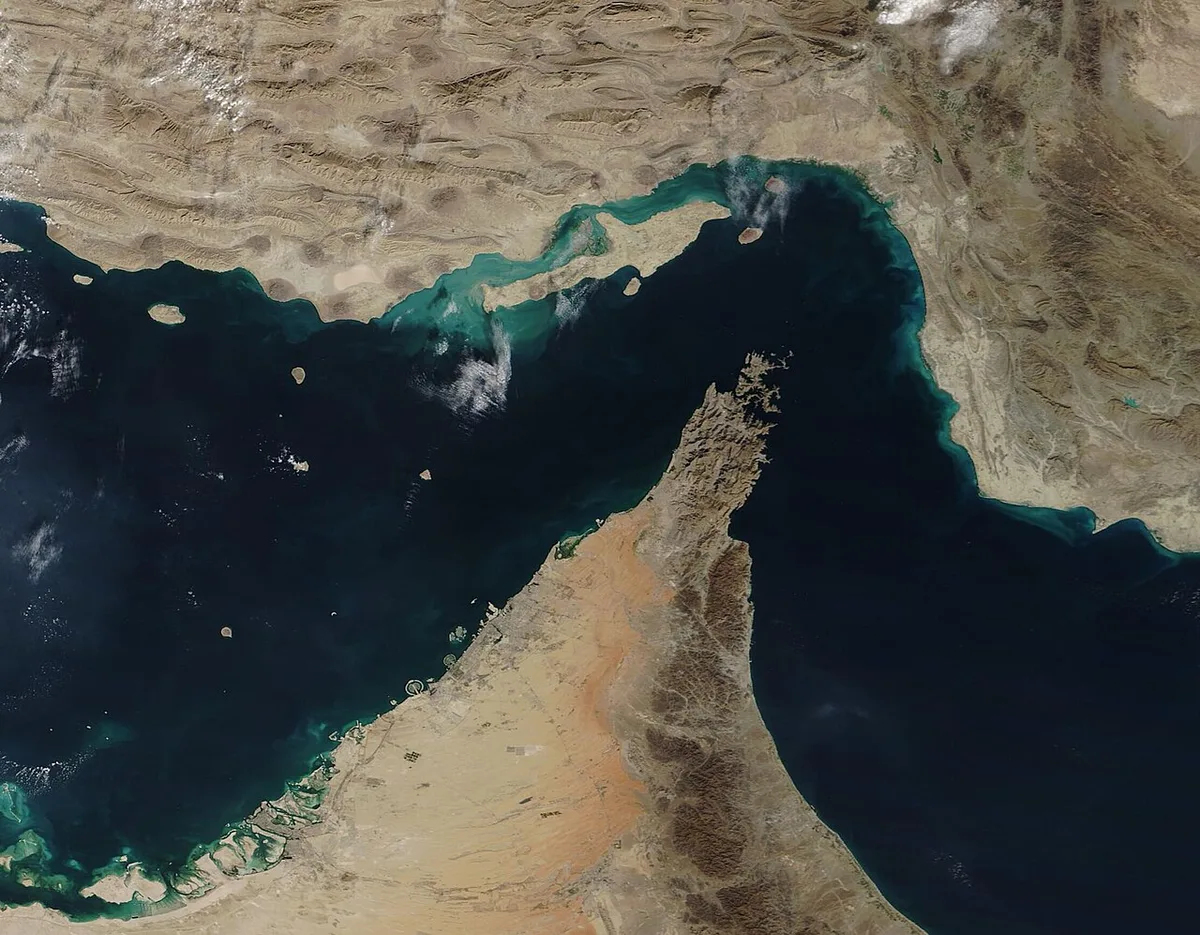
The so-called tanker war started when Iraq attacked the oil infrastructure at Kharg Island in early 1984. Iraq's aim in attacking Iranian shipping was to provoke the Iranians to retaliate with extreme measures, such as closing the Strait of Hormuz to all maritime traffic, thereby bringing American intervention; the United States had threatened several times to intervene if the Strait of Hormuz were closed. As a result, the Iranians limited their retaliatory attacks to Iraqi shipping, leaving the strait open to general passage.
Iraq declared that all ships going to or from Iranian ports in the northern zone of the Persian Gulf were subject to attack. They used helicopters armed with Exocet anti-ship missiles, as well as Soviet-made air-to-surface missiles, to enforce their threats. Iraq repeatedly bombed Iran's main oil export facility on Kharg Island, causing increasingly heavy damage. As a first response to these attacks, Iran attacked a Kuwaiti tanker carrying Iraqi oil near Bahrain on 13 May 1984, as well as a Saudi tanker in Saudi waters on 16 May.
Because Iraq had become landlocked during the course of the war, they had to rely on their Arab allies, primarily Kuwait, to transport their oil. Iran attacked tankers carrying Iraqi oil from Kuwait, later attacking tankers from any Persian Gulf state supporting Iraq. Attacks on ships of noncombatant nations in the Persian Gulf sharply increased thereafter, with both nations attacking oil tankers and merchant ships of neutral nations in an effort to deprive their opponent of trade. The Iranian attacks against Saudi shipping led to Saudi aircraft shooting down a pair of Iranian fighters on 5 June 1984.
The air and small-boat attacks did little damage to Persian Gulf state economies, and Iran moved its shipping port to Larak Island in the Strait of Hormuz.
The Iranian Navy imposed a naval blockade of Iraq, using its British-built frigates to stop and inspect any ships thought to be trading with Iraq. They operated with virtual impunity, as Iraqi pilots had little training in hitting naval targets. Some Iranian warships attacked tankers with ship-to-ship missiles, while others used their radars to guide land-based anti-ship missiles to their targets. Iran began to rely on its new Revolutionary Guard's navy, which used Boghammar speedboats fitted with rocket launchers and heavy machine guns. These speedboats would launch surprise attacks against tankers and cause substantial damage. Iran also used F-4 Phantom II fighters and helicopters to launch Maverick missiles and unguided rockets at tankers.
1985–86 Iraqi offensives
By 1985, Iraqi armed forces were receiving financial support from Saudi Arabia, Kuwait, and other Persian Gulf states, and were making substantial arms purchases from the Soviet Union, China, and France. For the first time since early 1980, Saddam launched new offensives.
On 6 January 1986, the Iraqis launched an offensive attempting to retake Majnoon Island. They were quickly bogged down into a stalemate against 200,000 Iranian infantrymen, reinforced by amphibious divisions. However, they managed to gain a foothold in the southern part of the island.
Between 12 and 14 March, Iraq hit up to 158 targets in over 30 towns and cities, including Tehran. Iran responded with missile launches. More Iraqi air attacks were carried out in August, resulting in hundreds of additional civilian casualties. Iraqi attacks against both Iranian and neutral oil tankers in Iranian waters continued, with Iraq carrying out 150 airstrikes using French-bought jet and helicopters.
The Iraqis attacked again on 28 January 1985; they were defeated, and the Iranians retaliated on 11 March with a major offensive directed against the Baghdad-Basra highway, codenamed Operation Badr. This operation was similar to Operation Kheibar, though it invoked more planning. Iran used 100,000 men, with 60,000 more in reserve. They assessed the marshy terrain, plotted points where they could land tanks, and constructed pontoon bridges across the marshes. The Basij forces were also equipped with anti-tank weapons.
The ferocity of the Iranian offensive broke through the Iraqi lines. Iran broke through north of Qurna on 14 March. That same night, they reached and crossed the Tigris River using pontoon bridges, and captured part of the Baghdad–Basra Highway 6.
Saddam responded by launching chemical attacks against the Iranian positions along the highway and by initiating the aforementioned second war of the cities, with an air and missile campaign against twenty to thirty Iranian population centres, including Tehran. The Iraqis launched air attacks against the Iranian positions and pinned them down. They then launched a pincer attack using mechanised infantry and heavy artillery. Chemical weapons were used, and the Iraqis also flooded Iranian trenches with specially constructed pipes delivering water from the Tigris.
Iranian counteroffensives
The failure of the human wave attacks in earlier years had prompted Iran to develop a better working relationship between the Army and the Revolutionary Guard and to mould the Revolutionary Guard units into a more conventional fighting force. To combat Iraq's use of chemical weapons, Iran began producing an antidote. They also created and fielded their own homemade drones fitted with RPG-7s. They were primarily used in observation, being used for up to 700 sorties.
Until the spring of 1988, the Iranian Air Force's efficiency in air defence increased, with weapons being repaired or replaced and new tactical methods being used. For example, the Iranians would loosely integrate their SAM sites and interceptors to create "killing fields" in which dozens of Iraqi planes were lost, which was reported in the West as the Iranian Air Force using F-14s as "mini-AWACs". The Iraqi Air Force reacted by increasing the sophistication of its equipment, incorporating modern electronic countermeasure pods, decoys such as chaff and flare, and anti-radiation missiles.
Due to heavy losses in the last war of the cities, Iraq reduced its use of aerial attacks on Iranian cities. Instead, they launched Scud missiles, which the Iranians could not stop. Since the range of the Scud missile was too short to reach Tehran, they converted them to al-Husayn missiles with the help of East German engineers. Iran responded to these attacks by using their own Scud missiles.
Compounding the extensive foreign help to Iraq, Iranian attacks were severely hampered by their shortages of weaponry, particularly heavy weapons as large amounts had been lost during the war. Iran still managed to maintain 1,000 tanks, often by capturing Iraqi ones and additional artillery, but many needed repairs to be operational. By this time Iran managed to procure spare parts from various sources, helping them to restore some weapons. They secretly imported some weapons, such as anti-aircraft missiles. In an exception to the U.S.' support for Iraq, in exchange for Iran using its influence to help free western hostages in Lebanon, the U.S. secretly sold Iran some limited supplies. Akbar Rafsanjani writes that during the period when Iran was succeeding, for a short time the U.S. supported Iran, then shortly after began helping Iraq again. Iran managed to get some advanced weapons, such as anti-tank TOW missiles. Iran later reverse-engineered and produced those weapons themselves. All of these almost certainly helped increase their effectiveness, but did not reduce their human losses.
1987–88: Renewed Iranian Offensives
Meanwhile, Iran continued to attack as the Iraqis were planning their strike. In 1987, the Iranians renewed a series of major human wave offensives in both northern and southern Iraq. The Iraqis had elaborately fortified Basra with five defensive rings, exploiting natural waterways such as the Shatt al-Arab and artificial ones, such as Fish Lake and the Jasim River, along with earth barriers. Fish Lake was a massive lake filled with mines, underwater barbed wire, electrodes and sensors. Behind each waterway and defensive line was radar-guided artillery, ground attack aircraft and helicopters, all capable of firing poison gas or conventional munitions.
The Iranian strategy was to penetrate the Iraqi defences and encircle Basra, isolating the city and the al-Faw peninsula. Iran's plan was for three assaults: a diversionary attack near Basra, the main offensive and another diversionary attack using Iranian tanks in the north to divert Iraqi heavy armour from Basra. For these battles, the Iranian military had grown by recruiting many new Basij and Pasdaran volunteers. Total Iranian strength reached 150,000–200,000.
On 25 December 1986, Iran launched Operation Karbala-4. According to Iraqi General Ra'ad al-Hamdani, this was a diversionary attack. The Iranians launched an amphibious assault against the Iraqi island of Umm al-Rassas in the Shatt al-Arab, parallel to Khoramshahr. They then set up a pontoon bridge and continued the attack, eventually capturing the island, but failing to advance further. The Iranians had 60,000 casualties, while the Iraqis 9,500. The Iraqi commanders exaggerated Iranian losses to Saddam, and it was assumed that the main Iranian attack on Basra had been fully defeated and that it would take the Iranians six months to recover. When the main Iranian attack, Operation Karbala-5, began, many Iraqis were on leave.
In the Siege of Basra, or Operation Karbala-5, Iran attempted to capture Basra in early 1987. Known for its extensive casualties and ferocious conditions, this was the biggest battle of the war. While Iranian forces crossed the border and captured the eastern section of Basra Governorate, the operation ended in a stalemate.
At the same time as Operation Karbala 5, Iran launched Operation Karbala-6 against the Iraqis in Qasr-e Shirin in central Iran to prevent the Iraqis from rapidly transferring units down to defend against the Karbala-5 attack. The attack was carried out by Basij infantry and the Revolutionary Guard's 31st Ashura and the Army's 77th Khorasan armoured divisions. The Basij attacked the Iraqi lines, forcing the Iraqi infantry to retreat. An Iraqi armoured counter-attack surrounded the Basij in a pincer movement. The Iranian tank divisions attacked, breaking the encirclement. The Iranian attack was stopped by mass Iraqi chemical weapons attacks.
Iranian war-weariness
Operation Karbala-5 was a severe blow to Iran's military and morale. To foreign observers, it appeared that Iran was continuing to strengthen. By 1988, Iran had become self-sufficient in many areas, such as anti-tank missiles, ballistic missiles, anti-ship missiles, tactical rockets, and producing spare weapon parts. Iran had improved its air defences with smuggled surface to air missiles. Iran was even producing UAVs and the Pilatus PC-7 propeller aircraft for observation. Iran doubled their stocks of artillery, and was self-sufficient in the manufacture of ammunition and small arms.
While it was not obvious to foreign observers, the Iranian public had become increasingly war-weary and disillusioned with the fighting, and relatively few volunteers joined the fight in 1987–88. Because the Iranian war effort relied on popular mobilisation, their military strength actually declined, and Iran was unable to launch any major offensives after Karbala-5. As a result, for the first time since 1982, the momentum of the fighting shifted towards the regular army, whose reliance on conscription made the war even less popular. Many Iranians began to try to escape the conflict. Anti-war demonstrations took place in numerous cities throughout Iran, which were violently suppressed by the regime, causing deaths.
The leadership acknowledged that the war was a stalemate, and began to plan accordingly. No more "final offensives" were planned. Akbar Rafsanjani also announced the end of human wave attacks. Mohsen Rezaee, head of the IRGC, announced that Iran would focus exclusively on limited attacks and infiltrations, while arming and supporting opposition groups inside of Iraq.
On the Iranian home front, sanctions, declining oil prices, and Iraqi attacks on Iranian oil facilities and shipping took a heavy toll on the economy. While the attacks themselves were not as destructive as some analysts believed, the U.S.-led Operation Earnest Will, which protected Iraqi and allied oil tankers, but not Iranian ones, led many neutral countries to stop trading with Iran because of rising insurance and fear of air attack. Iranian oil and non-oil exports fell by 55%, inflation reached 50% by 1987, and unemployment skyrocketed. At the same time, Iraq was experiencing crushing debt and shortages of workers, encouraging its leadership to try to end the war quickly.
By the end of 1987, Iraq possessed 5,550 tanks, outnumbering the Iranians six to one, and 900 fighter aircraft, outnumbering the Iranians ten to one. After Operation Karbala-5, Iraq only had 100 qualified fighter pilots remaining. Therefore, Iraq began to invest in recruiting foreign pilots from countries such as Belgium, South Africa, Pakistan, East Germany, and the Soviet Union. They replenished their manpower by integrating volunteers from other Arab countries into their army. Iraq also became self-sufficient in chemical weapons and some conventional ones and received much equipment from abroad. Foreign support helped Iraq bypass its economic troubles and massive debt to continue the war and increase the size of its military.
Air and tanker war
With the stalemate on land, the air/tanker war became more important. The Iranian Air Force had become very small, with a limited number of planes, although they managed to restore some damaged planes to service. The Air Force, despite its once sophisticated equipment, lacked enough equipment and personnel to sustain the war of attrition that had developed, and was unable to lead an outright onslaught against Iraq.
The Iraqi Air Force, had originally lacked modern equipment and experienced pilots, but after pleas from Iraqi military leaders, Saddam decreased political influence on everyday operations and left the fighting to his combatants. The Soviets began delivering more advanced aircraft and weapons to Iraq, while the French improved training for flight crews and technical personnel and continually introduced new methods for countering Iranian weapons and tactics. Iranian ground air defences still shot down many Iraqi aircraft.
The main Iraqi air effort had shifted to the destruction of Iranian war-fighting capability, primarily Persian Gulf oil fields, tankers and Kharg Island. Starting in late 1986, the Iraqi Air Force began a comprehensive campaign against Iranian economic infrastructure. By late 1987, the Iraqi Air Force could count on direct American support for long-range operations against Iranian infrastructural targets and oil installations deep in the Persian Gulf. U.S. Navy ships tracked and reported movements of Iranian shipping and defences. In the massive Iraqi air strike against Kharg Island, flown on 18 March 1988, the Iraqis destroyed two supertankers but lost five aircraft.
The attacks on oil tankers continued. Both Iran and Iraq carried out frequent attacks during the first four months of the year. Iran was effectively waging a naval guerilla war with its IRGC navy speedboats, while Iraq attacked with its aircraft. In 1987, Kuwait asked to reflag its tankers to the U.S. flag. They did so in March, and the U.S. Navy began Operation Earnest Will to escort the tankers. The result of Earnest Will would be that, while oil tankers shipping Iraqi/Kuwaiti oil were protected, Iranian tankers and neutral tankers shipping to Iran would be unprotected, inflicting losses on Iran and undermining its trade with foreign countries, damaging Iran's economy further.
Iran deployed Silkworm missiles to attack ships, but only a few were actually fired. Both the U.S. and Iran jockeyed for influence in the Gulf. To discourage the U.S. from escorting tankers, Iran secretly mined some areas. The U.S. began to escort the reflagged tankers, but one was damaged by a mine while under escort. While being a public-relations victory for Iran, the U.S. increased its reflagging efforts. While Iran mined the Persian Gulf, their speedboat attacks were reduced, primarily attacking unflagged tankers shipping in the area.
1988: Final Iraqi offensives
By 1988, with massive equipment imports and reduced Iranian volunteers, Iraq was ready to launch major offensives. In February 1988, Saddam began the fifth and most deadly war of the cities. Over the next two months, Iraq launched over 200 al-Husayn missiles at 37 Iranian cities. Saddam also threatened to use chemical weapons in his missiles, causing 30% of Tehran's population to leave the city. Iran retaliated, launching at least 104 missiles against Iraq in 1988 and shelling Basra. In all, Iraq launched 520 Scuds and al-Husseins against Iran; Iran fired 177 in return. The Iranian attacks were too few in number to deter Iraq from launching their attacks. Iraq also increased their airstrikes against Kharg Island and Iranian oil tankers. With their tankers protected by U.S. warships, they could operate with virtual impunity. In addition, the West supplied Iraq's air force with laser-guided smart bombs, allowing them to attack economic targets while evading anti-aircraft defences. These attacks began to have a major toll on the Iranian economy and morale and caused many casualties.
In March 1988, the Iranians carried out Operations Dawn 10, Beit ol-Moqaddas 2, and Zafar 7 in Iraqi Kurdistan with the aim of capturing the city of Suleimaniya and the Darbandikhan Dam and the power plant at Lake Dukan, which supplied Iraq with much of its electricity and water. Iran hoped that the capture of these areas would bring more favourable terms to the ceasefire agreement. This infiltration offensive was carried out in conjunction with the Peshmerga. Iranian airborne commandos landed behind the Iraqi lines and Iranian helicopters hit Iraqi tanks with TOW missiles. The Iraqis were taken by surprise, and Iranian F-5E Tiger fighter jets even damaged the Kirkuk oil refinery. Iraq executed multiple officers for these failures in March–April 1988, including Colonel Jafar Sadeq. Infiltrating the Kurdish mountains, Iran captured the town of Halabja and began to fan out across the province.
Though the Iranians advanced to within sight of Dukan and captured around 1,040 km2 (400 sq mi) and 4,000 Iraqis, the offensive failed due to the Iraqi chemical warfare. The Iraqis launched the deadliest chemical weapons attacks of the war. The Republican Guard launched 700 chemical shells, while the other artillery divisions launched 200–300 chemical shells each, unleashing a chemical cloud that killed or wounded 60% of the Iranians. The blow was felt particularly by the Iranian 84th infantry division and 55th paratrooper division. The Iraqi special forces then stopped the remains of the Iranian force. In retaliation for Kurdish collaboration with the Iranians, Iraq launched a massive poison gas attack against Kurdish civilians in Halabja, recently taken by the Iranians, killing thousands. Iran airlifted foreign journalists to the ruined city, and the images of the dead were shown throughout the world, but Western opposition to Iran led them to also blame Iran for the attack.
Iran accepts the ceasefire
Saddam sent a warning to Khomeini in mid-1988, threatening to launch a new and powerful full-scale invasion and attack Iranian cities with weapons of mass destruction. Shortly afterwards, Iraqi aircraft bombed the Iranian town of Oshnavieh with poison gas, immediately killing and wounding over 2,000 civilians. The fear of an all-out chemical attack against Iran's largely unprotected civilian population weighed heavily on the Iranian leadership, and they realised that the international community had no intention of restraining Iraq. The lives of the civilian population of Iran were becoming very disrupted, with a third of the urban population evacuating major cities in fear of the seemingly imminent chemical war. Meanwhile, Iraqi conventional bombs and missiles continuously hit towns and cities, destroying vital civilian and military infrastructure. Iran replied with missile and air attacks, but not sufficiently to deter the Iraqis.
With the threat of a new and even more powerful invasion, Rafsanjani ordered the Iranians to retreat from Haj Omran, Kurdistan on 14 July. The Iranians did not publicly describe this as a retreat, instead calling it a "temporary withdrawal". By July, Iran's army inside Iraq had largely disintegrated. Iraq put up a massive display of captured Iranian weapons in Baghdad, claiming they captured 1,298 tanks, 5,550 recoilless rifles, and thousands of other weapons. However, Iraq had taken heavy losses as well, and the battles were very costly.
In July 1988, Iraqi aircraft dropped bombs on the Iranian Kurdish village of Zardan. Dozens of villages and towns, such as Marivan, Baneh and Saqqez, were once again attacked with poison gas, resulting in even heavier civilian casualties. On 3 July 1988, the USS Vincennes shot down Iran Air Flight 655, killing 290 people. The lack of international sympathy disturbed the Iranian leadership, and they came to the conclusion that the U.S. was on the verge of waging a full-scale war against them, and that Iraq was on the verge of unleashing its entire chemical arsenal upon their cities.
At this point, elements of the Iranian leadership, led by Rafsanjani (who had initially pushed for the extension of the war), persuaded Khomeini to accept a ceasefire. They stated that in order to win the war, Iran's military budget would have to be increased eightfold and the war would last until 1993. On 20 July 1988, Iran accepted Resolution 598, showing its willingness to accept a ceasefire. A statement from Khomeini was read out in a radio address, and he expressed deep displeasure and reluctance about accepting the ceasefire,
Aftermath
Casualties
The Iran–Iraq War was the deadliest conventional war ever fought between regular armies of developing countries. Encyclopædia Britannica states: "Estimates of total casualties range from 1,000,000 to twice that number. The number killed on both sides was perhaps 500,000, with Iran suffering the greatest losses." Iraqi casualties are estimated at 105,000–200,000 killed, while about 400,000 had been wounded and some 70,000 taken prisoner. Thousands of civilians on both sides died in air raids and ballistic missile attacks. Prisoners taken by both countries began to be released on 17 August 1990, though some were not released until more than 10 years after the end of the conflict. Cities on both sides had also been considerably damaged. While revolutionary Iran had been bloodied, Iraq was left with a large military and was a regional power, albeit with severe debt, financial problems, and labour shortages.
Iran claimed the war cost them an estimated 200,000–220,000 deaths. Conservative Western estimates put this number at up to 262,000. This includes 123,220 combatants, 60,711 MIA and 11,000–16,000 civilians. Combatants include 79,664 members of the IRGC and 35,170 soldiers from the regular military. Prisoners of war accounted for 42,875 Iranian casualties, captured and kept in Iraqi detention centres from 2.5 to more than 15 years after the war was over.
According to the Janbazan Affairs Organization, 398,587 Iranians sustained injuries that required prolonged medical and health care following primary treatment, including 52,195 (13%) injured due to the exposure to chemical warfare agents. From 1980 to 2012, 218,867 Iranians died due to war injuries and the mean age of combatants was 23 years old. This includes 33,430 civilians (15% of all fatalities), mostly women and children. More than 144,000 Iranian children were orphaned as a consequence of these deaths. On average, 70 people were killed in Iran daily, whereas in addition 1,400 people died from landmines between 1988 and 2003. Other estimates put Iranian casualties up to 600,000.
Both Iraq and Iran manipulated loss figures to suit their purposes. At the same time, Western analysts accepted improbable estimates. By April 1988, such casualties were estimated at between 150,000 and 340,000 Iraqis dead, and 450,000 to 730,000 Iranians. Shortly after the end of the war, it was thought that Iran suffered even more than a million dead. Considering the style of fighting on the ground and the fact that neither side penetrated deeply into the other's territory, USMC analysts believed events do not substantiate the high casualties claimed. The Iraqi government has claimed 800,000 Iranians were killed in action, four times more than Iranian official figures, whereas Iraqi intelligence privately put the number at 228,000–258,000 in August 1986. Iraqi losses were also revised downwards over time.
Peace talks and postwar situation
With the ceasefire in place, and UN peacekeepers monitoring the border, Iran and Iraq sent their representatives to Switzerland to negotiate a peace agreement on the terms of the ceasefire. However, peace talks stalled. Iraq, in violation of the UN ceasefire, refused to withdraw its troops from 7,800 square kilometres (3,000 sq mi) of disputed marches unless the Iranians accepted Iraq's full sovereignty over the Shatt al-Arab. Foreign powers continued to support Iraq, which wanted to gain at the negotiating table what they failed to achieve on the battlefield, and Iran was portrayed as the one not wanting peace.
In response, Iran refused to release 70,000 Iraqi prisoners of war, compared to 40,000 Iranian prisoners of war held by Iraq. They continued to carry out a naval blockade of Iraq, although its effects were mitigated by Iraqi use of ports in friendly neighbouring Arab countries. Iran began to improve relations with many of the states that opposed it during the war. In 1990, Saddam expressed being open to a peace agreement, although he still insisted on full sovereignty over the Shatt al-Arab.
By 1990, Iran was undergoing military rearmament and reorganisation, and purchased $10 billion worth of heavy weaponry from the USSR and China, including aircraft, tanks, and missiles. Rafsanjani reversed Iran's self-imposed ban on chemical weapons, and ordered their manufacture and stockpile (Iran destroyed them in 1993 after ratifying the Chemical Weapons Convention). As war with the western powers loomed, Iraq became concerned about the possibility of Iran mending its relations with the west in order to attack Iraq. Iraq had lost its support from the West, and its position in Iran was increasingly untenable. Saddam realised that if Iran attempted to expel the Iraqis from the disputed territories in the border area, it was likely they would succeed.
Shortly after his invasion of Kuwait, Saddam recognised Iranian rights over the eastern half of the Shatt al-Arab, and stated that he would accept Iran's demands and withdraw Iraq's military from the disputed territories. A peace agreement was signed finalising the terms of the UN resolution, diplomatic relations were restored, and the Iraqi military withdrew. The UN peacekeepers withdrew from the border afterwards. Most of the prisoners of war were released in 1990, although some remained as late as 2003.
Economic situation
The economic loss at the time was believed to exceed $500 billion for each country ($1.2 trillion total). In addition, economic development stalled and oil exports were disrupted. Iraq had accrued more than $130 billion of international debt, excluding interest, and was also weighed down by a slowed GDP growth. Iraq's debt to the Paris Club amounted to $21 billion, 85% of which had originated from the combined inputs of Japan, the USSR, France, Germany, the United States, Italy and the United Kingdom. The largest portion of Iraq's debt, amounting to $130 billion, was to its former Arab backers, with $67 billion loaned by Kuwait, Saudi Arabia, Qatar, UAE, and Jordan.
After the war, Iraq accused Kuwait of slant drilling and stealing oil, inciting its invasion of Kuwait, which in turn worsened Iraq's financial situation: the United Nations Compensation Commission mandated Iraq to pay reparations of more than $200 billion to victims of the invasion, including Kuwait and the United States. To enforce payment, Iraq was put under a comprehensive international embargo, which further strained the Iraqi economy and pushed its external debt to private and public sectors to more than $500 billion by the end of Saddam's rule. Combined with Iraq's negative economic growth after prolonged international sanctions, this produced a debt-to-GDP ratio of more than 1,000%, making Iraq the most indebted developing country in the world. The unsustainable economic situation compelled the new Iraqi government to request that a considerable portion of debt incurred during the Iran–Iraq war be written off.
Science and technology
The war had its impact on medical science: a surgical intervention for comatose patients with penetrating brain injuries was created by Iranian physicians treating wounded soldiers, later establishing neurosurgery guidelines to treat civilians who had suffered blunt or penetrating skull injuries.
The Iran–Iraq War contributed to Iraq's defeat in the Persian Gulf War. Iraq's military was accustomed to fighting the slow-moving Iranian infantry formations with artillery and static defences, while using mostly unsophisticated tanks to gun down and shell the infantry and overwhelm the smaller Iranian tank force. In addition, they were also dependent on weapons of mass destruction to help secure victories. Therefore, they were rapidly overwhelmed by the high-tech, quick-manoeuvring Coalition forces using modern doctrines such as AirLand Battle.
Domestic situation
Iraq
At first, Saddam attempted to ensure that the Iraqi population suffered from the war as little as possible. There was rationing, but civilian projects begun before the war continued. At the same time, the already extensive personality cult around Saddam reached new heights while the regime tightened its control over the military.
After the Iranian victories of the spring of 1982 and the Syrian closure of Iraq's main pipeline, Saddam reversed on his policy towards the home front: a policy of austerity and total war was introduced, with the entire population being mobilised for the war effort. All Iraqis were ordered to donate blood and around 100,000 Iraqi civilians were ordered to clear the reeds in the southern marshes. Mass demonstrations of loyalty towards Saddam became more common. Saddam also began implementing a policy of discrimination against Iraqis of Iranian origin.
In the summer of 1982, Saddam executed more than 300 Iraqi Army officers for their failures on the battlefield. In 1983, a major crackdown was launched on the leadership of the Shia community. Ninety members of the al-Hakim family, an influential family of Shia clerics whose leading members were the émigrés Mohammad Baqir al-Hakim and Abdul Aziz al-Hakim, were arrested, and six were hanged.
The crackdown on Kurds saw the executions of 8,000 members of the Barzani clan, whose head (Massoud Barzani) also led the Kurdistan Democratic Party. From 1983 onwards, a campaign of increasingly brutal repression was started against the Iraqi Kurds, characterised by Israeli historian Efraim Karsh as having "assumed genocidal proportions" by 1988. The Anfal campaign was intended to pacify Iraqi Kurdistan permanently. By 1983, the Barzanis had allied with Iran.
To secure the loyalty of the Shia population, Saddam allowed more Shias into the Ba'ath Party and the government, and improved Shia living standards, which had been lower than those of the Iraqi Sunnis. Saddam had the state pay for restoring Imam Ali's tomb with Italian white marble. The Baathists also increased their policies of repression against the Shia. The most infamous event was the massacre of 148 civilians of the Shia town of Dujail.
Despite the costs of the war, the Iraqi regime made generous contributions to Shia waqf (religious endowments) as part of the price of buying Iraqi Shia support. The importance of winning Shia support was such that welfare services in Shia areas were expanded during a time in which the Iraqi regime was pursuing austerity in all other non-military fields. During the first years of the war in the early 1980s, the Iraqi government tried to accommodate the Kurds in order to focus on the war against Iran. In 1983, the Patriotic Union of Kurdistan agreed to cooperate with Baghdad, but the KDP remained opposed. In 1983, Saddam signed an autonomy agreement with Jalal Talabani of the Patriotic Union of Kurdistan (PUK), though Saddam later reneged on the agreement. By 1985, the PUK and KDP had joined forces, and Iraqi Kurdistan saw widespread guerrilla warfare for the rest of the war.
Iran
Historian Ephraim Karsh argued that the Iranian government saw the outbreak of war as chance to strengthen its position and consolidate the Islamic revolution, noting that government propaganda presented it domestically as a glorious jihad and a test of Iranian national character. Iran followed a policy of total war from the beginning, and attempted to mobilise the nation as a whole. They established a group known as the Reconstruction Campaign, whose members were exempt from conscription, and were instead sent into the countryside to work on farms to replace the men serving at the front.
Iranian workers had a day's pay deducted from their pay cheques every month to help finance the war, and mass campaigns were launched to encourage the public to donate food, money, and blood. To further help finance the war, the Iranian government banned the import of all non-essential items, and launched a major effort to rebuild the damaged oil plants.
Former Iraqi general Ra'ad al-Hamdani said the Iraqis believed that, in addition to the Arab revolts, the Revolutionary Guards would be drawn out of Tehran, leading to a counter-revolution in Iran that would cause Khomeini's government to collapse and thus ensure Iraqi victory. However, rather than turning against the revolutionary government as experts had predicted, Iran's people (including Iranian Arabs) rallied in support of the country and put up a stiff resistance.
The IRGC grew as an organisation to encompass not just military concerns but also matters of economic, religious, and educational importance. The organisation's growth during the war is vital to understanding its role in Iranian society and how it has evolved since its initial formation in 1979. Domestically, the IRGC dealt with suppressing uprisings by Kurds, Baluchs, Turkmen, and the MEK which broke with Khomeini in June 1981. While initially dealing with internal threats to the revolution in its first few years, the IRGC focused its attention on external threats at the outbreak of the war in 1980. In January 1981, the IRGC took control of the Basij to aid in the fight against Iraqi forces. The Basij helped bolster the prominence and legitimacy of the IRGC during the war as a vehicle for indoctrination and through its contributions to the defence of Iran. The transformation of the IRGC organised its command structure, which enabled the organisation to match the force of Iran's regular military and its first abroad deployment during the war began the sponsoring of other armed groups in the region through its command of the Quds force.
Comparison of Iraqi and Iranian military strength
Iran's regular Army had been purged after the 1979 Revolution, with most high-ranking officers either having fled the country or been executed.
At the beginning of the war, Iraq held a clear advantage in armour, while both nations were roughly equal in terms of artillery. The gap only widened as the war went on. Iran started with a stronger air force, but over time, the balance of power reversed in Iraq's favour (as Iraq was constantly expanding its military, while Iran was under arms sanctions). Estimates for 1980 and 1987 were:
On average, Iraq imported about $7 billion in weapons during every year of the war, accounting for fully 12% of global arms sales in the period.
The value of Iraqi arms imports increased to between $12 billion and $14 billion during 1984–1987, whereas the value of Iranian arms imports fell from $14 billion in 1985 to $5.89 billion in 1986 and an estimated $6 billion to $8 billion in 1987. Iran was constrained by the price of oil during the 1980s oil glut as foreign countries were largely unwilling to extend credit to Iran, but Iraq financed its continued massive military expansion by taking on vast quantities of debt that allowed it to win a number of victories against Iran near the end of the war but that left the country bankrupt.
Despite its larger population, by 1988 Iran's ground forces numbered only 600,000 whereas the Iraqi army had grown to include 1 million soldiers.
Foreign support to Iraq and Iran
During the war, Iraq was regarded by the West and the Soviet Union as a counterbalance to post-revolutionary Iran. The Soviet Union, Iraq's main arms supplier during the war, did not wish for the end of its alliance with Iraq, and was alarmed by Saddam's threats to find new arms suppliers in the West and China if the Kremlin did not provide him with the weapons he wanted. The Soviet Union hoped to use the threat of reducing arms supplies to Iraq as leverage for forming a Soviet–Iranian alliance.
During the early years of the war, the United States lacked meaningful relations with either Iran or Iraq, the former due to the Iranian revolution and the Iran hostage crisis and the latter because of Iraq's alliance with the Soviet Union and hostility towards Israel. Following Iran's success in repelling the Iraqi invasion and Khomeini's refusal to end the war in 1982, the United States made an outreach to Iraq, beginning with the restoration of diplomatic relations in 1984. The United States wished to both keep Iran away from Soviet influence and protect other Gulf states from any threat of Iranian expansion. As a result, the U.S. began to provide limited support to Iraq.
U.S. official Richard Murphy testified to Congress in 1984 that the Reagan administration believed a victory for either Iran or Iraq was "neither militarily feasible nor strategically desirable".
Support to Iraq was given via technological aid, intelligence, the sale of dual-use chemical and biological warfare related technology and military equipment, and satellite intelligence. While there was direct combat between Iran and the United States, it is not universally agreed that the fighting between the United States and Iran was specifically to benefit Iraq, or for separate issues between the U.S. and Iran. American official ambiguity towards which side to support was summed up by Henry Kissinger when he remarked, "It's a pity they can't both lose."
More than 30 countries provided support to Iraq, Iran, or both; most of the aid went to Iraq. Iran had a complex clandestine procurement network to obtain munitions and critical materials. Iraq had an even larger clandestine purchasing network, involving 10–12 allied countries, to maintain ambiguity over their arms purchases and to circumvent "official restrictions". Arab mercenaries and volunteers from Egypt and Jordan formed the Yarmouk Brigade and participated in the war alongside Iraqis.
Iraq
The United States pursued policies in favour of Iraq by reopening diplomatic channels, lifting restrictions on the export of dual-use technology, overseeing the transfer of third-party military hardware, and providing operational intelligence on the battlefield. France, which from the 1970s had been one of Iraq's closest allies, was a major supplier of military hardware. The French sold weapons equal to $5 billion, which made up well over a quarter of Iraq's total arms stockpile. France had been sending chemical precursors of chemical weapons to Iraq, since 1986. China, which had no direct stake in the victory of either side and whose interests in the war were entirely commercial, freely sold arms to both sides.
Iraq also made extensive use of front companies, middlemen, secret ownership of all or part of companies all over the world, forged end-user certificates, and other methods to hide what it was acquiring. Some transactions may have involved people, shipping, and manufacturing in as many as 10 countries. Support from Great Britain exemplified the methods by which Iraq would circumvent export controls. Iraq bought at least one British company with operations in the U.K. and the U.S., and had a complex relationship with France and the Soviet Union, its major suppliers of actual weapons.
Turkey took action against the Kurds in 1986, alleging they were attacking the Kurdistan Workers' Party (PKK), which prompted a harsh diplomatic intervention by Iran, which planned a new offensive against Iraq at the time and were counting on the support of Kurdish factions.
Sudan supported Iraq directly during the war, sending a contingent to fight at the frontlines. The Sudanese unit consisted to a large degree of Ugandan refugees.
The United Nations Security Council initially called for a cease-fire after a week of fighting while Iraq was occupying Iranian territory, and renewed the call on later occasions. However, the UN did not come to Iran's aid to repel the Iraqi invasion, and the Iranians thus interpreted the UN as subtly biased in favour of Iraq.
Iraq's main financial backers were the oil-rich Persian Gulf states, most notably Saudi Arabia ($30.9 billion), Kuwait ($8.2 billion), and the United Arab Emirates ($8 billion). In all, Iraq received $35 billion in loans from the West and between $30 and $40 billion from the Persian Gulf states during the 1980s.
Iran
While the United States directly fought Iran, citing freedom of navigation as a major casus belli, it also indirectly supplied some weapons to Iran as part of a complex and illegal programme that became known as the Iran–Contra affair. These secret sales were partly to help secure the release of hostages held in Lebanon, and partly to make money to help the Contras rebel group in Nicaragua. This arms-for-hostages agreement turned into a major scandal.
Israel supported Iran in its war against Iraq through the supply of military equipment including spare parts for fighter jets, missile systems, ammunition and tank engines. Israel's motivations for supporting Iran stemmed from a fear of what would have become if Iraq came out victorious and as an opportunity to create business for the Israeli arms industry.
North Korea was a major arms supplier to Iran, often acting as a third party in arms deals between Iran and the Communist bloc. Support included domestically manufactured arms and Eastern-Bloc weapons, for which the major powers wanted deniability. Among the other arms suppliers and supporters of Iran's Islamic Revolution, the major ones were Libya, Syria, and China. China was the largest foreign arms supplier to Iran between 1980 and 1988.
Syria and Libya, breaking Arab solidarity, supported Iran with arms, rhetoric and diplomacy. However, Libya then distanced itself from Iran from 1987, criticising Tehran's attitude and restoring diplomatic relations with Iraq.
Aid to both countries
Besides the United States and the Soviet Union, Yugoslavia also sold weapons to both countries for the entire duration of the conflict. Likewise, Portugal helped both countries; it was not unusual to see Iranian and Iraqi flagged ships anchored at Setúbal, waiting their turn to dock.
From 1980 to 1987, Spain sold €458 million in weapons to Iran and €172 million to Iraq. Weapons sold to Iraq included 4x4 vehicles, BO-105 helicopters, explosives, and ammunition. A research party later discovered that an unexploded chemical Iraqi warhead in Iran was manufactured in Spain.
Although neither side acquired any weapons from Turkey, both sides enjoyed Turkish civilian trade during the conflict, although the Turkish government remained neutral and refused to support the U.S.-imposed trade embargo on Iran. Turkey's export market jumped from $220 million in 1981 to $2 billion in 1985, making up 25% of Turkey's overall exports. Turkish construction projects in Iraq totalled $2.5 billion between 1974 and 1990. Trading with both countries helped Turkey to offset its ongoing economic crisis, though the benefits decreased as the war neared its end and accordingly disappeared entirely with Iraq's invasion of Kuwait and the resulting Iraq sanctions Turkey imposed in response.
U.S. involvement
American support for Ba'athist Iraq during the Iran–Iraq War, in which it fought against post-revolutionary Iran, included several billion dollars' worth of economic aid, the sale of dual-use technology, non-U.S. origin weaponry, military intelligence, and special operations training. The U.S. refused to sell arms to Iraq directly due to Iraq's ties to terrorist groups, but several sales of "dual-use" technology have been documented; notably, Iraq purchased 45 Bell helicopters for $200 million in 1985. Total sales of U.S. dual-use technology to Iraq are estimated at $500 million.
U.S. embargo
A key element of U.S. political–military and energy–economic planning occurred in early 1983. The Iran–Iraq war had been going on for three years and there were significant casualties on both sides, reaching hundreds of thousands. Within the Reagan National Security Council concern was growing that the war could spread beyond the boundaries of the two belligerents. A National Security Planning Group meeting then determined that there was a high likelihood that the conflict would spread into Saudi Arabia and other Gulf states, but that the U.S. had little capability to defend the region. It was determined that a prolonged war in the region would induce much higher oil prices and threaten the fragile world recovery which was just beginning to gain momentum. The conclusions were threefold: firstly, oil stocks needed to be increased among members of the International Energy Agency and, if necessary, released early in the event of oil market disruption; second, the United States needed to reinforce the security of friendly Arab states in the region; and thirdly, an embargo should be placed on sales of military equipment to Iran and Iraq. The plan was approved by Reagan, and later affirmed by the other G7 countries.
U.S. knowledge of Iraqi chemical weapons use
According to Foreign Policy, the "Iraqis used mustard gas and sarin prior to four major offensives in early 1988 that relied on U.S. satellite imagery, maps, and other intelligence. ... According to recently declassified Central Intelligence Agency (CIA) documents and interviews with former intelligence officials like Francona, the U.S. had firm evidence of Iraqi chemical attacks beginning in 1983."
Iraqi attack on U.S. warship
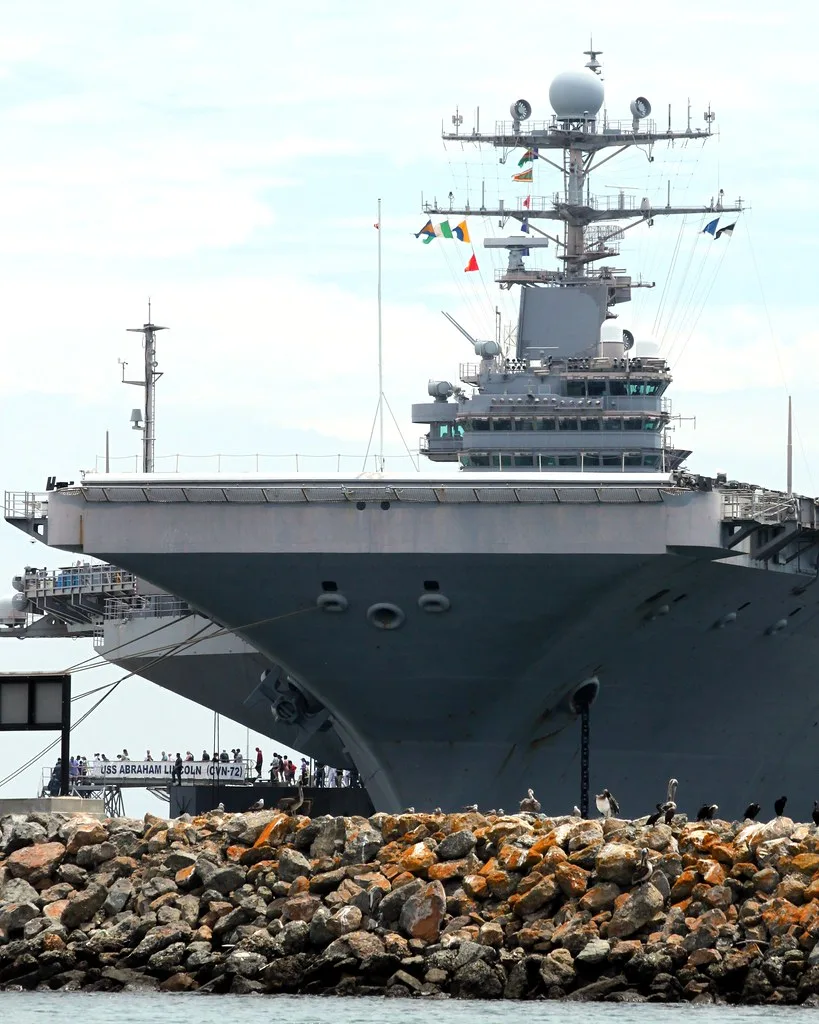
In 1987, an Iraqi Dassault Mirage F1 fighter jet launched two Exocet missiles at USS Stark, a Perry class frigate. The second killed 37 crewmen. Whether or not Iraqi leadership authorised the attack is still unknown. Initial claims by the Iraqi government that Stark was inside the Iran–Iraq War zone were shown to be false, and the motives and orders of the pilot remain unanswered. The attack remains the only successful anti-ship missile strike on an American warship.
U.S. military actions toward Iran
U.S. attention was focused on isolating Iran as well as maintaining freedom of navigation. It criticised Iran's mining of international waters, and sponsored UN Security Council Resolution 598, which passed unanimously on 20 July, under which the U.S. and Iranian forces skirmished during Operation Earnest Will. During Operation Nimble Archer in 1987, the United States attacked Iranian oil platforms in retaliation for an Iranian attack on the U.S.-flagged Kuwaiti tanker Sea Isle City.
In 1988, U.S. Navy sailors aboard USS Samuel B. Roberts were wounded by an Iranian mine. The U.S. responded with Operation Praying Mantis, the Navy's largest engagement of surface warships since World War II. Iranian ships and oil platforms were attacked.
In 1988, USS Vincennes shot down Iran Air Flight 655, killing all 290 passengers and crew on board. The American government claimed that Vincennes was in international waters at the time (which was later proven to be untrue), that the Airbus A300 had been mistaken for an Iranian F-14 Tomcat, and that Vincennes feared that she was under attack. The Iranians maintain that Vincennes was in their own waters, and that the passenger jet was turning away and increasing altitude after take-off. U.S. Admiral William J. Crowe later admitted that Vincennes was in Iranian territorial waters when it launched the missiles. At the time of the attack, Crowe claimed that the Iranian plane did not identify itself and sent no response to warning signals he had sent. In 1996, the U.S. expressed their regret for the event.
Iraq's use of chemical weapons
In 1991, the CIA estimated that Iran had suffered more than 50,000 casualties from Iraq's use of several chemical weapons, though current estimates are more than 100,000 as the long-term effects continue to cause casualties. The official CIA estimate did not include the civilian population contaminated in bordering towns or the children and relatives of veterans, many of whom developed blood, lung and skin complications. 20,000 Iranian soldiers were killed on the spot by nerve gas. As of 2002, 5,000 of the 80,000 survivors continue to seek regular medical treatment, while 1,000 are hospital inpatients.
According to Iraqi documents, assistance in developing chemical weapons was obtained from firms in many countries, including the United States, West Germany, the Netherlands, the United Kingdom, and France. A report stated that Dutch, Australian, Italian, French and both West and East German companies were involved in the export of raw materials to Iraqi chemical weapons factories. Declassified CIA documents show that the U.S. was providing reconnaissance intelligence to Iraq around 1987–88 which was then used to launch chemical weapon attacks on Iranian troops, and that the CIA fully knew that chemical weapons would be deployed and sarin and cyclosarin attacks followed.
In 1986, the UN Security Council made a declaration stating that "members are profoundly concerned by the unanimous conclusion of the specialists that chemical weapons on many occasions have been used by Iraqi forces against Iranian troops, and the members of the Council strongly condemn this continued use of chemical weapons in clear violation of the Geneva Protocol of 1925, which prohibits the use in war of chemical weapons." The United States was the only member who voted against the issuance of this statement. A mission to the region in 1988 found evidence of the use of chemical weapons, and was condemned in Security Council Resolution 612.
Former U.S. official W. Patrick Lang stated that "the use of gas on the battlefield by the Iraqis was not a matter of deep strategic concern" to the Reagan administration, because they "were desperate to make sure that Iraq did not lose". He claimed that the Defense Intelligence Agency "would have never accepted the use of chemical weapons against civilians, but the use against military objectives was seen as inevitable in the Iraqi struggle for survival". The Reagan administration did not stop aiding Iraq after receiving reports of the use of poison gas on Kurdish civilians.
Legacy and memory
Former CIA analyst Bruce Riedel describes the Iran–Iraq War as "one of the largest and longest conventional interstate wars" of the twentieth century and "the only war in modern times in which chemical weapons were used on a massive scale".
Iran's attack on the Osirak nuclear reactor in 1980 was the first attack on a nuclear reactor and one of only a small handful of military attacks on nuclear facilities in history. It was also the first instance of a pre-emptive attack on a nuclear reactor to forestall the development of a nuclear weapon, though it did not achieve its objective, as France repaired the reactor after the attack.
The war was the first conflict in the history of warfare in which both forces used ballistic missiles against each other. This war also saw the only confirmed air-to-air helicopter battles in history, with Iraqi Mi-25s fighting Iranian AH-1J SeaCobras on several occasions.
The war is regarded as being a major trigger for rising sectarianism in the region, as it was viewed by many as a clash between Sunni Muslims (Ba'athist Iraq and other Arab states) and the Shia revolutionaries that had recently taken power in Iran. There remains lingering animosity however despite the pragmatic alliance that has been formed as multiple government declarations from Iran have stated that the war will "affect every issue of internal and foreign policy" for decades to come.
The sustained importance of this conflict is attributed mostly to its massive human and economic cost, along with its ties to the Iranian Revolution. Another significant effect that the war has on Iran's policy is the issue of remaining war reparations. In 2004, the UN estimated that Iraq owed about $149 billion, while Iran contended that, with both the direct and indirect effects taken into account, the cost of the war reached $1 trillion.