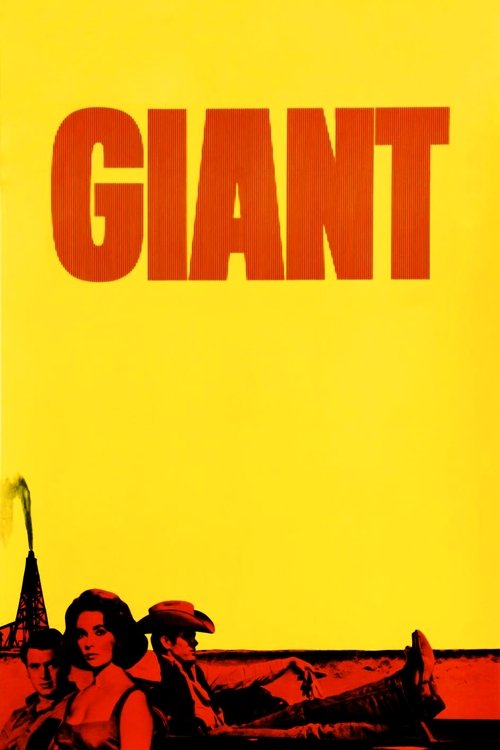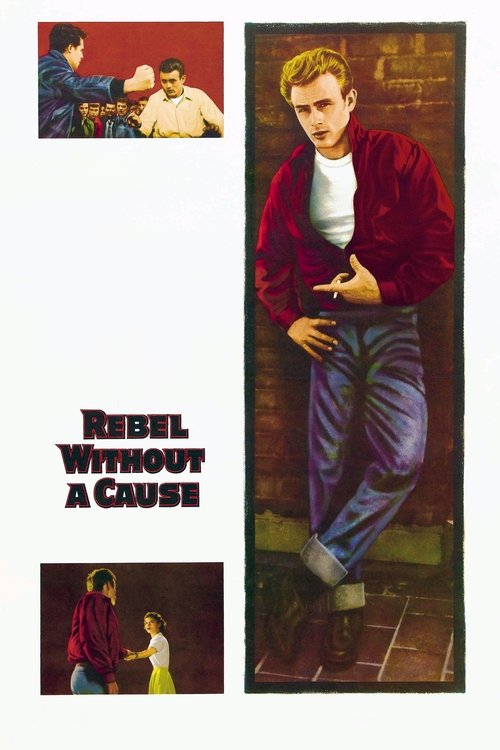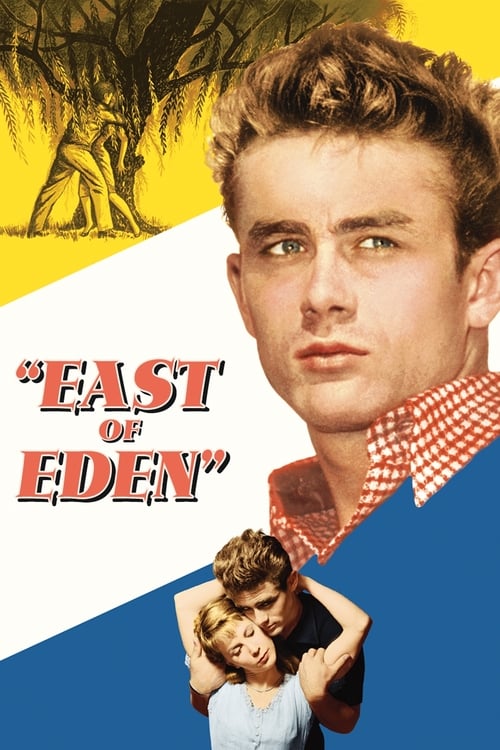




James Byron Dean (February 8, 1931 – September 30, 1955) was an American actor. He became one of the most influential figures in Hollywood in the 1950s, and his impact on cinema and popular culture was profound, although his career lasted only five years. He appeared in just three major films: Rebel Without a Cause (1955), in which he portrayed a disillusioned and rebellious teenager; East of Eden (1955), which showcased his intense emotional range; and Giant (1956), a sprawling drama. These have been preserved in the United States National Film Registry by the Library of Congress for their "cultural, historical, or aesthetic significance". He was killed in a car accident at the age of 24 in 1955, leaving him a lasting symbol of rebellion, youthful defiance, and the restless spirit.
For his role in East of Eden, Dean became the first actor to receive a posthumous Academy Award nomination for Best Actor. The following year, he earned a second nomination for his performance in Giant, making him the only actor to receive two posthumous acting nominations. In 1999, he was honored by the American Film Institute, being ranked as the 18th greatest male film star from Golden Age Hollywood on their "AFI's 100 Years...100 Stars" list. Time magazine recognized Dean in 2012 as one of the "All-Time Most Influential Fashion Icons".
Dean's film roles and style had a strong impact on Hollywood, capturing the spirit of 1950s youth and creating an enduring legacy that helped shape American pop culture and define rebellious, countercultural attitudes for generations.
Contents
Early life and education
James Byron Dean was born on February 8, 1931, in Marion, Indiana, the only child of Mildred Marie Wilson and Winton Dean. He stated that his mother was partly Native American and that his father descended from a "line of original settlers that could be traced back to the Mayflower". Six years after Winton left farming to become a dental technician, the family moved to Santa Monica, California. Dean first attended Brentwood Public School in the Brentwood neighborhood of Los Angeles, then transferred to McKinley Elementary School. The family remained in California for several years, and Dean was widely described as being very close to his mother. According to Michael DeAngelis, she was "the only person capable of understanding him". In 1938, she developed acute stomach pain and rapidly lost weight; she died of uterine cancer when Dean was nine years old. Unable to care for his son, Winton sent him to live with his aunt and uncle, Ortense and Marcus Winslow, on their farm in Fairmount, Indiana, where he was raised in their Quaker household. Winton served in World War II and later remarried.
During his adolescence, Dean sought guidance and companionship from a local Methodist pastor, the Rev. James DeWeerd, who appears to have influenced his later interests in bullfighting, car racing, and philosophy. Hollywood columnist and Dean biographer Joe Hyams alleged that Dean was molested as a teenager by DeWeerd, writing that "It was the beginning of a homosexual relationship that would endure over many years". Billy J. Harbin, a historian of American theater, cited Hyams when describing an intimate relationship between Dean and DeWeerd that began in Dean's senior year of high school and "endured for many years". Biographer Paul Alexander wrote in Boulevard of Broken Dreams that Dean and DeWeerd "had a romantic relationship that regularly included sex", presenting Dean as predominantly gay. A New York Times book review, however, stated that "Mr. Alexander's well-meaning stab at clarity may titillate, but it adds no light..." and dismissed some of his claims as "arrant nonsense". Kirkus Reviews similarly criticized the book as "riddled with errors" and containing "a great deal of unsubstantiated and highly speculative psychobiography". In 2011, The Daily Beast reported that Dean once confided in Elizabeth Taylor that he had been sexually abused by a minister approximately two years after his mother's death.
Although Dean's academic performance was unremarkable, he was a popular student and excelled in basketball despite standing just 5 ft 8 in (1.73 m) tall, his full adult height. He played baseball and varsity basketball, studied drama, and competed in public speaking through the Indiana High School Forensic Association. After graduating from Fairmount High School in May 1949, he returned to California to live with his father and stepmother, Ethel Case Dean. He enrolled at Santa Monica College as a pre-law major, then transferred to the University of California, Los Angeles (UCLA), where he changed his major to theater arts. His attempt to reconcile with his father ended in what Dean described as "uncommunicative antagonism", driven by Winton's efforts to steer him toward a more conventional career. Dean pledged Sigma Nu but was expelled after punching a fraternity brother. While at UCLA, he was selected from a group of 350 actors to portray Malcolm in Macbeth and also began studying in James Whitmore's acting workshop. In January 1951, he left UCLA to pursue acting full-time. Reflecting on his career choice, Dean later said, "The decision to act was never prompted. My whole life has been spent in a dramatic display of expression."
Acting career
Early career
Dean made his television debut in 1950 in a Pepsi commercial. He left college to pursue acting full‑time and received his first speaking role as John the Apostle in Hill Number One, an Easter television special dramatizing the Resurrection of Jesus. According to Robert Tanitch, the program drew an audience of 42,000,000 viewers. Dean then secured three bit parts: a soldier in Fixed Bayonets! (1951), a boxing cornerman in Sailor Beware (1952), and a youth in Has Anybody Seen My Gal (1952). While struggling to find work in Hollywood, he was employed as a parking lot attendant at CBS Studios. During this period, he met Rogers Brackett, a radio director for an advertising agency, who offered him professional guidance, career support, and a place to live. Brackett helped Dean obtain his first starring role on Broadway in See the Jaguar.
In July 1951, Dean appeared in Alias Jane Doe, a production overseen by Brackett. In October 1951, encouraged by actor James Whitmore and advised by Brackett, Dean moved to New York City. There, he briefly worked as a stunt tester for the game show Beat the Clock but was dismissed for allegedly completing the tasks too quickly. He also appeared in episodes of several CBS television series, including The Web, Studio One, and Lux Video Theatre, before gaining admission to the Actors Studio, where he studied method acting under Lee Strasberg. In 1952, he had a nonspeaking bit part as a pressman in Deadline – U.S.A., starring Humphrey Bogart.
Proud of his progress, Dean described the Actors Studio in a 1952 letter to his family as "the greatest school of the theater. It houses great people like Marlon Brando, Julie Harris, Arthur Kennedy, Mildred Dunnock, Eli Wallach... Very few get into it ... It is the best thing that can happen to an actor. I am one of the youngest to belong." At the Studio, he became close friends with Carroll Baker, with whom he later co‑starred in Giant (1956). Dean made only one solo presentation there. During the critique session that followed, Strasberg sharply criticized his performance of a scene adapted from Barnaby Conrad's bullfighting novel Matador. Dean stormed out and, although he continued attending classes, he never again submitted work for Strasberg's critiques.
Dean's career accelerated as he appeared in additional early‑1950s television programs, including Kraft Television Theatre, Robert Montgomery Presents, The United States Steel Hour, Danger, and General Electric Theater. In one early role, for the CBS series Omnibus in the episode "Glory in the Flower," he portrayed a disaffected youth similar to the character he would later play in Rebel Without a Cause (1955). The summer 1953 broadcast featured the song "Crazy Man, Crazy," making it one of the first dramatic television programs to include rock and roll.
East of Eden
In 1953, Kazan sought a substantive young actor to portray Cal Trask in screenwriter Paul Osborn's adaptation of John Steinbeck's 1952 novel East of Eden. Steinbeck's book follows the Trask and Hamilton families across three generations in California's Salinas Valley, from the mid-19th century through the 1910s. The film, however, focused on the final portion of the narrative, centering on Cal. Although initially presented as aloof and emotionally troubled in contrast to his twin brother Aron, Cal is revealed to be more worldly, business‑minded, and perceptive than their pious and disapproving father, played by Raymond Massey, who is attempting to develop a vegetable refrigeration process. Cal becomes preoccupied with the mystery surrounding their supposedly dead mother and eventually discovers she is alive and working as a brothel‑keeping madam, portrayed by Jo Van Fleet.
Before casting Cal, Kazan said he wanted "a Brando type" for the role. Osborn suggested Dean, then a relatively unknown actor. Dean met with Steinbeck, who reportedly disliked him personally but believed he was ideal for the part. Dean was cast and, on April 8, 1954, left New York City for Los Angeles to begin filming.
Much of Dean's performance was improvised, including his dance in the bean field and his fetal‑like posture atop a train boxcar after searching for his mother in nearby Monterey. The film's most famous improvised moment occurs when Cal's father rejects his gift of $5,000—money Cal earned by speculating in beans before the United States entered World War I. Instead of running away as scripted, Dean instinctively embraced Massey in an anguished lunge, crying. Kazan kept both the gesture and Massey's genuine shock in the final cut. Dean's portrayal foreshadowed his later role as Jim Stark in Rebel Without a Cause; both characters are angst‑ridden, misunderstood young men seeking approval from their fathers.
After the film's release in March 1955, gossip columnist Hedda Hopper wrote that Dean's performance had already generated significant discussion in Hollywood, with critics, producers, and directors attending advance screenings. She added, "I can't remember when any screen newcomer generated as much excitement in Hollywood as did James Dean in his first picture, East of Eden."
For his performance, Dean received a posthumous nomination for Best Actor at the 28th Academy Awards in 1956, the first official posthumous acting nomination in the Academy's history. (Jeanne Eagels had been nominated for Best Actress in 1929, under different selection rules). East of Eden was the only film starring Dean released during his lifetime.
Rebel Without a Cause, Giant, and planned roles
Dean followed East of Eden with a starring role as Jim Stark in Rebel Without a Cause (1955), a film that became enormously popular among teenagers. Film‑studies scholar Claudia Springer wrote that Dean, by dying young, "became a legendary figure of inarticulate teenage angst." Drama professor Kenneth Krauss similarly argued that Dean was the first postwar movie star to embody teenage angst. After East of Eden and Rebel Without a Cause, Dean sought to avoid being typecast as a rebellious youth like Cal Trask or Jim Stark. He therefore accepted the role of Jett Rink, a Texan ranch hand who strikes oil and becomes wealthy, in Giant, a 1956 film released posthumously and based on Edna Ferber's novel of the same name. The film spans several decades in the lives of Bick Benedict, a Texas rancher played by Rock Hudson; his wife, Leslie, played by Elizabeth Taylor; and Rink. To portray an older version of his character in the film's later scenes, the make‑up department dyed Dean's hair gray and shaved portions of it to create a receding hairline.
Giant proved to be Dean's final film. Near the end of the picture, Rink delivers a drunken speech at a banquet held in his honor, a scene John Howlett described as Jett's "last supper". Dean attempted to make the moment more realistic by becoming inebriated before filming, resulting in dialogue that was largely unintelligible. During editing, director George Stevens decided the scene had to be overdubbed by Nick Adams, as Dean had died by that point. Adams had a small role in the film as "Chick", though the studio mistakenly credited Jack Grinnage as the actor who played the part. Dean received his second posthumous Academy Award nomination for Best Actor for his performance in Giant at the 29th Academy Awards in 1957, honoring films released in 1956. After completing Giant, Dean had been set to star as Rocky Graziano in the drama Somebody Up There Likes Me (1956), and, according to director Nicholas Ray, he was also expected to appear in a project titled Heroic Love.
Personal life
Screenwriter William Bast was one of Dean's closest friends, a fact acknowledged by Dean's family. According to Bast, he was Dean's roommate at UCLA and later in New York, and knew him throughout the last five years of his life. While at UCLA, Dean dated Beverly Wills, an actress with CBS, and Jeanette Lewis, a classmate. Bast and Dean often double-dated with them. Wills began seeing Dean alone and later told Bast, "Bill, there's something we have to tell you. It's Jimmy and me. I mean, we're in love." Their relationship ended after Dean "exploded" when another man asked her to dance at a social event. Bast, who became Dean's first biographer, did not confirm whether he and Dean had a sexual relationship until 2006. In his book Surviving James Dean, Bast was more explicit about the nature of their relationship, describing a night they spent together at a hotel in Borrego Springs.
In 1996, actress Liz Sheridan described her relationship with Dean in New York in 1952, calling it "...just kind of magical. It was the first love for both of us." While living in New York, Dean was introduced to actress Barbara Glenn by their mutual friend Martin Landau. Dean and Glenn dated for two years, frequently breaking up and reconciling. In 2011, their love letters were sold at auction for $36,000.
Early in Dean's career, after he signed with Warner Brothers, the studio's public relations department began circulating stories about his supposed romances with various young actresses, most of whom were clients of his Hollywood agent, Dick Clayton. Studio press releases also grouped Dean with actors Rock Hudson and Tab Hunter, presenting all three as "eligible bachelors" who had not yet found time to settle down: "They say their film rehearsals are in conflict with their marriage rehearsals."
Dean's best-remembered relationship was with Italian actress Pier Angeli. He met Angeli while she was filming The Silver Chalice (1954) on an adjoining Warner lot, and the two exchanged pieces of jewelry as love tokens. In his 1992 biography James Dean: Little Boy Lost, Hollywood gossip columnist Joe Hyams, who said he knew Dean personally, devoted an entire chapter to their relationship. Fourteen years after it ended, Angeli described their time together:
We used to go together to the California coast and stay there secretly in a cottage on a beach far away from prying eyes. We'd spend much of our time on the beach, sitting there or fooling around, just like college kids. We would talk about ourselves and our problems, about the movies and acting, about life and life after death. We had a complete understanding of each other. We were like Romeo and Juliet, together and inseparable. Sometimes on the beach we loved each other so much we just wanted to walk together into the sea holding hands because we knew then that we would always be together.
Death
Auto racing hobby
In 1954, Dean developed a serious interest in motorsport. After filming for East of Eden concluded, he bought a Triumph Tiger T110 motorcycle, and in March 1955—just as East of Eden was being released—he purchased a Porsche 356 Super Speedster convertible. Driving the Speedster and its 1,500 cc engine, he placed in several major racing events. Shortly before filming began on Rebel Without a Cause, he entered his first professional competition at the Palm Springs Road Races on March 26–27, 1955. Dean won the novice class and finished second in the main event. On May 1, 1955, he raced the Speedster at Minter Field in Bakersfield, California, placing third. He hoped to compete in the Indianapolis 500, but his schedule made participation impossible.
Dean's final race took place in Santa Barbara on Memorial Day, May 30, 1955. A blown piston forced him to withdraw from the event. His brief racing career was then paused when director George Stevens barred him from racing during the production of Giant. Dean had completed his scenes, and the film had entered post‑production, when he decided to return to racing.
Accident and aftermath
Longing to return to the "liberating prospects" of motor racing, Dean traded in his Speedster for a new, more powerful 1955 Porsche 550 Spyder and entered the upcoming Salinas Road Race scheduled for October 2, 1955. Accompanying him on the drive to the track on September 30 were stunt coordinator Bill Hickman, Collier's photographer Sanford Roth, and Rolf Wütherich, the German Porsche factory mechanic who maintained Dean's Spyder, nicknamed "Little Bastard". Wütherich, who had encouraged Dean to drive the car from Los Angeles to Salinas to break it in, rode with him in the Porsche. At 3:30 pm, Dean was ticketed for speeding, as was Hickman, who was following behind in another vehicle.
On Friday, September 30, at approximately 5:45 pm, the group was traveling westbound on U.S. Route 466 (now SR 46) near Cholame, California, while Donald Gene Turnupseed, a Cal Poly State University student, was driving east. Turnupseed, heading north toward Fresno, attempted to turn left onto Highway 41 in front of the oncoming Porsche. Dean, unable to stop in time, struck the driver's side of Turnupseed's Ford. The impact sent the Porsche skidding across the pavement and off the highway. Wütherich was thrown from the car, while Dean remained trapped and sustained fatal injuries, including a broken neck. Turnupseed suffered only minor injuries.
Several bystanders witnessed the crash and stopped to help. Dean's biographer George Perry wrote that a woman with nursing experience attended to Dean and detected a weak pulse, though he also noted that "death appeared to have been instantaneous". Dean was pronounced dead on arrival at the Paso Robles War Memorial Hospital at 6:20 pm.
Although news of the crash was initially slow to reach newspapers in the eastern United States, details spread rapidly via radio and television. By October 2, his death had received extensive domestic and international coverage. On Monday morning, October 3, deputy coroner John Stander signed the death certificate, stating that "24‑year‑old James Byron Dean, actor, never married, had met his death on 30 September 1955 at 5.45 pm, one mile east of Cholame at the junction of Highways 466 and 41 in San Luis Obispo County. Chief cause of death was a broken neck, with numerous other fractures and internal injuries." Sheriff‑coroner Paul E. Merrick ordered an inquest, held in the Paso Robles City Council Chamber at 10 am the following Tuesday.
Legacy
Cinema and television
In 1960, Dean received a star on the Hollywood Walk of Fame. In 1999, the American Film Institute ranked him the 18th-greatest male legend of Golden Age Hollywood in its AFI's 100 Years...100 Stars list. All three of Dean's films have been preserved in the United States National Film Registry by the Library of Congress. American teenagers of the mid-1950s, when Dean's major films were first released, strongly identified with him and the characters he portrayed, especially Jim Stark in Rebel Without a Cause. The film depicts the dilemma of a teenager who feels misunderstood by both adults and peers. After Dean's death, Humphrey Bogart remarked on his emerging legend: "Dean died at just the right time. He left behind a legend. If he had lived, he'd never have been able to live up to his publicity."
Historian David Halberstam writes that the success of East of Eden was "stunning", and that it was perhaps director Kazan's best film. He calls Dean's performance a sensation and quotes Pauline Kael, the influential film critic: "There is a new image in American films, [...] the young boy as beautiful, disturbed animal." Halberstam says even Kazan was surprised by Dean's impact, surpassing that of the young Marlon Brando. Years later Kazan said Dean had cast a spell over the youth of America. In Halberstam's estimation, the screenplay of Rebel Without a Cause is weak, and what power the movie has is in Dean's performance. He posits that the actor's "myth" is largely interwoven with his role as Jim Stark, "the prototype for the alienated youth blaming all injustice on parents and their generation."
Terence Pettigrew writes that Dean's acting had an immediate effect on the youth of the mid‑1950s, influencing how young people dressed and behaved more than any other actor. Pettigrew describes how the youth revolution brought about by the post‑World War II economic boom in the United States reflected a universal desire among young people across all social levels for recognition of their individuality. Freed from the hardships of the Great Depression and the war endured by earlier generations, teenagers sought their own identity. Dean embodied the alienation and confusion felt by both middle‑class college students and disaffected youth in lower‑income environments. The characters he played onscreen made him a potent symbol of their doubts and inarticulate desires, and his young audience recognised in him their own anger and distrust of the adult world.
The film scholar Timothy Shary argues that Jim Stark, the role played by Dean in Rebel Without a Cause, became the most influential teenage rebel in American cinema. He notes that while Warner Bros. aimed to capitalize on a trend of depicting tormented adolescents in films made by smaller studios, the movie created by Nicholas Ray and his team addressed genuine tensions in teenage life. These feelings were given voice and personified by Dean, leading to his veneration as an icon of cool. His image made the film an "indelible symbol of youth trying to discover themselves and declare their identity."
Youth culture and music
Numerous commentators have asserted that Dean had a singular influence on the development of rock and roll music. According to David R. Shumway, a researcher in American culture and cultural theory at Carnegie Mellon University, Dean was the first notable figure of youthful rebellion and "a harbinger of youth-identity politics". The persona Dean projected in his movies, especially Rebel Without a Cause, influenced Elvis Presley and many other musicians who followed, including the American rockers Eddie Cochran and Gene Vincent.
In their book, Live Fast, Die Young: The Wild Ride of Making Rebel Without a Cause, Lawrence Frascella and Al Weisel wrote, "Ironically, though Rebel had no rock music on its soundtrack, the film's sensibility—and especially the defiant attitude and effortless cool of James Dean—would have a great impact on rock. The music media would often see Dean and rock as inextricably linked [...] The industry trade magazine Music Connection went so far as to call Dean 'the first rock star.'"
As rock and roll became a revolutionary force that affected the culture of countries around the world, Dean acquired a mythic status that cemented his place as a rock and roll icon. Dean himself listened to music ranging from African tribal music to the modern classical music of Stravinsky as well as to contemporary singers such as Frank Sinatra and Bartók. While the magnetism and charisma manifested by Dean onscreen appealed to people of all ages and sexes, his persona of youthful rebellion provided a template for succeeding generations of youth to model themselves on.
In his book, The Origins of Cool in Postwar America, Joel Dinerstein describes how Dean and Marlon Brando eroticized the rebel archetype in film, and how Elvis Presley, following their lead, did the same in music. Dinerstein details the dynamics of this eroticization and its effect on teenage girls with few sexual outlets. Presley said in a 1956 interview with Lloyd Shearer for Parade magazine, "I've made a study of Marlon Brando. And I've made a study of poor Jimmy Dean. I've made a study of myself, and I know why girls, at least the young 'uns, go for us. We're sullen, we're broodin', we're something of a menace. I don't understand it exactly, but that's what the girls like in men. I don't know anything about Hollywood, but I know you can't be sexy if you smile. You can't be a rebel if you grin."
Sexuality
Dean is often considered a sexual icon because of his perceived experimental take on life, which included his ambivalent sexuality. The Gay Times Readers' Awards cited him as the greatest male gay icon of all time. When questioned about his sexual orientation, Dean is reported to have said, "No, I am not a homosexual. But I'm also not going to go through life with one hand tied behind my back."
The journalist Joe Hyams suggests that Dean was willing to have sex with men who could advance his career. He moved in with Rogers Brackett, an advertising executive who had connections in the entertainment industry and supposedly arranged meetings with them on Dean's behalf, leading to speculation that Dean was having sex "for trade". William Bast referred to Dean as Rogers Brackett's "kept boy" and once found a grotesque depiction of a lizard with the head of Brackett in a sketchbook belonging to Dean. Brackett was quoted saying about their relationship, "My primary interest in Jimmy was as an actor—his talent was so obvious. Secondarily, I loved him, and Jimmy loved me. If it was a father-son relationship, it was also somewhat incestuous." James Bellah, the son of American Western author James Warner Bellah, was a friend of Dean's at UCLA, and later stated, "Dean was a user. I don't think he was homosexual. But if he could get something by performing an act ... Once ... at an agent's office, Dean told me that he had spent the summer as a 'professional house guest' on Fire Island." Mark Rydell stated, "I don't think he was essentially homosexual. I think that he had very big appetites, and I think he exercised them."
Aside from Bast's account of his own relationship with Dean, Dean's fellow motorcyclist and "Night Watch" member, John Gilmore, claimed that he and Dean "experimented" with gay sex on multiple occasions in New York, describing their sexual encounters as "Bad boys playing bad boys while opening up the bisexual sides of ourselves." Gilmore on another occasion said, "That's how it was, neither black nor white. Jimmy thought of himself as an explorer, making discoveries in life, things, and sex."
On the subject of Dean's sexuality, Rebel director Nicholas Ray is on record saying, "James Dean was not straight, he was not gay, he was bisexual. That seems to confuse people, or they just ignore the facts. Some—most—will say he was heterosexual, and there's some proof for that, apart from the usual dating of actresses his age. Others will say no, he was gay, and there's some proof for that, too, keeping in mind that it's always tougher to get that kind of proof. But Jimmy himself said more than once that he swung both ways, so why all the mystery or confusion?" Martin Landau, a good friend of Dean's whom he met at the Actors Studio, stated, "A lot of people say Jimmy was hell-bent on killing himself. Not true. A lot of gay guys make him out to be gay. Not true. When Jimmy and I were together, we'd talk about girls. Actors and girls. We were kids in our early 20s. That was what we aspired to." Elizabeth Taylor, whom Dean had become friends with while working together on Giant, referred to Dean as gay during a speech at the GLAAD Media Awards in 2000. When questioned about Dean's sexuality by the openly gay journalist Kevin Sessums for POZ magazine, Taylor responded, "He hadn't made up his mind. He was only 24 when he died. But he was certainly fascinated by women. He flirted around. He and I ... twinkled."
Fashion
James Laver, the historian and critic of costume and fashion, says that in the 1950s a fashion market arose that catered to young people with large disposable incomes, and that there was a general relaxation of dress codes among them. He writes, "James Dean and Marlon Brando popularized jeans and the motorbike jacket and also transformed the T-shirt into a fashionable item of clothing." According to the clothing designer Julian Robinson, "James Dean heralded the era of T-shirts, jeans and bomber jackets and a welcome blurring of class and wealth barriers." Dean was frequently photographed wearing his signature outfit of jeans, a white T-shirt, and a motorcycle jacket, evoking an outsider and rebel image, especially reflected in the symbolic mystique of the motorcycle jacket. According to Edgar Morin, with his wardrobe Dean expressed an attitude towards society of resistance against the social conventions of adults. The philosopher Malcolm Barnard writes that denim jeans, formerly worn as rural work clothes, "revealed the form of the body rather than covering it". He says they became a symbol of youthful defiance of authority, according to social commentators, when James Dean and Marlon Brando wore them in 1950s films.
Frascella and Weisel call the red jacket Dean wore in Rebel "one of the most iconic pieces of clothing ever worn by a Hollywood star". They recount the differing stories told by persons involved in the film's production about the origin of the red jacket: Nicholas Ray is quoted as saying, "the first thing I did was pull a red jacket off the Red Cross man, dip it in black paint to take off the sheen and give it to Jimmy." The actor Frank Mazzola said he accompanied Dean on a shopping trip to Mattson's clothing store on Hollywood Boulevard, and "The red jacket was really an Athenian jacket that we bought cheaply at Mattson's. They were blue, so the guy at Warner Brothers dyed it red." The film's costume designer, Moss Mabry, said he made three of the jackets. Ray had originally told him the jacket should be khaki. He went to Ray's office to show him swatches of the fabric he'd chosen, and while he was waiting to see the director, "This guy walked in with a red jacket just trying to get a part. And I was fascinated. How good he looked in that red jacket. So I went back to the wardrobe department and cut off a swatch of red." Ray approved the samples and Mabry worked out the pattern for the jacket and cut it from a bolt of red nylon.
Claudia Springer assigns James Dean a central role in the development of the icon of the teen rebel in the 1950s and details how the studios and the media manipulated Dean's public image for their own ends. The advertising industry exploited the ambiguity of the rebel icon as an "endlessly malleable and durable marketing tool", and now James Dean "has become the consummate product of commercialism." According to Springer, his image and his name have sold hundreds of millions of items.
Acting credits
Broadway
See the Jaguar (1952)
The Immoralist (1954) – based on the novel of the same name by André Gide
Off-Broadway
The Metamorphosis (1952) – based on the novella by Franz Kafka
The Scarecrow (1954)
Women of Trachis (1954) – translation by Ezra Pound
Awards and nominations
Other honor
On February 8, 1960, Dean was posthumously inducted into the Hollywood Walk of Fame with a motion-picture star at 1719 Vine Street.
Biographical films
The James Dean Story (1957), a documentary directed by Robert Altman, featuring photographs and video clips, including his public service announcement for safe driving from Warner Bros. Presents.
James Dean Remembered (1974), a television film, highlights significant moments from Dean's career in film and television and features interviews with Sammy Davis Jr., Natalie Wood, Sal Mineo, and Leonard Rosenman.
James Dean (1976), also known as James Dean: Portrait of a Friend, starring Stephen McHattie as Dean and Michael Brandon as writer William Bast.
James Dean: The First American Teenager (1976), a television biography documentary that includes interviews with Sal Mineo, Natalie Wood, and Nicholas Ray.
September 30, 1955 (1977), a film starring Richard Thomas as a teenager who idolizes Dean and grieves his death; co-starring Susan Tyrrell and Tom Hulce.
Come Back to the 5 & Dime, Jimmy Dean, Jimmy Dean (1982), a film about an all-female James Dean fan club reunion, starring Sandy Dennis, Cher, Karen Black, and Kathy Bates.
Forever James Dean (1988), Warner Home Video (1995).
James Dean: The Final Day (1991) features interviews with William Bast, Liz Sheridan, and Maila Nurmi. Dean's bisexuality is openly discussed. Episode of Naked Hollywood television miniseries produced by The Oxford Film Company in association with the BBC, aired in the United States on the A&E Network.
James Dean: Race with Destiny (1997), starring Casper Van Dien as Dean.
James Dean (2001), TV biographical film starring James Franco as Dean.