



Jane Wyman, TOSD ( WY-mən; born Sarah Jane Mayfield; January 5, 1917 – September 10, 2007) was an American actress. A star of both movies and television, she received an Academy Award for Best Actress, four Golden Globe Awards and nominations for two Primetime Emmy Awards. In 1960 she received stars on the Hollywood Walk of Fame for both motion pictures and television. She was the first wife of actor and future U.S. President Ronald Reagan.
Jane Wyman made her theatrical film debut in The Kid from Spain (1932) as an uncredited chorus girl. Wyman always maintained that she got her start in 1934 at 17 dancing in the chorus for LeRoy Prinz at Paramount Pictures. In 1936 Bryan Foy signed Wyman, at 19 years old, to her first studio contract with Warner Bros. During her tenure there, Wyman began appearing in bit roles but progressed into supporting roles, including My Love Came Back (1940), Footlight Serenade (1942), and Princess O'Rourke (1943).
By 1945, Wyman emerged as a prominent A-list actress with successful releases in The Lost Weekend (1945), The Yearling (1946), Johnny Belinda (1948), Stage Fright (1950), The Blue Veil (1951), So Big (1953), Magnificent Obsession (1954), and All That Heaven Allows (1955). She received four nominations for Academy Award for Best Actress between 1946 and 1954, winning one for Johnny Belinda (1948).
In 1955, Wyman transitioned into television, forming her own production company Lewman Productions Ltd. (co-owned with MCA Inc.). She was also made the producer, host, and frequent star of the last three seasons of NBC's Fireside Theatre, which was rebranded with Wyman's name. Her career declined shortly after, and she went into virtual retirement for several intervals of the 1960s and 1970s.
Wyman's career resurged when she appeared on the primetime soap opera Falcon Crest (1981–1990), portraying the villainous matriarch Angela Channing. She retired in 1993, after appearing in an episode of Dr. Quinn, Medicine Woman. Wyman died from natural causes in 2007, at the age of 90. She was a member of the Third Order of Saint Dominic.
Contents
Early life
Sarah Jane Mayfield was born on January 5, 1917, in St. Joseph, Missouri, the only child of Gladys Hope née Christian and Manning Jeffries Mayfield. She was descended from the American colonial Robert Coe. Gladys was a doctor's stenographer and office assistant and Manning was a laborer for a meal company. She filed for divorce in October 1921 and relocated to Cleveland without Wyman and left her in the care of Emma (née Reiss ) and Richard D. Fulks, though she occasionally visited. Wyman's father died a few months later of pneumonia after taking a job in San Francisco with Southern Pacific Westbound Conference, a shipping company. The obituary prepared by his family did not include Wyman. Richard was the patrolman to the chief of detectives in St. Joseph and served a term as county collector. Wyman took their surname unofficially, using the name Jane Fulks, as they never formally adopted her. Wyman later said, "I was raised with such strict discipline that it was years before I could reason myself out of the bitterness I brought from my childhood."
Shortly after taking Wyman into her care, Emma took Wyman to Los Angeles (LA), where her two biological children, Elsie and Morie, were living to see her father before he died. Morie was a doctor. They stayed for a few months before returning to St. Joseph, where Wyman took dance classes at Prinz's Dancing Academy. Richard died when Wyman was 11, in 1928. After his death, Emma and Wyman returned to LA to live with Elsie. There she entered Los Angeles High School, but soon after dropped out in 1932 to begin working at a Manning's coffee shop to pay for her dance classes. Wyman said she was fired for being too clumsy. She said that Emma wanted her to stay in school, but because she "goofed off in high school," she knew that she could not get into college and decided to pursue dance to help out financially. She sought out the son of her St. Joseph dance teacher, choreographer LeRoy Prinz, and, upon recommendation from his father, he coached her for chorus roles. In 1932, she landed her first role on the chorus of a film produced by Samuel Goldwyn, whose son later married her cousin, Jennifer Howard.
In 1933, Wyman returned briefly to St. Joseph where she again lived with her mother, attended Lafayette High School, and worked at a radio station there as a singer under the pseudonym Jane Durrell. Due to her local fame, she soon dropped out again, and returned to LA, taking on odd jobs as a manicurist and a switchboard operator. That same year, she married a salesman named Ernest Wyman, whom she divorced two years later. She lied about her age on her marriage certificate, alleging she was 19, when she was only 16 at the time.
Career
1932–1936: Early years in Hollywood
Jane Wyman began her 60-year show business career as an extra on The Kid from Spain (1932), Gold Diggers of 1933 (1933), Elmer, the Great (1933), and Harold Teen (1934). She had taken classes with Edward Albert Prinz (Dad Prinz) at Prinz’s Dancing Academy back in St. Joseph, Missouri. Dad Prinz’s son LeRoy Prinz was now a successful Dance Director at Paramount Pictures.
Prinz hired Wyman for the chorus of College Rhythm (1934), Rumba (1935), All the King's Horses (1935), Stolen Harmony (1935), Broadway Hostess (1935), and Anything Goes (1936). In between pictures at Paramount she did King of Burlesque (1936) and George White's 1935 Scandals (1935) at Fox.
She then went to Universal Studios for My Man Godfrey (1936).
1936–1944: Career at Warner Bros.
Jane Wyman signed her first contract with Warner Bros. in 1936 and stayed for the next two decades. Miracle in the Rain (1956) would become the last film she completed under contract to the studio. It was released on April 7, 1956 almost exactly twenty years after she signed her inaugural contract.
At Warner Bros, Wyman was in Freshman Love (1936) and Bengal Tiger (1936), Stage Struck (1936), Cain and Mabel (1936), and Here Comes Carter (1936).
Wyman had her first big role, both singing and dancing in a Dick Foran Western The Sunday Round-Up (1936).
Wyman had small parts in Polo Joe (1936), and Gold Diggers of 1937 (1936) but a bigger one in Smart Blonde (1936), the first of the Torchy Blane series. She appeared in Ready, Willing and Able (1937), The King and the Chorus Girl (1937), and Slim (1937). She had the lead in Little Pioneer (1937), a short, and parts in The Singing Marine (1937).
By the time Wyman starred in Public Wedding (1937), a "B" picture, she was already divorced from first husband Ernest Wyman. She retained use of the surname for the remainder of her career.
She had a supporting part in Mr. Dodd Takes the Air (1937) and was the female lead in some "B" films, such as The Spy Ring (1938) (at Universal), He Couldn't Say No (1938) with Frank McHugh and Wide Open Faces (1938) with Joe E. Brown.
Wyman was borrowed by MGM to play a supporting part in The Crowd Roars (1938).
Back at Warner Brothers, Wyman was cast as one of the leads in Brother Rat (1938) for Hal B. Wallis. It co-starred Ronald Reagan, Priscilla Lane, Wayne Morris and Eddie Albert.
Wyman was borrowed by 20th Century Fox for a supporting role in Tail Spin (1939), followed by The Kid from Kokomo (1939) with Pat O'Brien and Morris. She played the title role in Torchy Blane..Playing with Dynamite (1939).
1945–1956: Leading roles and critical acclaim
Wyman finally gained critical attention with The Lost Weekend (1945), made by the team of Billy Wilder and Charles Brackett. Wilder had wanted Katharine Hepburn or Barbara Stanwyck for the female lead but Brackett had been impressed by Wyman’s performance in Princess O'Rourke. Wyman called it "a small miracle".
Wyman remained a supporting actor in One More Tomorrow (1946), and Night and Day (1946). However Wyman was borrowed by MGM for the female lead in The Yearling (1946), and was nominated for the 1946 Academy Award for Best Actress.
She was leading lady for Dennis Morgan in Cheyenne (1947) and James Stewart in RKO's Magic Town (1947).
Her breakthrough role was playing a deaf-mute rape victim in Johnny Belinda (1948). Wyman spent over six months preparing for the film which was an enormous hit and won Wyman a Best Actress Oscar. She was the first person in the sound era to earn the award without speaking a line of dialogue. In an amusing acceptance speech, Wyman took her statue and said only, "I accept this, very gratefully, for keeping my mouth shut once. I think I'll do it again."
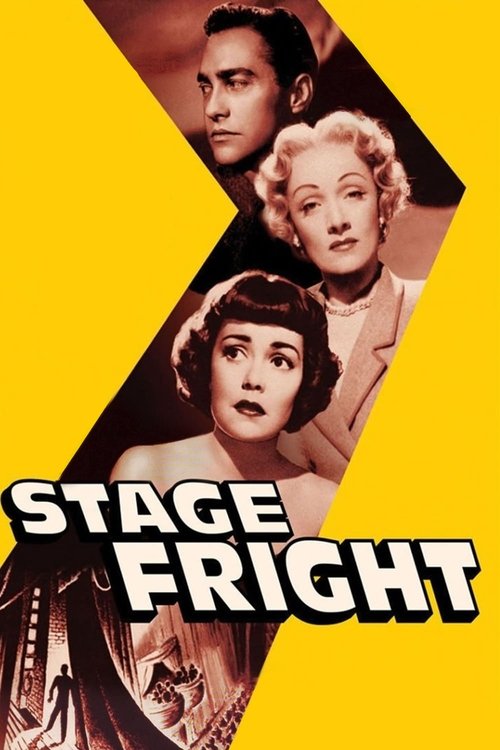
Wyman was now a top-billed star. She did two comedies, A Kiss in the Dark (1948) with David Niven and The Lady Takes a Sailor (1949) with Morgan, then made a thriller in England, Stage Fright (1950) for Alfred Hitchcock.
She played Laura in The Glass Menagerie (1950), and went to MGM for Three Guys Named Mike (1951), a popular comedy.
Frank Capra used her as Bing Crosby's leading lady in Here Comes the Groom (1951) at Paramount, then she had the lead role in RKO's The Blue Veil (1951), a melodrama that was a big box office hit and earned her an Oscar nomination.
Wyman was one of many stars in Warner Bros' Starlift (1951). She was the female lead in The Story of Will Rogers (1952) and Paramount reunited her and Crosby in Just for You (1952). Wyman expressed interest around this time of doing no more "weepy" roles.
1951–1953: Recording career
Jane Wyman's brief recording career with Decca Records extended between 1951 and 1953. She recorded a few solo tracks along with duets and novelty songs achieving three
Billboard top 30 hits and appearing on one #1 album.
Decca Albums
Selections from the Paramount Picture "Just for You" (1952): Bing Crosby, Jane Wyman, The Andrews Sisters, Jud Conlon's Rhythmaires and the Dave Barbour Orchestra
Studio cast recording of the music from the film Just for You (1952)
Danny Kaye sings Hans Christian Andersen (1952): Danny Kaye with Jane Wyman, Gordon Jenkins and his Chorus and Orchestra
This studio cast recording of the music from the film Hans Christian Andersen (1952) spent 17 weeks at #1 on the Billboard “Best Selling Popular Albums Chart” in 1953. Wyman is featured most prominently duetting with Kaye on the track "No Two People" and is also credited with contributing vocals to other tracks.
Decca Singles
"In the Cool, Cool, Cool of the Evening"/"Misto Cristofo Colombo" (1951): Bing Crosby and Jane Wyman with Matty Matlock's All Stars and the Four Hits and a Miss, from the film Here Comes the Groom (1951)
"In the Cool..." peaked at #11 on the Billboard charts. Hoagy Carmichael (music) and Johnny Mercer (lyrics) won the 1951 Academy Award for Best Original Song. Jane Wyman and Danny Kaye performed it at the 24th Academy Awards.
"How d'ye Do and Shake Hands"/"Black Strap Molasses" (1951): Danny Kaye, Jimmy Durante, Jane Wyman and Groucho Marx with the Sonny Burke Orchestra
1955–1967: Career in television
Wyman's television acting debut was the 1955 episode "Amelia" of the anthology series General Electric Theater produced by MCA Inc.'s Revue Studios and hosted by her former husband Ronald Reagan.
On August 30, 1955 just a year after Magnificent Obsession became Wyman's biggest hit and her first #1 film at the weekly box office her eponymous weekly television anthology series made its debut on NBC.
Wyman announced her first TV series The Jane Wyman Show (1955–58) in 1955. In its first season it was known as Jane Wyman Presents the Fireside Theatre then the Jane Wyman Theatre and finally The Jane Wyman Show. Wyman hosted every episode, acted in half, and was a producer.
When The Jane Wyman Show ended Wyman was no longer a film star, but she remained in demand. She replaced the ailing Gene Tierney in Holiday for Lovers (1959) for Fox, and next appeared in Disney's Pollyanna (1960) and Bon Voyage! (1962).
Wyman continued to guest star on TV shows like Checkmate, Bob Hope Presents the Chrysler Theatre, The Investigators, Wagon Train, and Insight.
"Something happened in the sixties," she later said. "it seemed that the time didn't permit women to be part of it except in a sort of secondary sort of way which I resented. I kept telling myself 'I didn't want to play Whatever Happened to Baby Jane." So she went into semi-retirement around 1962.
1968–1993: Brief retirement and career resurgence
Wyman focused on painting. She made the occasional acting appearance, mostly on television.
In 1966, Reginald Denham announced Wyman would appear in a play Wonderful Us based on the Parker–Hulme murder case but it was not produced.
She returned to films with How to Commit Marriage (1969).
Wyman continued to work in the 1970s, guest starring on My Three Sons; The Bold Ones: The New Doctors; The Sixth Sense; and Owen Marshall, Counselor at Law and her first film for television, The Failing of Raymond (1971). She starred in a pilot for a TV series Amanda Fallon but it was not picked up.
She was offered roles of "murderers, old ladies that were senile – they were awful. The weirdest kind of writing."
After five years of retirement living in Carmel painting and focusing on her philanthropic work she took her first acting role since 1974. She accepted a featured role in the television movie, The Incredible Journey of Doctor Meg Laurel (1979). She then guest starred on Charlie's Angels and The Love Boat.
In the spring of 1981, Wyman's career enjoyed a resurgence when she was cast as the scheming Californian vintner and matriarch Angela Channing in The Vintage Years, which was retooled as the primetime soap opera Falcon Crest. Wyman said she wanted to make it as it was a change from "the four handkerchief bits" she was known for. "You just can't miss on a thing like this," she added.
Then relatively unknown Lorenzo Lamas appeared as Angela's irresponsible grandson, Lance Cumson. The on- and off-screen chemistry between Wyman and Lamas helped fuel the series' success.
For her role as Angela Channing, Wyman was nominated for a Soap Opera Digest Award five times (for Outstanding Actress in a Leading Role and for Outstanding Villainess: Prime Time Serial), and was also nominated for a Golden Globe award in 1983 and 1984. She won in 1984 for Best Performance By an Actress in a TV Series. Later in the show's run, Wyman suffered several health problems. In 1986 abdominal surgery caused her to miss two episodes. She was plagued with fatigue during the 1988–1989 season, and her health continued to deteriorate. Later in 1989 she collapsed on the set and was hospitalized due to problems with diabetes and a liver ailment. Her doctors told her that she should end her acting career. Wyman was absent for most of the ninth and final season of Falcon Crest in 1989–1990.
Personal life
Marriages
Jane Wyman was married five times, to four men. Her last marriage to Fred Karger ended in 1965 and she never remarried.
At age 16, Wyman married salesman Ernest Eugene Wyman in Los Angeles, California, on April 8, 1933. She recorded her name as 'Jane Fulks', foster parents Emma and Richard Fulks, and her age as 19 on the wedding certificate. Though the couple divorced after just two years, she retained the name Wyman professionally for the rest of her life.
Wyman was 20 when she married dress manufacturer Myron Martin Futterman in New Orleans on June 29, 1937. She wanted children but he did not, and they separated after only three months. They were divorced on December 5, 1938.
In 1938, Wyman co-starred with Ronald Reagan in Brother Rat (1938). They were engaged at the Chicago Theatre, and married on January 26, 1940, at the Wee Kirk o' the Heather in Glendale, California. She and Reagan had two biological daughters, each born prematurely: Maureen in 1941, and Christine in 1947 (who died the following day). They adopted a son, Michael, in 1945.
In the aftermath of the premature birth and subsequent death of their infant daughter Christine on June 26, 1947, Wyman separated from Reagan. Wyman’s divorce from Reagan was granted on June 28, 1948 and finalized on July 18, 1949. Wyman leased a home in Palm Springs, California. Wyman, who was a registered Republican, said that their divorce was due to political differences; Ronald Reagan was still a Democrat at the time.
When Reagan was inaugurated as president on January 20, 1981, Wyman became the first ex-wife of a U.S. president in American history. Although she remained silent during Reagan's political career, she told a newspaper interviewer in 1968, after Reagan was elected governor of California in 1966, that her silence was not because she was bitter or because she did not agree with him politically:
I've always been a registered Republican. But it's bad taste to talk about former husbands and former wives, that's all. Also, I don't know a damn thing about politics.
Later life
After Falcon Crest ended, Wyman made a guest appearance on the CBS series Dr. Quinn, Medicine Woman and then completely retired from acting; she spent her retirement painting and entertaining friends. Wyman was a recluse and made only a few public appearances in her last years in part due to suffering from arthritis. Wyman also suffered from Type 1 diabetes from a very young age. She attended the funeral of her long-time friend Loretta Young in 2000. She attended her daughter's funeral in 2001 after Maureen died of melanoma, and Ronald Reagan's funeral in 2004.
Death
On September 10, 2007, Wyman died in her sleep of natural causes at her home in Rancho Mirage, California, at age 90. Her son Michael Reagan released a statement saying:
I have lost a loving mother, my children Cameron and Ashley have lost a loving grandmother, my wife Colleen has lost a loving friend she called Mom and Hollywood has lost the classiest lady to ever grace the silver screen.
Wyman was a devout Catholic for nearly 55 years. She was lay tertiary of the Dominican Order of the Catholic Church. As a lay Dominican, the full Dominican habit is available at death, if desired. Therefore, Wyman chose to be buried in the full habit of the Dominican Order. She is interred at Forest Lawn Mortuary and Memorial Park in Cathedral City, California.
Filmography
Box office ranking
For several years, film exhibitors voted Wyman as among the most popular stars in the country. Annual Top Ten Money Making Stars Poll rankings:
1949 – 25th (US), 6th (UK)
1952 – 15th (US)
1953 – 19th (US)
1954 – 9th (US)
1955 – 18th (US)
1956 – 23rd (US)
Top-Grossing Films
Between 1944 and 1962, Wyman was either a supporting or leading player in seven top-ten grossing films. Below are their rankings by year:
1944 - Hollywood Canteen - No. 8
1945 - The Lost Weekend - No. 8
1946 - The Yearling - No. 9
1946 - Night and Day - No. 7
1948 - Johnny Belinda - No. 4
1954 - Magnificent Obsession - No. 9
1962 - Bon Voyage! - No. 9
Awards and nominations
Jane Wyman's imprints were set in concrete in front of Grauman's Chinese Theatre on September 17, 1952.
Jane Wyman has two stars on the Hollywood Walk of Fame: one for motion pictures, at 6607 Hollywood Boulevard; and one for television, at 1620 Vine Street. Both from the inaugural placement of stars in 1960.