Overview
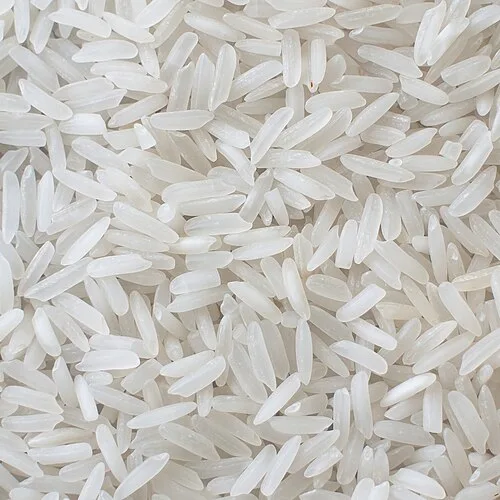
Jasmine rice is a long-grain variety of fragrant rice (also known as aromatic rice). Its fragrance, reminiscent of pandan (Pandanus amaryllifolius) and popcorn, results from the rice plant's natural production of aroma compounds, of which 2-acetyl-1-pyrroline is the most salient. A rapid loss of aromatic intensity leads many Southeast Asians and connoisseurs to prefer each year's freshly harvested "new crop" of jasmine rice. Jasmine rice is a variety of Oryza sativa.
Jasmine rice is grown primarily in Thailand (Thai hom mali or Thai fragrant rice), Cambodia (phka rumduol or Cambodian jasmine rice), Laos, and southern Vietnam. It is moist and soft in texture when cooked, with a slightly sweet flavor. The grains cling and are somewhat sticky when cooked, though less sticky than glutinous rice (Oryza sativa var. glutinosa), as it has less amylopectin. It is about three times stickier than American long-grain rice.
To harvest jasmine rice, the long stalks are cut and threshed. The rice can then be left in a hulled form called paddy rice, de-hulled to produce brown rice, or milled to remove the germ and some or all of the bran, producing white rice.
Origin
The origin of jasmine rice can be traced to Ban Laem Pradu in Phanat Nikhom District, Chonburi Province where the original Khao DawkMali rice was discovered. The rice sample, known as "Sample 105," was selected for its slender, jasmine-white long grain and natural fragrance similar to pandanus leaf and was brought to Bang Khla District, Chachoengsao Province in mid-1940s to early 1950s. Eventually, the rice was officially named Khao Dawk Mali 105, which is often shortened to "Khao Hom Mali" or simply "Hom Mali", and is now grown primarily in the Northeast region of Thailand, specifically in Thung Kula Rong Hai.
From Wikipedia (CC BY-SA 4.0).