Academic analysis
Jesus Christ Superstar is a passion narrative that follows most closely the Gospel of Mark's portrayal of the story. In addition to the introduction reflecting 1:4 of the Gospel of Mark in terms of foreshadowing the crucifixion, the screenplay encompasses many themes of Mark, such as "way (Greek: ὁδός, hodos)", "blindness of the disciples", "servanthood" and "thinking the things of God".
The film mostly focuses on the conflict of its characters, especially Jesus and Judas. The characterisation is either not based on the Gospels or formed from composite characters from various gospels; Judas, for example, is derived from both the Gospel of Matthew and Gospel of John's portrayals of him. Mary's character, on the other hand, is different from any scripture, "a mulatto whore who is a site of contest between two alpha males", wrote Clark-Soles.
Judas plays the role which Satan symbolically had in the Gospels, as an opposition to Jesus' mission. This is symbolized by Judas wearing red and Jesus wearing a light robe. Within the 1970s context of the film's release, Judas is a revolutionary who is part of a grassroots movement against "the man" of society, his pragmatism rendered in his worries about the movement getting carried away. However, he is confused, which opens the door for the priesthood to take advantage of his sympathy for the downtrodden.
Jesus also quarrels with the Apostles, who are portrayed as self-absorbed, only enjoying their association with a sacrificial figure like Jesus, as they sing at the last supper, "always hoped that I'd be an apostle / Knew that I would make it if I tried / Then when we retire we can write the gospels / So they'll still talk about us when we've died".
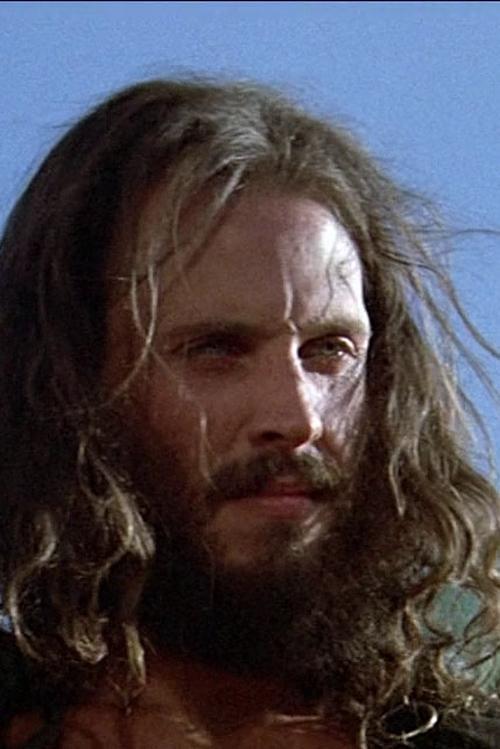
A highlight for critics and scholars is the human presentation of the biblical figures, particularly Jesus. Clark-Soles summarized: "[the film] helps us to imagine these people as real people, with mixed motives, bodies that sweat, yearn for sex, get sleepy after too much wine, and die". Jesus is seen as impatient, tortured, and irritated, lashing at the Apostles for being "so shallow, thick and slow" in one scene. In public meetings, he gives appreciative looks at the crowd; however, in one instance where the Romans enter in the middle of a dance sequence, Jesus' mood switches and sings, "Neither you Simon, nor the 50,000; nor the Romans, nor the Jews; nor Judas, nor the twelve, nor the priests, nor the scribes, nor doomed Jerusalem itself; understand what power is, understand what glory is, understand at all, understand at all". Following "The Temple" sequence, he encounters an overwhelming number of those needing to be healed, and is only able to heal a few of them. The turning point for Jesus is "Gethsemane", where he laments that he has become "sad and tired" after being "inspired" to form a movement, and lashes out at God: "Show me there's a reason for your wanting me to die […] Watch me die. See how I die."
Kim Paffenroth felt Judas and Mary had the most depth of all characters, even more than Jesus: "their songs are haunting or jarring, and their depictions are passionate, much more so even than the depiction of Jesus, who seems rather too passive, confused, and weak."
Jesus Christ Superstar is one of Jewison's many productions to have betrayal as a primary theme. Another major theme is religious authorities colluding with the government for greed. The Romans, focusing on keeping their state together, crucify Jesus after noticing his challenges to the political, economic and religious establishment, such as Jesus destroying modern paraphernalia sold at "The Temple".
Jesus Christ Superstar is different from other Jesus films in terms of its lack of fidelity to, as well as modernization of, the original Bible text in terms of costumes, staging and behavior. Jesus Christ Superstar has most of its characters reflect the hippie movement and youth culture of the 1960s and 1970s in terms of their dances and contemporaneous dresses, apart from the garb-wearing titular character. There is tension created in the film's implication that social issues prevalent in the era of Jesus are still important in the present. The opening depicts the cast riding a bus, with Arabic and Hebrew language on it alluding to the Six-Day War, and excitedly carrying the cross out of the bus. The market in "The Temple" has ancient goods such as birds and sheep sold alongside mirrors, weapons, grenades, guns, and drugs, as well as prostitutes performing modern dance moves in contemporary 70s dress.
Although interpreting biblical scripture to comment on contemporaneous political social issues is a common aspect of religious films, Jesus Christ Superstar is one of few to encompass several subjects at once. There is an anti-war and Vietnam War sentiment, with machine-gun-armed soldiers in military uniform, thieves trading grenades, machine guns and drugs, and Judas encountering tanks and fighter jets. The Israeli locations were interpreted by Paul V. M. Flesher and Robert Torry as referencing the Mideast conflict. The use of a black actor for Judas adds a civil rights movement component, most displayed in his suicide where he hangs himself with a rope on a tree, reminiscent of the lynchings associated with the era. Clark-Soles analyzed race as playing "a crucial, if ambiguous, role in the film", as a white actor and a black actor portray figures who, in the first century, were of the same Jewish race. In "Heaven On Their Minds", Judas asks Jesus, "Do you care for your race?"