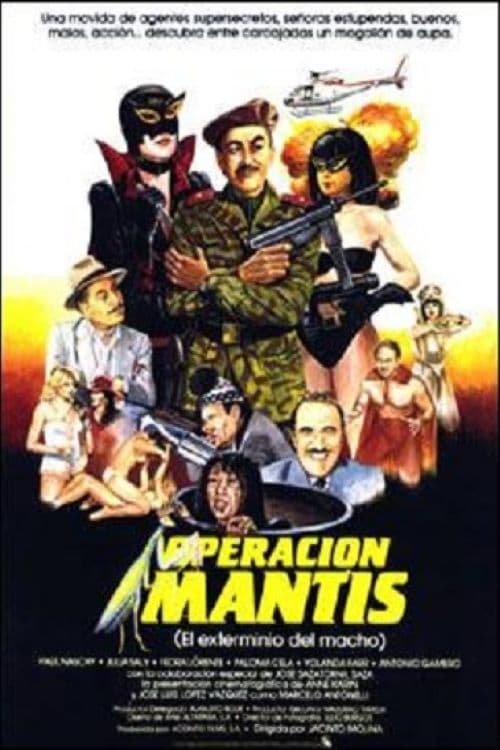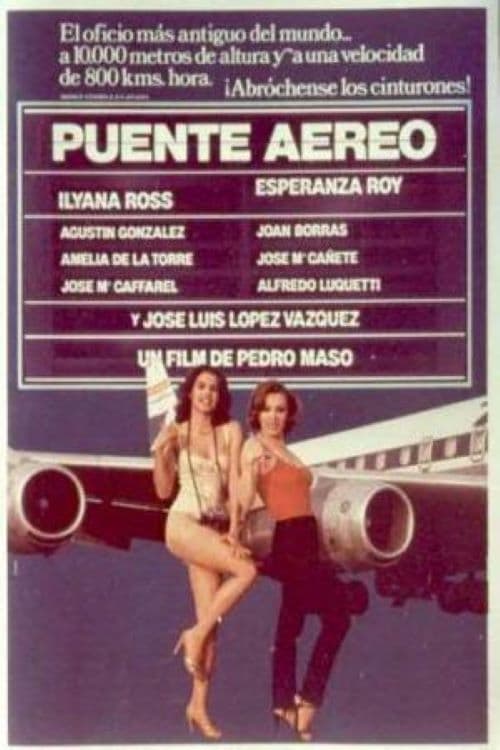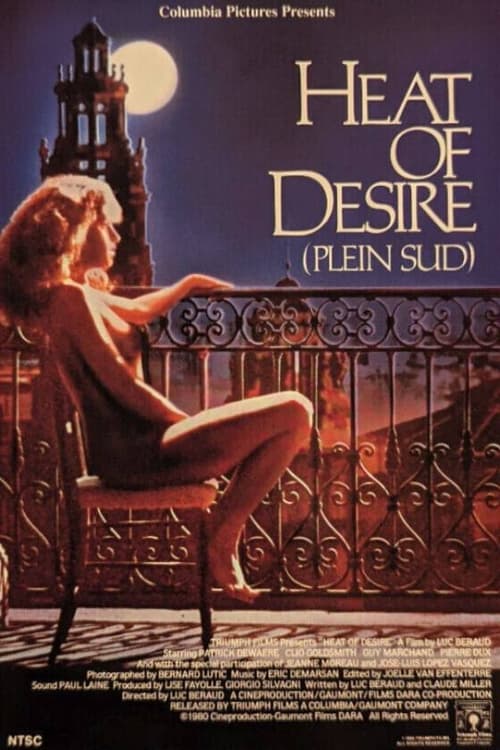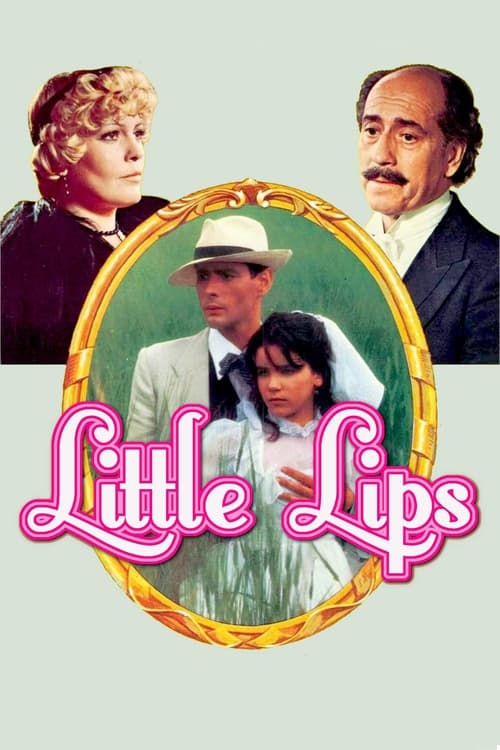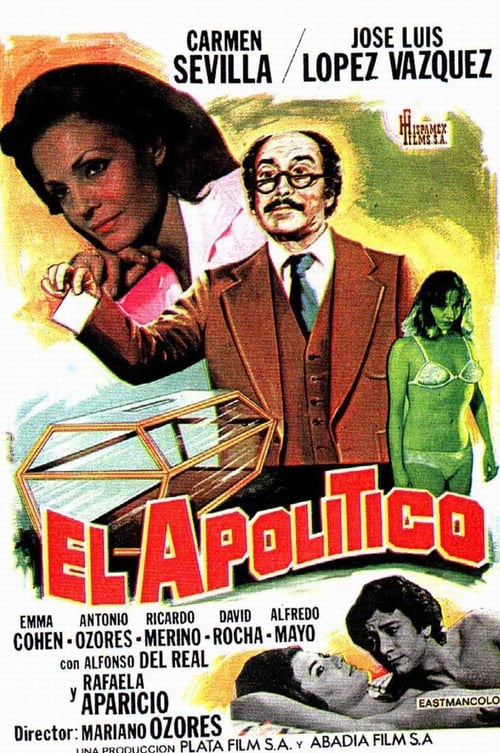




José Luis López Vázquez de la Torre (11 March 1922 – 2 November 2009) was a Spanish actor, comedian, costume designer, scenic designer, and assistant director whose career spanned nearly seven decades. He was one of the most prolific and successful actors in Spain in the 20th century, starring in 262 films between 1946 and 2007. Internationally he was best known for his lead role in the surrealist horror telefilm La cabina (1972).
Born in Madrid of working-class parents, López Vázquez began his career on theatre in 1939 as a costume designer and set decorator before making his breakthrough as an actor. In the mid-1940s he switched over to film, where he continued his work in costume designs while serving as an assistant director. Throughout the 1950s he mostly played bit parts in the Spanish film industry, however, his comedic talent soon allowed him to get bigger roles, cultivating an image as Spain's on-screen everyman in numerous comedies during the Franco era and beyond. Around the 1960s he also revealed his ability to play dramatic roles.
At one point in his career he became part of a distinctive Spanish art cinema led primarily by directors Luis García Berlanga, Juan Antonio Bardem, Carlos Saura and screenwriter Rafael Azcona. He played important roles in several films by Berlanga (Plácido, 1961, El Verdugo, 1963, La escopeta nacional, 1978, Patrimonio nacional, 1981, Nacional III, 1982) and Saura (Peppermint Frappé, 1967, The Garden of Delights, 1970, Cousin Angelica, 1974), which gained international attention. He won two consecutives Best Actor awards at the Chicago International Film Festival for The Ancines Woods in 1971 and My Dearest Senorita in 1972. He had the opportunity to occasionally collaborate with renowned foreign filmmakers such as Marco Ferreri (El Pisito, 1959, El Cochecito, 1960) and George Cukor (Travels with My Aunt, 1972).
He was the recipient of numerous accolades, including four CEC Awards, two Fotogramas de Plata, two Sant Jordi Awards, two New York Latin ACE Awards, an Antena de Oro, and a TP de Oro. He earned the Spike of Honour at the Valladolid International Film Festival in 1989, the Actors and Actresses Union Lifetime Achievement Award in 2000, the National Theatre Award in 2002, the Honorary Goya Award in 2004, and the CEC Honorary Award in 2005. The Government of Spain honoured him with the Gold Medal of Merit in the Fine Arts in 1985 and the Gold Medal of Merit in Labour in 1997.
Contents
Early life
José Luis López Vázquez was born in Madrid, Spain, on 11 March 1922. The only son of Margarita Vázquez de la Torre, a dressmaker, and Luis López, who worked as an official of the Ministry of Justice. In some biographies he appears as born on 12 March. "With the nerves of the event, my father forgot to register me and he did it the next day" he said. His father also forgot to give the official the name he chose for the baby. And he had to return to his brother José. The offices were already closed and they had to return a day later. He was registered with the nicknames of both. His parents separated when he was very young, causing them to go through difficulties and financial problems. As a teenager he was force to leave his studies and work as an administrative assistant and typist, a period that he began to overcome due to his ability in drawing and painting.
Career
Early artistic work
In 1939, at the age of 17, he became interested in theatre through the Youth Front and entered in the Universitary Spanish Theatre (TEU) directed by Modesto Higueras. There he outlined his vocation as a draughtsman thanks to the painter José Caballero, who had been part of the group La Barraca led by Federico García Lorca. He originally worked as a scenic designer for the sets of the Theatre of María Guerrero in times of Luis Escobar Kirkpatrick, as well as an assistant director to Pío Ballesteros and Enrique Herreros. The playwright and filmmaker José López Rubio had a decisive influence on his artistic side when he hired him as a costume designer for three films: It Happened in Damascus (1943), Eugenia de Montijo (1944) and Alhucemas (1948). Some of the theatrical productions for which he created costume designs in the 1940s and 1950s are Don Juan Tenorio, where he met Salvador Dalí in 1949, The Phantom Lady, The Village of Stepanchikovo, El caballero de Olmedo, La guardia cuidadosa, a drawing of Don Gil of the Green Breeches, and five sketches for the sets of Life Is a Dream, Y no subió a la cruz, and The Dog in the Manger.
Acting
In 1946, he made his film debut in Enrique Herreros' crime drama María Fernanda, la Jerezana. A few years later he began a long-time collaboration with director Luis García Berlanga, giving him a small role in the 1951 comedy That Happy Couple, co-directed by Juan Antonio Bardem. Shortly after, he made a part in Bardem's Felices Pascuas (1954), and Berlanga counted on him for two supporting roles in Boyfriend in Sight (1954), playing a nineteenth-century beach flirt, and Miracles of Thursday (1957), as a skeptical priest. He acted in many comedy films in these years, including Los tramposos (1959), directed by Pedro Lazaga, which showed the city of Madrid at the time and some of its most popular scams.
López Vázquez was given the chance to be appreciated abroad for the first time by the Italian director Marco Ferreri, with whom he shot his first starring role in El Pisito (1959), an anti-bourgeois black comedy based on a 1957 novel by screenwriter Rafael Azcona, which is centred on Rodolfo (López Vázquez), a timid, middle-class man who marries a crotchety, dying octogenarian to inherit her apartment and eventually marry his fiancee Petrita (Mary Carrillo). In addition he starred in the short film Se vende un tranvía, a social critique with an anti-clerical point that was co-written by Berlanga and Azcona. The following year he appeared in Ferreri's El Cochecito (1960), with Pepe Isbert in the lead role in a sardonic study of geriatric revolt. The film won the FIPRESCI Prize at the Venice Film Festival. All these films were oblique critiques of Franco's totalitarian regime.
In the early 1960s he worked on two Berlanga's savage satires: Plácido (1961), nominated to the Academy Award as Best Foreign Language Film in 1962, where López Vázquez shined in the role as Gabino Quintanilla, an event organizer without moral principles. His performance was acclaimed in the Sant Jordi Awards as Best Actor. And the classic Spanish film El Verdugo (The Executioner, 1963), playing an eccentric tailor who is brother of the main character (Nino Manfredi). He portrayed relevant comic roles such as the godfather in La gran familia (1962), and as Fernando Galindo, a bank clerk who plans a robbery of his own bank with the help of other employees in José María Forqué's comedy Atraco a las tres (Robbery at 3 o'clock, 1962). The character's quote "Fernando Galindo, un admirador, un amigo, un esclavo, un siervo" ("Fernando Galindo, an admirer, a friend, a slave, a servant") would become essential within Spanish culture. The movie co-starred the Spanish actress Gracita Morales, which he formed a popular partnership in such comedies as Pedro Lazaga's Sor Citroën (1967), and Mariano Ozores' Operation Mata Hari (1968). Together with Paco Martínez Soria he also stars in Lazaga's 1968 film El turismo es un gran invento, one of the most representative comedies of the construction boom in the 60s in Spain.
Personal life, death and legacy
In 1951 he was married with the actress Ana María Ventura, but the couple were unable to have offspring. He later get into an eighteen-year relationship with Katty Magerus although they could not marry due to the lack of divorce. They had two children, José Luis (b. 1962), and Virginia (b. 1965), who died in the United States in 1994. He also had two other daughters with the journalist Flor Aguilar, named Cayetana and Camino. In his latter years he had a relationship with the actress Carmen de la Maza. He amassed a great fortune due to his work in cinema and lived in a duplex of 400 square meters on Paseo de la Castellana of the Spanish capital.
López Vázquez died of natural causes in Madrid on 2 November 2009, at the age of 87. After his death, several tributes were paid to him, among them Álex de la Iglesia, president of the Spanish Film Academy, who said, "One of the greatest actors is gone, one of the legs of the table of great Spanish cinema along with Fernando Fernán Gómez and Pepe Isbert". The actor and filmmaker Santiago Segura stated that his death represents "the end of an era". His coffin was installed at the Theatre of María Guerrero, headquarters of the national theatre company Centro Dramático Nacional (CDN), which was attended by figures such as actresses Carmen Sevilla and Verónica Forqué, film director Pedro Almodóvar, the mayor of Madrid Alberto Ruiz-Gallardón, and the Prince and Princess of Asturias. He was later cremated in the Almudena Cemetery in Madrid.
In 2010, his biography was posthumously published under the title ¿Para qué te cuento?: biografía autorizada de José Luis López Vázquez, written by Luis Lorente, who claimed that López Vázquez "belongs to a generation of extraordinary actors who have no replacement". In the same year, the Cultural Centre José Luis López Vázquez was opened in the San Blas-Canillejas district in Madrid, and on 6 July, Correos, the Spanish postal service, issued a sheet of stamps in tribute to him as part of its Spanish cinema series.
In 2022 it was released the documentary José Luis López Vázquez: ¡Qué disparate!, directed by Roberto J. Oltra and sponsored by the actor's son, José Luis López Magerus, to commemorate his 100th birth anniversary, which explores the reasons for his success throughout his career. On 10 March, a silhouette was placed on the monument of La cabina installed in Madrid to remember his performance in the television film.
Selected filmography
Cinema
María Fernanda la Jerezana (1946)
That Happy Couple (1951)
The Devil Plays the Flute (1953)
Felices Pascuas (1954)
Boyfriend in Sight (1954)
An Andalusian Gentleman (1954)
Andalusia Express (1956)
Miracles of Thursday (1957)
Night and Dawn (1958)
Back to the Door (1959)
El pisito (1959)
Los tramposos (1959)
Se vende un tranvía (1959)
Heaven at Home (1960)
El Cochecito (1960)
Carnival Day (1960)
The Economically Handicapped (1960)
Three Ladies (1960)
Police Calling 091 (1960)
Plácido (1961)
Tres de la Cruz Roja (1961)
Atraco a las tres (1962)
La gran familia (1962)
You and Me Are Three (1962)
Accident 703 (1962)
Television
Palma y don Jaime (1960)
Tercero izquierda (1962–1963)
La cabina (1972)
Este señor de negro (1975–1976)
La forja de un rebelde (1990)
El Quijote de Miguel de Cervantes (1992)
Los ladrones van a la oficina (1993–1996)
Café con leche (1998)
La gran familia... 30 años después (1999)
El botones Sacarino (2000)
Cuéntame cómo pasó (2002)
Documentary
José Luis López Vázquez:¡Qué disparate! (2022)
Stage
1943: El casamiento engañoso
1947: El anticuario
1951: La dama boba
1953: Bobosse
1954: La otra orilla
1958: Buonanotte Bettina
1958: Kean
1960: Cartas credenciales
1964: Los Palomos
1967: Luv
1976: Equus
1982: ¡Vade Retro!
1985: Death of a Salesman
1987: El manifiesto
1991: Cena para dos
1996: Mariquilla Terremoto
1997: The Sunshine Boys
2000: Que viene mi marido
2001: La raya en el pelo de William Holden
2001: Caesar and Cleopatra
2004: Tres hombres y un destino
Accolades
Honours
Gold Medal of Merit in the Fine Arts (Kingdom of Spain, 19 June 1985)
Gold Medal of Merit in Labour (Kingdom of Spain, 19 December 1997)