Regions
The northeastern portion of the state, extending from the eastern border to Junction City and from the Nebraska border to south of Johnson County is home to more than 1.5 million people in the Kansas City (Kansas portion), Manhattan, Lawrence, and Topeka metropolitan areas. Overland Park, a young city incorporated in 1960, has the largest population and the largest land area in the county. It is home to Johnson County Community College.
Olathe is the county seat and home to Johnson County Executive Airport. The cities of Olathe, Shawnee, De Soto and Gardner have some of the state's fastest growing populations. The cities of Overland Park, Lenexa, Olathe, De Soto, and Gardner are also notable because they lie along the former route of the Santa Fe Trail. Among cities with at least one thousand residents, Mission Hills has the highest median income in the state.
Several institutions of higher education are located in Northeast Kansas including Baker University (the oldest university in the state, founded in 1858 and affiliated with the United Methodist Church) in Baldwin City, Benedictine College (sponsored by St. Benedict's Abbey and Mount St. Scholastica Monastery and formed from the merger of St. Benedict's College (1858) and Mount St. Scholastica College (1923)) in Atchison, MidAmerica Nazarene University in Olathe, Ottawa University in Ottawa and Overland Park, Kansas City Kansas Community College and KU Medical Center in Kansas City, and KU Edwards Campus in Overland Park. Less than an hour's drive to the west, Lawrence is home to the University of Kansas, the largest public university in the state, and Haskell Indian Nations University.
To the north, Kansas City, with the second-largest land area in the state, contains a number of diverse ethnic neighborhoods. Its attractions include the Kansas Speedway, Sporting Kansas City, Kansas City Monarchs, and The Legends at Village West retail and entertainment center. Nearby, Kansas's first settlement Bonner Springs is home to several national and regional attractions including the Providence Medical Center Amphitheater, the National Agricultural Center and Hall of Fame, and the annual Kansas City Renaissance Festival. Further up the Missouri River, the city of Lansing is the home of the state's first maximum-security prison. Historic Leavenworth, founded in 1854, was the first incorporated city in Kansas. North of the city, Fort Leavenworth is the oldest active Army post west of the Mississippi River. The city of Atchison was an early commercial center in the state and is well known as the birthplace of Amelia Earhart.
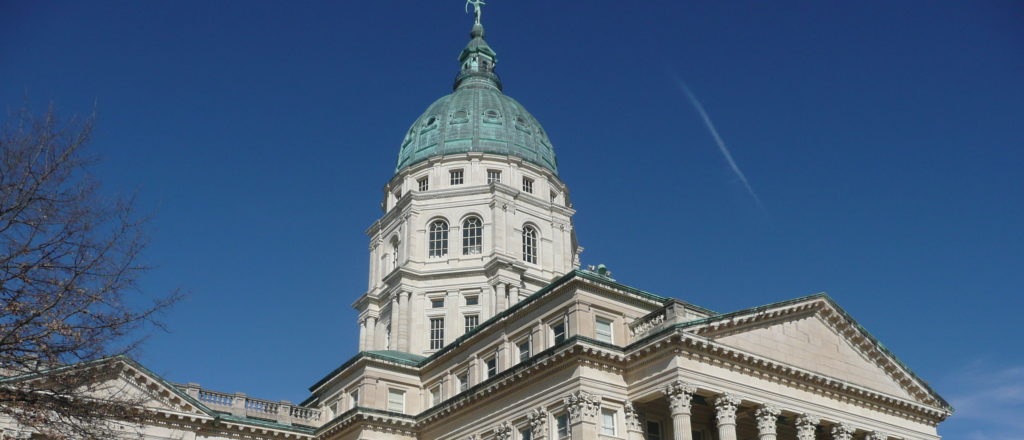
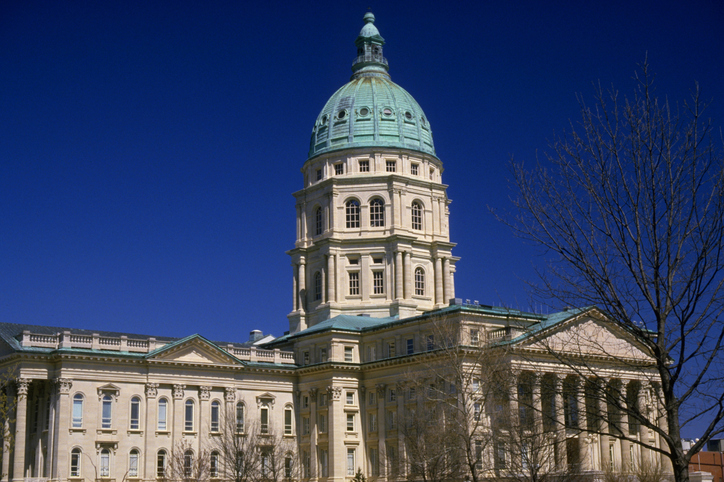
To the west, nearly a quarter million people reside in the Topeka metropolitan area. Topeka is the state capital and home to Washburn University and Washburn Institute of Technology. Built at a Kansas River crossing along the old Oregon Trail, this historic city has several nationally registered historic places. Further westward along Interstate 70 and the Kansas River is Junction City with its historic limestone and brick buildings and nearby Fort Riley, well known as the home to the U.S. Army's 1st Infantry Division (nicknamed "the Big Red One"). A short distance away, the city of Manhattan is home to Kansas State University, the second-largest public university in the state and the nation's oldest land-grant university, dating back to 1863. South of the campus, Aggieville dates back to 1889 and is the state's oldest shopping district of its kind.
In south-central Kansas, the Wichita metropolitan area is home to more than 600,000 people. Wichita is the largest city in the state in terms of both land area and population. 'The Air Capital' is a major manufacturing center for the aircraft industry and the home of Wichita State University. Before Wichita was 'The Air Capital' it was a Cowtown. With a number of nationally registered historic places, museums, and other entertainment destinations, it has a desire to become a cultural mecca in the Midwest. Wichita's population growth has grown by double digits and the surrounding suburbs are among the fastest growing cities in the state. The population of Goddard has grown by more than 11% per year since 2000. Other fast-growing cities include Andover, Maize, Park City, Derby, and Haysville.
Wichita was one of the first cities to add the city commissioner and city manager in their form of government. Wichita is also home of the nationally recognized Sedgwick County Zoo.
Up river (the Arkansas River) from Wichita is the city of Hutchinson. The city was built on one of the world's largest salt deposits (of what would form Strataca), and it has the world's largest and longest wheat elevator. It is also the home of Kansas Cosmosphere and Space Center, Prairie Dunes Country Club and the Kansas State Fair. North of Wichita along Interstate 135 is the city of Newton, the former western terminal of the Santa Fe Railroad and trailhead for the famed Chisholm Trail. To the southeast of Wichita are the cities of Winfield and Arkansas City with historic architecture and the Cherokee Strip Museum (in Ark City). The city of Udall was the site of the deadliest tornado in Kansas on May 25, 1955; it killed 80 people in and near the city.
Southeast Kansas has a unique history with a number of nationally registered historic places in this coal-mining region. Located in Crawford County (dubbed the Fried Chicken Capital of Kansas), Pittsburg is the largest city in the region and the home of Pittsburg State University. The neighboring city of Frontenac in 1888 was the site of the worst mine disaster in the state in which an underground explosion killed 47 miners. "Big Brutus" is located 1.5 miles (2.4 km) outside the city of West Mineral. Along with the restored fort, historic Fort Scott has a national cemetery designated by President Lincoln in 1862. The region also shares a Media market with Joplin, Missouri, a city in Southwest Missouri.
Salina is the largest city in central and north-central Kansas. South of Salina is the small city of Lindsborg with its numerous Dala horses. Much of the architecture and decor of this town has a distinctly Swedish style. To the east along Interstate 70, the historic city of Abilene was formerly a trailhead for the Chisholm Trail and was the boyhood home of President Dwight D. Eisenhower, and is the site of his Presidential Library and the tombs of the former president, First Lady and son who died in infancy. To the west is Lucas, the Grassroots Art Capital of Kansas.
Westward along the Interstate, the city of Russell, traditionally the beginning of sparsely populated northwest Kansas, was the base of former U.S. Senator Bob Dole and the boyhood home of U.S. Senator Arlen Specter. The city of Hays is home to Fort Hays State University and the Sternberg Museum of Natural History, and is the largest city in the northwest with a population of around 20,001.
Two other landmarks are located in smaller towns in Ellis County: the "Cathedral of the Plains" is located 10 miles (16 km) east of Hays in Victoria, and the boyhood home of Walter Chrysler is 15 miles (24 km) west of Hays in Ellis. West of Hays, population drops dramatically, even in areas along I-70, and only two towns containing populations of more than 4,000: Colby and Goodland, which are located 35 miles (56 km) apart along I-70.
Dodge City, famously known for the cattle drive days of the late 19th century, was built along the old Santa Fe Trail route. The city of Liberal is located along the southern Santa Fe Trail route. The first wind farm in the state was built east of Montezuma. Garden City has the Lee Richardson Zoo. In 1992, a short-lived secessionist movement advocated the secession of several counties in southwest Kansas.
Located midway between Kansas City, Topeka, and Wichita in the heart of the Bluestem Region of the Flint Hills, the city of Emporia has several nationally registered historic places and is the home of Emporia State University, well known for its Teachers College. It was also the home of newspaper man William Allen White.