Critical reception
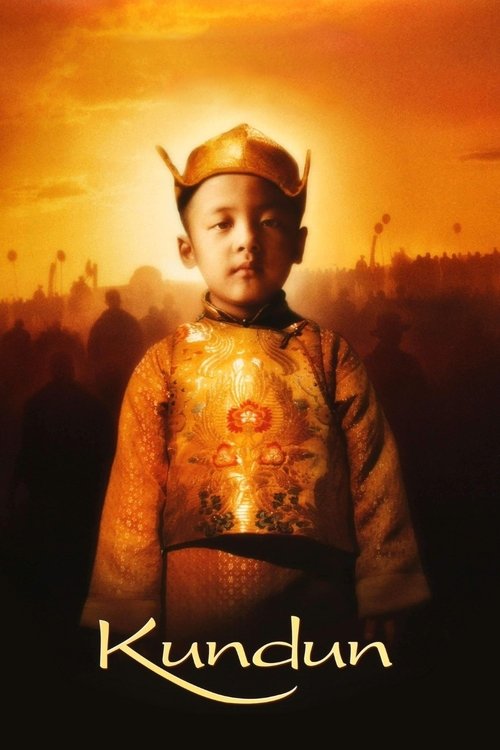
On the review aggregator website Rotten Tomatoes, 75% of 63 critics' reviews are positive, with an average rating of 7.3/10. The website's consensus reads: "Hallucinatory but lacking in characterization, Kundun is a young Dalai Lama portrait presented as a feast of sight and sound." Metacritic calculated an average score of 74 out of 100 based on 26 reviews, indicating "generally favorable" reviews.
Roger Ebert gave the film three stars out of four, saying it was "made of episodes, not a plot". Stephen Holden of The New York Times called the film "emotionally remote" while praising its look and its score: "The movie is a triumph for the cinematographer Roger Deakins, who has given it the look of an illuminated manuscript. As its imagery becomes more surreal and mystically abstract, Mr. Glass's ethereal electronic score, which suggests a Himalayan music of the spheres, gathers force and energy and the music and pictures achieve a sublime synergy." Richard Corliss praised the cinematography and score as well: "Aided by Roger Deakins' pristine camera work and the euphoric drone of Philip Glass's score, Scorsese devises a poem of textures and silences. Visions, nightmares and history blend in a tapestry as subtle as the Tibetans' gorgeous mandalas of sand." David Edelstein called the movie a hagiography whose "music ties together all the pretty pictures, gives the narrative some momentum, and helps to induce a kind of alert detachment, so that you're neither especially interested nor especially bored." Mark Swed, writing in the Los Angeles Times, also lauded the musical score, opining that "it sounds neither like typical movie music, nor is it actual Tibetan music, however much Tibetan elements color and shape the score. It sounds, unmistakably, like Glass."
Michael Wilmington of The Chicago Tribune gave the film four stars out of four, writing: "Hauntingly beautiful, raptly serious and vastly ambitious, Kundun is exactly the sort of movie that critics complain the major Hollywood studios never make -- and then tend to ignore or underrate when it finally appears."
Barry Norman at the BBC opined that Kundun was "beautifully and intelligently made, far more impressive, for instance, than the recent Seven Years in Tibet". As Kundun was released in the UK four months after its original release, Norman was able to probe Scorsese about the film's promotion. Writing about his interview with Scorsese, Norman said,
Yet it seems to be Scorsese, rather than the studio, who is doing most to promote the film. So I asked him "Did Disney back you up when it came out? Did they really put themselves behind it to try to sell it?" Now Scorsese is a decent and diplomatic man, who likes to be fair to everybody, but eventually he said: "I personally think that, unfortunately, they didn't push the picture." For fear of offending China? "Who knows?" he said. But, perhaps significantly, he also said: "The market China represents is enormous, not just for Disney but many other corporations around the world."