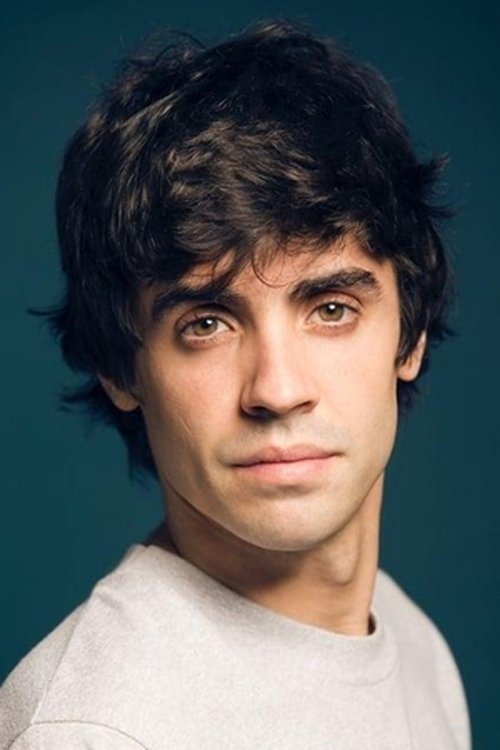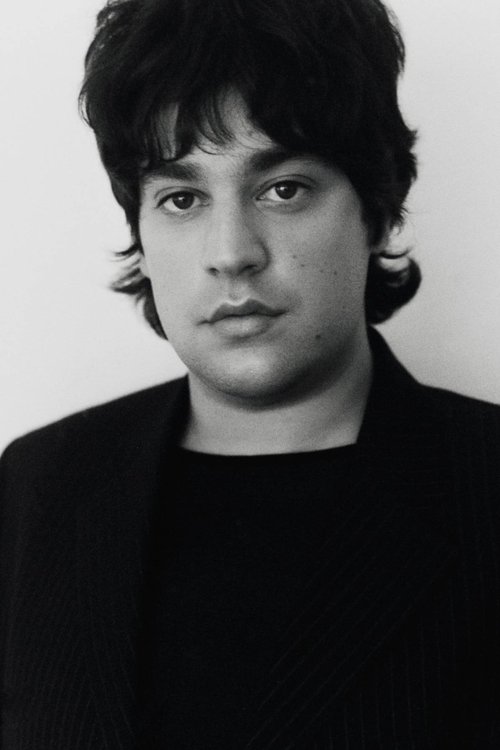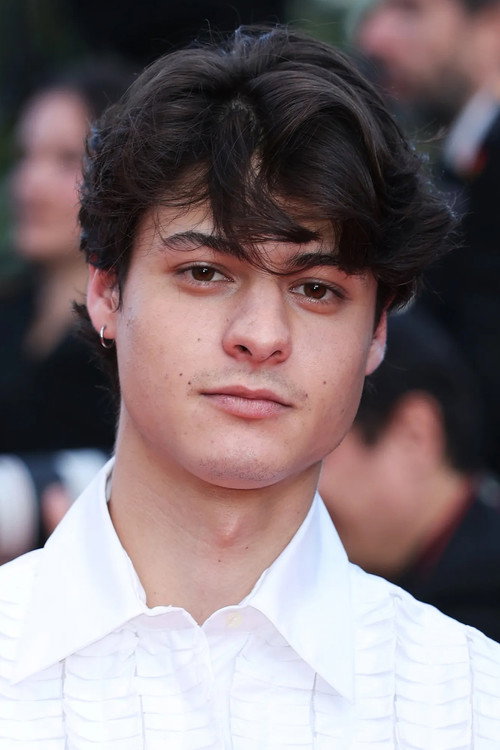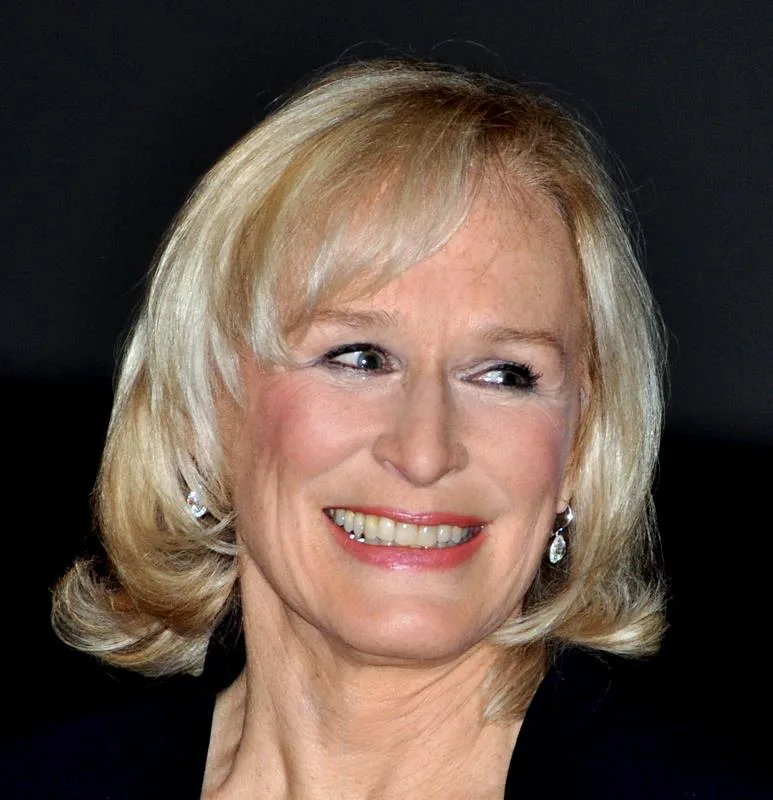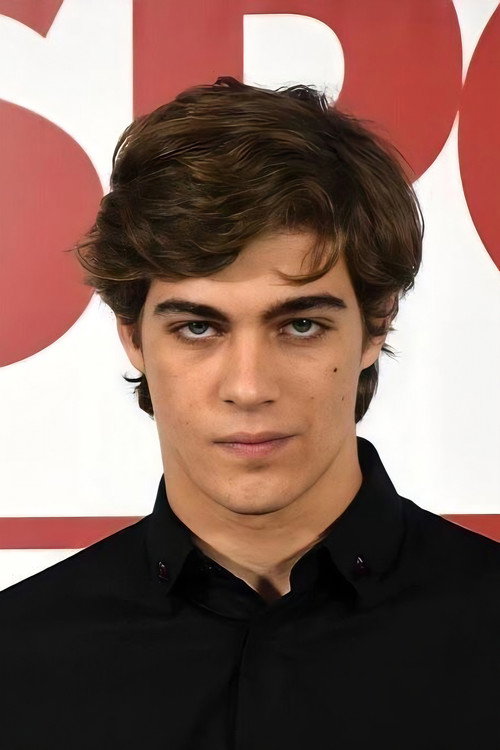




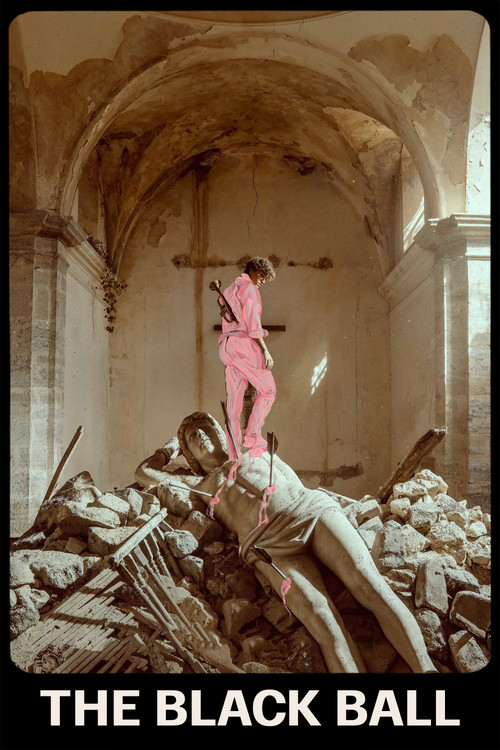
La bola negra, also known as The Black Ball, is a 2026 drama film directed by Javier Calvo and Javier Ambrossi, from a screenplay they co-wrote with Alberto Conejero. A queer epic inspired by the unfinished work of the same name by Federico García Lorca and Conejero's play La piedra oscura, its ensemble cast is led by Guitarricadelafuente, Miguel Bernardeau, Carlos González, Milo Quifes, Lola Dueñas, Penélope Cruz, and Glenn Close.
The film premiered in the main competition of the 79th Cannes Film Festival on 21 May 2026, earning Calvo and Ambrossi the Best Director Award. It is scheduled to be released theatrically in Spain on 25 September 2026 by Elastica and in France on 16 December 2026 by Le Pacte.
It was selected as the Spanish entry for Best International Feature Film at the 99th Academy Awards.
Contents
Premise
The plot is set in 1932, 1937, and 2017, exploring the interconnected lives of three gay men.
Production
Development
The plot is inspired by La bola negra, an unfinished novel of Federico García Lorca, who wrote four pages of the work before being murdered in 1936, with the title ('the black ball') alluding to the form of rejection to a young gay man when attempting to join a social club in Granada. It is also inspired by the play La piedra oscura by Alberto Conejero, which contributes mostly to the 1937 timeline featuring Sebastián and Rafael Rodríguez Rapún. The 2017 timeline taps to an extent from Conejero's life and, as per Conejero's statements, it is no coincidence that the leading character, a writer and playwright, is named Alberto and is writing a dissertation on Greek literature. While in the early stages of development, Los Javis declined to confirm whether García Lorca would appear as a character in the film.
Main cast members Guitarricadelafuente (in his acting debut), Carlos González, Miguel Bernardeau, Lola Dueñas, and Penélope Cruz were announced by Los Javis during the 2025 Cannes Film Festival. La bola negra is a Movistar Plus+ and Suma Content Films co-production with El Deseo and Le Pacte, and it had the participation of Atresmedia. Other cast members such as Milo Quifes (in his acting debut), Lorenzo Zurzolo, Albert Pla, Yenesi Suárez, Mona Martínez, Hugo Welzel, María Morales, Daniel Ibáñez and Nuria Mencía were announced while shooting was taking place.
Filming
On 26 August 2025, local media reported the beginning of filming in the abandoned village of Castil de Carrias, halfway between Belorado and Briviesca. Shooting also took place in Comillas, Cantabria (where a man working as an extra fell down some stairs on set and eventually died), Granada (Iglesia de Santa Ana, Carmen de los Mártires, Albaicín), and Sigüenza. The production had a budget of around €15 million.
Cinematographer Gris Jordana shot the movie on 35mm film. She used two Arricam LT cameras and Panavision Primo lenses. Roger Bellés was the art director and Ana López Cobos the costume designer. Alberto Gutiérrez edited the film.
Calvo and Ambrossi broke up their 13-year relationship during the shooting. According to sources consulted by El País, the separation was not going to disrupt ongoing and future professional projects by Los Javis, including the rest of this shooting.
Music
Lead actor Guitarricadelafuente performed (and co-wrote along with Raül Refree) the tune "La nieve", that features in a scene late in the film. Judeline (who also debuted as an actress in the film) performed a version of "Soldadito español" for the film's score. The trailer features an arrangement by Refree and Pablo Lluch reinterpreting Camarón de la Isla's "La leyenda del tiempo", which in turn sets to music a poem by García Lorca. María Terremoto provides vocals for a seguiriya.
Release
The film had its world premiere at the 79th Cannes Film Festival on 21 May 2026. For its Australian premiere, the film made it to the lineup of the 73rd Sydney Film Festival. For its Spanish premiere, it was programmed in the 'Perlak' slate of the 74th San Sebastián International Film Festival. For its Canadian premiere, it made it to the 'Special Presentations' slate of the 2026 Toronto International Film Festival. It was also programmed at the New Horizons Film Festival, the New Zealand International Film Festival, the 74th Melbourne International Film Festival, the 53rd Telluride Film Festival (for its North American premiere), the 39th Out on Film festival, the 28th Rio de Janeiro International Film Festival, the 39th Helsinki International Film Festival – Love & Anarchy, and the 70th BFI London Film Festival.
Goodfellas took over international sales. Elastica will handle theatrical distribution in Spain. The release in Spanish theatres was originally scheduled for 2 October 2026, but was later brought forward to 25 September 2026. Co-producer Le Pacte is scheduled to release the film in French theatres on 16 December 2026. Likewise, Altitude programmed a 6 November 2026 theatrical release in the United Kingdom and Ireland.
Also in Europe, Goodfellas closed distribution deals with Cinéart (for the Benelux), Filmcoopi (Switzerland), Pandora Film (Germany and Austria), Rosebud (Greece), Movies Inspired (Italy), Another World (Scandinavia), Nitrato Filmes (Portugal), Cinelibri (Bulgaria), MCF (former Yugoslavia), Mozinet (Hungary), Aero Films (Czechia), Independenta (Romania), A-One Films (the Baltic countries), and Gutek Film (Poland).
Shortly after its Cannes premiere, a bidding war ensued for U.S. distribution rights to the film, with A24, Netflix, Mubi, and Neon believed to be among the interested companies. Netflix ultimately won in a deal worth around $4–5 million, with a multi-week theatrical release obligation and plans for an awards campaign. Netflix subsequently set a 4-week theatrical window starting on 6 November 2026 before the film's U.S. streaming debut on 4 December 2026. It later announced that the theatrical release date (then also reported to involve the Canadian market in addition to the U.S.) would be moved up to 16 October 2026. Its streaming release date was also brought forward to 2 December, thus giving the film a 47-day theatrical window, the longest for a Netflix film, breaking Marriage Story's record.
Reception
Critical response
On the review aggregator website Rotten Tomatoes, 91% of 47 critics' reviews are positive, with an average rating of 8.4/10. Metacritic, which uses a weighted average, assigned the film a score of 86 out of 100, based on 13 critics, indicating "universal acclaim".
Elsa Fernández-Santos of El País deemed La bola negra to be "a moving and ambitious search of the Spanish queer identity", despite some excesses, otherwise featuring a stunning Penélope Cruz in a brilliant scene pumping up the troops.
Guy Lodge of Variety lamented that while the ambitious film "occasionally strikes a poetic note worthy of its historical muse, it more often plays as turgidly overblown melodrama".
Sophie Monks Kaufman of IndieWire gave the film an 'A' rating, wondering about the near impossibility of grasping "the structural effort required to fluidly create one perfectly coherent story using three narratives told across three timelines, each with a distinct visual identity".
Richard Lawson of The Hollywood Reporter underscored the film as "a dazzling mix of contemporary pop sensibility and classical filmmaking".
Daniel de Partearroyo of Cinemanía rated the film 3 out of 5 stars, lamenting that it "is overwhelmed by an ambition with no way out", adding that "the soil [the film] is turning over has already been worked extensively, and its plough is not sharp enough to cut any deeper".
Peter Bradshaw of The Guardian, rated the "rich and rewarding" movie 4 out of 5 stars, deeming it to be "handsomely produced, lovingly detailed and confidently constructed".
Mariona Borrull of Fotogramas rated the film 4 out of 5 stars, declaring it "a sweeping two-and-a-half-hour epic", while considering the third act to be "heavy-going or overly didactic, verging on the corny".
Lee Marshall of ScreenDaily described the film as a "stirring, timely reclamation of Spain's history and queer culture" but also as "a sprawling, undisciplined melodrama", otherwise being "more effective as an earnest, cumulative emotional journey than as a viewing experience".