LG Electronics Inc. (Korean: 엘지 전자; RR: Elji Jeonja) is a South Korean multinational major appliance and consumer electronics corporation headquartered in Yeouido-dong, Seoul, South Korea. LG Electronics is a part of LG Corporation, the fourth largest chaebol in South Korea, and often considered as the pinnacle of LG Corp with the group's chemical and battery division LG Chem. It comprises four business units: Home Appliance Solution (HS), Media Entertainment Solution (MS), Vehicle Solution (VS), and Eco Solution (ES).
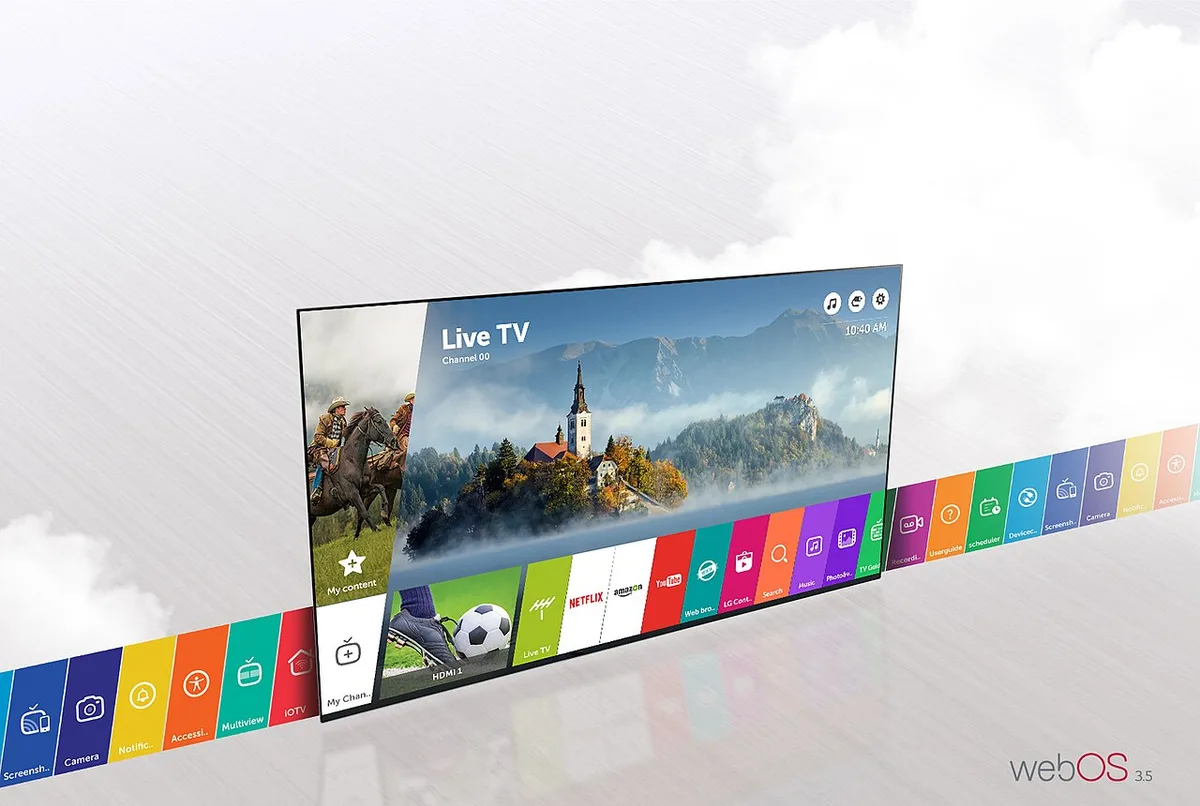
LG Electronics' product portfolio includes televisions and audio products, home appliances such as refrigerators, dishwashers, microwaves, washing machines, tumble dryers and air conditioners, as well as commercial and industrial products. The company is associated with technologies such as OLED television displays, the webOS smart TV platform, and the LG ThinQ smart home ecosystem.
LG Electronics acquired Zenith in 1995 and is the largest shareholder of LG Display, the world's largest display company by revenue in 2020. LG Electronics is also the world's second largest television manufacturer behind Samsung Electronics. The company has 128 operations worldwide, employing 83,000 people.
Contents
History
1958–1977: Foundation and domestic expansion
In 1958, LG Electronics was founded as GoldStar (Korean: 금성). It was established in the aftermath of the Korean War to provide the rebuilding nation with domestically produced consumer electronics and home appliances. The start of the country's national broadcasting that created a booming electronics market and a close relationship it quickly forged with Hitachi helped GoldStar to produce South Korea's first radios, televisions, refrigerators, washing machines, and air conditioners. GoldStar was the electronics division of Lak-Hui (pronounced "Lucky") Chemical Industrial Corp. which is now LG Chem and LG Household & Health Care. GoldStar merged with Lucky Chemical and GoldStar Cable on 28 February 1995, changing the corporate name to Lucky-Goldstar and then finally to LG Electronics. Goldstar first went public in 1970; by 1976, it was producing one million televisions annually.
1978–1999: Global expansion and brand transformation
In 1978, the company also surpassed US$100 million in exports. In 1982, Goldstar opened its first overseas factory, which was based in Huntsville, Alabama. In 1994, GoldStar officially adopted the LG Electronics brand and a new corporate logo. In 1995, LG Electronics acquired the US-based TV manufacturer Zenith and absorbed it four years later. Also in that year, LG Electronics made the world's first CDMA digital mobile handsets and supplied Ameritech and GTE in the US, the LGC-330W digital cellular phone. The company was also awarded UL certification in the US. In 1998, LG developed the world's first 60-inch plasma TV and established a joint venture in 1999 with Philips – LG.Philips LCD – which now goes by the name LG Display. In 1999, LG Semiconductor merged with Hynix.
2000–2010: Digital electronics and display
LG Electronics had operated LGE.com in 2000. In order to create a holding company, the former LG Electronics was split off in 2002, with the "new" LG Electronics being spun off and the "old" LG Electronics changing its name to LG EI. It was then merged with and into LG CI in 2003 (the legal successor of the former LG Chem), so the company that started as GoldStar does not exist.
In 2004, LG.Philips LCD completed an initial public offering and was listed on the New York Stock Exchange and the Korea Exchange; it was later renamed LG Display. By 2005, LG was a Top 100 global brand and recorded a brand growth of 14% in 2006. As of 2009, its display manufacturing affiliate, LG Display, was the world's largest LCD panel manufacturer. LG Electronics has since continued to develop various electronic products, such as releasing the world's first 84-inch ultra-HD TV for retail sale.
2010–2019: Smart devices and premium technology
In 2010 Ericsson acquired Nortel's controlling stake in LG-Nortel, a joint venture with LG Electronics, and the company was later renamed LG-Ericsson. In 2011, LG released the LG Optimus 2X, which Guinness World Records recognized as the first mobile phone to use a dual-core processor.
On 5 December 2012, the antitrust regulators of the European Union fined LG Electronics and five other major companies (Samsung, Thomson since 2022 known as Vantiva, Matsushita which today is Panasonic Corp, Philips and Toshiba) for fixing prices of TV cathode-ray tubes in two cartels lasting nearly a decade.
LG Electronics plays a large role in the global consumer electronics industry; it was the second-largest LCD TV manufacturer worldwide as of 2013. In 2013, LG established its Vehicle component business, marking a formal expansion into automotive electronics.
On 11 June 2015, LG Electronics found itself in the midst of a human rights controversy when The Guardian published an article by Rosa Moreno, a former employee of an LG television assembly factory. Moreno was offered $3800 in compensation after losing both hands in an industrial accident while working for a subcontrator making parts for LG-branded flatscreen televisions.
At the end of 2016, LG Electronics merged its German branch (situated in Ratingen) and European headquarter (situated in London) together in Eschborn, a suburb of Frankfurt am Main. In March 2017, LG Electronics was sued for its handling of hardware failures with recent smartphones such as the LG G4.
Koo Bon-joon, who was the CEO and the current vice chairman of LG Electronics, was replaced by his nephew Koo Kwang-mo in July 2018 as CEO and vice chairman. The move came after the succession of Koo Kwang-mo as the chairman of the parent company LG Corporation who succeeded his adoptive father and uncle Koo Bon-moo after Bon-moo died of a brain tumor on 20 May 2018.
LG announced in November 2018 that Hwang Jeong-hwan, who took the job as president of LG Mobile Communications in October 2017, will be replaced by Brian Kwon, who is head of LG's hugely profitable home entertainment business, from the 1st of December 2018. In 2018, LG Electronics acquired a 70 percent stake in Austrian automotive lighting company ZKW Group, while LG Corp. acquired the remaining 30 percent. Also in 2018, LG decided to stop smartphone production in South Korea to move production to Vietnam, in order to stay competitive. LG said Vietnam provides an "abundant labor force" and that 750 workers at its South Korean handset factory would be relocated to its home appliance plant.
2020–present: Business restructuring and expansion
In 2020, LG Electronics ranked fourth among global applicants under the Patent Cooperation Treaty system, according to the World Intellectual Property Organization. In the same year, LG began selling its rollable OLED television in South Korea.
On 5 April 2021, LG announced its withdrawal from the phone manufacturing industry after continuous loss in the market. In 2020, LG faced a loss of 5 trillion won (US$4.4 billion).In July 2021, LG Electronics formed LG Magna e-Powertrain, a joint venture with Magna International focused on electric vehicle powertrain components, including motors, inverters and onboard chargers.
In June 2021, the YouTube channel Hardware Unboxed published a video alleging an attempt by a representative of LG to manipulate the review of one of LG's gaming monitors. The representative, in an email shown in the video, attempts to influence the editorial outcome of the review by indicating testing methods and aspects of the display to be followed by the channel. This came a few months after a similar incident between the creators and Nvidia in which Nvidia warned them that if they continue emphasizing on rasterization rather than ray tracing in Nvidia's graphics cards, they would no longer receive review samples. Hardware Unboxed later stated that LG Electronics had contacted the channel and would change how it handled monitor reviews.
As of 1 December 2021, the Chief Strategy Officer William Cho will take over for Bong-seok Kwon as the CEO of LG Electronics. In June 2022, LG acquired AppleMango, a South Korean EV charger manufacturer with a 60% purchase of the company's stocks The acquisition marked LG's entry into the electric vehicle charging business. In that same month, the American publication Consumer Reports rated LG home appliances as the most reliable in the U.S. consumer market. In 2022 and 2023, two LG Electronics home appliance manufacturing facilities, LG Smart Park in Changwon, South Korea, and its plant in Tennessee, United States, were selected by the World Economic Forum as Lighthouse Factories. In April 2024, a security firm discovered security bugs in tens of thousands of LG smart TV models that could "let hackers hijack them". The vulnerability particularly affects smart TVs running LG's WebOS operating system from version 4 to version 7. The vulnerabilities had been reported to LG in November 2023, and LG released patches for the affected models on 22 March 2024, before the research was publicly disclosed.
Corporate governance
COVID-19 response
On 25 December 2021, LG Electronics launched a video campaign showing some of the initiatives the company has taken in India during the COVID-19 pandemic. The video shows how the company has handled the pandemic from the beginning by encouraging good hygiene practices to include social distancing, hand-washing, mask wearing, and using hand sanitizers.
In a strategy to cope with demand for contactless shopping during the COVID-19 pandemic, LG Electronics opened a number of unmanned stores that allowed for customers to authenticate themselves at the main entrance, check product information, and purchase products using a mobile phone or QR code. The company operates nine unmanned stores and this will increase to 30 by the end of June 2022. These locations are only available in South Korea.
United States headquarters
In 2013, LG Electronics USA proposed building a new headquarters in the borough of Englewood Cliffs in Bergen County, New Jersey, including a 143 ft (44 m) tall building that would stand taller than the tree line of the Hudson Palisades, a US National Natural Landmark. The company proposed to build an environmentally friendly facility in Englewood Cliffs, incidental to Bergen County's per-capita leading Korean American population, having received an initially favorable legal decision concerning building height issues. The plan, while approved by the local government, met with resistance from the segments of the general public as well as government officials in New Jersey and adjacent New York. The initial court decision upholding the local government approval was overturned by a New Jersey appellate court in 2015 and LG subsequently submitted a revised, scaled-down, 64-foot building for approval by the borough of Englewood Cliffs in 2016. LG broke ground on the new US$300 million Englewood Cliffs headquarters on 7 February 2017, to be completed in late 2019.
Products
LG Electronics products include televisions including hospitality televisions for hotels and commercial industrials, home theater systems, home audio, portable audio and headphones, refrigerators, washing machines, computer monitors, wearable devices, vehicle components including IVI, EV components, and lighting systems, air conditioning and HVAC products, smart appliances and formerly smartphones and solar panels.
Home appliances
LG manufactures home appliances including refrigerators, Dishwasher, Water purifier, washing machines, tumble dryers, garment steamers, vacuum cleaners, air conditioners and microwave ovens. In June 2014, LG Electronics announced the launch of its smart appliances with HomeChat messaging service in South Korea. HomeChat employs LINE, the mobile messenger app from Korean company 'Naver', to let homeowners communicate, control, monitor and share content with LG's smart appliances. Users can send simple messages, such as "start washing cycle," in order to control their washing machines.
In December 2021, LG Electronics announced they were testing an ecologically friendly washing machine that uses liquid carbon dioxide as a cleaner. The company will be conducting a two-year test prove the safety with a goal of having commercial CO2 washers in shopping mall laundries. This new process creates no wastewater and will exhaust gas.
GoldStar, the predecessor of LG Electronics, produced the WP-181 washing machine in 1969, which South Korea's Cultural Heritage Administration lists as the first washing machine made in Korea.
In 1998, LG introduced its inverter direct drive motor for washing machines, a design in which the motor is connected directly to the washing tub rather than using a belt or pulley. This made them the first company to successfully mass-market the technology globally in front-loading machines.
In 2015, LG introduced the TWINWash system, the world's first washing system combining a drum washer with a secondary mini washer.
In 2017, LG announced plans to build a washing machine factory in Clarksville, Tennessee, described by the Tennessee Department of Economic and Community Development as LG's first washing machine manufacturing operation in the United States. The plant opened in 2019 and produced its one millionth washing machine in 2020. In 2023, the Clarksville facility was selected by the World Economic Forum as a Lighthouse Factory.
The WashTower, a vertically stacked washer–dryer introduced in 2020, and the WashCombo, a single-drum washer–dryer introduced in 2024, were each the first of their kind in the South Korean market.
Televisions
LG has been a television manufacturer since the early development of South Korea's consumer electronics industry. Under its former brand GoldStar, the company produced South Korea's first domestically manufactured black-and-white television in 1966. The company later expanded into color television, large-screen displays, and digital broadcasting technologies.
In 2004, LG introduced a 55-inch Full HD LCD television, which at the time was among the largest television displays available. In the same year, the company also unveiled a 71-inch Full HD plasma display television. LG Electronics introduced its first Internet TV in 2007, originally branded as "Net Cast Entertainment Access" devices. The LG SL9000 was one of several new Borderless HDTV's advertised for release at IFA Berlin in 2009. They later renamed the 2011 Internet televisions to "LG Smart TV" when more interactive television features were added, that enable the audience to receive information from the Internet while watching conventional TV programming along with the world's first 84-inch Ultra HD TV
In November 2013, a blogger discovered that some of LG's smart TVs silently collect filenames from attached USB storage devices and program viewing data, and transmit the information to LG's servers and LG-affiliated servers. Shortly after this blog entry went live, LG disabled playback on its site of the video, explaining how its viewer analytics work, and closed the Brightcove account the video was hosted on.
In 2016, exclusively to India, Indian arm of South Korea's LG Electronics Inc started selling a TV that would repel mosquitoes. It uses ultrasonic waves that are silent to humans but cause mosquitoes to fly away. It was released on 16 June 2016. The technology was also used in air conditioners and washing machines. The TV is aimed for lower-income consumers living in conditions that would make them susceptible to mosquitoes.
In 2018, it was reported that LG was planning to sell big-screen televisions that could be rolled up and retract automatically with the push of a button come 2019.
LG Electronics launched the world's first 55-inch OLED TV in 2013 and 65-inch and 77-inch sizes in 2014. With these launches, LG became the first company to mass-produce large sized OLED TV panels. In August 2018 at IFA in Berlin, LG exhibited the first 8K OLED television. In October 2020, LG launched the first rollable OLED television available for commercial purchase.
Audio
Since December 2017, LG has co-developed its soundbars with British high-end audio manufacturer Meridian Audio, whose digital signal processing technologies are integrated into the company's premium models. In 2025, LG Electronics and musician will.i.am produced the xboom line of portable Bluetooth speakers and wireless earbuds.
At CES 2026, LG Electronics introduced LG Sound Suite, a Wi-Fi-based modular home audio system. Unveiled through a joint announcement by Dolby Laboratories and LG Electronics, it is documented as the world's first soundbar-based audio system to feature Dolby Atmos FlexConnect, a technology that detects the positions of compatible wireless speakers to optimize audio for asymmetric room layouts. Designed as a highly scalable and modular ecosystem, it offers more than 50 customizable hardware configurations, allowing users to expand their setup by integrating various wireless speakers and subwoofers according to their preferences. The system's flagship H7 soundbar supports LG's Sound Follow feature, which utilizes ultra-wideband (UWB) positioning to dynamically adjust the sound based on the location of the listener.
Computing
In 2016, the company introduced the UltraFine 5K display with Thunderbolt 3, which it described as the world's first 5K display with Thunderbolt 3. In 2019, LG announced what it described as the world's first one-millisecond IPS gaming monitor under its UltraGear brand. At CES 2025, LG announced the UltraGear GX9 series, including what it described as the world's first 5K2K bendable gaming monitor; This series won three CES 2025 awards. In 2022, LG monitor models have also received design recognition. Red Dot has listed awards for products including the DualUp Monitor Ergo.
LG released the UltraFine evo 6K, a 32-inch monitor with a 6,144 × 3,456 IPS Black panel at 224 pixels per inch. It was described as the first 6K monitor to launch with Thunderbolt 5, which carries video, data and up to 96 W of power over a single cable.
Ahead of CES 2026, LG introduced UltraGear evo, a premium line within its existing UltraGear gaming monitor sub-brand. The 39-inch GX9 (39GX950B) uses a curved 5,120 × 2,160 OLED panel and was described by LG as the first 39-inch 5K2K OLED gaming monitor. The 27-inch GM9 (27GM950B) pairs a 5,120 × 2,880 panel with a 2,304-zone backlight that LG markets as Hyper Mini LED. It is rated at 1,250 nits of peak brightness and certified to VESA DisplayHDR 1000.
LG Electronics produces the LG gram, a line of laptop computers first released in South Korea in 2014 and expanded to international markets in 2015. The line focuses on minimizing weight, with some configurations weighing as little as 980 grams. It has expanded to include standard clamshell, convertible 2-in-1, and ultraslim configurations. In 2019, the gram line received three Guinness World Records for the lightest laptop in its screen-size category.
Beginning with its 2026 lineup, LG introduced Aerominum, an aluminium-magnesium alloy developed by the company, which LG said reduced weight while improving structural strength and scratch resistance.
Heating and cooling
LG Electronics has developed heating and cooling systems since the late 20th century. Its portfolio includes air conditioners, heat pumps, chillers, and building energy management systems for residential, commercial, and industrial applications.
LG's air conditioning business dates to 1968, when its predecessor GoldStar introduced the GA-111, described as the first domestically produced air conditioner in South Korea.
In 1979, LG introduced the GA-100SP, described as South Korea's first wall-mounted air conditioner.
LG produces air-to-water heat pump systems for residential applications under the Therma V name. The company also produces heat pump chillers for commercial applications. The company entered the commercial chiller market in 2011 through the acquisition of a chiller business from LS Mtron, a South Korean industrial manufacturer. In June 2025, LG agreed to acquire OSO, a Norway-based water heating manufacturer founded in 1932, with production facilities in Norway and Sweden.
LG produces variable refrigerant flow (VRF) systems for commercial buildings under the Multi V brand name, first introduced in 2006. The company also produces large-scale chillers for commercial and industrial buildings, entering the chiller market in 2011 through the acquisition of a chiller business from LS Mtron, a South Korean industrial manufacturer. In 2017, LG began mass production of large-scale chillers using oil-free magnetic bearing compressor technology. In 2023, LG Electronics had received the Air-Conditioning, Heating and Refrigeration Institute (AHRI) Performance Award for the sixth consecutive year, across multiple product categories including VRF systems and chillers. By late 2024, LG ranked fifth in the global large-scale chiller market. In December 2024, LG partnered with South Korea's Ministry of Trade, Industry and Energy to expand exports of its chiller systems for data centers.
Mobility
The company launched a vehicle component division in 2013 and expanded it to cover in-vehicle infotainment (IVI) technologies, including audio, video and navigation, displays, telematics, and Advanced Driver Assistance Systems (ADAS) vision systems, as well as EV powertrain solutions.
LG expanded its mobility component business in the 2010s through electric vehicle and lighting-related projects. In 2015, LG developed in-vehicle experience solutions for General Motors’ Chevrolet Bolt EV, investing more than $250 million in an engineering and manufacturing facility in Incheon for the project. In 2018, LG acquired ZKW Group, an Austrian automotive lighting company, for about $1.3 billion. ZKW's customers include European automakers such as Volkswagen, Audi, BMW, Porsche and Mercedes-Benz.
The company later expanded into electric vehicle powertrain components. In July 2021, LG and Canadian automotive supplier Magna International established LG Magna e-Powertrain, a joint venture manufacturing e-drive systems including e-motors, inverters, onboard chargers, and integrated power generation modules. Magna held a 49 percent stake in the venture, valued at approximately USD 1 billion, with LG retaining the remaining 51 percent. That same year, LG acquired Cybellum to enhance its cybersecurity capabilities in response to rapid electrification trends in the automotive market.
In 2021, LG developed an Android Automotive-based in-vehicle infotainment system with Renault, which debuted in the Renault Mégane E-Tech Electric. In 2023, Hyundai Motor Group and LG announced—as part of their software-defined vehicle (SDV) solutions— the integration of LG’s webOS for Automotive Content Platform (ACP) in Genesis vehicles.
Additionally, LG manufactures advanced mobility solutions for numerous global automakers, including Volkswagen, Renault, Jaguar, Land Rover, General Motors, Toyota, and Hyundai. The company also produces teardrop trailers and supplies displays for various other vehicle manufacturers.
In-Vehicle Infotainment (IVI) systems are a core component of the digital cockpit, delivering integrated driving information and entertainment features to both drivers and passengers. LG Electronics has described the automobile as a "Living Space on Wheels" and develops IVI systems based on its experience in customer experience (CX) technologies.
Mobile devices
In April 2021, LG officially confirmed that it will shut down its mobile division. Earlier, there had been rumours that LG considered selling its mobile division with Vingroup and Volkswagen named as potential buyers.
Other than mobile phones, LG Electronics have also made tablet computers like the LG G series complementing the mobile phones. LG also makes laptop computers in the LG Gram line, and previously under the Xnote line (see List of LG laptops).
LG Electronics used to manufacture mobile phones from 1995 to 2021, selling to the domestic market only (as Cyon) until 2000 where it was in the shadow of Samsung Anycall. LG released its first GSM network phones during 2001 although had also marketed CDMA phones before then in the U.S. LG made its breakthrough during the mid and late 2000s: it launched its highly popular LG Chocolate in worldwide in 2006 which popularised touch-sensitivity. The following year it released the world's first capacitive touchscreen phone LG Prada, and Shine, cementing its focus on design: its phones during this era have led to LG being called alongside Apple as one of the pioneers of the rise of touchscreens. By 2008 LG had entered the top 3 worldwide leaders in mobile phones.
There was further success with the Cookie which helped to bring touchscreens to the budget market, and with the Lollipop flip phone that became very popular in South Korea. However the company had trouble with competing in smartphones. In 2010, LG released the Optimus smartphone, which would span into a series. The following year saw the release of the LG Optimus 3D, the world's first mobile phone with glasses-free 3D display, and LG Optimus 2X, the first with a dual-core processor. In 2012 LG worked with Google to build the Nexus 4 smartphone.
Other than the G3, LG officially unveiled the curved smartphone, LG G Flex, on 27 October 2013. At Consumer Electronics Show in January 2014, LG announced a US release for the G2 across several major carriers. In 2015, LG released LG G4 globally in late May through early June. On 7 September 2016, LG unveiled the V20, and the V30 was announced on 31 August 2017. LG G6 was officially announced during MWC 2017 on 26 February 2017. The G7 ThinQ model was announced at a 2 May 2018 media briefing. In 2020, the LG Wing was introduced with two displays and a swivel design.
Competitive position: innovation
In 2021, the World Intellectual Property Organization (WIPO)'s annual World Intellectual Property Indicators report ranked LG's number of patent applications published under the PCT System as 4th in the world, with 2,759 patent applications being published during 2020. This position is an impressive increase from its previous ranking as 10th in 2019 with 1,646 applications.
In 2023, the World Intellectual Property Organization (WIPO)'s Annual PCT Review ranked LG Electronics's number of patent applications published under the PCT System as 6th in the world, with 1,887 patent applications being published during 2023.
In 2024 LG's number of designs in industrial design registrations published under the Hague System was ranked as 4th in the world, with 352 design registrations being published during 2023.
Marketing and public relations
Sponsorships
LG Sports Limited, a subsidiary of LG Corporation, owns the Korean Baseball Organisation (KBO) LG Twins (LG 트윈스). Through an acquisition in 1990, the MBC Blue Dragons (who was one of the six original founding members of the KBO in 1982) became the LG Twins. The team has won two Korean Series (1990 and 1994). LG attracts a large attendance of fans and to much of their enjoyment, took third place in the league.
In August 2013, LG Electronics announced that it would sponsor German Bundesliga club Bayer 04 Leverkusen for the next three years with an option to extend for one more year. LG sponsors the International Cricket Council, the world governing body for cricket and also sponsors the ICC Awards.
From 2009 to 2013, LG Electronics sponsored Formula One as a Global Partner and Technology Partner. LG was also an official supplier to Virgin Racing and Lotus Racing team, plus engine manufacturer Cosworth from 2010 to 2012. LG also sponsors London Fashion Week and the LG Arena in Birmingham.
During the period 2001–2003, LG sponsored the snooker Grand Prix. During these years the tournament was known as the LG Cup. In 2008, LG became sponsors of the Extreme Sport 'FSO4 Freeze' festival.
The LG Electronics company in Australia dissolved its sponsorship with cricketer David Warner on 27 March 2018 and dropped him as the brand ambassador of the company over the ball tampering scandal during the third Test of their 2017–18 tempestuous series against South Africa. Warner had an agreement with the company in 2014 and his contract had been planned for renewal.
Environmental record
In 2010, independent tests of popular LG fridge models conducted by Choice magazine found the energy consumption in two models was higher than claimed by LG. LG was aware of the problem and offered compensation to affected customers. In 2004, LG made 4A-rated water efficiency claims for numerous washing machines before they were certified. LG gave undertakings to the Australian Competition & Consumer Commission to provide appropriate corrective notices and upgrade and maintain its trade practices compliance program. In 2006, LG overstated energy efficiency on five of its air conditioner models and was again required to offer consumers rebates to cover the extra energy costs.
In May 2020, a deadly gas leak in LG chemical plant in Visakhapatnam killed 12 people. An investigation set up to look into the matter revealed many causes for the accident; improper storage design, haphazard maintenance of the old storage tank, the high temperature inside the oldest of the three storage tanks holding styrene monomer (a chemical used in making polystyrene products - the temperature rose to more than six times the permitted level due to chemical reactions (polymerization) in the tank) are a few causes. It was also suggested to move the company to a less populated area.
Slogans
"We Put People First" (1997–1999)
"Digitally Yours" (1999–2004)
"A Better Life with Digital" (2002–2004)
"Life's Good" (1999–present in Australia and 2004–present globally)
"Innovation for a Better Life" (2016–present)