Overview
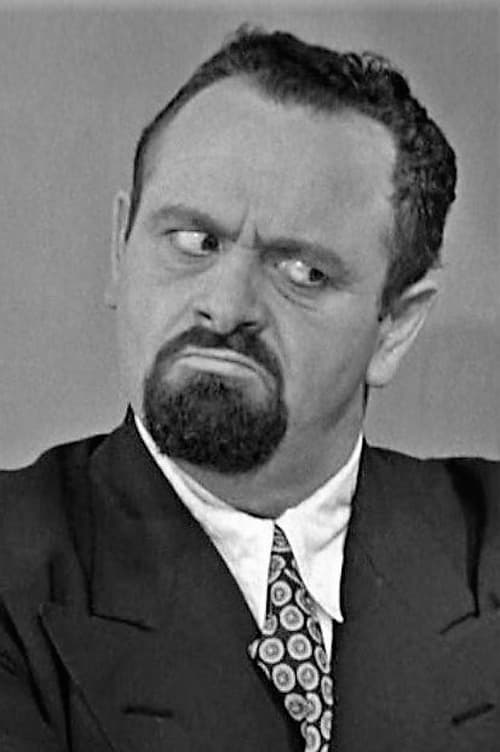
Louis Dilman Merrill (April 1, 1912 – April 7, 1963) was an American actor, who worked primarily in radio from the 1930s through the 1950s.
Early life
Lou Merill was born on April 1, 1912, in Winnipeg, Manitoba, Canada., and moved to the United States when he was young. He acted in stock theater and little theater before going to radio.
Radio
Merrill began working in radio in 1928. He performed in Lux Radio Theater as a utility supporting player in nearly every broadcast from 1937 to 1939 (notably as Sleepy in Snow White and the Seven Dwarfs), and also served as an assistant director handling the crowd scenes during that time. He continued to work the show sporadically until 1953. His career in the 1930s also included roles in the children's Christmas series The Cinnamon Bear (as Santa Claus), the crime drama Big Town (as various gangsters and a stand-in for Edward G. Robinson as Steve Wilson), the soap opera Those We Love (as con man Ed Neely), and The Mickey Mouse Theater of the Air. He later worked for Arch Oboler on Arch Oboler's Plays and Lights Out. As related by Mr. Oboler on the Speaking of Radio show (1976), in one dramatic real-life confrontation, Mr. Oboler broke his hand on Mr. Merrill's jaw when the former became incensed over the latter's offensive attitude. A mutual respect resulted from the incident.
In 1941, he starred as the Nemo-like Captain Craig McKenzie in the now mostly lost sci-fi radio series Latitude Zero (on which the 1969 film of the same name is based). Tweelve years later, he starred on the true crime anthology drama series Crime Classics. Merrill played Thomas Hyland, the host and narrator who was fascinated with crime. Radio comedy appearances included Point Sublime (a regular as jeweler Aaron Saul) and Abbott and Costello (guesting as Santa Claus) and the Life of Riley as Punchy (a punch drunk ex-prize fighter). He also appeared on Escape, The Man Called X, Suspense, NBC University Theater, On Stage, The CBS Radio Workshop, Rogue's Gallery, and The Six Shooter.
From Wikipedia (CC BY-SA 4.0).