Critical response
On Rotten Tomatoes, the film has an approval rating of 40% based on reviews from 10 critics, with an average rating of 5.7/10.
Janet Maslin in The New York Times wrote: "This modest film actually covers a lot of ground... Love Field brings remarkably few preconceptions to the telling of its understated story. The characters transcend stereotypes, but what really matters is the actors' ability to breathe these people to life." Time Out was similarly positive, writing: "This affecting romantic comedy probes the gradations of racial prejudice still prevalent in the South despite JFK's best efforts... unaccountably denied a theatrical release in Britain, this is a most impressive and enjoyable work." On the negative side, Variety described it as "a sincere, not fully realized 1960s drama that is yet another variation on the 'Where were you when you heard JFK was shot?' theme." Hal Hinson in The Washington Post thought that "the interracial love affair that develops between this oddly matched pair never makes much sense." Roger Ebert in the Chicago Sun-Times wrote that "the essential truth of the characters was being undercut by all the manufactured gimmicks of the plot."
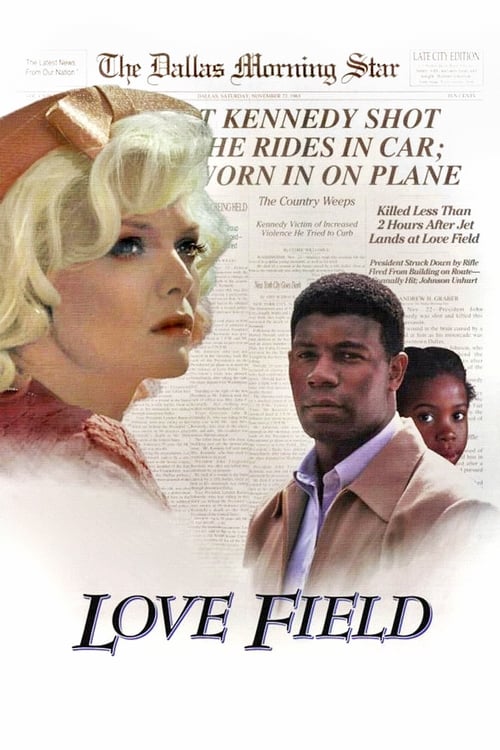
Critical consensus held that the primary reason to see the film was the Oscar-nominated performance of Michelle Pfeiffer. The New York Times wrote that a "character this flamboyant would risk sinking any film. But Ms. Pfeiffer, again demonstrating that she is as subtle and surprising as she is beautiful, plays Lurene with remarkable grace." The Washington Post called the characterization "a marvel, but by now that is only to be expected. Watching her [Pfeiffer] discover new facets of her talent is one of the real pleasures of going to the movies these days. Done up with a '60s platinum bouffant and butterfly fake eyelashes, Pfeiffer plays Lurene as a big-hearted, motor-mouth ditz. But, even in the movie's earliest scenes, Pfeiffer suggests that Lurene has hidden depth; not unrevealed smarts, really, but innate decency and guilelessness... She's fully alive up there on the screen: a grounded angel, tarnished, funny and exquisitely soulful, even when the movie is dead." Desson Howe wrote: "there is strong reason to watch Love Field simply for Pfeiffer. As the nobly oppressed father (a sort of clichéd, Sidney Poitier role), Haysbert is respectable and doe-eyed McFadden makes a fetching innocent. But Pfeiffer is the movie's sole engine. Tucking away her gratuitous beauty behind pancake makeup and that blonde hay-er, she's in effortless, sassy command." Peter Travers in Rolling Stone was of the opinion that "Pfeiffer overcomes the poky direction of Jonathan Kaplan (The Accused) and the unfocused script by Don Roos (of Single White Female infamy). She weaves magic in a portrayal of striking grace notes... long after Love Field hits a dead end, Pfeiffer cuts a path to the heart." Time Out called it a "marvellously touching, funny and credible performance," while for Variety it was "yet another memorable characterization." Roger Ebert congratulated her for a performance "which takes a woman who could have become a comic target and invests her with a certain dignity." Stephen Farber in Movieline wrote: "As Lurene Hallett, a dreamy beautician obsessed with Jackie Kennedy, Pfeiffer confirms her growing range and power. Her skill with accents is beginning to rival Meryl Streep's, but even more impressive than her technical virtuosity is her emotional depth; she highlights the childlike romanticism and generosity of this simple woman."
Gene Siskel on "If We Picked The Oscars" (1993) chose Pfeiffer's performance as the "Worst Nomination of the Year", claiming her southern accent was unconvincingly "broad" and "couldn't hide her own intelligence from me on screen" in order to make the character believable.