



Luis Buñuel Portolés (Spanish: [ˈlwis βuˈɲwel poɾtoˈles]; 22 February 1900 – 29 July 1983) was a Spanish and Mexican filmmaker who worked in France, Mexico, and Spain. He has been widely considered by many film critics, historians, and directors to be one of the greatest and most influential filmmakers of all time. Buñuel's works are known for their avant-garde surrealism which was also infused with political commentary.
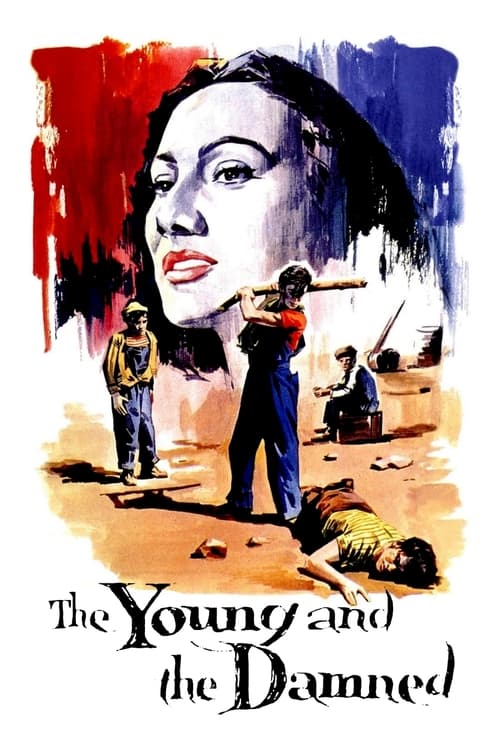
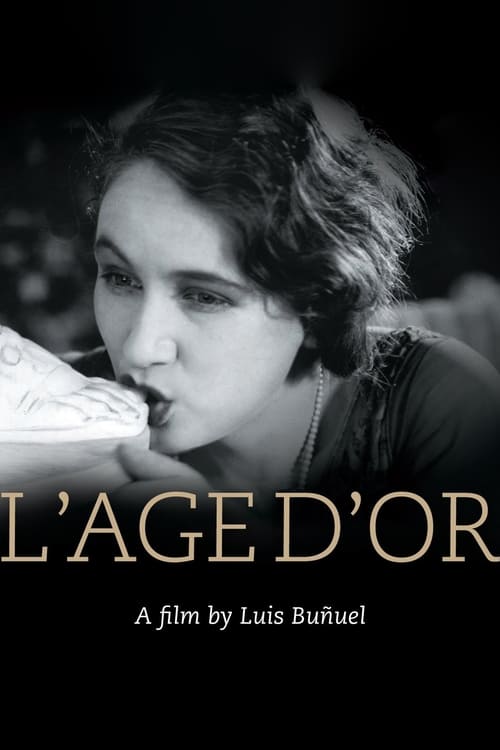
Often associated with the surrealist movement, Buñuel's career spanned the 1920s through the 1970s. He collaborated with surrealist painter Salvador Dalí on Un Chien Andalou (1929) and L'Age d'Or (1930). Both are considered masterpieces of surrealist cinema. From 1947 to 1960, he honed his skills as a director in Mexico, making grounded and human melodramas such as Gran Casino (1947), Los Olvidados (1950) and Él (1953).
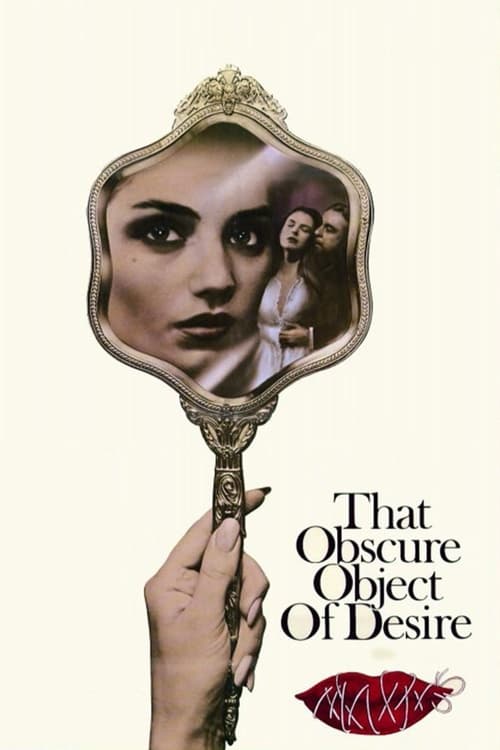
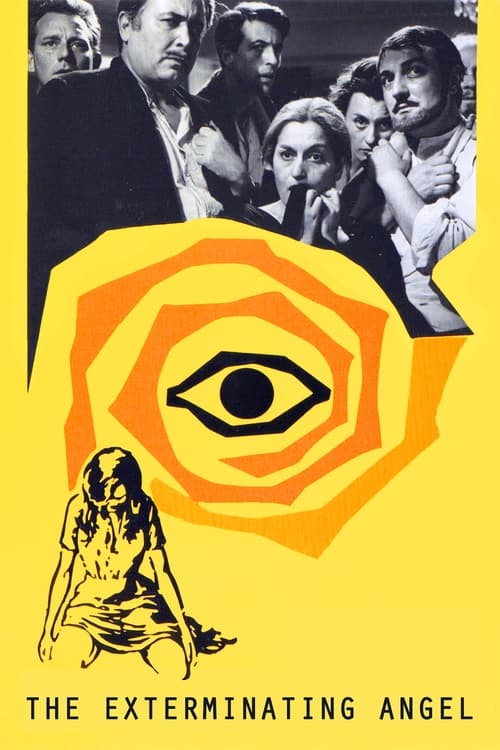
Buñuel then transitioned to making artful, surrealistic and satirical films. He earned the Palme d'Or at the 1961 Cannes Film Festival for Viridiana (1961), which criticized the Francoist dictatorship. He satirized social conditions in The Exterminating Angel (1962) and The Discreet Charm of the Bourgeoisie (1972), the latter of which won the Academy Award for Best Foreign Language Film. He also directed Diary of a Chambermaid (1964) and Belle de Jour (1967). He earned the National Society of Film Critics Award for Best Director for his final film, That Obscure Object of Desire (1977).
Buñuel earned five Cannes Film Festival prizes, two Berlin International Film Festival prizes, a BAFTA Award and an Academy Award in 1972. Buñuel received numerous honors including National Prize for Arts and Sciences for Fine Arts in 1977, the Moscow International Film Festival Contribution to Cinema Prize in 1979, and the Career Golden Lion in 1982. He was nominated twice for the Nobel Prize in Literature, in 1968 and then in 1972. Seven of Buñuel's films are included in Sight & Sound's 2012 critics' poll of the top 250 films of all time. Buñuel's obituary in The New York Times called him "an iconoclast, moralist, and revolutionary who was a leader of avant-garde surrealism in his youth and a dominant international movie director half a century later".
Contents
Early life and education
Buñuel was born on 22 February 1900 in Calanda, a small town in the Aragon region of Spain. His father was Leonardo Buñuel, also a native of Calanda, who had left home at age 14 to start a hardware business in Havana, Cuba, ultimately amassing a fortune and returning home to Calanda at the age of 43, in 1898. He married the 18-year-old daughter of the only innkeeper in Calanda, María Portolés Cerezuela. The eldest of seven children, Luis had two brothers, Alfonso and Leonardo, and four sisters: Alicia, Concepción, Margarita and María. He later described his birthplace by saying that in Calanda, "the Middle Ages lasted until World War I".
When Buñuel was four months old, the family moved to Zaragoza, where they were one of the wealthiest families in town. In Zaragoza, Buñuel received a strict Jesuit education at the private Colegio del Salvador, starting at the age of seven and continuing for the next seven years. After being kicked and insulted by the study hall proctor before a final exam, Buñuel refused to return to the school. He told his mother he had been expelled, which was not true; in fact, he had received the highest marks on his world history exam. Buñuel finished the last two years of his high school education at the local public school, graduating at the age of 16. Even as a child, Buñuel was something of a cinematic showman; friends from that period described productions in which Buñuel projected shadows on a screen using a magic lantern and a bedsheet. He also excelled at boxing and playing the violin.
In his youth, Buñuel was deeply religious, serving at Mass and taking Communion every day, until, at the age of 16, he grew disgusted with what he perceived as the illogicality of the Church, along with its power and wealth.
In 1917, he attended the University of Madrid, first studying agronomy then industrial engineering and finally switching to philosophy. He developed very close relationships with painter Salvador Dalí and poet Federico García Lorca, among other important Spanish creative artists living in the Residencia de Estudiantes, with the three friends forming the nucleus of the Spanish Surrealist avant-garde, and becoming known as members of "La Generación del 27". Buñuel was especially taken with García Lorca, later writing in his autobiography: We liked each other instantly. Although we seemed to have little in common—I was a redneck from Aragon, and he an elegant Andalusian—we spent most of our time together...We used to sit on the grass in the evenings behind the Residencia (at that time, there were vast open spaces reaching to the horizon), and he would read me his poems. He read slowly and beautifully, and through him I began to discover a wholly new world. Buñuel's relationship with Dalí was somewhat more troubled, being tinged with jealousy over the growing intimacy between Dalí and Lorca and resentment over Dalí's early success as an artist.
Career
1925–1930: Early French period
In 1925 Buñuel moved to Paris, where he began work as a secretary in an organization called the International Society of Intellectual Cooperation. He also became actively involved in cinema and theater, going to the movies as often as three times a day. Through these interests, he met a number of influential people, including the pianist Ricardo Viñes, who was instrumental in securing Buñuel's selection as artistic director of the Dutch premiere of Manuel de Falla's puppet-opera El retablo de maese Pedro in 1926.
He decided to enter the film industry and enrolled in a private film school run by Jean Epstein and some associates. At that time, Epstein was one of the most celebrated commercial directors working in France, his films being hailed as "the triumph of impressionism in motion, but also the triumph of the modern spirit". Before long, Buñuel was working for Epstein as an assistant director on Mauprat (1926) and La chute de la maison Usher (1928), and also for Mario Nalpas on La Sirène des Tropiques (Siren of the Tropics) (1927), starring Josephine Baker. He appeared on screen in a small part as a smuggler in Jacques Feyder's Carmen (1926).
When Buñuel derisively rejected Epstein's demand that he assist Epstein's mentor, Abel Gance, who was at the time working on the film Napoléon, Epstein dismissed him angrily, saying "How can a little asshole like you dare to talk that way about a great director like Gance?" then added "You seem rather surrealist. Beware of surrealists, they are crazy people."
After parting with Epstein, Buñuel worked as film critic for La Gaceta Literaria (1927) and Les Cahiers d'Art (1928). In the periodicals L'Amic de les Arts and La gaseta de les Arts, he and Dalí carried on a series of "call and response" essays on cinema and theater, debating such technical issues as segmentation, découpage, the insert shot and rhythmic editing. He also collaborated with the celebrated writer Ramón Gómez de la Serna on the script for what he hoped would be his first film, "a story in six scenes" called Los caprichos. Through his involvement with Gaceta Literaria, he helped establish Madrid's first cine-club and served as its inaugural chairman.
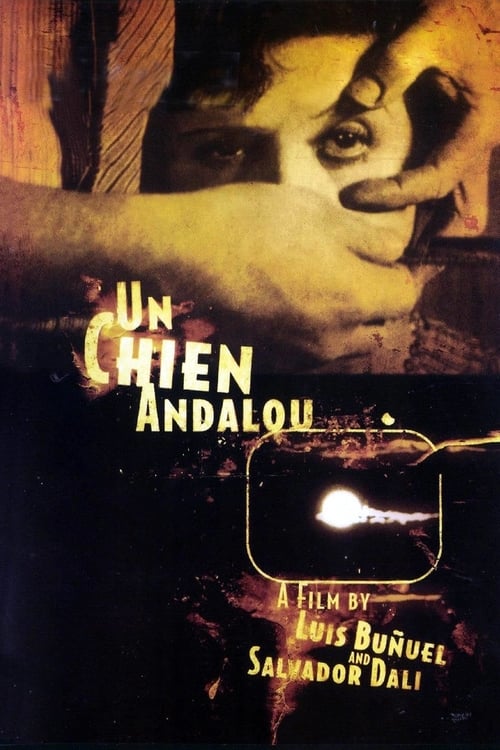
After his apprenticeship with Epstein, Buñuel shot and directed a 16-minute short, Un Chien Andalou, with Salvador Dalí. The film, financed by Buñuel's mother, consists of a series of startling images of a Freudian nature, starting with a woman's eyeball being sliced open with a razor blade. Un Chien Andalou was enthusiastically received by the burgeoning French surrealist movement and continues to be shown regularly in film societies. The script was written in six days at Dalí's home in Cadaqués. In a letter to a friend written in February 1929, Buñuel described the writing process:
1931–1937: Spain
Spain in the early 1930s was a time of political and social turbulence. Due to both a surge in anti-clerical sentiment and a longrunning desire for retribution for the corruption and malfeasance of the extreme right and their supporters in the church, Anarchists and Radical Socialists sacked monarchist headquarters in Madrid and proceeded to burn down or otherwise wreck more than a dozen churches in the capital. Similar revolutionary acts occurred in many other cities in southern and eastern Spain, in most cases with the acquiescence and occasionally with the assistance of the official Republican authorities.
Buñuel's future wife, Jeanne Rucar, recalled that during that period, "he got very excited about politics and the ideas that were everywhere in pre-Civil War Spain". In the first flush of his enthusiasm, Buñuel joined the Communist Party of Spain (PCE) in 1931, though later in life he denied becoming a Communist.
In 1932, Buñuel was invited to serve as film documentarian for the celebrated Mission Dakar-Djibouti, the first large-scale French anthropological field expedition, which, led by Marcel Griaule, unearthed some 3,500 African artifacts for the new Musée de l'Homme. Although he declined, the project piqued his interest in ethnography. After reading the academic study, Las Jurdes: étude de géographie humaine (1927) by Maurice Legendre, he decided to make a film focused on peasant life in Las Hurdes, perhaps the poorest comarca in Extremadura, one of Spain's poorest regions. The film, called Las Hurdes: Tierra Sin Pan (1933), was financed on a budget of 20,000 pesetas donated by a working-class anarchist friend named Ramón Acín, who had won the money in a lottery. In the film, Buñuel matches scenes of deplorable social conditions with narration that resembles travelogue commentary delivered by a detached-sounding announcer, while the soundtrack thunders inappropriate music by Brahms.
Las Hurdes was banned by the Second Spanish Republic and then by the Francoist dictatorship. It is a film which continues to perplex viewers and resists easy categorization by film historians. Las Hurdes has been called one of the first examples of mockumentary, and has been labeled a "surrealist documentary", a term defined by critic Mercè Ibarz as "A multi-layered and unnerving use of sound, the juxtaposition of narrative forms already learnt from the written press, travelogues and new pedagogic methods, as well as a subversive use of photographed and filmed documents understood as a basis for contemporary propaganda for the masses". Catherine Russell has stated that in Las Hurdes, Buñuel was able to reconcile his political philosophy with his surrealist aesthetic, with surrealism becoming "a means of awakening a marxist materialism in danger of becoming a stale orthodoxy".
1938–1945: United States
Returning to Hollywood in 1938, he was befriended by Frank Davis, an MGM producer and member of the Communist Party USA, who placed Buñuel on the payroll of Cargo of Innocence, a film about Spanish refugee mothers and children fleeing from Bilbao to the USSR. The project was shelved precipitately when another Hollywood film about the Spanish Civil War, Blockade, was met with disfavor by the Catholic League of Decency. In the words of biographer Ruth Brandon, Buñuel and his family "lived from one unsatisfactory crumb of work to another" because he "had none of the arrogance and pushiness essential for survival in Hollywood". He just was not flamboyant enough to capture the attention of Hollywood decision makers, in the opinion of film composer George Antheil: "Inasmuch as [Buñuel], his wife and his little boy seemed to be such absolutely normal, solid persons, as totally un-Surrealist in the Dalí tradition as one could possibly imagine." For the most part, he was snubbed by many of the people in the film community whom he met during his first trip to America, although he was able to sell some gags to Chaplin for The Great Dictator (1940).
In desperation, to market himself to independent producers, he composed a 21-page autobiography, a section of which, headed "My Present Plans", outlined proposals for two documentary films:
"The Primitive Man", which would depict "the terrible struggle of primitive man against a hostile universe, how the world appeared, how they saw it, what ideas they had on love, on death, on fraternity, how and why religion is born", [italics in original]
"Psycho-Pathology", which would "expose the origin and development of different psychopathic diseases...Such a documental film, apart from its great scientific interest, could depict on screen a New Form of Terror or its synonym Humour." [italics in original]
Nobody showed any interest and Buñuel realized that staying in Los Angeles was futile, so he traveled to New York City to see if he could change his fortunes.
In New York City, Antheil introduced Buñuel to Iris Barry, chief curator of film at the Museum of Modern Art (MoMA). Barry talked Buñuel into joining a committee formed to help educate those within the U.S. government who might not have appreciated fully the effectiveness of film as a medium of propaganda. Buñuel was hired to produce a shortened version of Leni Riefenstahl's Triumph of the Will (1935) as a demonstration project. The finished product was a compilation of scenes from Riefenstahl's Nazi epic with Hans Bertram's Feuertaufe. Buñuel stayed at MoMA to work for the Office of the Coordinator of Inter-American Affairs (OCIAA) as part of a production team that gathered, reviewed and edited films intended as anti-fascist propaganda to be distributed in Latin America by American embassies. While being vetted for the job at the OCIAA, upon being asked if he was a Communist, he replied: "I am a Republican," and, apparently, the interviewer did not realize that Buñuel was referring to the Spanish socialist coalition government, not the American political party. Describing Buñuel's work at MoMA, his friend, composer Gustavo Pittaluga, stated: "Luis created maybe 2,000 remarkable works. We were sent anodyne documentaries, often extremely feeble primary materials, which the Museum team turned into marvellous films. And not just Spanish versions, but also Portuguese, French and English...He would create a good documentary through editing." [italics in original]
1946–1953: Mexico
In 1946, an old friend, producer Denise Tual, the widow of Pierre Batcheff, the leading man in Un Chien Andalou, proposed that she and Buñuel adapt Lorca's play La casa de Bernarda Alba for production in Paris. As it turned out, though, before they could both make their way to Europe, they encountered problems in securing the rights from Lorca's family. While in Mexico City, on a stopover, they had asked Óscar Dancigers, a Russian émigré producer active in Mexico, for financing. Dancigers ran an independent production company that specialized in assisting U.S. film studios with on-location shooting in Mexico, but following World War II, he had lost his connection with Hollywood due to his being blacklisted as a Communist. Although Dancigers was not enthusiastic about the Lorca project, he did want to work with Buñuel and persuaded the Spanish director to undertake a totally different project.
The Golden Age of Mexican cinema was peaking in the mid-to-late 1940s, at just the time Buñuel was connecting with Dancigers. Movies represented Mexico's third largest industry by 1947, employing 32,000 workers, with 72 film producers who invested 66 million pesos (approximately U.S. $13 million) per year, four active studios with 40 million pesos of invested capital, and approximately 1,500 theaters throughout the nation, with about 200 in Mexico City alone. For their first project, the two men selected what seemed like a sure-fire success, Gran Casino, a musical period piece set in Tampico during the boom years of oil exploitation, starring two of the most popular entertainers in Latin America: Libertad Lamarque, an Argentine actress and singer, and Jorge Negrete, a Mexican singer and leading man in "charro" films. Buñuel recalled: "I kept them singing all the time—a competition, a championship".
The film was not successful at the box office, with some even calling it a fiasco. Different reasons have been given for its failure with the public; for some, Buñuel was forced to make concessions to the bad taste of his stars, particularly Negrete, others cite Buñuel's rusty technical skills and lack of confidence after so many years out of the director's chair, while still others speculate that Mexican audiences were tiring of genre movies, called "churros", that were perceived as being cheaply and hastily made.
The failure of Gran Casino sidelined Buñuel, and it was over two years before he had the chance to direct another picture. According to Buñuel, he spent this time "scratching my nose, watching flies and living off my mother's money", but he was actually somewhat more industrious than that may sound. With the husband/wife team of Janet and Luis Alcoriza, he wrote the scenario for Si usted no puede, yo sí, which was filmed in 1950 by Julián Soler. He also continued developing the idea for a surrealistic film called Ilegible, hijo de flauta, with the poet Juan Larrea. Dancigers pointed out to him that there was currently public interest in films about street urchins, so Buñuel scoured the back streets and slums of Mexico City in search of material, interviewing social workers about street gang warfare and murdered children.
1954–1965: International work
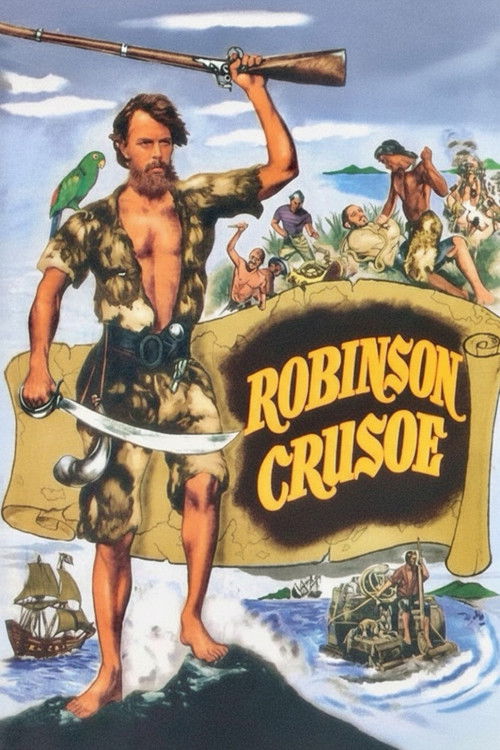
As much as he welcomed steady employment in the Mexican film industry, Buñuel was quick to seize opportunities to re-emerge onto the international film scene and to engage with themes that were not necessarily focused on Mexican preoccupations. His first chance came in 1954, when Dancigers partnered with Henry F. Ehrlich, of United Artists, to co-produce a film version of Daniel Defoe's Robinson Crusoe, using a script developed by the Canadian writer Hugo Butler. The film was produced by George Pepper, the former executive secretary of the Hollywood Democratic Committee. Both Butler and Pepper were emigres from Hollywood who had run afoul of authorities seeking out communists. The result, Adventures of Robinson Crusoe, was Buñuel's first color film. Buñuel was given much more time than usual for the filming (three months), which was accomplished on location in Manzanillo, a Pacific seaport with a lush jungle interior, and was shot simultaneously in English and Spanish. When the film was released in the United States, its young star Dan O'Herlihy used his own money to fund a Los Angeles run for the film and gave free admission to all members of the Screen Actors Guild, who in turn rewarded the little-known actor with his only Oscar nomination.
In the mid-1950s, Buñuel got the chance to work again in France on international co-productions. The result was what critic Raymond Durgnat has called the director's "revolutionary triptych", in that each of the three films is "openly, or by implication, a study in the morality and tactics of armed revolution against a right-wing dictatorship". The first, Cela s'appelle l'aurore (Franco-Italian, 1956) required Buñuel and the "pataphysical" writer Jean Ferry to adapt a novel by Emmanuel Roblès after the celebrated writer Jean Genet failed to deliver a script after having been paid in full. The second film was La Mort en ce jardin (Franco-Mexican, 1956), which was adapted by Buñuel and his frequent collaborator Luis Alcoriza from a novel by the Belgian writer José-André Lacour. The final part of the "triptych" was La Fièvre Monte à El Pao (Franco-Mexican, 1959), the last film of the popular French star Gérard Philipe, who died in the final stages of the production. At one point during the filming, Buñuel asked Philipe, who was visibly dying of cancer, why the actor was making this film, and Philipe responded by asking the director the same question, to which both said they did not know. Buñuel was later to explain that he was so strapped for cash that he, "took everything that was offered to me, as long as it wasn't humiliating".
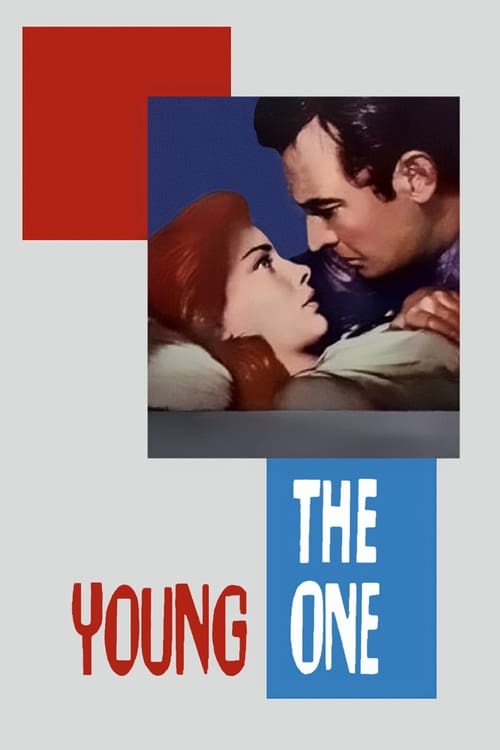
In 1960, Buñuel re-teamed with scenarist Hugo Butler and organizer George Pepper, allegedly his favorite producer, to make his second English-language film, a US/Mexico co-production called The Young One, based on a short story by writer and former CIA-agent Peter Matthiessen. This film has been called "a surprisingly uncompromising study of racism and sexual desire, set on a remote island in the Deep South" and has been described by critic Ed Gonzalez as "salacious enough to make Elia Kazan's Baby Doll and Luis Malle's Pretty Baby blush". Although the film won a special award at the Cannes Film Festival for its treatment of racial discrimination, the US critics were so hostile upon its release that Buñuel was later to say that "a Harlem newspaper even wrote that I should be hung upside down from a lamppost on Fifth Avenue...I made this film with love, but it never had a chance."
1966–1983: Acclaim and final films
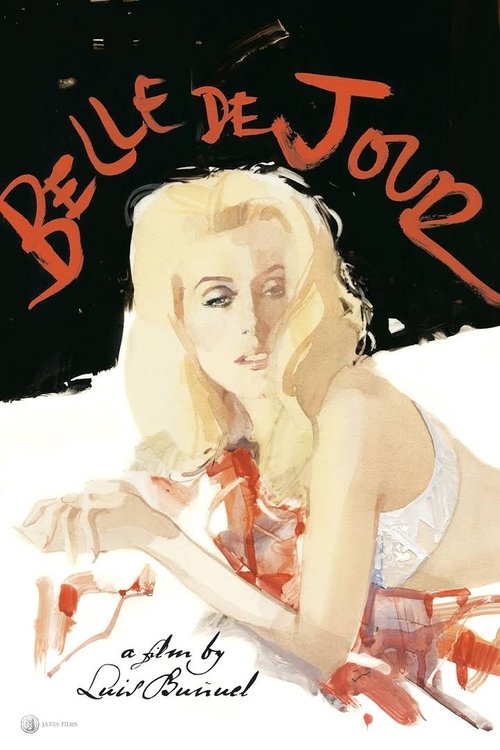
In 1966, Buñuel was contacted by Robert and Raymond Hakim, Egyptian-French producers who specialized in sexy films directed by star filmmakers, who offered him the opportunity to direct a film version of Joseph Kessel's novel, about an affluent young woman who leads a double life as a prostitute, and that had caused a scandal upon its publication in 1928. Buñuel did not like Kessel's novel, considering it "a bit of a soap opera", but he took on the challenge because: "I found it interesting to try to turn something I didn't like into something I did." So he and Carrière set out enthusiastically to interview women in the brothels of Madrid to learn about their sexual fantasies. Buñuel also was not happy about the choice of the 22-year-old Catherine Deneuve for the title role, feeling that she had been foisted upon him by the Hakim brothers and Deneuve's lover at the time, director François Truffaut. As a result, both actress and director found working together difficult, with Deneuve claiming, "I felt they showed more of me than they'd said they were going to. There were moments when I felt totally used. I was very unhappy," and Buñuel deriding her prudery on the set. Roger Ebert described it as "possibly the best-known erotic film of modern times, perhaps the best", even though, as another critic has written, "in terms of explicit sexual activity, there is little in Belle de jour we might not see in a Doris Day comedy from the same year". It was Buñuel's most successful film at the box office.
Critics have noted Buñuel's habit of following up a commercial or critical success with a more personal, idiosyncratic film. After the worldwide success of Belle de Jour, and upon viewing Jean-Luc Godard's film La Chinoise, Buñuel, who had wanted to make a film about Catholic heresies for years, told Carrière: "If that is what today's cinema is like, then we can make a film about heresies." The two spent months researching Catholic history and created the 1969 film The Milky Way, a "picaresque road film" that tells the story of two vagabonds on pilgrimage to the tomb of the Apostle James at Santiago de Compostela, during which they travel through time and space to take part in situations illustrating heresies that arose from the six major Catholic dogmas. Vincent Canby compared it to George Stevens's blockbuster The Greatest Story Ever Told, in that Buñuel had made a film about Jesus casting nearly all the famous French performers of the time in cameo roles. The Milky Way was banned in Italy, only to have the Catholic Church intervene on its behalf.
Tristana (1970) is a film about a young woman who is seduced and manipulated by her guardian, who attempts to thwart her romance with a young artist and who eventually induces her to marry him after she loses one of her legs due to a tumor. It has been considered by scholar Beth Miller the least understood of Buñuel's films, and consequently one of the most underrated, due to a "consistent failure to apprehend its political and, especially, its socialist-feminist statement". Buñuel had wanted to make a film of Benito Pérez Galdós's novel Tristana as early as 1952, even though he considered Galdós's book the author's weakest. After finishing Viridiana and in the wake of the scandal its release caused in 1962, the Spanish censor turned down this project, and Buñuel had to wait for 8 years before he could receive backing from the Spanish production company Época Films. The censors had threatened to deny permission for the film on the grounds that it encouraged dueling, so Buñuel had to approach the subject matter very gingerly, in addition to making concessions to his French/Italian/Spanish producers, who insisted on casting two of the three primary roles with actors not of Buñuel's choosing: Franco Nero and Catherine Deneuve. On this occasion, however, Deneuve and Buñuel had a more mutually satisfactory working relationship, with Deneuve telling an interviewer, "but in the end, you know, it was actually rather a wonderful shoot. Tristana is one of my favorite films. Personally, as an actress, I prefer Tristana to Belle de Jour."
Personal life
Starting at age 17, Buñuel steadily dated the future poet and dramatist Concha Méndez, with whom he vacationed every summer at San Sebastián. He introduced her to his friends at the Residencia as his fiancée. After five years, she broke off the relationship, citing Buñuel's "insufferable character". Fetishism, especially of feet, is a theme in his work. Pauline Kael wrote "That was a wonderful afternoon little Luis spent on the floor of his mother’s closet, and he has never allowed us to forget it."
During his student years, Buñuel became an accomplished hypnotist. He claimed that once, while calming a hysterical prostitute through hypnotic suggestion, he inadvertently put one of the several bystanders into a trance as well. He was often to insist that watching movies was a form of hypnosis: "This kind of cinematographic hypnosis is no doubt due to the darkness of the theatre and to the rapidly changing scenes, lights, and camera movements, which weaken the spectator's critical intelligence and exercise over him a kind of fascination." Referring to Buñuel's interest in hypnosis, Anthony Lane wrote, "You can easily picture yourself being hypnotized by this man; sit through a sample of his movies, and you will think you have been."
Marriage
In 1926 he met his future wife, Jeanne Rucar Lefebvre, a gymnastics teacher who had won a bronze medal at the 1924 Paris Olympics. Buñuel courted her in a formal Aragonese manner, complete with a chaperone, and they married in 1934 despite a warning by Jean Epstein when Buñuel first proposed in 1930: "Jeanne, you are making a mistake.... It's not right for you, don't marry him." The two remained married throughout his life and had two sons, Juan Luis and Rafael. Diego Buñuel, filmmaker and host of the National Geographic Channel's Don't Tell My Mother series, is their grandson.
Illness and death
In his 70s, Buñuel once told his friend, novelist Carlos Fuentes: "I'm not afraid of death. I'm afraid of dying alone in a hotel room, with my bags open and a shooting script on the night table. I must know whose fingers will close my eyes." In his autobiography, My Last Sigh, he wrote, "I'd love to rise from the grave every ten years or so and go buy a few newspapers. Ghostly pale, sliding silently along the walls, my paper under my arm, I'd return to the cemetery and read about all the disasters in the world before falling back to sleep, safe and secure in my tomb."
According to his wife, Jeanne, Buñuel died in Mexico City in 1983 from diabetes complications. Fuentes has recounted that Buñuel spent his last week in hospital discussing theology with the Jesuit brother Julián Pablo Fernández, a long time friend. His funeral was very private, involving only family and close friends, among them poets Octavio Paz and Homero Aridjis. He died on the same day as David Niven and Raymond Massey
Style, themes and influences
Buñuel's technique of made distinct use of mise-en-scène, sound editing and music. The influences on his filmmaking have included a positive relationship to surrealism and a critical approach to atheism and religion. Buñuel's style of directing was extremely economical; he shot films in a few weeks, rarely deviating from his script (the scene in Tristana where Catherine Deneuve exposes her breasts to Saturno – but not the audience – being a noted exception) and shooting as much as possible in order to minimize editing time. He remained true throughout his working life to an operating philosophy that he articulated at the beginning of his career in 1928: "The guiding idea, the silent procession of images that are concrete, decisive, measured in space and time—in a word, the film—was first projected inside the brain of the filmmaker". In this, Buñuel has been compared with Alfred Hitchcock, another director famous for precision, efficiency and preplanning, for whom actually shooting the film was an anticlimax, because both knew, in Buñuel's words, "exactly how each scene will be shot and what the final montage will be". Per Jeanne Moreau, "He was the only director I know who never threw away a shot. He had the film in his mind. When he said 'action' and 'cut,' you knew that what was in between the two would be printed."
Buñuel is often cited as an auteur; Ingmar Bergman once wrote "Buñuel nearly always made Buñuel films". Despite his variety, John Huston believed that, regardless of genre, a Buñuel film is so distinctive as to be instantly recognizable. Writer Octavio Paz called Buñuel's work "the marriage of the film image to the poetic image, creating a new reality...scandalous and subversive". Ebert writes "None of his films is lacking a cheerfully sardonic view of human nature. His object is always dry humor. Even when he was working for Hollywood studios, recycling the sets and costumes of English-language pictures into Spanish versions of the same screenplays, or later simply dubbing them into Spanish, he slyly slipped in a few touches that were lacking in the sources. He is one of the great originals, creator of satirical delight." David Thomson names him one of the greatest directors, adding "He is as intent on comedy as Kafka was, as little intent on showing off style, and as much a victim as the joke he tells."
Retrospectives
In 1994, a retrospective of Buñuel's works was organized by the Kunst- und Ausstellungshalle in Bonn, as homage to one of the most internationally revered figures in world cinema. This was followed in the summer of 1996 by a commemoration of the centenary of the birth of cinema held by the Museo Nacional Centro de Arte Reina Sofía in Madrid, which included a unique retrospective, jointly sponsored by the King of Spain and the President of Mexico, called ¿Buñuel!. La mirada del siglo, honoring his special status as Spanish cinema's most emblematic figure.
A secondary school in Zaragoza, Spain has been named for Buñuel: Instituto de Educación Secundaria Ies Luis Buñuel. Liceo Español Luis Buñuel, a Spanish international school, is in Neuilly-sur-Seine, France, near Paris.
In Calanda, Spain a bust of the head of Luis Buñuel is on display at the Centro Buñuel Calanda (CBC), a museum devoted to the director. The mission of the CBC is to serve as a reference center both for connoisseurs of Buñuel and for anyone interested in the arts of Aragon.
One of the main theatres at the Palais des Festivals et des Congrès, where the Cannes Film Festival is held, is named after him: Salle Buñuel.
To mark the centenary of his birth, in 2000 the Cannes festival partnered with the Spanish film industry, to pay tribute to Luis Buñuel. This tribute consisted of three events: (1) the inauguration, for Cannes 2000, of the Palace's new Luis Buñuel room, (2) an original exhibition organized by Instituto de la Cinematografía y de las Artes Audiovisuales entitled "The Secret World of Buñuel", and (3) an exceptional projection of Viridiana, the Palme d'Or winner in 1961, in the presence of specially invited artists.
The Luis Buñuel Film Institute (LBFI) is housed in the Downtown Independent Theatre, Los Angeles, and has as its mission: "to form the vital and innovative arena for the promotion of the work of Luis Buñuel, and a seminal resource for the development of new research, knowledge and scholarship on his life and work, extending across his body of films and writings".
Awards, influence and legacy
Buñuel was given the Career Golden Lion in 1982 by the Venice Film Festival and the FIPRESCI Prize – Honorable Mention in 1969 by the Berlin International Film Festival. In 1977, he received the National Prize for Arts and Sciences for Fine Arts. At the 11th Moscow International Film Festival in 1979, he was awarded the Honorable Prize for his contribution to cinema. He was nominated twice for the Nobel Prize in Literature in 1968 and 1972.
Fifteen of his films are included in the They Shoot Pictures, Don't They? list of the 1,000 greatest films of all time, second only to Jean-Luc Godard, with sixteen, and he ranks number 13 on their list of the top 250 directors.
He has influenced directors such as Woody Allen, Godfrey Reggio, Aki Kaurismäki, Gaspar Noé, Yorgos Lanthimos, Wes Anderson, and Jonathan Glazer.
Documentaries about Buñuel
Dans l'oeil de Luis Buñuel. France, 2013, 54 min., book and director: François Lévy-Kuentz, Producer: KUIV Productions, arte France.
El último guión – Buñuel en la memoria. Spain, Germany, France, 2008, 45 min., Book and director: Javier Espada und Gaizka Urresti, Producer: Imval Producciones
Tras Nazarín (Following Nazarín). Spain/Mexico, 2015. Directed by Javier Espada. Ircania Producciones. Utilizes still photos taken by Buñuel and Manuel Álvarez Bravo to link the images of the film to the Mexican countryside. Includes interviews with Jean Claude Carrière, Ignacio López Tarso, Silvia Pinal, Arturo Ripstein and Carlos Reygadas, along with critics and film scholars.
In popular culture
Buñuel has been portrayed as a character in many films and television productions:
A portion of Juan Antonio Bardem's mini-series Lorca, muerte de un poeta (1987–1988), recreates the student years of Buñuel, Lorca and Dalí, with Fernando Valverde portraying Buñuel in two episodes.
He was played by Dimiter Guerasimof in Antoni Ribas's biopic Dalí (1991), despite the fact that Dalí and his attorney had written to Ribas objecting to the project in its early stages in 1985.
Buñuel appeared as a character in Alejandro Pelayo's film Miroslava (1993), based on the life of actress Miroslava Stern, who committed suicide after appearing in Ensayo de un crimen (1955).
Buñuel was played by three actors, El Gran Wyoming (old age), Pere Arquillué (young adult) and Juan Carlos Jiménez Marín (child), in Carlos Saura's 2001 fantasy, Buñuel y la mesa del rey Salomón, which tells of Buñuel, Lorca and Dalí setting out in search of the mythical table of King Salomón, which is thought to have the power to see into the past, the present and the future.
Buñuel was a character in a 2001 television miniseries Severo Ochoa: La conquista de un Nobel, on the life of the Spanish émigré and Nobel laureate in medicine, who was also at the Residencia de Estudiantes during Buñuel's time there.
Matt Lucas portrayed Buñuel in Richard Curson Smith's 2002 TV movie Surrealissimo: The Scandalous Success of Salvador Dalí, a comedy depicting Dalí's "trial" by the Surrealists in 1934 for his pro-Hitler sympathies.
Delaney Bishop's short The Death of Salvador Dali (2005) contains sequences in which Buñuel appears, played by Alejandro Cardenas.
Paul Morrison's Little Ashes hypothesizes a love affair between Dalí and Lorca, with Buñuel (Matthew McNulty) looking on suspiciously.