Release and reception
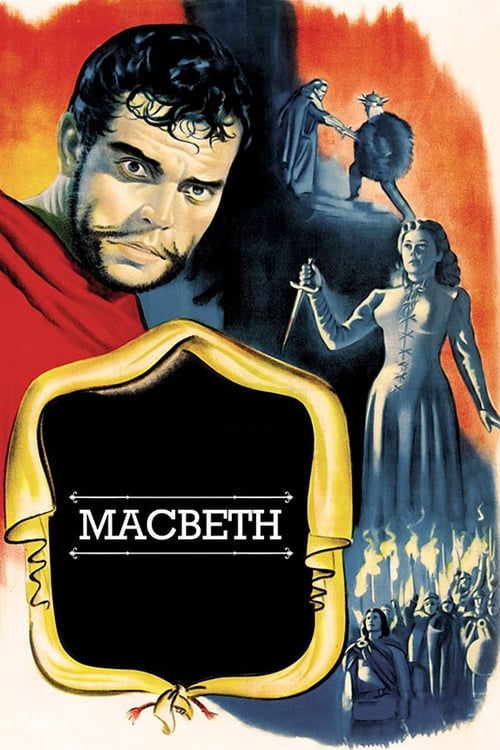
Republic initially planned to have Macbeth in release by December 1947, but Welles was not ready with the film. The studio entered the film in the 1948 Venice Film Festival, but it was abruptly withdrawn when it was compared unfavorably against Olivier's version of Hamlet, which was also in the festival's competition.
In the U.S. theatrical release, Republic tested the film in a few cities. Critical reaction was overwhelmingly negative, with complaints about Welles's decision to have his cast speak in Scottish burrs and modify the original text.
After its original release, Republic had Welles cut two reels from the film and ordered him to have much of the soundtrack re-recorded with the actors speaking in their natural voices, and not the approximation of Scottish accents that Welles initially requested. This new version was released by Republic in 1950. While critical reaction was still not supportive, the film earned a small profit for the studio.
Welles would maintain mixed emotions about Macbeth. In a 1953 lecture at the Edinburgh Fringe Festival, he said: "My purpose in making Macbeth was not to make a great film – and this is unusual, because I think that every film director, even when he is making nonsense, should have as his purpose the making of a great film. I thought I was making what might be a good film, and what, if the 23-day day shoot schedule came off, might encourage other filmmakers to tackle difficult subjects at greater speed. Unfortunately, not one critic in any part of the world chose to compliment me on the speed. They thought it was a scandal that it should only take 23 days. Of course, they were right, but I could not write to every one of them and explain that no one would give me any money for a further day's shooting . . . However, I am not ashamed of the limitations of the picture."
The truncated version of Macbeth remained in release until 1980, when the original uncut version with the Scottish-tinged soundtrack was restored by the UCLA Film and Television Archive and the Folger Shakespeare Library. On Rotten Tomatoes, the film has an approval rating of 87% based on 30 reviews, with an average rating of 7.4/10. The site's critics' consensus reads: "This haunting, eccentric Macbeth may be hampered by budget constraints, but Orson Welles delivers both behind and in front of the camera."
Slant Magazine wrote, "While French writers and filmmakers as disparate as Jean Cocteau, André Bazin and Robert Bresson celebrated the film, American critics panned it and U.S. audiences disdained it." Bresson claimed, "I love too much natural settings and natural light not to love also the fake light and the cardboard settings of Macbeth."
Variety wrote, "Welles' idea of Shakespeare is such a personalized version. Production was comparatively inexpensive and looks it. Mood is as dour as the Scottish moors and crags that background the plot. Film is crammed with scenery-chewing theatrics in the best Shakespearean manner with Welles dominating practically every bit of footage."