Wartime and later years
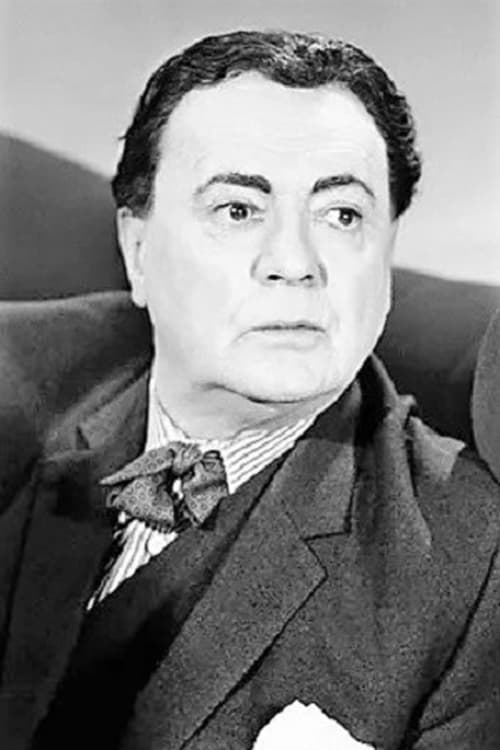
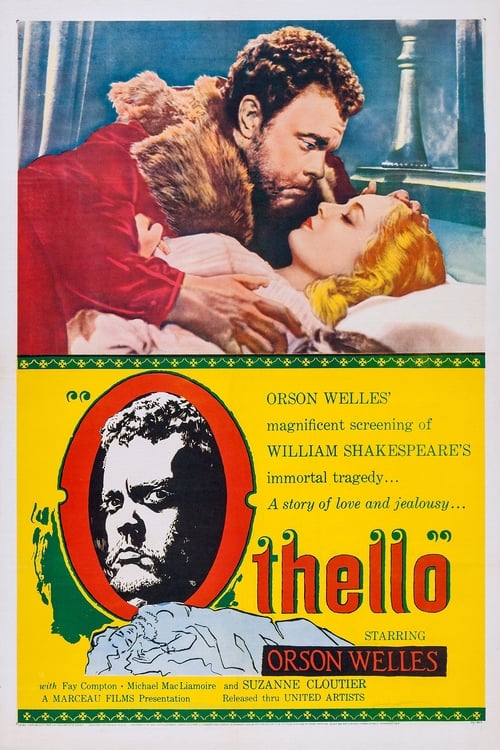
Mac Liammóir remained based in Ireland during the Second World War. In the post-war years, he returned to the West End in his own play Ill Met by Moonlight. The Stage thought the piece "too obscure and too discursive", but praised the performances of Mac Liammóir, Edwards and their supporting cast. The following year the company played a short season on Broadway – Mac Liammóir's début there – giving his Where Stars Walk, Johnston's The Old Lady Says No!, and Shaw's John Bull's Other Island. In 1951 he played Iago to Welles's Othello in the latter's film adaptation. In his early fifties, he was unusually old for the role, but Welles wanted Iago played as an older, impotent man consumed by envy of the younger Othello. Mac Liammóir returned to the role onstage at the Dublin Festival in 1962 opposite William Marshall in the title role.
In 1954 Mac Liammóir returned to London, playing Brack in Hedda Gabler with Peggy Ashcroft as Hedda. In the role he was judged to be both sinister and amusing. Most of his work continued to be at the Gate, but in 1959 he returned to New York to play Don Pedro in Much Ado About Nothing, with John Gielgud as Benedick and Margaret Leighton as Beatrice.
Mac Liammóir's biggest theatrical success came in 1960, with his one-man show The Importance of Being Oscar, which won enthusiastic reviews and did well at the box office. It opened at the Gate, after which he played it on Broadway, in London and on tour around the world. He appeared in the piece more than 1,300 times between 1960 and 1975. He followed this in May 1963 with a new one-man entertainment I Must Be Talking to My Friends, and in 1970 presented a third, Talking About Yeats. Also in 1963 he had a key role as the ironic, mocking, unseen narrator of the multi-Oscar-winning film Tom Jones.
Despite Ireland's anti-gay laws, not repealed in their lifetimes, Edwards' and Mac Liammóir's relationship gained wide acceptance. The writer Éibhear Walshe has described them as Ireland's only publicly acknowledged homosexuals. They were jointly created freemen of the city of Dublin in 1973, the first theatre people to be thus honoured. Before that, Mac Liammóir had received the Lady Gregory Medal for literature in 1960 and an honorary doctorate from Trinity College in 1963.
Mac Liammóir made his final stage performance at the Gate in 1975 in The Importance of Being Oscar. He died at his and Edwards' Dublin home, 4 Harcourt Terrace, on 6 March 1978. Walshe records, "as a measure of the public acceptance of the MacLiammóir–Edwards partnership, the president of Ireland attended Micheál's funeral, two days later, at St Fintan's, Howth, Dublin, and paid his respects to Hilton Edwards as chief mourner".
Mac Liammóir continued to give the false impression that he was native Irish throughout his life, including as late as 1976 reminiscing in an interview about how he "first went to [London]" as a child, how as a young man he "would get back to Ireland as soon as [he] could" and that he was originally from Cork. For many years after his death, reference books continued to record him inaccurately as a native of Cork.