




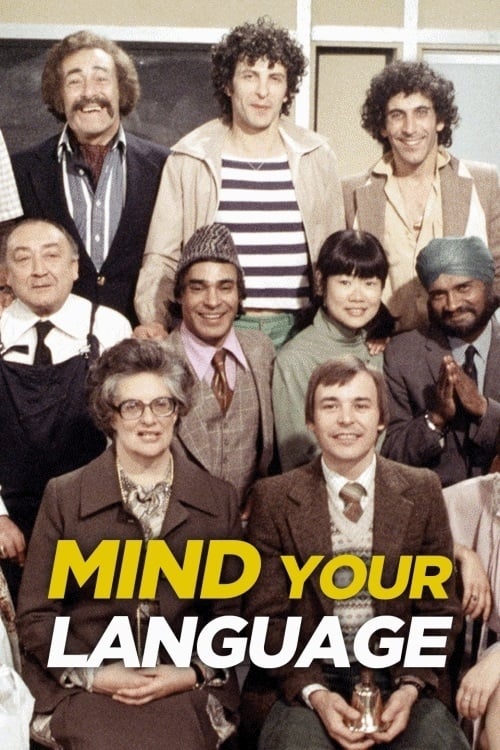
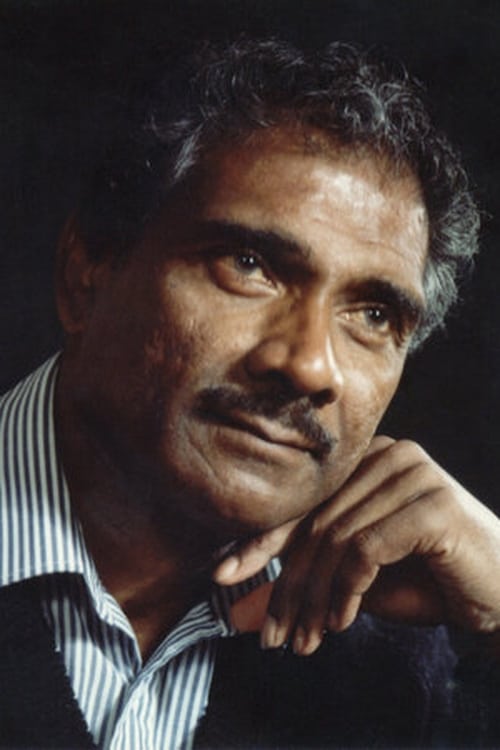
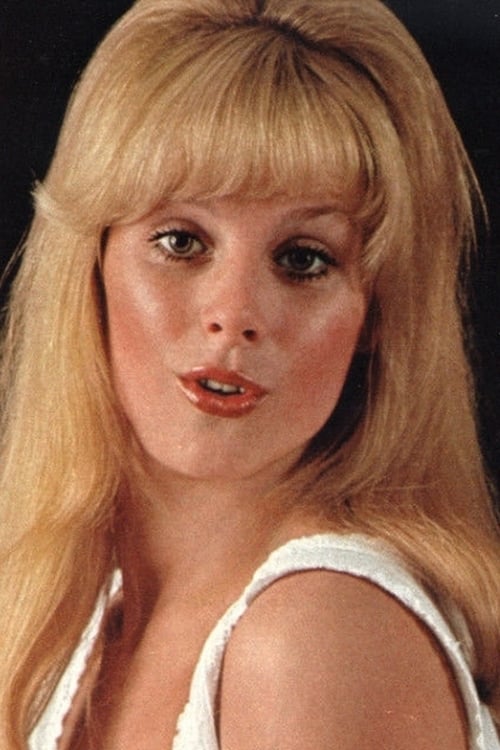
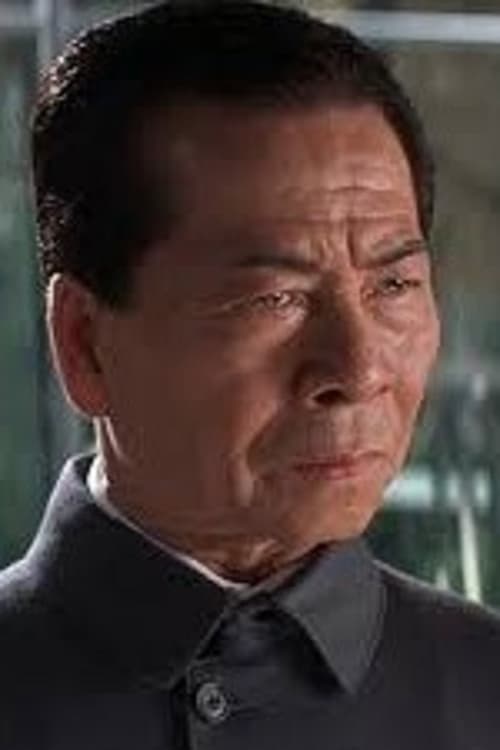
Mind Your Language is a British sitcom that premiered on ITV in 1977. It was produced by London Weekend Television and directed by Stuart Allen. Three series were made by London Weekend Television between 1977 and 1979, and it was briefly revived in 1985 (or 1986 in most ITV regions) with six of the original cast members.
The series shows people of different countries with different social backgrounds, religions, and languages existing in the same classroom, learning English as a foreign language.
Contents
Summary
The show is set in an adult education college in London and focuses on the class in ESL, taught by Jeremy Brown, who teaches a group of enrolled foreigners.
Cast and characters
Series 1–3
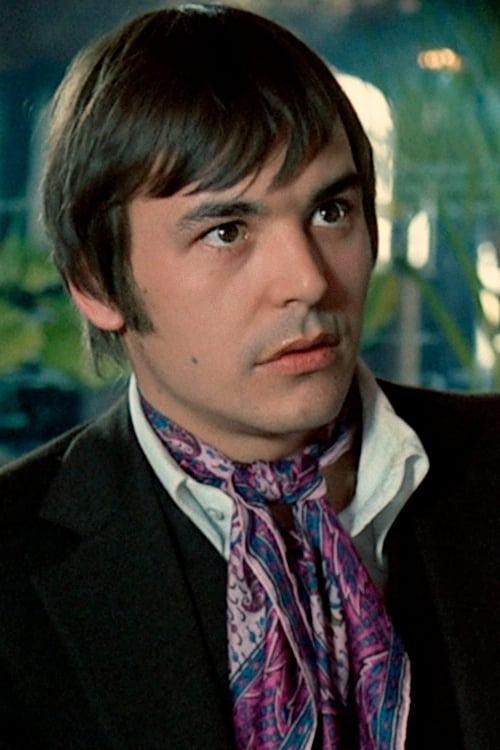
Barry Evans (42 episodes) as Jeremy Brown, the ESL teacher and focal point of most of the series. He is a good-natured, earnest single man in his thirties who lives alone (apart from his Siamese cat Josephine, whom he mentions in "The Examination") and holds a Bachelor of Arts degree from the University of Oxford. He was hired in Series 1 Episode 1, Pilot, in which he was warned that the students drove the previous teacher insane. Mr Brown is up to the challenge but often exasperated by the students' creative interpretations of the English language.
George Camiller (42 episodes) as Giovanni Cupello, a stereotypical Italian Catholic chef, the class's spokesman and de facto class monitor. He is best friends with Max, who becomes his flatmate. Giovanni's main problem with English is understanding metaphors and long words, although he often answers wrongly on purpose to amuse the class. He often calls Mr Brown Professore (teacher in italian). When shocked or surprised, he often uses catchphrases like "Santa Maria", "Whoops ada Daisy", "Okey cokey", "Buona sera" or "Holy ravioli". He apologises by saying scusi, which is Italian for "I'm sorry". He has an elaborate set of first names: Giovanni Vincenzo Marco Dino Alberto Leonardo etc. His last name is sometimes spelled "Capello" (hair) in the closing credits.
Kevork Malikyan (29 episodes) as Maximillian "Max" Andrea Archimedes Papandrious (Series 1–3), stereotypical Greek Orthodox shipping agency worker from Athens who is often paired with Giovanni. He, like Giovanni, is attracted to Danielle, but as the show progresses, the three become friends. Max tends to misunderstand metaphors and long words. An example of a mistake was when Mr Brown asked him to give a word beginning with the letter l and he said 'elephant' (from Hello Sailor - series 1, Episode 10). He also has a heavy accent, which causes him to add h to the beginning of almost every word that starts with a vowel sound. Later, he shares his flat with Giovanni, with whom he is close friends; these two characters have the best command of the English language of all the students in the series.
Robert Lee (29 episodes) as Taro Nagazumi (Series 1–3), a Japanese electronics executive who works as a representative for the London branch of the fictional Japanese electronic company Bushido Electronics. He speaks English quite fluently, but has a habit of adding -o to almost every word he says (as in "thank-o," "England-o," and so on) and always replies "Ah so!" and bows whenever he is addressed. Early in the series he is at odds with Su-Lee due to Japan and China's own political differences in the 1970s but they become friends later on. Most of the time he is seen with his camera.
Series 4 only
Sue Bond (13 episodes) as Rita, Gladys' successor.
Marie-Elise Grepne (13 episodes) as Michelle Dumas, a student from France.
Jenny Lee-Wright (13 episodes) as Maria Papandrious, a student from Greece and the sister of Maximillian Papandrious.
Harry Littlewood (13 episodes) as Mr. Henshawe, Sid's successor.
Raj Patel (13 episodes) as Farrukh Azzam, a student from Pakistan.
Vincent Wong (13 episodes) as Fu Wong Chang, a student from China.
Individual appearances
Gyearbuor Asante as Roger Kenyon, inspector from the local education authority (Series 1, Episode 2).
David King as "Ivan" or Ivan Ivanovich, captain in the Soviet Navy (Series 1, Episode 10)
Ray Marioni as "Boris" or Boris Borisovich, wayward sailor in the Soviet Navy and defector (Series 1, Episode 10)
Deirdre Costello as Mavis, barmaid at the Red Lion Pub (Series 1, Episodes 12–13)
Production
Development
The series was commissioned by Michael Grade, Director of Programmes at London Weekend Television.
The majority of recordings for the first three series took place on Tuesday evenings in Studio Two at the South Bank Television Centre while Series 4 was filmed at Uxbridge Technical College in Middlesex.
Using this series as an example, Sarita Malik, in Representing Black Britain (2002) wrote that "Blacks, Asians or 'race' were usually the butt of the joke", which "tended to hit a racist note, but always in a well-meaning, benevolent tone". She continued that "never before had so many diverse races... been seen in the same television frame, but they had never clung so tightly to their popular crude national stereotypes."
The series attracted about 18 million viewers. Grade cancelled the programme having considered the stereotyping offensive. "It was really irresponsible of us to put it out", he told Linda Agran at the Edinburgh Television Festival in 1985.
International screenings
The series was sold to Pakistan, Australia, New Zealand, Sri Lanka, India, Malaysia, Kenya, Nigeria, Ghana, Singapore, Persian Gulf states and Hong Kong. It was also one of the first British TV programmes shown in South Africa after the end of the boycott by the British Actors' Equity Association. It was also broadcast in Canada on CBC Television from 1979 until 1982. The series broadcast on PBS stations across the United States from 1985 until 1987. The show was also broadcast on South Pacific Television in New Zealand, and on Seven Network in Australia. In comments released in 2005, film historian Jonathan Rigby said the series was still screened internationally, particularly in the countries represented in the series onscreen.
DVD releases
The series was released as a "Best of" four-disc box set on Region 2 DVD in 2003 (Cinema Club), and on Region 1 DVD in 2004 (Granada). However, these sets exclude the Series 1 episode "Kill or Cure", the Series 2 episode "Don't Forget the Driver", the Series 3 episode "Guilty or Not Guilty?" and all of Series 4.
Another four-DVD box set, The Complete LWT Series, released by Network in November 2007 contains all episodes of Series 1–3.
Series 4 has never been released on either DVD or in any streaming format.
International remakes
International television shows based on the premise of Mind Your Language include:
India: Zabaan Sambhalke and Zaban Sambhal Ke (in Hindi)
Indonesia: Kelas Internasional (in Indonesian)
Japan: 日本人の知らない日本語 (Nihonjin no Shiranai Nihongo; in Japanese)
Jordan: العلم نور (al-ʿilm nūr; in Arabic)
Kenya: Classmates
Malaysia: Cakap Melayu Lah (In Malay) and Oh My English! (in English)
Malta: Klassi Għalina (in Maltese)
Nigeria: Second Chance! (in English), and Jami'ar Albarkawa (in Hausa)
South Korea: So Not Worth It (in Korean)
Sri Lanka: Raja Kaduwa! (in Sinhala)
United States: A 1981 episode of sitcom Diff'rent Strokes titled "Almost American" served as a backdoor pilot for an American adaptation, with the regular Diff'rent Strokes cast only appearing briefly at the beginning and end of the episode. The series was not picked up. Later in 1986, Mind Your Language was adapted as What a Country!
Criticism
David Aaronovitch notes that even Michael Grade, the commissioner of the series, regrets that Mind Your Language was ever broadcast:
In 1979, BBC2's Open Door carried a scathing critique of TV tolerance of racial stereotypes and its contribution to negative perceptions of immigrants. It was titled It Ain't Half Racist, Mum and it's a shocker. Google it. The excerpts from IAHHM are bad enough, but those from the ITV sitcom Mind Your Language, in which an Asian character loafs happily on the dole while two families of his relatives inhabit his one room, are simply appalling. The Open Doors documentary showed the executive responsible defending the programme as conducive to racial harmony. Six years later its commissioner, Michael Grade, admitted it should never have been aired. At its peak 18 million viewers watched it.
