Production
Director Tomino actually started planning for a Gundam sequel in February 1984. The first memo dated February 20 included themes related to staff work, such as "What is missing?/What do you really want to do?" From February to May is a period of trial and error, with the "Zeta Gundam" proposal set in the future U.C.0111 (Triple One) and the "Mobile Suit His Alpha Gundam" proposal set in the past U.C.0045. is written. In the "Zeta Gundam" proposal, there is an idea that goes beyond the Newtype, "Gather Stime", which allows one to gain the mental identity of others. Around the beginning of June, a story line close to its current form began to come together, and since then, it has been refined repeatedly based on it. On August 20, the basic background titled "Situation 7 years later..." and a plot memo for one course will be completed. In November 1984, it was officially announced.
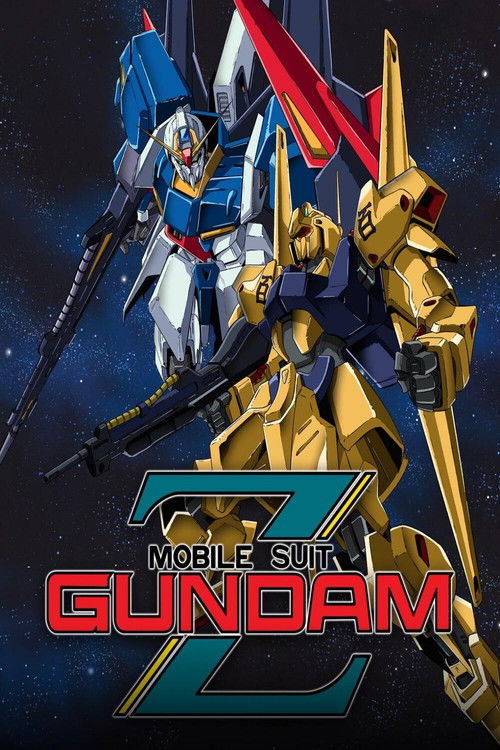
Despite the considerable preparation period for a TV anime, the design decision and commercialization of the main character Z Gundam were delayed due to its complicated design and deformation mechanism. Due to the participation of multiple designers, the actual design work took an unexpectedly long time, and the appearance on the show was delayed until the third cour in the second half. For this reason, the need for a Gundam to play the leading role in the first two courses until the appearance of the Zeta Gundam arose, and the appearance of the Gundam Mk-II was decided. Under the order from Bandai that "Mk-II is a descendant of MSV", from RX-78 Full Armor Gundam and Heavy Gundam. which is downstream of the flow to and was designed with consideration for "movability".
Also, with an offer from Bandai saying, "Since the main Zeta Gundam won't appear until after episode 20, we'd like you to put out an MSV as a bridge between them", it was decided that the MSV, which until then had only been developed as a plastic model, would appear in the main story. In the first place, MSV was originally developed by Bandai because Sunrise was reluctant to make a sequel to Gundam.
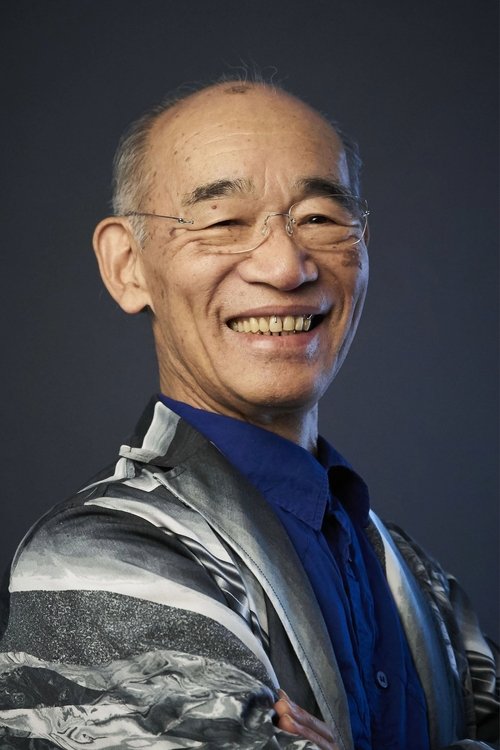
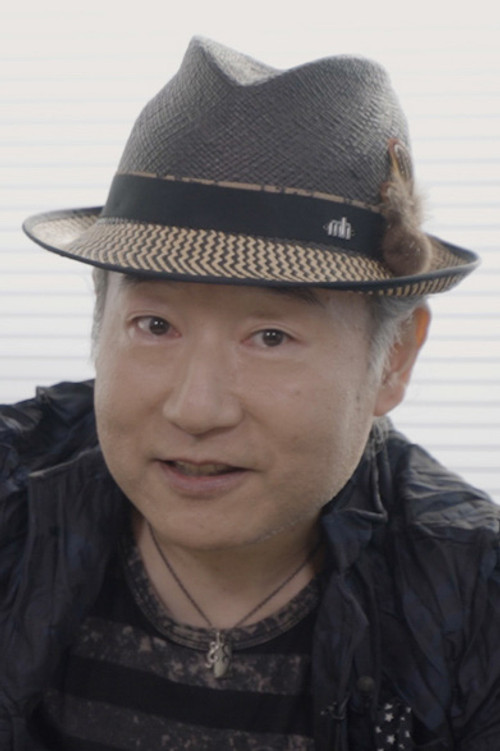
In order to train the younger generation, which was one of Director Tomino's requests to "break Gundam's shell" and one of the challenges, the staff ended up with [Yasuhiko Yoshikazu], the character who was responsible for the world view of the previous work. While the mecha designed Kunio Okawara participated, it became a system where young people solidified around him.
For the first time in a Sunrise work, a mechanical animation director was appointed, and Yunhisa Uchida was adopted and credited in the program. Yoshikazu Yasuhiko, the designer of the previous game, was in charge of character design. Work began in September 1984, and based on the plot and memo sentences delivered by director Yoshiyuki Tomino, the design was given priority to the image. However, there were many misunderstandings in this method, and some were redrawn according to their roles after the design was completed. In later years, Yasuhiko said that in the previous work, he had a relationship that could be called a "comrade" with Tomino, but in this work, it changed completely and he only felt bad, and he was able to meet directly and have a meeting without an appointment. In addition, it was decided that Yasuhiko would only work on the design and not the drawing, and the pillar of the actual drawing was the three-dimensional drawing that contrasted with Yasuhiko, who has a soft pattern with nuances. It was Hiroyuki Kitazume who was influenced by Tomoken Kogawa with a solid pattern.
Yoshiyuki Tomino crammed his frustrations into Zeta Gundam. He created the anime with the idea of telling viewers "Hey, watch my new Gundam, youngsters. Why are you not so lively like them in Z?" Tomino has mixed feelings about Zeta Gundam. Tomino did not like the series and believes he should have ended the story in the first TV series. However, at the same time, he noted that thanks to Zeta the franchise became more popular.