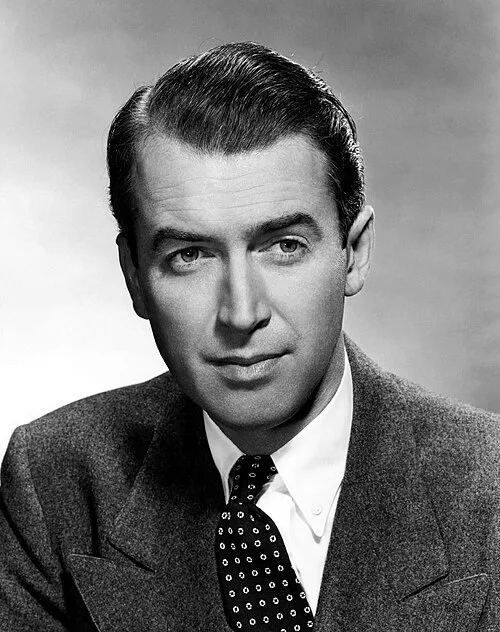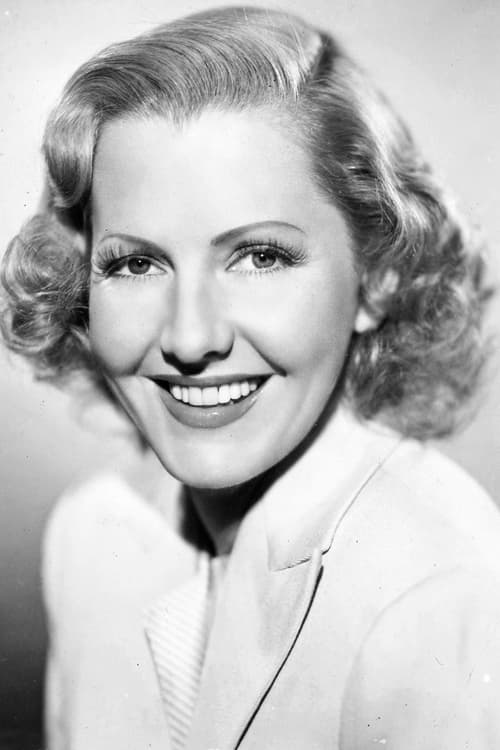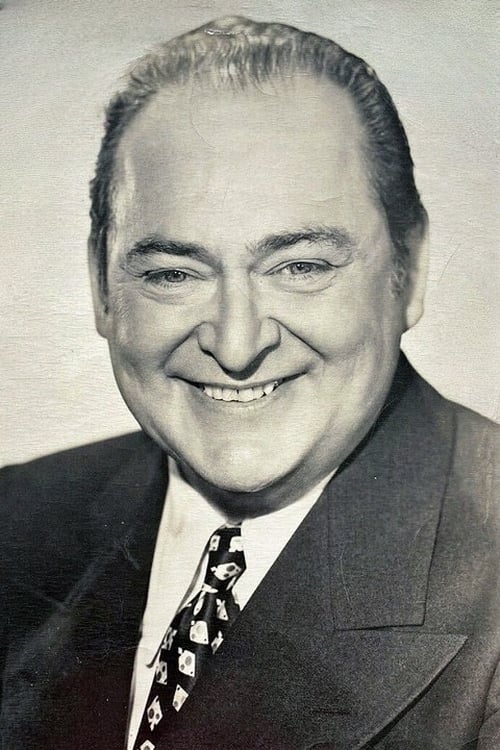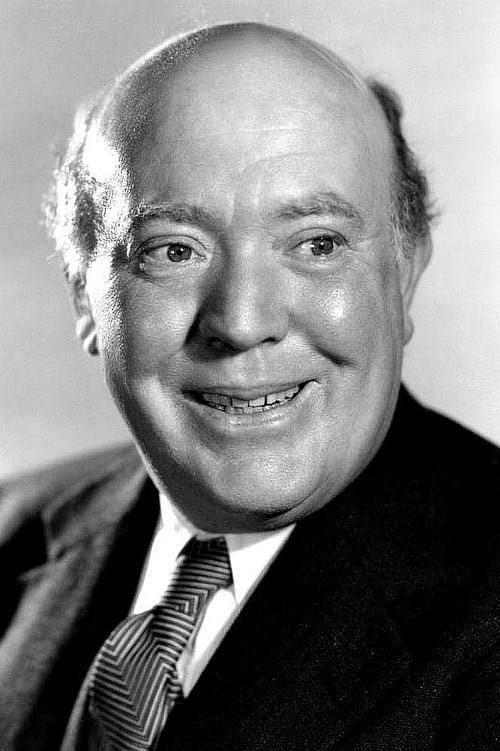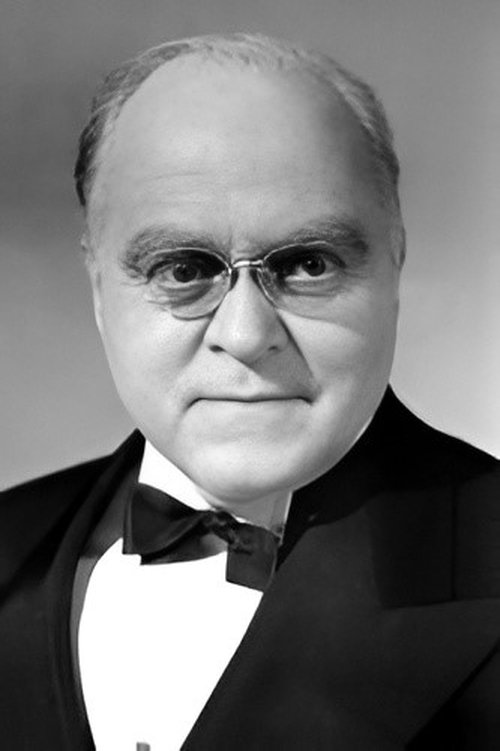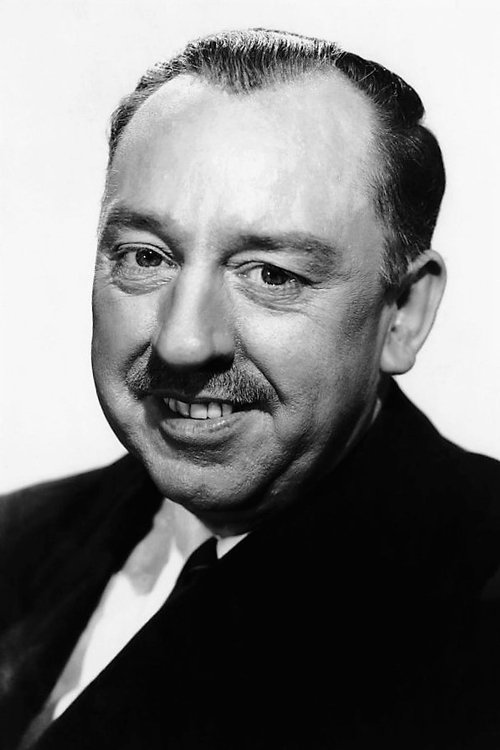




Mr. Smith Goes to Washington is a 1939 American political comedy-drama film directed by Frank Capra, starring Jean Arthur and James Stewart, and featuring Claude Rains and Edward Arnold. The film is about a naive, newly appointed United States senator who fights against government corruption, and was written by Sidney Buchman, based on Lewis R. Foster's unpublished story "The Gentleman from Montana". It was loosely based on the life of Montana US Senator Burton K. Wheeler, who underwent a similar experience when he was investigating the Warren G. Harding administration's Teapot Dome scandal.
The film was controversial in the US when it was first released, with attacks from many politicians claiming that it brought Washington into disrepute, but it was very successful at both the domestic and international box offices, and it made Stewart a major star.
Mr. Smith Goes to Washington was nominated for eleven Academy Awards, including Best Picture, Best Director and Best Actor, winning Best Original Story. Considered to be one of the greatest films of all time, the film was selected by the Library of Congress as one of the first 25 films for preservation in the United States National Film Registry in 1989, for being "culturally, historically, or aesthetically significant".
Contents
Plot
In the late 1930s, the governor of an unnamed western state, Hubert "Happy" Hopper, appoints Jefferson Smith to replace deceased U.S. Senator Sam Foley. Smith is head of the Boy Rangers, and his appointment is supported by the governor's children. Corrupt political boss Jim Taylor sought the appointment of his handpicked stooge, while popular committees wanted another candidate. Smith, however, was chosen because his naivety about politics was expected to make him easy to manipulate.
Smith is taken under the wing of the publicly esteemed, but secretly crooked, Senator Joseph Paine, who was Smith's late father's friend. Smith develops an immediate attraction to the senator's daughter, Susan. At Senator Paine's home, Smith has a conversation with Susan, fidgeting and bumbling, entranced by the young socialite. Smith's naïve and honest nature allows the unforgiving Washington press to take advantage of him, quickly tarnishing Smith's reputation with ridiculous front-page pictures and headlines branding him a yokel.
To keep Smith busy, Paine suggests he propose a bill. With the help of his secretary, Clarissa Saunders, who was the aide to Smith's predecessor and had been around Washington and politics for years, Smith comes up with a bill to authorize a federal government loan to buy some land in his home state for a national boys' camp, to be paid back by youngsters across America. Donations pour in immediately. However, the proposed campsite is already part of a dam-building graft scheme included in an appropriations bill framed by the Taylor political machine and supported by Senator Paine.
Unwilling to crucify the worshipful Smith so that their graft plan will go through, Paine tells Taylor he wants out, but Taylor reminds him that Paine is in power primarily through Taylor's influence. Paine then advises Smith to keep silent about the matter. The following day, when Smith speaks out about the bill in the Senate, the machine in his state — through Paine — accuses Smith of trying to profit from his bill by producing fraudulent evidence that Smith already owns the land in question. Smith is too shocked and angry by Paine's betrayal to defend himself and runs away.
Saunders, who looked down on Smith at first, but has come to believe in him, convinces him to launch a filibuster to postpone the appropriations bill and argue his innocence on the Senate floor just before the vote to expel him. With coaching from the gallery by Saunders, Smith deflects several attempts to defeat his filibuster, and talks non-stop for hours, reaffirming the American ideals of freedom and disclosing the dam scheme's true motives. None of the senators are convinced.
Cast
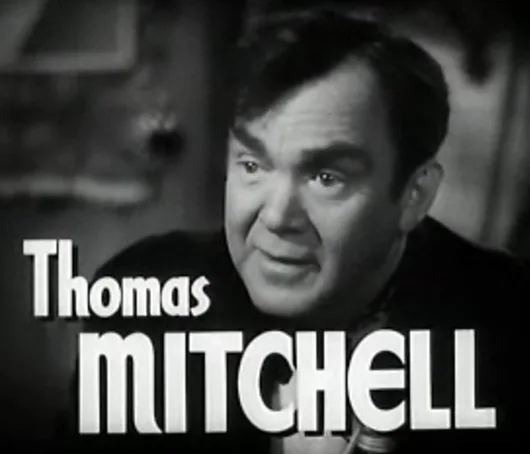
In addition, uncredited appearances include: Dick Jones as Dickie, the Senate page boy who helps Smith; Milton Kibbee, who has a bit as a reporter; Lafe McKee; and Matt McHugh of the McHugh acting family.
Production
Columbia Pictures originally purchased Lewis R. Foster's unpublished story, variously called "The Gentleman from Montana" and "The Gentleman from Wyoming", as a vehicle for Ralph Bellamy, but once Frank Capra came on board as director – after Rouben Mamoulian had expressed interest – the film was to be a sequel to his Mr. Deeds Goes to Town, called Mr. Deeds Goes to Washington, with Gary Cooper reprising his role as Longfellow Deeds. Because Cooper was unavailable, Capra then "saw it immediately as a vehicle for Jimmy Stewart and Jean Arthur", and Stewart was borrowed from MGM. Capra said of Stewart: "I knew he would make a hell of a Mr. Smith ... He looked like the country kid, the idealist. It was very close to him."
Although a youth group is featured in the story, the Boy Scouts of America refused to allow their name to be used in the film and instead the fanciful "Boy Rangers" was used.
In January 1938, both Metro-Goldwyn-Mayer and Paramount Pictures submitted Foster's story to the censors at the Hays Office, likely indicating that both studios had an interest in the project before Columbia purchased it. Joseph Breen, the head of that office, warned the studios: "[W]e would urge most earnestly that you take serious counsel before embarking on the production of any motion picture based on this story. It looks to us like one that might well be loaded with dynamite, both for the motion picture industry, and for the country at large." Breen specifically objected to "the generally unflattering portrayal of our system of Government, which might well lead to such a picture being considered, both here, and more particularly abroad, as a covert attack on the Democratic [sic?] form of government", and warned that the film should make clear that "the Senate is made up of a group of fine, upstanding citizens, who labor long and tirelessly for the best interests of the nation."
Later, after the screenplay had been written and submitted, Breen reversed course, saying of the film, "It is a grand yarn that will do a great deal of good for all those who see it and, in my judgment, it is particularly fortunate that this kind of story is to be made at this time. Out of all Senator Jeff's difficulties there has been evolved the importance of a democracy and there is splendidly emphasized the rich and glorious heritage which is ours and which comes when you have a government 'of the people, by the people, and for the people.'"
Impact
The film premiered in Constitution Hall in Washington, D.C., on October 17, 1939, sponsored by the National Press Club, an event to which 4,000 guests were invited, including 45 senators. Mr. Smith Goes to Washington was attacked by the Washington press, and politicians in the U.S. Congress, as anti-American and pro-Communist/Socialist for its portrayal of corruption in the American government. Frederic William Wile of The Washington Star wrote that the film showed "the democratic system and our vaunted free press in exactly the colors Hitler, Mussolini and Stalin like to paint them." While Capra claims in his autobiography that some senators walked out of the premiere, contemporary press accounts are unclear about whether this occurred or not, or whether senators yelled back at the screen during the film.
However, it is known that Alben W. Barkley, a Democrat and the Senate Majority Leader, called the film "silly and stupid", and said it "makes the Senate look like a bunch of crooks". He also remarked that the film was "a grotesque distortion" of the Senate, "as grotesque as anything ever seen! Imagine the Vice President of the United States winking at a pretty girl in the gallery in order to encourage a filibuster!" (Ironically Barkley would serve as Vice President between 1949 and 1953.) Barkley thought the film "showed the Senate as the biggest aggregation of nincompoops on record!"
Pete Harrison, a respected journalist and publisher of the motion picture trade journal Harrison's Reports, suggested that the Senate pass a bill allowing theater owners to refuse to show films that "were not in the best interest of our country". That did not happen, but one of the ways that some senators attempted to retaliate for the damage they felt the film had done to the reputation of their institution was by pushing the passage of the Neely Anti-Block Booking Bill, which eventually led to the breakup of the studio-owned theater chains in the late 1940s. Columbia responded by distributing a program which put forward the film's patriotism and support of democracy and publicized the film's many positive reviews.
Other objections were also voiced. Joseph P. Kennedy, the American Ambassador to Great Britain, wrote to Capra and Columbia head Harry Cohn to say that he feared the film would damage "America's prestige in Europe", and because of this urged that it be withdrawn from European release. Capra and Cohn responded, citing the film's review, which mollified Kennedy to the extent that he never followed up, although he privately still had doubts about the film.
Box office
Mr. Smith Goes to Washington was a box office success upon its release, earning theatrical rentals of $3.5 million in the United States alone. It became the second-highest-grossing film of 1939 and was also the fourth highest-grossing film of the 1930s, behind only Gone with the Wind (1939), Snow White and the Seven Dwarfs (1937) and The Wizard of Oz (1939).
Awards and honors
Academy Awards
Mr. Smith Goes to Washington was nominated for 11 Academy Awards, but won only one.
Other honors
Mr. Smith Goes to Washington was named as one of the best films of 1939 by The New York Times and Film Daily, and was nominated for Best Film by the National Board of Review.
James Stewart won the 1939 New York Film Critics Circle Award for Best Actor.
In 1989, Mr. Smith Goes to Washington was added to the United States National Film Registry as being deemed "culturally, historically, or aesthetically significant".
American Film Institute recognition
1998 AFI's 100 Years...100 Movies #29
2003 AFI's 100 Years...100 Heroes & Villains:
Jefferson Smith, Hero #11
2006 AFI's 100 Years...100 Cheers #5
2007 AFI's 100 Years...100 Movies (10th Anniversary Edition) #26
Remakes
In 1949, Columbia planned, but never actually produced, a sequel to Mr. Smith Goes to Washington, called Mr. Smith Starts a Riot. They also considered doing a gender-reversed remake in 1952, with Jane Wyman playing the lead role.
A television series of the same name, Mr. Smith Goes to Washington, ran on ABC during the 1962–1963 season, starring Fess Parker, Sandra Warner and Red Foley.
Producer Frank Capra Jr. remade the film as part of Tom Laughlin's Billy Jack series, Billy Jack Goes to Washington (1977).
The film was also loosely remade as The Distinguished Gentleman (1992), starring Eddie Murphy.
The 2019 Australian political drama television series Total Control features a remarkably similar plot, this time with the new Senator being an Indigenous Australian woman played by Deborah Mailman recruited to the Australian Senate.
Radio adaptation
The film was adapted for radio in Australia in 1941, with Grant Taylor in the title role.
In popular culture
The March 10, 1940, broadcast of Jack Benny's NBC radio show featured a parody entitled "Mr. Benny Goes to Washington".
The VHS release of Ernest Rides Again featured the opening Saturday Night Live-based short "Mr. Bill Goes to Washington".
The Simpsons has parodied it several times, including the third season episode "Mr. Lisa Goes to Washington", which deals with Lisa Simpson's disillusionment with Washington government, following her winning a trip to Washington as a prize in an essay contest; the eleventh season premiere "Beyond Blunderdome" which includes a remake of Mr. Smith Goes to Washington, starring Mel Gibson (voiced by himself) as Jefferson Smith; and the fourteenth season episode "Mr. Spritz Goes to Washington" .
For their 2002 season, the San Francisco Mime Troupe presented a musical, Mr. Smith Goes to Obscuristan, which tells the story of "an idealistic innocent who learns firsthand what Presidency of George W. Bush means when it claims to support democratic principles at home and abroad" in a post-9/11 setting.
The short-lived NBC political drama Mister Sterling (2003) was described as "a Mr. Smith Goes to Washington for the 21st century", with the show centering on an idealistic young senator from California, coming to grips with Washington and appointed by a scheming, underhanded governor.
In the TV series Highway to Heaven, the eleventh episode of season three is entitled, "Jonathan Smith Goes to Washington" (1986). The appeal made in that episode was regarding healthcare, and a filibuster was employed.
In the TV series Scandal, the third episode of season three is entitled "Mrs. Smith Goes to Washington" (2013).
The documentary film Can Mr. Smith Get to Washington Anymore? follows Missouri politician Jeff Smith's 2004 Democratic primary election campaign for the United States House of Representatives.