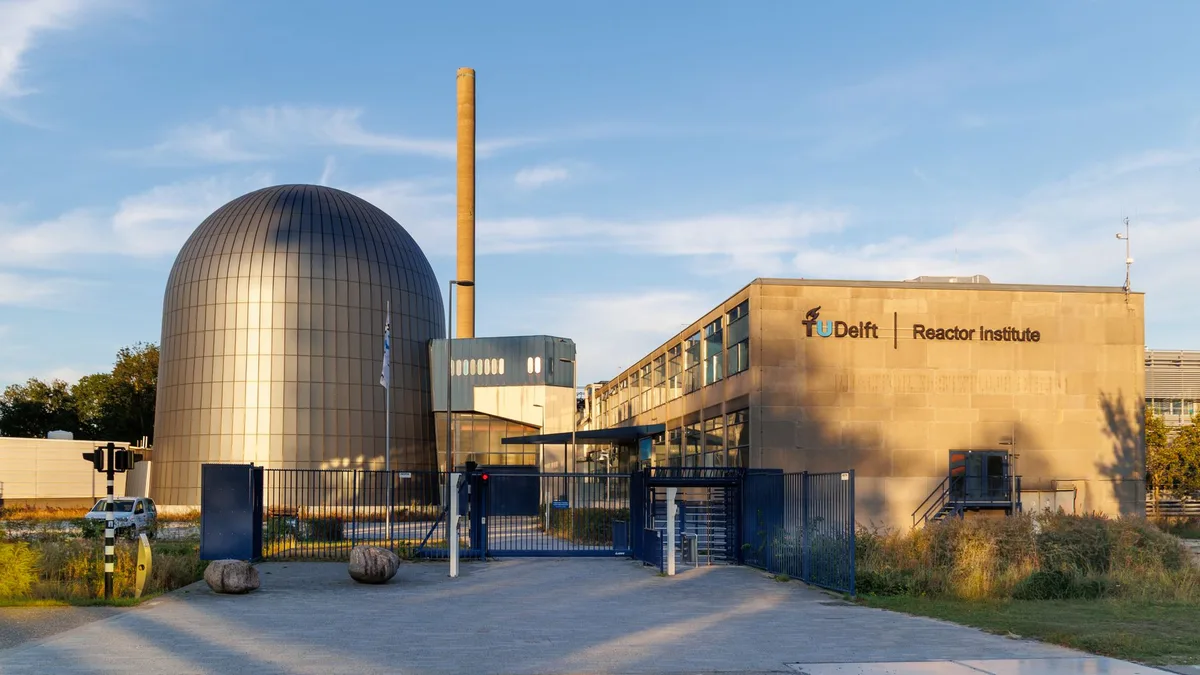
Nuclear proliferation is the spread of nuclear weapons to additional countries, particularly those not recognized as nuclear-weapon states by the Treaty on the Non-Proliferation of Nuclear Weapons, commonly known as the Non-Proliferation Treaty or NPT. Nuclear proliferation occurs through the spread of fissile material, and the technology and capabilities needed to produce it and to design and manufacture nuclear weapons. In a modern context, it also includes the spread of nuclear weapons to non-state actors. Proliferation has been opposed by many nations with and without nuclear weapons, as governments fear that more countries with nuclear weapons will increase the possibility of nuclear warfare (including the so-called countervalue targeting of civilians), de-stabilize international relations, or infringe upon the principle of state sovereignty. Conversely, supporters of deterrence theory argue that controlled proliferation decreases conflict rates via nuclear peace.
Nuclear weapons were initially researched during World War II, jointly by the United States, United Kingdom and Canada, and separately by Germany, Japan, the Soviet Union, and France. The United States was the first and is the only country to have used a nuclear weapon in war, when it used two bombs against Japan in August 1945. After surrendering, Germany and Japan ceased to be involved in any nuclear weapon research. A nuclear arms race followed, with further countries developing and testing nuclear weapons. The US primarily competed with the Soviet Union, which carried out their first test in 1949. Seven other countries developed nuclear weapons during the Cold War. The UK and France, both NATO members, developed fission and fusion weapons throughout the 1950s, and 1960s, respectively. China developed both against the backdrop of the Sino-Soviet split.
Five countries besides the five recognized Nuclear Weapon States have acquired, or are presumed to have acquired, nuclear weapons: Israel, South Africa, India, Pakistan, and North Korea. While South Africa dismantled its program and acceded, the other four states are not members of the NPT. One critique of the NPT is that the treaty is discriminatory in the sense that only those countries that tested nuclear weapons before 1968 are recognized as nuclear weapon states while all other states are treated as non-nuclear-weapon states who can only join the treaty if they forswear nuclear weapons.
Many other states pursued a nuclear weapons program without attaining weapons. These include Yugoslavia, South Korea, Libya, Brazil, Iraq, Iran, and Syria. Some states, such as modern Iran and Japan, are suggested to maintain nuclear latency, the capacity to rapidly develop nuclear weapons on demand. Proliferation is tied to the development of civilian nuclear power, as fuel reprocessing and uranium enrichment facilities have dual use for producing both civilian and weapons-grade fissile material. It is also tied to the proliferation of nuclear weapons delivery systems, especially ballistic missiles.
Contents
History of nuclear non-proliferation efforts
Early efforts to prevent nuclear proliferation involved intense government secrecy, the wartime acquisition of known uranium stores (the Combined Development Trust), and at times even outright sabotage—such as the bombing of a heavy-water facility in Norway thought to be used for a German nuclear program. These efforts began immediately after the discovery of nuclear fission and its military potential. None of these efforts were explicitly public, because the weapon developments themselves were kept secret until the bombing of Hiroshima.
Earnest international efforts to promote nuclear non-proliferation began soon after World War II, when the Truman Administration proposed the Baruch Plan of 1946, named after Bernard Baruch, America's first representative to the United Nations Atomic Energy Commission (UNAEC). The Baruch Plan, which drew heavily from the Acheson–Lilienthal Report of 1946, proposed the verifiable dismantlement and destruction of the U.S. nuclear arsenal (which, at that time, was the only nuclear arsenal in the world) after all governments had cooperated successfully to accomplish two things: (1) the establishment of an "international atomic development authority," which would actually own and control all military-applicable nuclear materials and activities, and (2) the creation of a system of automatic sanctions, which not even the U.N. Security Council could veto, and which would proportionately punish states attempting to acquire the capability to make nuclear weapons or fissile material.
Baruch's plea for the destruction of nuclear weapons invoked basic moral and religious intuitions. In one part of his address to the UN, Baruch said, "Behind the black portent of the new atomic age lies a hope which, seized upon with faith, can work out our salvation. If we fail, then we have damned every man to be the slave of Fear. Let us not deceive ourselves. We must elect World Peace or World Destruction.... We must answer the world's longing for peace and security." With this remark, Baruch helped launch the field of nuclear ethics, to which many policy experts and scholars have contributed.
Although the Baruch Plan enjoyed wide international support, it failed to emerge from the UNAEC because the Soviet Union planned to veto it in the Security Council. Still, it remained official American policy until 1953, when President Eisenhower made his "Atoms for Peace" proposal before the U.N. General Assembly. Eisenhower's proposal led eventually to the creation of the International Atomic Energy Agency (IAEA) in 1957. Under the "Atoms for Peace" program thousands of scientists from around the world were educated in nuclear science and then dispatched home, where many later pursued secret weapons programs in their home country.
Dual-use technology
Dual-use technology refers to the possibility of military use of civilian nuclear power technology. Many technologies and materials associated with the creation of a nuclear power program have a dual-use capability, in that several stages of the nuclear fuel cycle allow diversion of nuclear materials for nuclear weapons. When this happens a nuclear power program can become a route leading to the atomic bomb or a public annex to a secret bomb program. The crisis over Iran's nuclear activities is a case in point.
Many UN and US agencies warn that building more nuclear reactors unavoidably increases nuclear proliferation risks. A fundamental goal for American and global security is to minimize the proliferation risks associated with the expansion of nuclear power. If this development is "poorly managed or efforts to contain risks are unsuccessful, the nuclear future will be dangerous". For nuclear power programs to be developed and managed safely and securely, it is important that countries have domestic "good governance" characteristics that will encourage proper nuclear operations and management:
These characteristics include low degrees of corruption (to avoid officials selling materials and technology for their own personal gain as occurred with the A.Q. Khan smuggling network in Pakistan), high degrees of political stability (defined by the World Bank as "likelihood that the government will be destabilized or overthrown by unconstitutional or violent means, including politically-motivated violence and terrorism"), high governmental effectiveness scores (a World Bank aggregate measure of "the quality of the civil service and the degree of its independence from political pressures [and] the quality of policy formulation and implementation"), and a strong degree of regulatory competence.
International cooperation
Treaty on the Non-Proliferation of Nuclear Weapons
At present, 189 countries are States Parties to the Treaty on the Nonproliferation of Nuclear Weapons, more commonly known as the Nuclear Non-Proliferation Treaty or NPT. These include the five Nuclear Weapons States (NWS) recognized by the NPT: the People's Republic of China, France, Russian Federation, the UK, and the United States.
Notable non-signatories to the NPT are Israel, Pakistan, and India (the latter two have since tested nuclear weapons, while Israel is considered by most to be an unacknowledged nuclear weapons state). North Korea was once a signatory but withdrew in January 2003. The legality of North Korea's withdrawal is debatable but on 9 October 2006 North Korea said it tested a nuclear device, for which it was sanctioned by the UN Security Council.
International Atomic Energy Agency
The IAEA was established on 29 July 1957 to help nations develop nuclear energy for peaceful purposes. Allied to this role is the administration of safeguards arrangements to provide assurance to the international community that individual countries are honoring their commitments under the treaty. Though established under its own international treaty, the IAEA reports to both the United Nations General Assembly and the Security Council.
The IAEA regularly inspects civil nuclear facilities to verify the accuracy of documentation supplied to it. The agency checks inventories, and samples and analyzes materials. Safeguards are designed to deter a diversion of nuclear material by increasing the risk of early detection. They are complemented by controls on the export of sensitive technology from countries such as the UK and the United States through voluntary bodies such as the Nuclear Suppliers Group. The main concern of the IAEA is that uranium not be enriched beyond what is necessary for commercial civil plants, and that plutonium which is produced by nuclear reactors not be refined into a form that would be suitable for bomb production.
Scope of safeguards
Traditional safeguards are arrangements to account for and control the use of nuclear materials. This verification is a key element in the international system which ensures that uranium in particular is used only for peaceful purposes.
Parties to the NPT agree to accept technical safeguard measures applied by the IAEA. These require that operators of nuclear facilities maintain and declare detailed accounting records of all movements and transactions involving nuclear material. Over 550 facilities and several hundred other locations are subject to regular inspection, and their records and the nuclear material being audited. Inspections by the IAEA are complemented by other measures such as surveillance cameras and instrumentation.
The inspections act as an alert system providing a warning of the possible diversion of nuclear material from peaceful activities. The system relies on;
Material Accountancy – tracking all inward and outward transfers and the flow of materials in any nuclear facility. This includes sampling and analysis of nuclear material, on-site inspections, and review and verification of operating records.
Physical Security – restricting access to nuclear materials at the site.
Containment and Surveillance – use of seals, automatic cameras and other instruments to detect unreported movement or tampering with nuclear materials, as well as spot checks on-site.
All NPT non-weapons states must accept these full-scope safeguards. In the five weapons states plus the non-NPT states (India, Pakistan and Israel), facility-specific safeguards apply. IAEA inspectors regularly visit these facilities to verify completeness and accuracy of records.
The terms of the NPT cannot be enforced by the IAEA itself, nor can nations be forced to sign the treaty. In reality, as shown in Iraq and North Korea, safeguards can be backed up by diplomatic, political and economic measures.
Additional Protocol
In 1993 a program was initiated to strengthen and extend the classical safeguards system, and a model protocol was agreed by the IAEA Board of Governors 1997. The measures boosted the IAEA's ability to detect undeclared nuclear activities, including those with no connection to the civil fuel cycle.
Innovations were of two kinds. Some could be implemented on the basis of IAEA's existing legal authority through safeguards agreements and inspections. Others required further legal authority to be conferred through an Additional Protocol. This must be agreed by each non-weapons state with IAEA, as a supplement to any existing comprehensive safeguards agreement. Weapons states have agreed to accept the principles of the model additional protocol.
Key elements of the model Additional Protocol:
The IAEA is to be given considerably more information on nuclear and nuclear-related activities, including R & D, production of uranium and thorium (regardless of whether it is traded), and nuclear-related imports and exports.
IAEA inspectors will have greater rights of access. This will include any suspect location, it can be at short notice (e.g., two hours), and the IAEA can deploy environmental sampling and remote monitoring techniques to detect illicit activities.
States must streamline administrative procedures so that IAEA inspectors get automatic visa renewal and can communicate more readily with IAEA headquarters.
Further evolution of safeguards is towards evaluation of each state, taking account of its particular situation and the kind of nuclear materials it has. This will involve greater judgement on the part of IAEA and the development of effective methodologies which reassure NPT States.
As of 3 July 2015, 146 countries have signed the Additional Protocols and 126 have brought them into force. The IAEA is also applying the measures of the Additional Protocol in Taiwan. Under the Joint Comprehensive Plan of Action, Iran has agreed to implement its protocol provisionally. Among the leading countries that have not signed the Additional Protocol are Egypt, which says it will not sign until Israel accepts comprehensive IAEA safeguards, and Brazil, which opposes making the protocol a requirement for international cooperation on enrichment and reprocessing, but has not ruled out signing.
Limitations of safeguards
The greatest risk from nuclear weapons proliferation comes from countries that have not joined the NPT and which have significant unsafeguarded nuclear activities; India, Pakistan, and Israel fall within this category. While safeguards apply to some of their activities, others remain beyond scrutiny.
A further concern is that countries may develop various sensitive nuclear fuel cycle facilities and research reactors under full safeguards and then subsequently opt out of the NPT. Bilateral agreements, such as insisted upon by Australia and Canada for sale of uranium, address this by including fallback provisions, but many countries are outside the scope of these agreements. If a nuclear-capable country does leave the NPT, it is likely to be reported by the IAEA to the United Nations Security Council, just as if it were in breach of its safeguards agreement. Trade sanctions would then be likely.
IAEA safeguards can help ensure that uranium supplied as nuclear fuel and other nuclear supplies do not contribute to nuclear weapons proliferation. In fact, the worldwide application of those safeguards and the substantial world trade in uranium for nuclear electricity make the proliferation of nuclear weapons much less likely.
The Additional Protocol, once it is widely in force, will provide credible assurance that there are no undeclared nuclear materials or activities in the states concerned. This will be a major step forward in preventing nuclear proliferation.
Other developments
The Nuclear Suppliers Group communicated its guidelines, essentially a set of export rules, to the IAEA in 1978. These were to ensure that transfers of nuclear material or equipment would not be diverted to unsafeguarded nuclear fuel cycle or nuclear explosive activities, and formal government assurances to this effect were required from recipients. The Guidelines also recognised the need for physical protection measures in the transfer of sensitive facilities, technology and weapons-usable materials, and strengthened retransfer provisions. The group began with seven members—the United States, the former USSR, the United Kingdom, France, Germany, Canada and Japan—but now includes 46 countries including all five nuclear weapons states.
The International Framework for Nuclear Energy Cooperation is an international project involving 25 partner countries, 28 observer and candidate partner countries, and the International Atomic Energy Agency, the Generation IV International Forum, and the European Commission. Its goal is to "[..] provide competitive, commercially-based services as an alternative to a state's development of costly, proliferation-sensitive facilities, and address other issues associated with the safe and secure management of used fuel and radioactive waste."
According to Kenneth D. Bergeron's Tritium on Ice: The Dangerous New Alliance of Nuclear Weapons and Nuclear Power, tritium is not classified as a "special nuclear material" but rather as a by-product. It is seen as an important litmus test on the seriousness of the United States' intention to nuclear disarm. This radioactive, super-heavy, hydrogen isotope is used to boost the efficiency of fissile materials in nuclear weapons. The United States resumed tritium production in 2003 for the first time in 15 years. This could indicate that there is a potential nuclear arms stockpile replacement since the isotope naturally decays.
In May 1995, NPT parties reaffirmed their commitment to a Fissile Materials Cut-off Treaty to prohibit the production of any further fissile material for weapons. This aims to complement the Comprehensive Nuclear-Test-Ban Treaty of 1996 (not entered into force as of June 2020) and to codify commitments made by the United States, the UK, France and Russia to cease production of weapons material, as well as putting a similar ban on China. This treaty will also put more pressure on Israel, India and Pakistan to agree to international verification.
Unsanctioned Nuclear Activity or U.N.A
NPT Non Signatories
India, Pakistan and Israel have been "threshold" countries in terms of the international non-proliferation regime. They possess or are quickly capable of assembling one or more nuclear weapons. They have remained outside the 1970 NPT. They are thus largely excluded from trade in nuclear plants or materials, except for safety-related devices for a few safeguarded facilities.
In May 1998 India and Pakistan each exploded several nuclear devices underground. This heightened concerns regarding a nuclear arms race between them, with Pakistan involving the People's Republic of China, an acknowledged nuclear weapons state. Both countries are opposed to the NPT as it stands, and India has consistently attacked the Treaty since its inception in 1970 labeling it as a lopsided treaty in favor of the nuclear powers.
Relations between the two countries are tense and hostile, and the risks of nuclear conflict between them have long been considered quite high. Kashmir is a prime cause of bilateral tension, its sovereignty being in dispute since 1948. There is a persistent low-level bilateral military conflict due to the alleged backing of insurgency by Pakistan in India, and the infiltration of Pakistani state-backed militants into Indian-administered Jammu and Kashmir, along with the disputed status of Kashmir.
Both engaged in a conventional arms race in the 1980s, including sophisticated technology and equipment capable of delivering nuclear weapons. In the 1990s the arms race quickened. In 1994 India reversed a four-year trend of reduced allocations for defence, and despite its much smaller economy, Pakistan was expected to push its own expenditures yet higher. Both have lost their patrons: India, the former USSR, and Pakistan, the United States.
But it is the growth and modernization of China's nuclear arsenal and its assistance with Pakistan's nuclear power programme and, reportedly, with missile technology, which exacerbate Indian concerns. In particular, as viewed by Indian strategists, Pakistan is aided by China's People's Liberation Army.
Nuclear power for civil use is well established in India. Its civil nuclear strategy has been directed towards complete independence in the nuclear fuel cycle, necessary because of its outspoken rejection of the NPT. Due to economic and technological isolation of India after its nuclear test in 1974, India has largely diverted focus on developing and perfecting the fast breeder technology by intensive materials and fuel cycle research at the dedicated center established for research into fast reactor technology, Indira Gandhi Center for Atomic Research (IGCAR) at Kalpakkam, in the southern part of the country. At the moment, India has a small fast breeder reactor and a much larger Prototype Fast Breeder Reactor. This self-sufficiency extends from uranium exploration and mining through fuel fabrication, heavy water production, reactor design and construction, to reprocessing and waste management. It is also developing technology to utilise its abundant resources of thorium as a nuclear fuel.
Nuclear arms control in South Asia
The public stance of India and Pakistan on non-proliferation differs markedly. Pakistan has initiated a series of regional security proposals. It has repeatedly proposed a nuclear-free zone in South Asia, and has proclaimed its willingness to engage in nuclear disarmament and to sign the Non-Proliferation Treaty if India would do so. It has endorsed a United States proposal for a regional five power conference to consider non-proliferation in South Asia.
India has taken the view that solutions to regional security issues should be found at the international rather than the regional level, since its chief concern is with China. It therefore rejects Pakistan's proposals.
Instead, the 'Gandhi Plan', put forward in 1988, proposed the revision of the Non-Proliferation Treaty, which it regards as inherently discriminatory in favor of the nuclear-weapon States, and a timetable for complete nuclear weapons disarmament. It endorsed early proposals for a Comprehensive Test Ban Treaty and for an international convention to ban the production of highly enriched uranium and plutonium for weapons purposes, known as the 'cut-off' convention.
The United States for some years, especially under the Clinton administration, pursued a variety of initiatives to persuade India and Pakistan to abandon their nuclear weapons programs and to accept comprehensive international safeguards on all their nuclear activities. To this end, the Clinton administration proposed a conference of the five nuclear-weapon states, Japan, Germany, India and Pakistan.
India refused this and similar previous proposals, and countered with demands that other potential weapons states, such as Iran and North Korea, should be invited, and that regional limitations would only be acceptable if they were accepted equally by China. The United States would not accept the participation of Iran and North Korea and these initiatives have lapsed.
Another, more recent approach, centers on 'capping' the production of fissile material for weapons purposes, which would hopefully be followed by 'roll back'. To this end, India and the United States jointly sponsored a UN General Assembly resolution in 1993 calling for negotiations for a 'cut-off' convention. Should India and Pakistan join such a convention, they would have to agree to halt the production of fissile materials for weapons and to accept international verification on their relevant nuclear facilities (enrichment and reprocessing plants). It appears that India is now prepared to join negotiations regarding such a Cut-off Treaty, under the UN Conference on Disarmament.
NPT signatories
In 2004 and 2005, Egypt disclosed past undeclared nuclear activities and material to the IAEA. In 2007 and 2008, high-enriched and low-enriched uranium particles were found in environmental samples taken in Egypt. In 2008, the IAEA states Egypt's statements were consistent with its own findings. In May 2009, Reuters reported that the IAEA was conducting further investigation in Egypt.
In 2003, the IAEA reported that Iran had been in breach of its obligations to comply with provisions of its safeguard agreement. In 2005, the IAEA Board of Governors voted in a rare non-consensus decision to find Iran in non-compliance with its NPT Safeguards Agreement and to report that non-compliance to the UN Security Council. In response, the UN Security Council passed a series of resolutions citing concerns about the program. Iran's representative to the UN argues sanctions compel Iran to abandon its rights under the Nuclear Nonproliferation Treaty to peaceful nuclear technology. Iran says its uranium enrichment program is exclusively for peaceful purposes and has enriched uranium to "less than 5 percent," consistent with fuel for a nuclear power plant and significantly below the purity of WEU (around 90%) typically used in a weapons program. The director general of the International Atomic Energy Agency, Yukiya Amano, said in 2009 he had not seen any evidence in IAEA official documents that Iran was developing nuclear weapons.
Up to the late 1980s it was generally assumed that any undeclared nuclear activities would have to be based on the diversion of nuclear material from safeguards. States acknowledged the possibility of nuclear activities entirely separate from those covered by safeguards, but it was assumed they would be detected by national intelligence activities. There was no particular effort by IAEA to attempt to detect them.
Iraq had been making efforts to secure a nuclear potential since the 1960s. In the late 1970s a specialised plant, Osiraq, was constructed near Baghdad. The plant was attacked during the Iran–Iraq War and was destroyed by Israeli bombers in June 1981.
Not until the 1990 NPT Review Conference did some states raise the possibility of making more use of (for example) provisions for "special inspections" in existing NPT Safeguards Agreements. Special inspections can be undertaken at locations other than those where safeguards routinely apply, if there is reason to believe there may be undeclared material or activities.
Breakout capability
For a state that does not possess nuclear weapons, the capability to produce one or more weapons quickly and with little warning is called a breakout capability.
Japan, with its civil nuclear infrastructure and experience, has a stockpile of separated plutonium that could be fabricated into weapons relatively quickly.
Iran, according to some observers, may be seeking (or have already achieved) a breakout capability, with its stockpile of low-enriched uranium and its capability to enrich further to weapons-grade.
Arguments for and against proliferation
There has been much debate in the academic study of international security as to the advisability of proliferation. In the late 1950s and early 1960s, Gen. Pierre Marie Gallois of France, an adviser to Charles DeGaulle, argued in books like The Balance of Terror: Strategy for the Nuclear Age (1961) that mere possession of a nuclear arsenal, what the French called the Force de frappe, was enough to ensure deterrence, and thus concluded that the spread of nuclear weapons could increase international stability.
Some very prominent neo-realist scholars, such as Kenneth Waltz, emeritus Professor of Political Science at the University of California, Berkeley and Adjunct Senior Research Scholar at Columbia University, and John Mearsheimer, R. Wendell Harrison Distinguished Service Professor of Political Science at the University of Chicago, continue to argue along the lines of Gallois in a separate development. Specifically, these scholars advocate some forms of nuclear proliferation, arguing that it will decrease the likelihood of war, especially in troubled regions of the world. Aside from the majority opinion which opposes proliferation in any form, there are two schools of thought on the matter: those, like Mearsheimer, who favor selective proliferation, and those such as Waltz, who advocate a laissez-faire attitude to programs like North Korea's.
Total proliferation
In embryo, Waltz argues that the logic of mutually assured destruction (MAD) should work in all security environments, regardless of historical tensions or recent hostility. He sees the Cold War as the ultimate proof of MAD logic—the only occasion when enmity between two Great Powers did not result in military conflict. This was, he argues, because nuclear weapons promote caution in decision-makers. Neither Washington nor Moscow would risk a nuclear apocalypse to advance territorial or power goals, hence a peaceful stalemate ensued (Waltz and Sagan (2003), p. 24). Waltz believes there to be no reason why this effect would not occur in all circumstances.
Todd Sechser and Matthew Fuhrmann find that nuclear weapons do not necessarily lead states to be more successful in coercive diplomacy. They argue that nuclear weapons are useful for defense, but are not effective offensive tools. As a consequence, they write that nuclear proliferation may "be less harmful for international security than many believe" while cautioning that nuclear proliferation may still be harmful due to miscalculation, terrorism and sabotage.
Selective proliferation
John Mearsheimer would not support Waltz's optimism in the majority of potential instances; however, he has argued for nuclear proliferation as policy in certain places, such as post–Cold War Europe. In two famous articles, Mearsheimer opined that Europe was bound to return to its pre–Cold War environment of regular conflagration and suspicion at some point in the future. He advocated arming both Germany and Ukraine with nuclear weaponry in order to achieve a balance of power between these states in the east and France/UK in the west and predicted that otherwise war would eventually break out on the European continent. Russia did invade Ukraine in 2022.
Another separate argument against Waltz's open proliferation and in favor of Mearsheimer's selective distribution is the possibility of nuclear terrorism. Some countries included in the aforementioned laissez-faire distribution could predispose the transfer of nuclear materials or a bomb falling into the hands of groups not affiliated with any governments. Such countries would not have the political will or ability to safeguard attempts at devices being transferred to a third party. Not being deterred by self-annihilation, terrorism groups could push forth their own nuclear agendas or be used as shadow fronts to carry out the attack plans by mentioned unstable governments.
Arguments against both positions
There are numerous arguments presented against both selective and total proliferation, generally targeting the very neorealist assumptions (such as the primacy of military security in state agendas, the weakness of international institutions, and the long-run unimportance of economic integration and globalization to state strategy) its proponents tend to make. With respect to Mearsheimer's specific example of Europe, many economists and neoliberals argue that the economic integration of Europe through the development of the European Union has made war in most of the European continent so disastrous economically so as to serve as an effective deterrent. Constructivists take this one step further, frequently arguing that the development of EU political institutions has led or will lead to the development of a nascent European identity, which most states on the European continent wish to partake in to some degree or another, and which makes all states within or aspiring to be within the EU regard war between them as unthinkable.
As for Waltz, the general opinion is that most states are not in a position to safely guard against nuclear use, that he underestimates the long-standing antipathy in many regions, and that weak states will be unable to prevent—or will actively provide for—the disastrous possibility of nuclear terrorism. Waltz has dealt with all of these objections at some point in his work, though some scholars feel he has not adequately responded (e.g.: Betts, 2000).
The Learning Channel documentary Doomsday: "On The Brink" illustrated 40 years of U.S. and Soviet nuclear weapons accidents. Even the 1995 Norwegian rocket incident demonstrated a potential scenario in which Russian democratization and military downsizing at the end of the Cold War did not eliminate the danger of accidental nuclear war through command and control errors. After asking: might a future Russian ruler or renegade Russian general be tempted to use nuclear weapons to make foreign policy? The documentary writers revealed a greater danger of Russian security over its nuclear stocks, but especially the ultimate danger of human nature to want the ultimate weapon of mass destruction to exercise political and military power. According to the documentary, the Soviets, Russians, and Americans came very close to global catastrophe. History and military experts agree that proliferation can be slowed, but never stopped (technology cannot be uninvented).
Proliferation begets proliferation
'Proliferation begets proliferation' is a concept described by professor of political science Scott Sagan in his article, "Why Do States Build Nuclear Weapons?". This concept can be described as a strategic chain reaction. If one state produces a nuclear weapon it creates almost a domino effect within the region. States in the region will seek to acquire nuclear weapons to balance or eliminate the security threat. Sagan describes this reaction in his article where he states, "Every time one state develops nuclear weapons to balance against its main rival, it also creates a nuclear threat to another region, which then has to initiate its own nuclear weapons program to maintain its national security".
Sagan laid out the historical pattern: When the United States demonstrated that it had nuclear weapon capability with the atomic bombing of Hiroshima and Nagasaki, the Soviet Union started to develop its program in preparation for the Cold War. The Soviet military buildup caused France and the United Kingdom to view it as a security threat, so they too pursued nuclear weapons. (Sagan, p. 71) Even though proliferation causes proliferation, this does not guarantee that other states will successfully develop nuclear weapons because the economic stability of a state plays an important role in whether the state will successfully be able to acquire nuclear weapons. The article written by Dong-Jong Joo and Erik Gartzke discusses how the economy of a country determines whether they will successfully acquire nuclear weapons.
Former Iranian President Mahmoud Ahmadinejad has been a frequent critic of the concept of "nuclear apartheid" as it has been put into practice by several countries, particularly the United States. In an interview with CNN's Christiane Amanpour, Ahmadinejad said that Iran was "against 'nuclear apartheid,' which means some have the right to possess it, use the fuel, and then sell it to another country for 10 times its value. We're against that. We say clean energy is the right of all countries. But also it is the duty and the responsibility of all countries, including ours, to set up frameworks to stop the proliferation of it." Hours after that interview, he spoke passionately in favor of Iran's right to develop nuclear technology, claiming the nation should have the same liberties.
Iran is a signatory of the Nuclear Non-Proliferation Treaty and claims that any work done in regards to nuclear technology is related only to civilian uses, which is acceptable under the treaty. In 2005, the International Atomic Energy Agency found that Iran violated its safeguards obligations under the treaty by performing uranium-enrichment in secret, after which the United Nations Security Council ordered Iran to suspend all uranium-enrichment until July 2015.
Security guarantees
In their article, "The Correlates of Nuclear Proliferation," Sonali Singh and Christopher R. Way argue that states protected by a security guarantee from a great power, particularly if backed by the "nuclear umbrella" of extended deterrence, have less of an incentive to acquire their own nuclear weapons. States that lack such guarantees are more likely to feel their security threatened and so have greater incentives to bolster or assemble nuclear arsenals. As a result, it is then argued that bipolarity may prevent proliferation whereas multipolarity may actually influence proliferation.
Artificial intelligence
Concerns have been raised that widespread use of large language models (LLMs) since 2023 could assist in the technical understanding of nuclear weapons for terrorism or espionage purposes. The company Anthropic, which maintains the public LLM Claude, has since 2024 collaborated with the National Nuclear Security Administration of the US Department of Energy, to develop nuclear technology-related filters, intended to be shared with the Frontier Model Forum, which includes AI giants Amazon, Google, OpenAI, Meta, and Microsoft. The filters can distinguish specifically nuclear weapons-related inquiries, from an opposing example of a scientist's inquiry on civilian nuclear power. The NNSA carried out a year of red-teaming tests, leading to a filter with a 94.8% true positive rate for "harmful conversations", a 5.2% false negative rate, allowing "harmful conversations" as benign, and a 0% false positive rate. LLMs, being purely trained on large data sets of human-written text, may suffer from limitations on the accuracy of physics-related generated answers, while in March 2025 it was reported that Nvidia was developing a "world model", distinct from LLMs and trained on physical data.