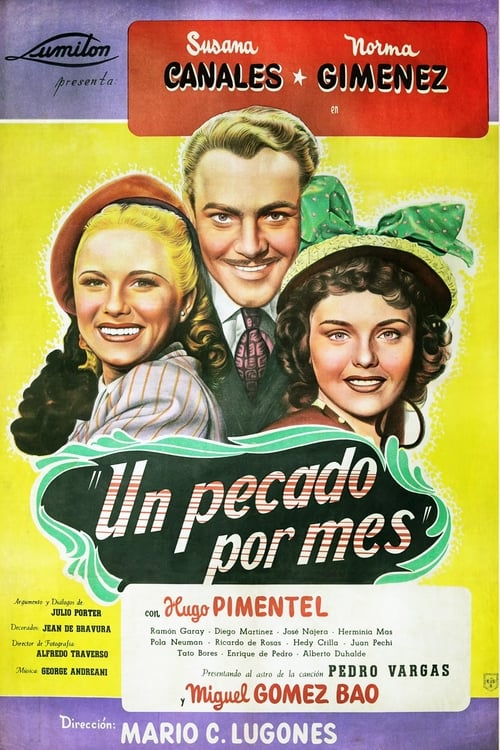




Pedro Vargas Mata (29 April 1906 – 30 October 1989) was a Mexican tenor and actor, from the golden age of Mexican cinema, participating in more than 70 films. He was known as the "Nightingale of the Americas", "Song Samurai" or "Continental Tenor".
Despite his training in opera, he dedicated his career to popular song, reaching international recognition and becoming one of the main interpreters of Agustín Lara.
Contents
Biography
Early life
Vargas was born in San Miguel de Allende, Guanajuato on 29 April 1906 and died on 30 October 1989, in Mexico City. He was the second of twelve children that José Cruz Vargas and Rita Mata had.
Born into a family of modest means, Pedro Vargas sang in the church choir in his hometown from the age of seven. In 1920, when he was only 14 years old, he came to Mexico City and immediately began singing in the choirs of several churches and giving serenades. It was in Colegio Francés de La Salle where he was given a scholarship to study piano and solfeggio and where he met the composer and tenor Mario Talavera –his guide and mentor– who recommended him to Professor José Pierson. While he was there he met Jorge Negrete, Alfonso Ortiz Tirado and Juan Arvizu. José Mojica also recommended him to Alejandro Cuevas, who offered him free lessons.
Career
He received the opportunity to participate in the opera "Cavalleria Rusticana" on 22 January 1928, at the Teatro Esperanza, as he had been recommended by Jose Pierson. He traveled to the United States with the Orquesta Tipica (Orquesta Tipica de la Ciudad de México) de Miguel Lerdo de Tejada.
On his first visit to Buenos Aires he recorded two of his own compositions for the RCA Victor label: "Porteñita mía" and "Me fui", with musical backing from pianist Agüero Pepe and the legendary violinist Elvino Vardaro.
On 12 September 1931, he married María Teresa Camo Jáuregui, who came originally from a Querétaro family and with whom he had four children, Pedro, Mario, Marcelo and Alejandro.
He found great success as an interpreter of the composer Agustín Lara, as well as many other composers from Latin America, and enabled their music to traverse diverse countries in the continent, mainly Argentina, Colombia, and Venezuela. With an extensive repertoire that included lyrical songs such as "Jinetes en el Cielo", ranchera songs like "Allá en el Rancho Grande", boleros such as "Obsesión" (sung as a duet with Beny Moré) and nostalgic songs like "Alfonsina y el mar", Pedro Vargas became known as "The Nightingale of the Americas".
Death
Pedro Vargas died due to complications with his diabetes while sleeping and suffered from a heart attack, 30 October 1989, in Mexico City, at the age of 83.
Discography
Long (vinyl)
El Rey Pedro Vargas – RCA VICTOR – 0107LPA
Tracks
– Te Solté la Rienda
– Se Me Olvidó Otra Vez
– A Donde Va Nuestro Amor?
– Mi Paloma Triste #- Volver, Volver
– El Rey #- Cruz de Olvido
– 16 Años
– Eres Tú
– Amor de Mi Vida
– Que Te Vaya Bonito
Así Es Mi Tierra Pedro Vargas y La Rondalla Tapatía – RCA VICTOR – 0107LPB
Tracks
– Así es mi Tierra
– Soy Puro Mexicano
– Allá en el Rancho Grande
– La Feria de las Flores
– Dos Arbolitos
– Cielito Lindo
– La del Rebozo Blanco
– Fallaste Corazón
– La Barca de Guaymas
– La Huella de Mis Besos
– ¿Sabes De Que Tengo Ganas?
Filmography
A Butterfly in the Night (1977) (voice)
Thank (1975) TV
Back (1969)
Retablos of Guadalupe (1967) ... Retablos of Tepeyac (Mexico)
La Duquesa (1966) TV
Cucurrucucu Paloma (1965)
El Study Raleigh (1964) TV
The singer cricket Cri Cri (1963) (voice)
The Paper Man (1963) (voice) ... The Paper Man (International: English title)
Domingos Herdez (1962) TV
Mexico lindo y querido (1961) ... Beautiful and Beloved Mexico (International: English title)
Three Black Angels (1960)
Everyone his music (1959)
Unforgettable Melodies (1959 ).... Singer
Flor de canela (1959)
The Life of Agustín Lara (1959)
"Estudio de Pedro Vargas, El" (1959) TV
Bolero inmortal (1958)
Locos on television (1958)
Mask of flesh, The (1958)
Music in the Night (1958)