Production
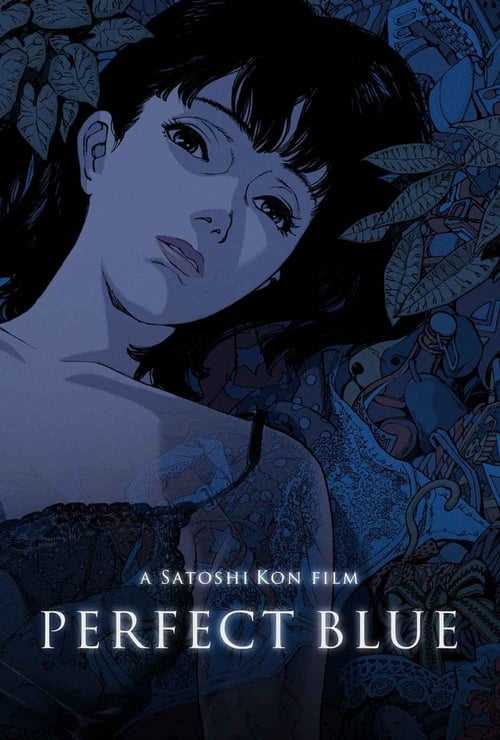
This film was Satoshi Kon's first directorial effort.
Masao Maruyama, a producer at Madhouse at the time, appreciated Kon's work on the OVA JoJo's Bizarre Adventure and contacted him to ask if he would be interested in directing in the fall of 1994. The original author, Yoshikazu Takeuchi, allegedly first planned a live-action film based on his novel. However, due to funding difficulties, it was downgraded to direct-to-video and then direct-to-video animation. When Kon received the initial offer, it was for an OVA project, so he made Perfect Blue as a video animation. Then, it was decided to be released as a movie in a hurry just before its completion. This work was originally made as a video animation for a narrow market, so it was expected to disappear as soon as a few people talked about it. The fact that such a work was treated as a film, invited to many film festivals around the world, and released as a package in many countries was unexpected for those involved. Psychological horror was not a mainstream genre in Japanese animation, and there was no precedent for it at the time, so it would normally have been rejected.
By the time Kon was offered the job, the title Perfect Blue and the content, a story about a B-class idol and a perverted fan had already been set. He had not read the original novel and only read the script for the film, which was said to be close to the original and was never used in the final film. There is no play-within-a-play in the original story, nor is there a motif of blurring the boundary between dream and reality. The first plot was a simple splatter/psycho-horror story about an idol girl that is attacked by a perverted fan who cannot tolerate her image change, and there were also many depictions of bleeding, so it was not suitable for Kon who does not like horror or idols. Kon said that if he were free to make a plan, he would never have thought of such a setting. This genre was overused, having already been dealt with in various works such as Se7en, Basic Instinct and The Silence of the Lambs and was also something that anime was not good at. Since most of the works in that genre pursue how perverted or crazy the perpetrators, the murderers, are, Kon focused on "how the inner world of the protagonist, the victim, is broken by being targeted by the stalker" in order to outsmart the audience. On the other hand, the play within a play, Double Bind, is more like a parody than a straight psycho-horror, and he made it with the intention of criticizing Japanese TV dramas that are easily made by imitating Hollywood fads immediately.
Kon decided to take on the role of director because he was attracted by the allure of directing for the first time, and because the original author allowed him to change the story as he liked as long as he kept three things in mind to make the film work: the main character is a B-grade idol, she has a rabid fan (stalker), and it is a horror film. Kon took some elements from the original work, such as the uniquely Japanese existence of idols, the "otaku" fans that surround them, and the stalkers that have become more radical, and came up with as many ideas as possible with the scriptwriter, Sadayuki Murai, with the intention of using them to create a completely new story. To find the film's core motif, Kon came up with the motif of two things that should have a "borderline", such as "dream and reality", "memory and fact", and "oneself and others", becoming borderless and blending together, based on the short film Magnetic Rose (from Memories), for which he had written a script, and the suspended manga Opus. The concept of "memory and fact" in the plot was inspired by the album Sim City by Susumu Hirasawa. He said, "This album is like a city that was suddenly created with a high degree of modernity without any evolutionary process". In the meantime, he came up with the idea that "a character more like 'me' than 'I', the protagonist, to the people around 'me' " is created on the Internet without 'my' knowledge". The character is "the past me" for the protagonist, and this "other me" that should have existed only on the Internet has materialized due to external factors (the consciousness of the fans who want the protagonist to be like that) and internal factors (the protagonist's regret that she might have been more comfortable in the past). And then the composition that the character and the protagonist herself confronted emerged. It was only then that he became convinced that this work could be established as his own video work. Kon decided to interpret the original story above as a story about an idol girl who was broken down by a sudden change in her environment or by a stalker who targets her, and wrote a completely new script with Sadayuki Murai. Initially, Murai wrote the first draft of the script, and Kon added or removed ideas from it. They spent a lot of time discussing, and many of the ideas came out of that. Next, Kon wrote all the storyboards, where he also made changes to dialogue and other elements. The drawing work was also carried out in parallel.
The company that purchased the videogram and television rights to Perfect Blue before the film was completed advised the distributor to submit the film to the Fantasia International Film Festival in Montreal, Canada, so that it could be released overseas first. Since it was his first film, director Kon was still unknown. Therefore, the distributor introduced the film as the first directorial effort of a disciple of Katsuhiro Otomo, the creator of Akira, which had already become a hit overseas. Otomo is credited as a planning collaborator, but he never arranged for the company to ask Kon to direct the film, nor was he involved in the film. However, Otomo apparently once advised the original author about the circumstances of the animation industry when he was touting around the animation project. At Fantasia, the film was so well received that a second screening was hurriedly arranged for those who could not see it, and it was eventually voted by the audience as the best international film. This acclaim brought the distributor invitations from more than 50 film festivals, including Germany, Sweden, Australia, and South Korea. The distributor began negotiations with distributors in various European countries and eventually succeeded in selling the film in major markets such as Spanish, French, Italian, English and German-speaking countries prior to its release in Japan.
The distributor was successful in obtaining permission from filmmakers Roger Corman and Irvin Kershner to use their comments in recommending the film free of charge worldwide. As a result, their comments were used on international theater flyers and in worldwide promotions.
Director Darren Aronofsky was rumored to have purchased the remake rights for Perfect Blue. However, when he spoke with Kon in a magazine in 2001, he stated that he had to abandon the purchase for various reasons. His film Requiem for a Dream pays homage to Perfect Blue in some of its angles and shots.