Overview
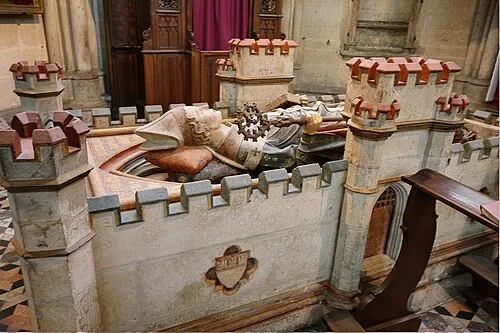
Philip I (c. 1130 – 13 August 1191) was Archbishop of Cologne and Archchancellor of Italy from 1167 to 1191.
He was the son of Count Goswin II of Heinsberg and Adelaide of Sommerschenburg. He received his ecclesiastical training in Cologne and Reims, becoming dean of the cathedral chapter in Cologne and then provost of Liège. In the late summer of 1167 he was promoted to the archchancellorship and archdiocese of Cologne, where he was consecrated on 29 September 1168. That year he intervened and mediated in the dispute between France and England.
As bishop, Philip continued the policies of his predecessors. However, he surpassed them all in territorial expansion, buying up the lands of his vassals and selling many of them at a profit. Philip held his fief directly from the emperor and was the greatest of the imperial lords. By buying up his vassals, he tied them more closely to himself. Frederick Barbarossa, however, saw the archbishop's claims as a threat and allied himself with the competing baronial factions in the region, notably Henry IV of Luxembourg, who had a hereditary claim to Hainaut. Barbarossa also made Aachen and Duisburg royal cities with trading privileges in order to weaken Cologne economically.
Nevertheless, Philip remained a supporter of Frederick. As archchancellor, he campaigned with him in Italy on several occasions. He was present at the disastrous Battle of Legnano on 29 May 1176, where Barbarossa's Italian ambitions were crushed on the field. On 13 April 1180, Philip became Duke of Westphalia when the old Duchy of Saxony was dissolved following the deposition of Henry the Lion. With Westphalia under his control, Philip was the most powerful lord in the north of the empire, threatening the power and influence of the emperor. At the Diet of Pentecost in Mainz in 1184, he raised Baldwin V of Hainaut to the rank of margrave. Philip responded by negotiating with Pope Urban III, then at odds with Barbarossa, and Canute IV of Denmark. He also supported the old Count of Luxembourg, who had claims to Hainaut. Philip also supported the anti-imperial candidate for the archbishopric of Trier, Folmar of Karden, and built a fortress at Zeltingen for this purpose, but the archbishop's wider attempts to unite the German episcopate against the emperor failed.
From Wikipedia (CC BY-SA 4.0).