Plot
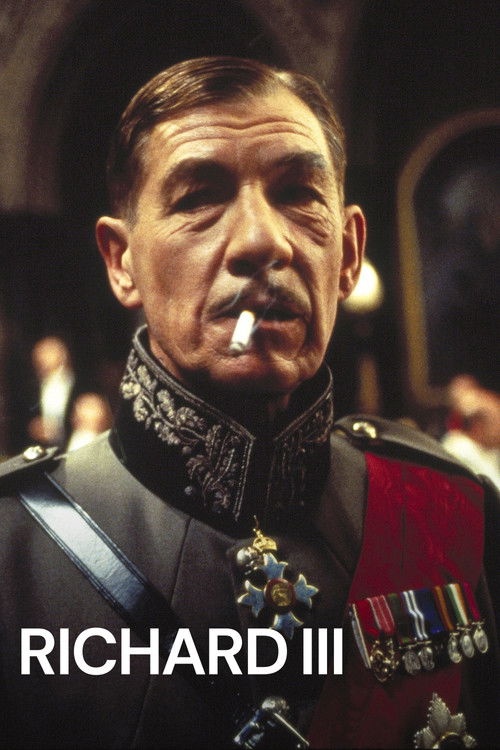
In a fictitious timeline of England in the late 1930s, a civil war (which occurs roughly 450 years later than the historical event) ends with the Lancastrian King Henry and his son Prince Edward assassinated by Yorkist Field Marshal Richard, Duke of Gloucester. Richard's elder brother Edward becomes King. Richard is determined to take the crown, and pits King Edward against their other brother, George, Duke of Clarence, who is later imprisoned under a sentence of death. Richard deceives and marries Prince Edward's widow Lady Anne Neville.
Queen Elizabeth intercedes on Clarence's behalf and persuades Edward to spare his life. Richard destroys the royal pardon and commissions a soldier James Tyrrell to murder Clarence, ostensibly in compliance with the original death sentence. Richard informs Edward of Clarence's death at a meeting with Prime Minister William Hastings, and the shocked King dies from a stroke. As Edward's sons are underage, Richard becomes Regent, taking the title of Lord Protector with the support of the ambitious and corrupt Henry Buckingham.
To undermine his rivals for the throne, Richard has Rivers, the Queen's brother, assassinated and uses the sordid circumstances of his death to damage the Queen's reputation and cast doubt on her sons' legitimacy. Hastings' reluctance to support Richard's claim to the crown enrages Richard so much that he manufactures false charges of treason against the Prime Minister, who is sentenced to death by hanging. Having made an example of his only vocal opponent, Richard persuades the Lord Mayor of London and members of the House of Lords to acknowledge his claim to the throne and crown him King. Acting on the advice of Archbishop Thomas and Lord Stanley, the Lancastrian heir, Henry, Earl of Richmond, flees to France.
Following his coronation Richard, now King Richard III, seeks to make his throne secure. He employs Tyrrell to murder the princes after failing to convince Buckingham to do so. Aware that Richmond intends to marry Elizabeth, he instructs Sir William Catesby to spread rumours that Lady Anne is ill and likely to die; with Richard intending to marry Elizabeth himself. Lady Anne is found dead sometime later from an apparent drug overdose. Impatient for the promised reward for his loyalty, Buckingham demands the Earldom of Hereford. Richard dismisses this in a high-handed manner, with the line "I am not in the giving vein". Buckingham, also disturbed by the murders of the princes and Hastings, flees to meet Richmond but is later captured and killed by Tyrrell on Richard's orders.
Richmond gathers supporters, among them Archbishop Thomas and Air Marshal Thomas Stanley. As such Richard's mother, the Duchess of York, turns against her son after confronting and then disowning him in a heated argument between them. Richmond marries Elizabeth and unites both Houses and political factions against Richard. With the army's loyalty slipping and the legitimacy of his claims to the crown weakened, Richard prepares for the final battle against the Lancastrians, who plan an invasion by launching an attack on London. Richard's remaining loyal troops, assembling in a marshalling yard, are attacked from the air, revealing Stanley's defection to the Lancastrian cause.
The two armies meet soon after at a ruined Battersea Power Station. Richard and Richmond seek each other out but when his vehicle stalls Richard flees into the structure. Pursued by Richmond himself, Richard is forced to climb onto exposed metal beams high above the burning battlefield. Cornered by Richmond and refusing to surrender, Richard falls into the inferno with a maniacal grin, reflected by Richmond.