Marriages, relationships and family
Hayworth married and divorced five times in 24 years. She had affairs with several of her leading men, most notably Victor Mature in 1942, during the filming of My Gal Sal.
Hayworth had two daughters and two grandsons, one by each daughter. Her older daughter was the daughter of her second husband, Orson Welles. She had a son who was placed for adoption at birth, by some accounts, at Hayworth's urging, and he is featured in the 2008 documentary film Prodigal Sons.
Hayworth's younger daughter, Yasmin Aga Khan, is the daughter of Aly Khan.
In 1936, at age 18, Hayworth married Edward C. Judson, an oilman turned promoter who was 23 years older than her. They married in Las Vegas. Judson, who helped launch her acting career, was a shrewd businessman, but domineering. "He helped me with my career", Hayworth conceded after they divorced, adding "and helped himself to my money". She alleged that Judson compelled her to transfer much of her property to him, and she promised to pay him $12,000 under threats that he would do her "great bodily harm".
Hayworth filed for divorce from him on February 24, 1942, with a complaint of cruelty. She noted to the press that his work took him to Oklahoma and Texas while she lived and worked in Hollywood. Judson was as old as her father, who was enraged by the marriage, which caused a rift between Hayworth and her parents until the divorce. Judson had failed to tell Hayworth before they married that he had previously been married twice. When she left him, she had no money.
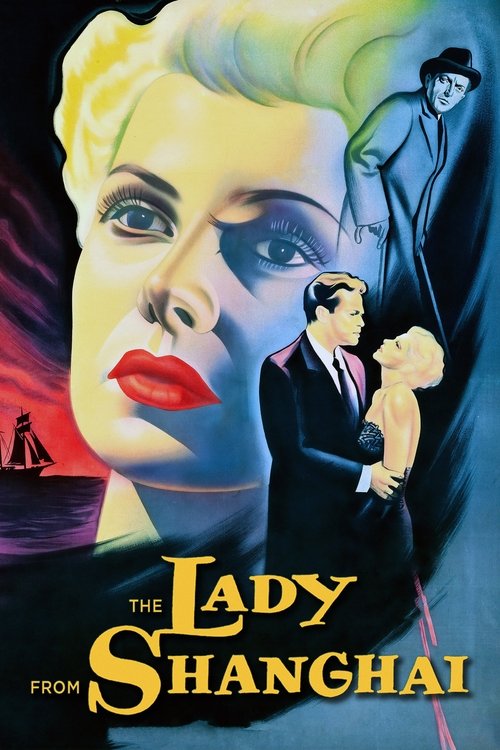
Hayworth married Orson Welles on September 7, 1943, during the run of The Mercury Wonder Show. None of her colleagues knew about the planned civil wedding ceremony until she announced it the day before. At the ceremony, she wore a beige suit, a ruffled white blouse, and a veil. A few hours after they got married, they returned to work at the studio. They had a daughter, Rebecca, who was born on December 17, 1944, and died at the age of 59 on October 17, 2004. They struggled in their marriage, with Hayworth saying that Welles did not want to be tied down:
During the entire period of our marriage, he showed no interest in establishing a home. When I suggested purchasing a home, he told me he didn't want the responsibility. Mr. Welles told me he never should have married in the first place; that it interfered with his freedom in his way of life.
On November 10, 1947, she was granted a divorce that became final the next year. The divorce was civil and they remained friendly afterwards.
Hayworth had an intermittent, long-term relationship with Glenn Ford that started during the filming of Gilda in 1945 and continued through their numerous marriages. Their relationship is documented in the 2011 biography Glenn Ford: A Life by Ford's son, Peter Ford. Peter writes that Hayworth became pregnant during the filming of The Loves of Carmen and traveled to France to get an abortion. Ford later moved next door to her in Beverly Hills in 1960, and they continued their relationship until the early 1980s.
In 1948, Hayworth left her film career to marry Aly Khan, a son of Sultan Mohammed Shah, Aga Khan III, the leader of the Ismaili community of Shia Islam. They were married on May 27, 1949.
Aly Khan and his family were heavily involved in horse racing, owning and racing horses. Hayworth had no interest in the sport but became a member of the Del Mar Thoroughbred Club anyway. Her filly, Double Rose, won several races in France and finished second in the 1949 Prix de l'Arc de Triomphe.
In 1951, while still married to Hayworth, Khan was spotted dancing with the actress Joan Fontaine in the nightclub where he and Hayworth had met. Hayworth threatened to divorce him in Reno, Nevada. In May, Hayworth moved to Nevada to establish legal residence to qualify for a divorce. She stayed at Lake Tahoe with their daughter, saying there was a risk the child would be kidnapped. Hayworth filed for divorce from Khan on September 2, 1951, on the grounds of "extreme cruelty, entirely mental in nature".
Hayworth said she might convert to Islam, but did not. During the custody fight over their daughter, Yasmin Aga Khan, born (1949-12-28)December 28, 1949, Aly said he wanted her to be raised as a Muslim; Hayworth wanted the child to be raised as a Christian. Hayworth rejected his offer of $1 million if she would rear Yasmin as a Muslim from age seven and allow her to go to Europe to visit him for two or three months each year, saying:
Nothing will make me give up Yasmin's chance to live here in America among our precious freedoms and habits. While I respect the Moslem faith, and all other faiths, it is my earnest wish that my daughter be raised as a normal, healthy American girl in the Christian faith. There isn't any amount of money in the entire world for which it is worth sacrificing this child's privilege of living as a normal Christian girl here in the United States. There just isn't anything else in the world that can compare with her sacred chance to do that. And I'm going to give it to Yasmin regardless of what it costs.
In January 1953, Hayworth was granted a divorce from Aly Khan on the grounds of extreme mental cruelty. Yasmin, three years old, played about the court while the case was being heard, finally climbing onto the judge's lap.
When Hayworth and Dick Haymes first met, he was married and his singing career was waning. Haymes was desperate for money because two of his ex-wives were suing him for unpaid child support. His financial problems were so bad that when he tried to return to California, he was arrested.
On July 7, 1954, his ex-wife Nora Eddington got a bench warrant for his arrest because he owed her $3,800 in alimony. Less than a week earlier, his ex-wife Joanne Dru also got a bench warrant because she said he owed $4,800 in child support payments for their three children. Hayworth ended up paying most of Haymes's debts.
Haymes was born in Argentina and did not have solid proof of US citizenship. Not long after he met Hayworth, US officials initiated proceedings to have him deported to Argentina for being an illegal alien. He hoped Hayworth could influence the government and keep him in the United States. When she assumed responsibility for his citizenship, a bond was formed that led to marriage. The two married on September 24, 1953, at the Sands Hotel, Las Vegas, and their wedding procession went through the casino.
From the start of their marriage, Haymes owed large amounts of money to the Internal Revenue Service (IRS). When Hayworth took time off from attending his comeback performances in Philadelphia, audiences sharply declined. Haymes's $5,000 weekly salary was attached by the IRS to pay a $100,000 bill, and he was unable to pay his pianist. Haymes's ex-wives demanded money while Hayworth publicly bemoaned her own lack of alimony from Aly Khan. At one point, the couple was effectively imprisoned for 24 hours in Manhattan at the Hotel Madison while sheriff's deputies waited outside, threatening to arrest Haymes for outstanding debts.
At the same time, Hayworth was fighting a severe custody battle with Khan, during which she reported death threats against their children. While living in New York, Hayworth sent the children to live with their nanny in Westchester County. They were found and photographed by a reporter from Confidential magazine.
After two years together, Haymes struck Hayworth in the face in 1955 in public at the Cocoanut Grove nightclub in Los Angeles. Hayworth immediately separated from him. The assault and crisis affected her health, and her doctor ordered her to remain in bed for several days.
Hayworth was in financial hardship after her marriage to Haymes. She had failed to gain child support from Aly Khan. She sued Orson Welles for back payment of child support, which she claimed had never been paid. This effort was unsuccessful and added to her stress.
Hayworth began a relationship with film producer James Hill, whom she married on February 2, 1958. He put her in one of her last major films, Separate Tables. This film was popular and highly praised, although The Harvard Lampoon named her the worst actress of 1958 for her performance. On September 1, 1961, Hayworth filed for divorce, alleging extreme mental cruelty. Hill later wrote Rita Hayworth: A Memoir, in which he suggested that their marriage collapsed because he wanted Hayworth to continue making movies while she wanted them both to retire from Hollywood.
In his autobiography, Charlton Heston wrote about Hayworth's marriage to Hill. One night, Heston and his wife Lydia joined the couple for dinner at a restaurant in Spain with the director George Marshall and the actor Rex Harrison, Hayworth's co-star in The Happy Thieves. Heston wrote that the occasion "turned into the single most embarrassing evening of my life", describing how Hill heaped "obscene abuse" on Hayworth until she was "reduced to a helpless flood of tears, her face buried in her hands". Heston wrote that the others sat stunned, witnesses to a "marital massacre", and, though he was "strongly tempted to slug him" (Hill), he left with his wife after she stood up, almost in tears. Heston wrote, "I'm ashamed of walking away from Miss Hayworth's humiliation. I never saw her again".