Overview
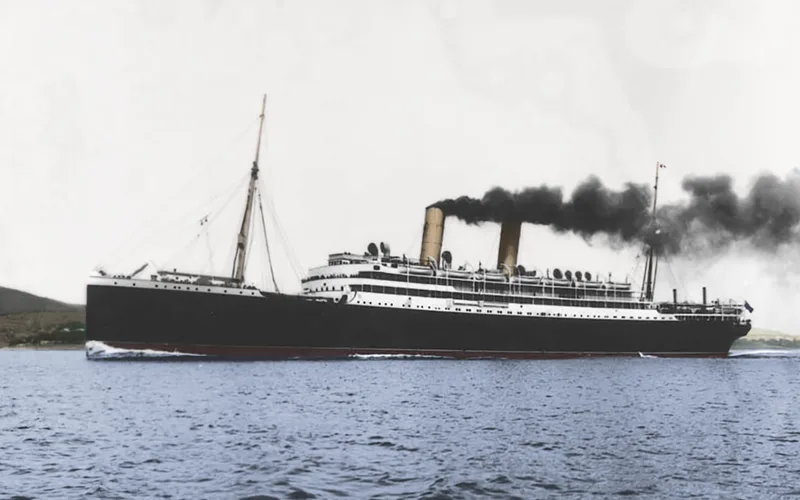
RMS Empress of Ireland was a British-built ocean liner that sank near the mouth of the Saint Lawrence River in Canada following a collision in thick fog with the Norwegian collier in the early hours of 29 May 1914. Although the ship was equipped with watertight compartments and, in the aftermath of the Titanic disaster two years earlier, carried more than enough lifeboats for all aboard, she foundered in only 14 minutes. Of the 1,477 people on board, 1,012 died, making it the worst peacetime maritime disaster in Canadian history.
Fairfield Shipbuilding and Engineering built Empress of Ireland and her sister ship, , at Govan on the Clyde in Scotland. The liners were commissioned by Canadian Pacific Steamships or CPR for the North Atlantic route between Liverpool and Quebec City. The transcontinental CPR and its fleet of ocean liners constituted the company's self-proclaimed "World's Greatest Transportation System". Empress of Ireland had just begun her 96th voyage when she was lost.
The wreck of Empress of Ireland lies in of water, making it accessible to advanced divers. Many artifacts from the wreckage have been retrieved, some of which are on display in the Empress of Ireland Pavilion at the Site historique maritime de la Pointe-au-Père in Rimouski, Quebec, and at the Canadian Museum of Immigration at Pier 21 in Halifax, Nova Scotia. The Canadian government has passed legislation to protect the site.
Background
Empress of Ireland was the second of a pair of ocean liners ordered by Canadian Pacific Steamships during their early years in operation on the North Atlantic. In 1903, Canadian Pacific officially entered the market for trans-Atlantic passenger travel between the United Kingdom and Canada. In February of that year, they had purchased Elder Dempster & Co, through which they obtained three ships from Elder's subsidiary, the Beaver Line. These ships were Lake Champlain, Lake Erie and Lake Manitoba, with Lake Champlain being the first to sail on the company's established route between Liverpool, England and Montreal, Quebec, the following April. The line proved to be successful on the North Atlantic trade, as in that first year, thirty-three westbound crossings were completed by those three ships, on which a combined total of 23,400 passengers traveled in third class, most of them immigrants bound for Canada.
From Wikipedia (CC BY-SA 4.0).