Overview
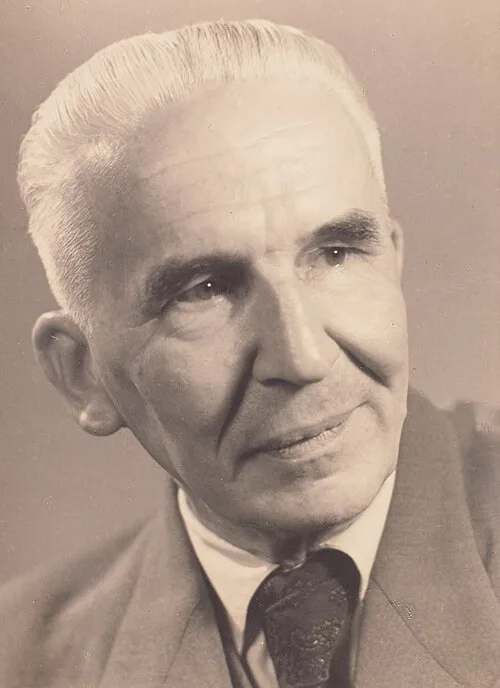
Rudolf Steglich (18 February 18868 July 1976) was a German musicologist, music editor and academic teacher, who was professor at the University of Erlangen from 1930 to 1956. His focus was life and music of George Frideric Handel. He was instrumental in the composer's revival from the 1920s, and was from 1955 co-editor of the Hallische Händel-Ausgabe, the critical edition of the composer's complete works.
Career
Steglich was born in Rats-Damnitz, then in the Prussian Province of Pomerania, now in Poland. He studied in Dresden from 1900 to 1906 with Liszt pupil Bertrand Roth. He then studied musicology with Adolf Sandberger at the Ludwig-Maximilians-Universität München and with Johannes Wolf at the Humboldt University of Berlin. In 1911, he achieved the doctorate, supervised by Hugo Riemann, at the University of Leipzig with a dissertation Die quaestiones in musica: ein Choraltraktat des zentralen Mittelalters und ihr mutmasslicher Verfasser Rudolf von St. Trond (1070-1138) (The quaestiones in musica: A Choral Tract of the Central Middle Ages and its presumed author Rudolf of St Trond (1070-1138)).
Steglich served as a soldier in the First World War. From 1919 to 1929, he was music journalist for the . He taught at the Hannover Conservatory from 1925.
Steglich achieved his habilitation in 1930 at the University of Erlangen with a thesis Die elementare Dynamik des musikalischen Rhythmus (The elementary dynamics of musical rhythm). He then succeeded Gustav Becking as Privatdozent for musicology, and was also chairman of the musicology seminar. In 1934, he became associate professor. At the same time, he was from 1935 a lecturer at the Nürnberg Conservatory and at the . From 1936 to 1940, he published the journal Archiv für Musikforschung. He was one of 26 musicologists who took part in the 1938 Reichsmusiktage in Düsseldorf, an event of Nazi propaganda. After World War II, Steglich taught in Erlangen until his retirement in 1956.
From Wikipedia (CC BY-SA 4.0).