Ryoo Seung-wan (Korean: 류승완; born December 15, 1973) is a South Korean filmmaker. He made his debut in 1996 with the short film Dangerous Head, then worked as an assistant director under director Park Chan-wook, took film lessons, and made his feature film debut with Die Bad (2000). He received the Blue Dragon Film Awards for Best New Director, drawing attention from the film industry. Ryoo Seung-wan is called Korea's "action kid" for his unique action and rough life style.
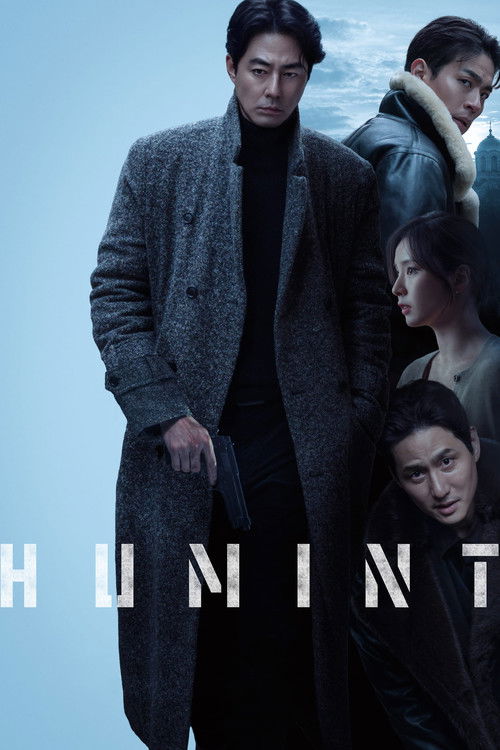
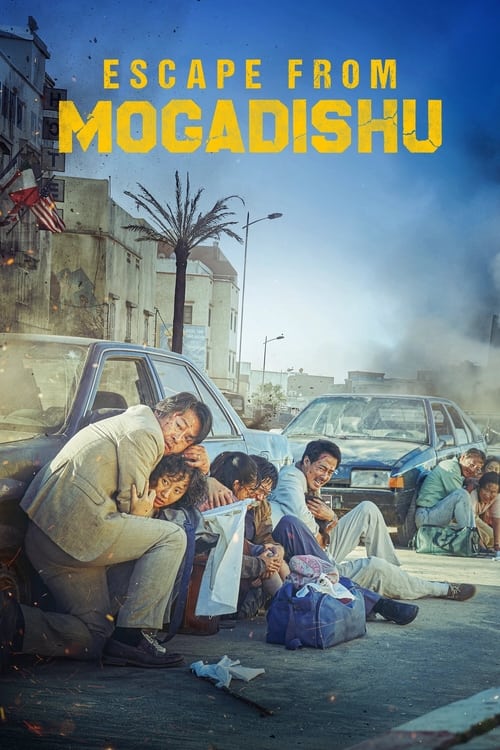
He has directed films such as Crying Fist (2005), The Unjust (2010), The Berlin File (2013), Veteran (2015), Escape from Mogadishu (2021), Smugglers (2023) and Humint (2026).
Contents
Early life
Born in Onyang, South Chungcheong Province, Ryoo's fist exposure to cinema was Hong Kong action films from the likes of Jackie Chan, which turned him into a fan of the genre, especially that in his childhood Korean cinema was reduced to propaganda and hostess films, due to censorship. He took up taekwondo and saved money to buy an 8mm camera, determined to become a director.
Ryoo became his family's sole breadwinner after he lost his parents while in middle school. He later dropped out of high school in 1992 and worked for six months to raise enough money to cover a year's worth of basic living expenses for his family. After that he joined a private film workshop, and paid his tuition through several part-time jobs: as a construction worker, hotel janitor, vegetable cart driver, and even an instructor at an illegal driving school. Ryoo, a fan of a young unknown director named Park Chan-wook's 1992 debut The Moon Is... the Sun's Dream and his work as a critic, went to meet Park and the two quickly became friends. Those formative years also saw Ryoo's debut as a 'real' director, with the 1996 short Transmutated Head (변질헤드). The 19-minute short's DP was Jang Joon-hwan (then a young film academy student), and it featured many familiar faces in the Korean indie scene, including character actor Heo Jong-soo and Lee Mu-young (future director of The Humanist).
Career
1998–2004
With a few years of experience as assistant director on Whispering Corridors and Park's 1997 film Trio, Ryoo was ready to start his own career. Initially, he wanted to make a feature film, but due to external circumstamces, he was forced to shoot separate short films that shared themes and characters. In 1998, his short film Rumble (패싸움) won him the Best Film at the 1998 Busan Short Film Festival, and a year later he signed a contract to develop a feature film out of Rumble and three following sequels, one of which was his short Modern Man, which won Best Film and the audience award at the Korean Independent Short Film Festival in 1999.
From 1996 to 1999, Ryoo shot four low-budget short films starring himself, his younger brother Ryoo Seung-bum, and several friends. In strikingly diverse styles but with a common narrative, these shorts were re-edited, combined and released in 2000 as Ryoo Seung-wan's feature directorial debut Die Bad, made with a very low budget of ₩65 million. It became a cult hit overnight. One review described Ryoo Seung-bum's acting debut as "a startling, naturalistic turn," and he won Best New Actor at the Grand Bell Awards.
In 2000 the now defunct Cine4M website released a short film by Ryoo alongside Jang Jin's A Terrible Day and Kim Jee-woon's Coming Out. Ryoo Seung-wan's Dachimawa Lee, titled after industry slang ("tachimawari" is a part of Kabuki theater plays that involve over-the-top action scenes), was a 35-minute short film parodying Korean action films and melodramas, Bruce Lee, Jackie Chan and Shaw Brothers movies. It was a success, making a name for actor Im Won-hee and further solidifying the Ryoo brothers in the industry.
Ryoo's first action noir, No Blood No Tears starred Jeon Do-yeon alongside talented theater actors like Jung Jae-young. The film disappointed critics, but Ryoo continued to make the stories he envisioned, next producing Arahan, a mix of modern-day wuxia and comedy. Although it fared well commercially, critics were not receiving it well.
2005–2009
Ryoo returned in 2005 with Crying Fist, starring veteran actor Choi Min-sik, and officially catapulting his brother, Seung-bum into fame. The film opened April 1, 2005, competing against Kim Jee-woon's A Bittersweet Life. Both got good reviews, but did not fare well at the box office.
In 2005, Ryoo established Filmmaker R&K with his wife Kang Hye-jeong.
After the success of 2003's If You Were Me, South Korea's National Commission on Human Rights commissioned a second omnibus film in 2006, If You Were Me 2. Five directors — Park Kyung-hee, Jang Jin, Jung Ji-woo, Kim Dong-won and Ryoo — contributed short films on a human rights issue of their choosing. Ryoo's short Hey Man! is about a man (Kim Su-yeon) with multiple prejudices that lead him to abandon his friends and patrons of the restaurant he frequents. In 2006, Seoul Art Cinema organized a special program "Anatomy of Violence: Ryoo Seung-wan's Action School" wherein Ryoo selected 10 films to screen and discuss with participants, including five of his own works. The program aimed to better understand the art of action filmmaking.
Waiting to secure funding for his first zombie film Yacha, Ryoo released The City of Violence, a low-budget HD action film. As Ryoo described it as a Jackie Chan-style piece, set in a world similar to Roman Polanski's Chinatown.
In 2009 Ryoo directed four mini-movies for the Korea Tourism Organization targeted at the Chinese market. Each movie tells a story that represents the beauty of Korea's travel locations through four themes: Hallyu (Korean movies and dramas), food, shopping and trendy places to visit like Hongdae or Cheongdam-dong. The tourism commercials starred Gao Yuanyuan and Li Guangjie as a Chinese couple, with cameos by Song Seung-heon, Park Hae-jin and Park Eun-hye.
Then to promote the release of Motorola's new model MOTO Klassic, Ryoo wrote and directed a 22-minute short film starring American-born Japanese martial arts star Kane Kosugi and action choreographer Jung Doo-hong. Titled Timeless and set at Jung's stunt school, the mockumentary-style short eschews the use of CGI in fight scenes and advances the return to old school action.
2010–present
His 2010 film The Unjust, a tale about corruption among policemen and prosecutors, received rave reviews for its seamless storytelling interspersed with action sequences, social commentary and powerhouse performances from Hwang Jung-min and brother Seung-bum. It was successful at the box office with more than 2.7 million tickets sold, landing it on that year's top ten box office list.
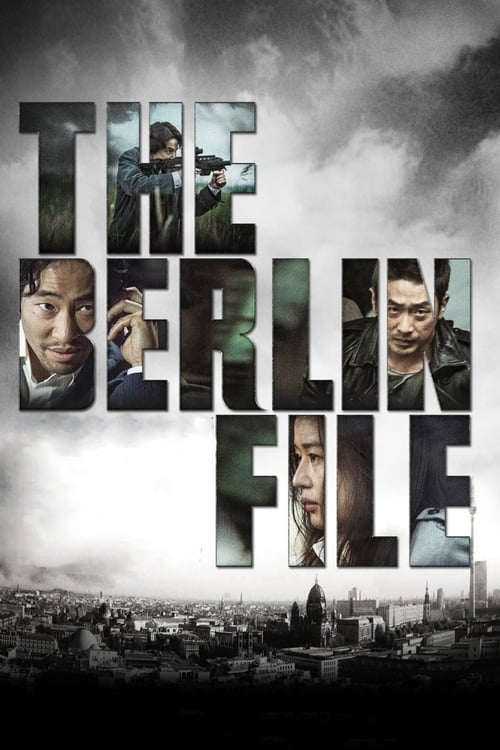
Ryoo's next movie The Berlin File was an espionage thriller about a North Korean spy who is betrayed and cut loose when a weapons deal is exposed. While preparing for the film, Ryoo met with several North Korean defectors and shot the documentary Spies for Korean broadcaster MBC as part of a special series that aired in 2011, intending "to make a realistic, fast-paced, Korean-style espionage action film about South Korean agents discovering North Korea's secret accounts and how political dynamics between the two Koreas get involved." Ryoo said he wanted the film to be reminiscent of The Bourne Identity, and on an emotional level, to focus on the solitude and sorrow of those who live as secret agents. It was shot almost 100% on location in Europe, namely in Berlin, Germany, and Riga, Latvia. The film attracted 7.17 million admissions in early 2013 to become the all-time highest-grossing Korean action film. But because of its big budget, it barely broke even commercially. Ryoo later said that the picture failed to fully connect with younger audiences which know little of the Cold War era, and that "after making such an expensive film, (his) take-away was that (he) needed to make a cheaper one."
In 2015, Ryoo wrote and directed Veteran, an action film about an amoral and powerful third-generation business tycoon doggedly pursued by a detective investigating the mysterious injuries of a truck driver.Ryoo said, "Because (the movie) is about the world I know and the story about people I know, it was comfortable for me. [...] But my feeling comfortable doesn't mean that the work is easy. It just means that I'm comfortable (working out the troubles). [...] I didn't want the movie to be based on personal revenge, and I want it to show how a person gets justice through the legal system."Made with a modest budget of ₩6 billion, Veteran became a huge blockbuster at the South Korean box office, attracting 13.3 million admissions and earning US$89.7 million. It is the biggest hit of Ryoo's career and was the 5th all-time highest-grossing film in Korean cinema history at the time.
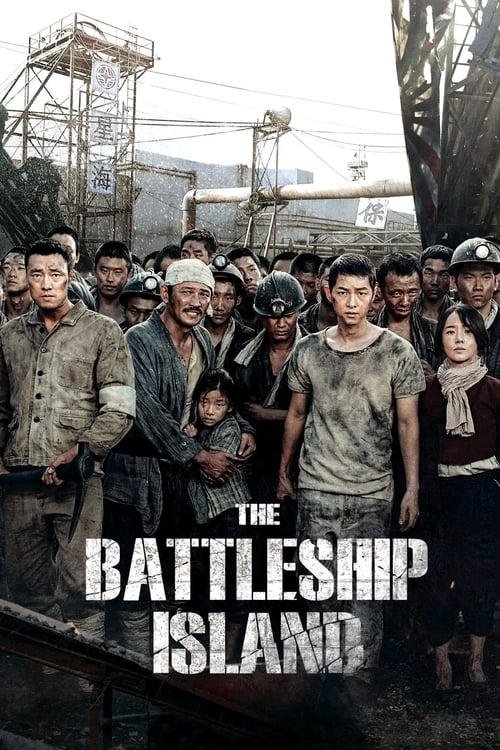
His next project was The Battleship Island, set on Hashima Island, an outlying island abandoned by Japan off the coast of Nagasaki, where countless Koreans were drafted into forced labor during World War II. The film follows a group of American OSS agents and Korean independence fighters on a mission to evacuate a key Korean figure from the island.
Filmmaking
Ryoo Seung-wan is called Korea's 'action kid' for his unique action and rough life style. Ryoo has cited 1970s American cinema as a primary inspiration for his work, specifically naming Martin Scorsese and Brian De Palma as major influences. He has expressed particular admiration for De Palma’s thriller and gangster films, including Sisters (1972), Scarface (1983), Raising Cain (1992), and Carlito's Way (1993). His appreciation for the era extends to the "tough guy" films of Lee Marvin, such as Point Blank (1967) and Prime Cut (1972), as well as the classical work of John Boorman, specifically Deliverance (1972). Within South Korean cinema, Ryoo views Park Chan-wook as both a mentor and a frequent collaborator. He also credits directors Lee Chang-dong and Bong Joon-ho as significant influences. He has highlighted Lee Doo-yong’s 1980 film The Last Witness as a particularly impactful work.
Ryoo frequently collaborated with film editor Nam Na-yeong. She has edited films Arahan, The City of Violence, and Crying Fist.
Ryoo is known for frequently casting the same actors, including his brother Ryoo Seung-bum, Hwang Jung-min, and Zo In-sung.
Personal life
Ryoo met Kang Hye-jung in the Independent Film Council workshop. Ryoo was working as a workshop assistant, and they started dating after collaborating on a project. In 1997, Ryoo married Kang after 4 years of dating. They have three children together, a daughter and two sons.
Filmography
Recurring cast members
Ryoo frequently re-casts actors whom he has worked with on previous films.