Critical response
On the review aggregator website Rotten Tomatoes, 100% of 12 critics' reviews are positive, with an average rating of 7.5/10.
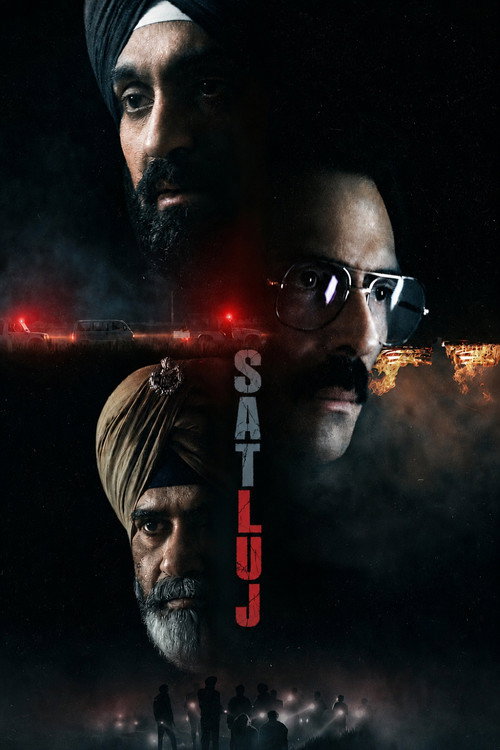
Saibal Chatterjee of NDTV gave 4 stars out of 5 and said that "Satluj is a powerful political film that pulls no punches, It is unmissable. Its title may have changed, its power hasn't diminished one bit".
Shubhra Gupta writing for The Indian Express rated it 3.5 stars out of 5 and writes that "But there’s nothing generic about the film. It is a powerful, moving account of a lone man holding up a candle to dispel darkness. Take a bow, Honey Trehan, and Team Satluj; this is a clear win for filmmakers who want to tell the story of an actual person, time and place, with unwavering conviction."
Reviewing the film for Scroll.in, Nandini Ramnath called it a harrowing and heart-rending account of unchecked state power, praising Dosanjh's understated performance and the ensemble cast, including Ohlyan, Vicky and Rampal. She wrote that the film's insistence on Khalra's religious motivations understates the leftist political tradition the real Khalra came from, and that its 163-minute runtime includes some indulgent stretches, but called it one of the sharpest political films in recent memory.
Debanjan Dhar of Outlook rated the film 4/5 stars and called it one of the year's most essential films and praised Dosanjh and Suvinder Vicky's performances, describing Vicky's character as a chilling study in institutional cruelty.
Writing in India TV News, the critic praised the muted cinematography and restrained score but found the editing loose in places, arguing that trimming around fifteen minutes would have tightened the film, and gave it 3.5/5 stars.
Bhumi Vashisht of Sunday Guardian Live called it a fearless docu-drama and praised Dosanjh's performance as a departure from his earlier screen persona.
Giving the film 3/5 stars, Troy Ribeiro of Free Press Journal called it a sincere and necessary work with a clear moral spine, praising Dosanjh's understated lead performance and Arjun Rampal and Kanwaljit Singh's supporting turns, and noted that the film favours atmosphere over spectacle.
Shilajit Mitra of The Hollywood Reporter India stated that it Hearty and Harrowing and The Finest Indian Films of The Year.
Critc of Bollywood Hungama rated it 3.5/5 stars and state d that "SATLUJ brings a deeply disturbing true story to the screen with remarkable sensitivity and is powered by marvellous performances from Diljit Dosanjh, Arjun Rampal and Suvinder Vicky."
Neeshita Nyayapati reviewing for Hindustan Times gave 4 stars out of 5 and said that "Satluj might seem like the story of just one person, one region, and the horrific acts that occurred during a single period. But beneath the tension-filled and heartbreaking tale lies the answer to whether one person could ever bring about social change. More than just a sharp political film, Satluj is a reminder that a lamp can vanquish darkness, a relevant message for today's world." Anuj Kumar of The Hindu writes in his review that "Diljit Dosanjh shines as a solitary lamp whose conviction outlasts the darkest night in this moving tribute to social activist Jaswant Singh Khalra, where director Honey Trehan examines the rhetoric around the dehumanisation of citizens."
Devesh Sharma of Filmfare rated it 4/5 stars and said that "Satluj is not conventional entertainment, nor does it aspire to be. It is a film that educates, disturbs and moves in equal measure. It honours the memory of a man who chose truth over safety and conscience over silence. At a time when meaningful cinema often struggles to find space, films like this become all the more valuable."
Agnivo Niyogi of The Telegraph (India) appreciated the performances of Diljit Dosanjh, the supporting cast (Geetika Vidya Ohlyan, Saurabh Sachdeva, Suvinder Vicky, Kanwaljit Singh and Arjun Rampal), K.U. Mohanan’s cinematography, Sreekar Prasad’s editing and filmmaker, Honey Trehan. For the latter, he wrote, "Trehan refuses to reduce systemic abuse to isolated incidents or a handful of villains. Instead, he patiently shows how institutions can normalise extraordinary violence when accountability disappears."
British academic, writer and human rights advocate William Gomes published two critical essays on Satluj in Modern Ghana. He argued that the film subjects Jaswant Singh Khalra to a symbolic “second killing” by depicting his death while omitting important aspects of his Sikh political identity, including his association with the Khalistan movement. Gomes also criticised the film for replacing allegations of a state-funded police bounty system and senior official responsibility with a narrative centred on individual corruption and extortion.