




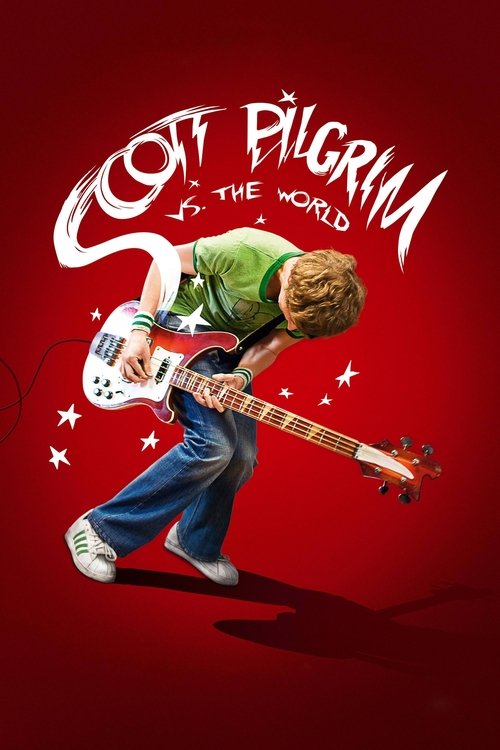
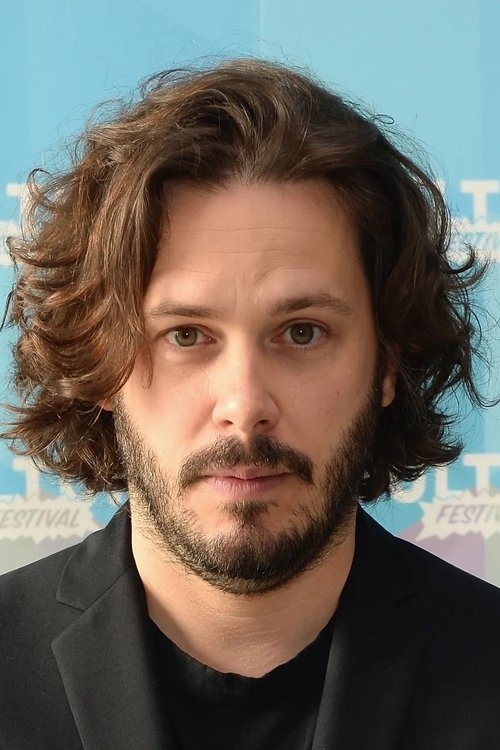
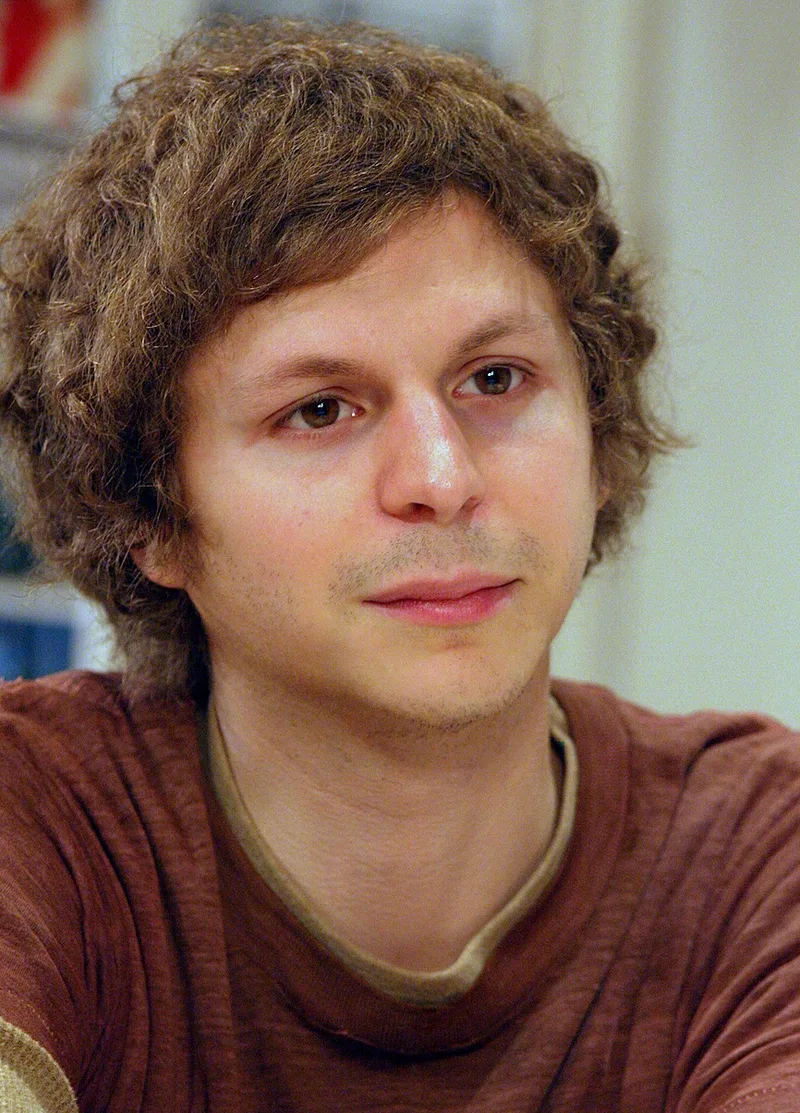
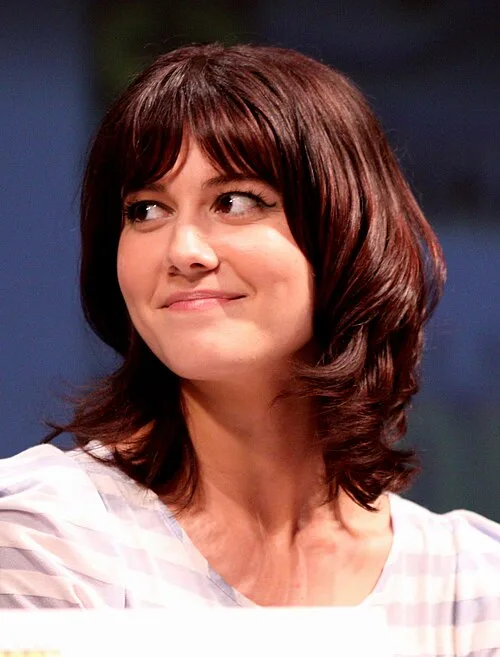

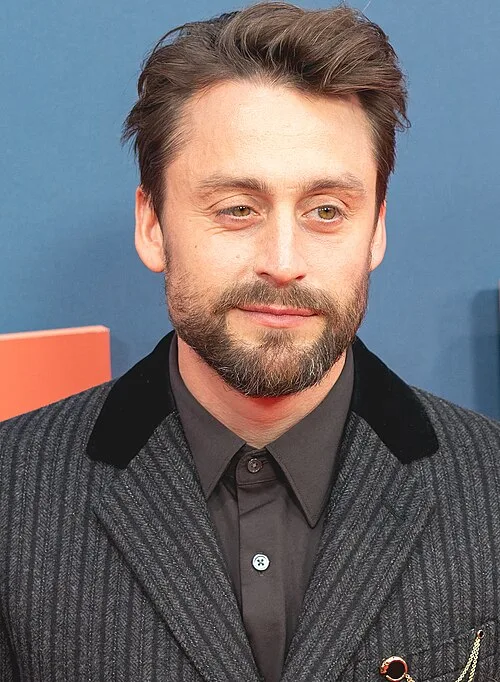
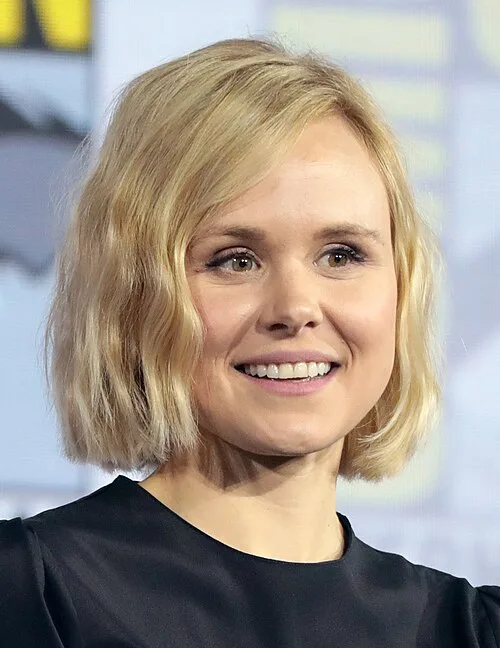
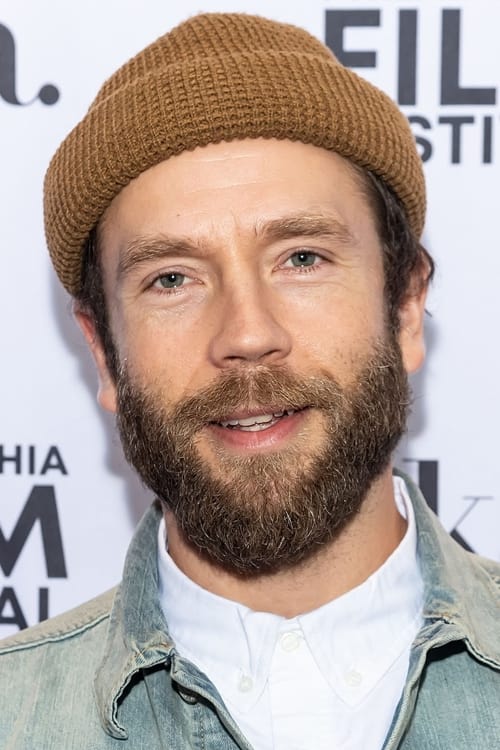
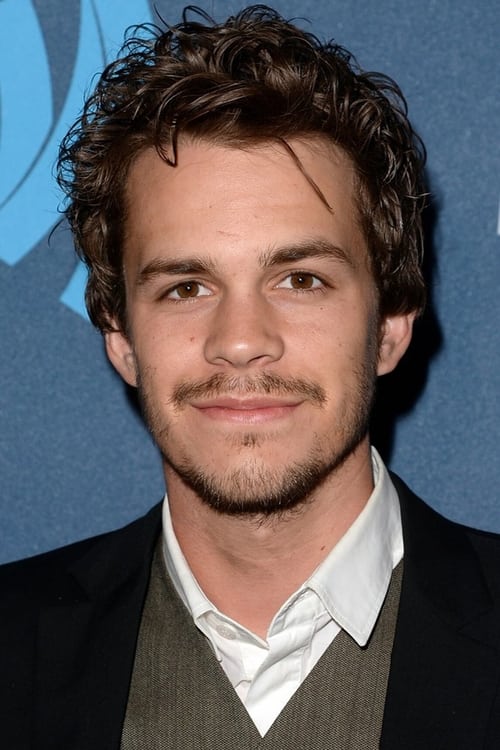

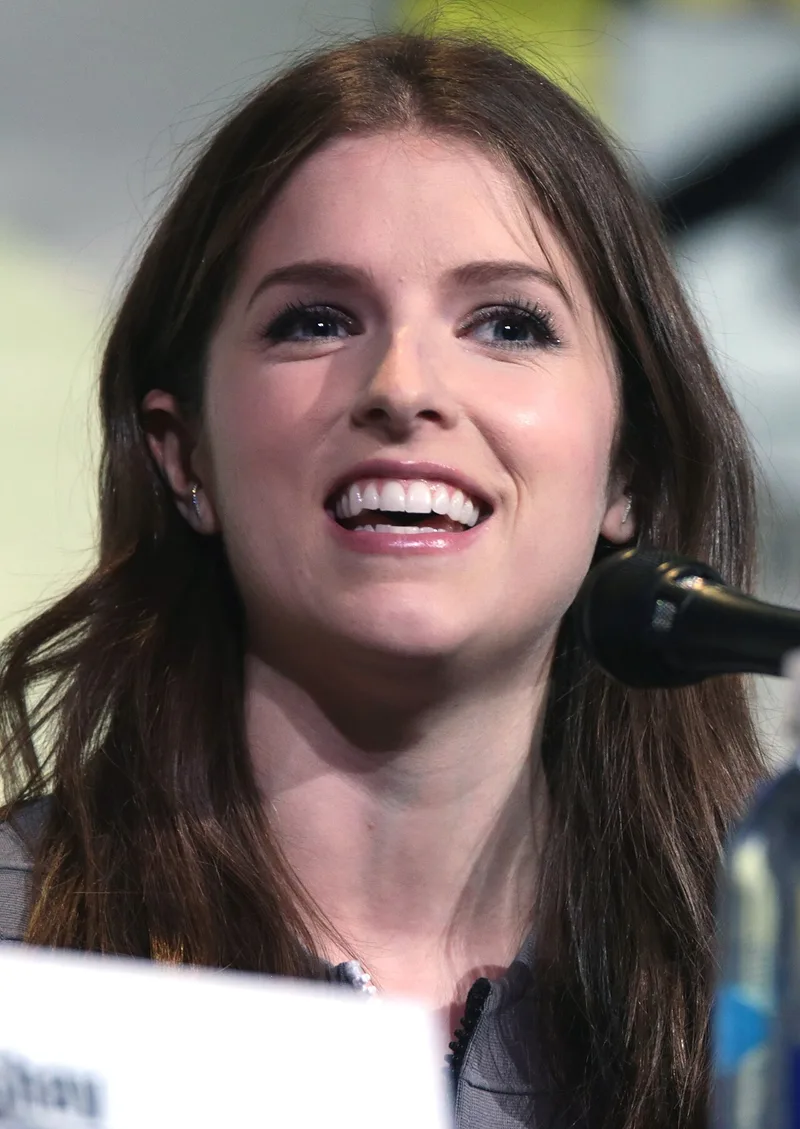

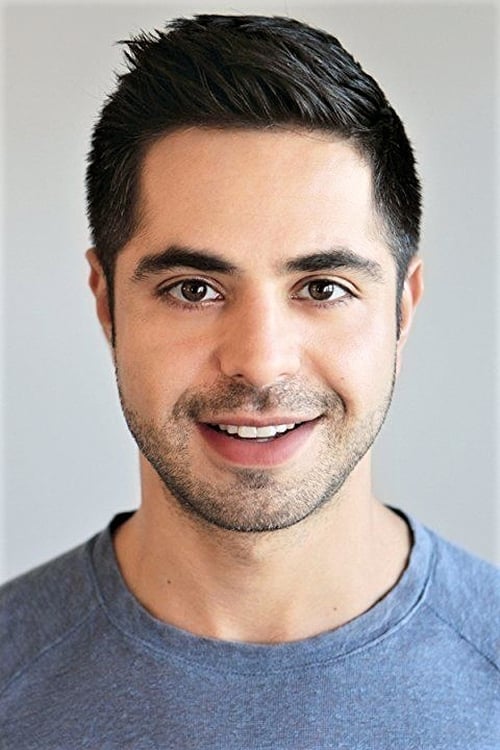


Scott Pilgrim vs. the World is a 2010 romantic action comedy film directed by Edgar Wright, and written by Wright and Michael Bacall, based on the graphic novel series Scott Pilgrim by Bryan Lee O'Malley. It stars Michael Cera as Scott Pilgrim, a slacker musician who is trying to win a competition to get a record deal, while also battling the seven evil exes of his new girlfriend Ramona Flowers, played by Mary Elizabeth Winstead. The ensemble cast also features Kieran Culkin, Chris Evans, Anna Kendrick, Alison Pill, Brandon Routh, and Jason Schwartzman.
A film adaptation of Scott Pilgrim was proposed following the release of the first volume, and Wright was attached early in development. Filming took place between March and August 2009 in Toronto. The film uses famous features of its Toronto setting and matches the style of video game and comic book imagery. It used real musical artists, including Beck and Metric, as a basis for each fictional group in the battle of the bands plot, with some of the actors also performing. The score was composed by Nigel Godrich. A combination of digital and physical methods were used to create the extensive VFX.
The film premiered at San Diego Comic-Con on July 22, 2010, before premiering at the Fantasia Festival on July 27. It was released in the United States on August 13, and in the United Kingdom on August 25, by Universal Pictures. It received positive reviews from critics, who noted its visual style and humor, though it was a box-office failure, grossing $48 million against a budget of $60–85 million. It has since garnered a cult following. The film made several top ten lists and received several awards and nominations. In scholarly analysis, it has been widely discussed as a transmedia narrative. The film's main cast reprised their roles in the 2023 animated television series Scott Pilgrim Takes Off, Wright and Bacall also served as executive producers on the series, which was co-written by O'Malley.
Contents
Plot
In Toronto, Scott Pilgrim, a 22-year-old bassist for unsuccessful indie garage band Sex Bob-Omb, dates Knives Chau, a 17-year-old high-school student, to the disapproval of his friends in the band, his younger sister Stacey, and his roommate Wallace Wells. Scott meets Ramona Flowers, an American Amazon delivery girl, at Julie Powers’ party, after having first seen her in a dream. Scott loses interest in Knives but does not break up with her immediately before pursuing Ramona.
When Sex Bob-Omb plays in a battle of the bands sponsored by record executive Gideon Graves, Scott is attacked by Ramona's ex-boyfriend Matthew Patel. Sex Bob-Omb's competition is incinerated by Matthew's fireball attacks, but Scott defeats him and learns he must defeat Ramona’s remaining six evil exes in order to date her. Scott finally breaks up with Knives, who blames Ramona and swears to win him back by becoming more like Ramona.
Scott soon encounters Ramona's second ex, actor and skateboard junkie Lucas Lee. Scott defeats Lucas by tricking him into attempting a grind on a 200-plus step icy railing and crashing explosively. The band is soon asked to open for Clash at Demonhead, whereupon Scott encounters Ramona's third ex, the super-powered vegan bassist Todd Ingram, who is dating Scott's ex, Envy Adams, the lead singer. Scott deceives Todd into drinking half and half, and Todd is confronted by the vegan police and stripped of his powers; Scott then delivers the final blow. Scott then encounters Ramona's fourth ex, bisexual ninja Roxy Richter, and with the help of Ramona, he manages to beat her. Scott's growing frustration soon boils over, and after an outburst regarding Ramona's dating history, she breaks up with him while leaving him a list of her exes.
At the next battle of the bands, Sex Bob-Omb defeats Ramona's fifth and sixth exes, techno twins Kyle and Ken Katayanagi, earning Scott an extra life. Despite this, Ramona appears to get back with her seventh and final ex, Gideon. Sex Bob-Omb accepts Gideon's record deal, except Scott, who quits the band in protest, during which their roadie, Young Neil, becomes their new bassist. Gideon invites Scott to his venue, the Chaos Theater, where Sex Bob-Omb is playing. Resolving to win Ramona back, Scott challenges Gideon to a fight for her affection, earning the "Power of Love" sword. Knives interrupts the battle, attacking Ramona, and Scott is forced to reveal that he cheated on both of them.
Cast
Production
Development
After artist Bryan Lee O'Malley completed the first volume of Scott Pilgrim, his publisher Oni Press contacted producer Marc E. Platt to propose a film adaptation. O'Malley originally had mixed feelings about a film adaptation, stating that he "expected them to turn it into a full-on action comedy with some actor that [he] hated", though he also "didn't even care", admitting: "I was a starving artist, and I was like, 'Please, just give me some money.'" Universal Studios contracted director Edgar Wright, who had just finished the 2004-released Shaun of the Dead and agreed to adapt the Scott Pilgrim comics. Wright had first become interested in making the film when given a pre-release copy of the first graphic novel during the Shaun of the Dead press tour, later saying that "everything that [he] found interesting about the book, and why it felt fresh and unique, was irresistible to adapt." In May 2005, the studio signed Michael Bacall to co-write the screenplay.
Wright cited Mario Bava's 1968 film Danger: Diabolik (another adaptation of a comic series) as an influence on his approach to Scott Pilgrim, stating that he took an "Italian influence, a sense of completely unbridled imagination. They don't make any attempt to make it look realistic. Mario Bava's composition and staging has a real try-anything attitude." Other influences on the screenwriters include musical films like Beyond the Valley of the Dolls, Dig!, and particularly Phantom of the Paradise. The film also takes on elements of style from the graphic novels, including the use of comic book text-as-graphic (e.g. sound effect onomatopoeia), which is described by Wright and O'Malley as "merely the internal perspective of how Scott understands himself and the world". It has been described as both a video game and a comic book film.
Bacall said that he wanted to write the Scott Pilgrim film because he felt strongly about its story and empathized with its characters. Wright said that O'Malley was "very involved" with the script of the film from the start, contributing lines and adding polish. Due to the long development, several lines from various scripts written by Wright and Bacall were used in later Scott Pilgrim comics. The screenplay's second draft, which O'Malley said "became the main draft for the film", was submitted right at midnight on the night the Writers' Strike was supposed to begin in October 2007. No material from Scott Pilgrim's Finest Hour, the sixth Scott Pilgrim volume, appeared in the film, as the comic was not complete at the time of the film's production; O'Malley contributed suggestions for the film's ending and gave the producers his notes for the sixth volume, but stated that the film's ending was "their ending". Some ideas for the film's ending were cut before production, including that Scott would turn out to be a serial killer who fantasized the gaming aspects and that Gideon would turn into a Transformers-style robot.
Filming
Principal photography began in March 2009 in Toronto, and wrapped as scheduled on August 28. One of the producers, Miles Dale, said that the film is "the biggest movie ever identifiably set in Toronto." The film features notable Toronto locations Casa Loma, St. Michael's College School, Sonic Boom, the Toronto Public Library Wychwood Library, a Goodwill location on St. Clair West, a Second Cup, a Pizza Pizza, Lee's Palace, and Artscape Wychwood Barns. The production planned to set the film in Toronto because, in Dale's words, "the books are super-specific in their local details" and director Wright wanted to use the imagery from the books, so Universal Studios had no plans to alter the setting. Dale stated that "Bathurst Street is practically the cerebral cortex of Scott Pilgrim". David Fleischer of Torontoist wrote that though films set in New York City show off all the major landmarks, "Scott Pilgrim revels in the simplicity" of everyday locations that are still identifiably Toronto, like the Bathurst/Bloor intersection and a single Pizza Pizza restaurant.
Director Wright, who lived in the city for a year before making the film, said that "as a British filmmaker making [his] first film outside the UK, [he] wouldn't want anyone to give [him] demerits for getting the location wrong", sticking to the real Toronto and "shooting even the most banal of locations" in the comic. Wright said that the first thing he did when he arrived in Toronto was to tour all of the locations with O'Malley, saying that this gave him a "kind of touch down at the real locations [that] just made everything feel right", though O'Malley could not remember the exact spots of some and so they drove around using his comic reference photos to find them. The production was allowed to film in Second Cup and Pizza Pizza locations, with Wright saying that using them instead of Starbucks "just felt right" because "it means something to Canadian audiences and people in international audiences just think [they] made [Pizza Pizza] up [them]selves. It sounds like a cute movie brand".
Wright said that he took pride in having been able to record the original Lee's Palace mural before it was taken down; he also had the old bar reconstructed on a set for interior scenes, which was positively received when the bands consulting for the film visited. Wright suggested that "they wanted it preserved as a museum piece". Another reconstruction was the Rock It club, which no longer existed, with the interior built on a soundstage. The Sonic Boom store had been changed from how it appeared in the comics, but allowed its interior to be fully restored to the previous look for filming. The backgrounds were also changed for the film: many landscapes were simplified in post-production to emulate the drawing style in the comics, including removing many trees from the scenes shot at Hillcrest Park and Turner Road.
Casting
Casting took place between 2008 and 2010, involving director Wright and casting directors Jennifer Euston, Allison Jones, and Robin D. Cook. Cera was cast in March 2008 and Winstead in May. By the end of 2008, Whitman, Wong, and Kendrick were cast; in January 2009, Routh, Evans, and Larson were announced together, with Webber, Pill, Simmons, and Bhabha added around the same time. Extras casting in Toronto began in February 2009. Though based on a graphic novel about a musician, experts and reviewers consider the film to be a comic book adaptation and a superhero film, and in the years after its release commenters noted that the film features an all-star cast of the biggest actors in comic book and superhero films, with CBR's Noah Dominguez saying that "Scott Pilgrim vs. the World may have the best of comic book movie actors, ever". Patrick O'Donnell of NME wrote that "notable actors [having starred] in comic book adaptations before and after their roles in Scott Pilgrim [injects] a meta quality to the film's already genre-busting style".
Director Wright felt confident with his casting in the film, saying that "like with Hot Fuzz [when they] had great people in every single tiny part, it's the same with this. What's great with this is that there's people [like] Michael [Cera] and Jason [Schwartzman], and [...] people who are up and coming, like Anna Kendrick, Aubrey Plaza and Brie Larson, and then there's complete unknowns as well". Collider noted that the less-known actors fit their roles well, with Wright confirming that they did not have much pressure to find a lot of big names, adding that "Universal never really gave [him] any problems about casting bigger people, because in a way Michael [Cera] has starred in two $100 million-plus movies, and also a lot of the other people, though they're not the biggest names, people certainly know who they are." He also noted that while some of the actors were more famous when they auditioned, like Schwartzman and Evans, others became more well-known over the time the film was in development, saying that "Anna Kendrick did her first audition for it before she shot the first Twilight. And Aubrey Plaza got the part in Scott Pilgrim before she did Funny People or Parks and Recreation, which is crazy. It shows you how long this film has taken to get made."
The casting decisions were all run by O'Malley during a casting session with Wright; O'Malley was not in the room but was shown all of the tapes. Wright said that he planned on casting Cera while he was writing Hot Fuzz, after watching episodes of Arrested Development, also saying that he needed an actor that "audiences will still follow even when the character is being a bit of an ass." Cera said he was equally excited to work with Wright, "because [he] was a big fan of his". He committed to working out for fight scenes for a year in preparation, earning him the on-set nickname "push-up king" because of how muscular he became. Wright explained that though Cera is a talented musician, they were not particularly looking for people who could already play instruments, with the cast members who could not subsequently learning for the film. Like Cera, Wright already had in mind Mary Elizabeth Winstead as his choice for Ramona Flowers, thinking of her for the part two years before filming had started because "she has a very sunny disposition as a person, so it was interesting to get her to play a version of herself that was broken inside. She's great in the film because she causes a lot of chaos but remains supernaturally grounded". In 2020, Wright and Winstead explained how she had been his first choice after he saw her in Death Proof and because she has big eyes that reflected the graphic novel. Wright said that Universal had suggested Seth Rogen for the role of Scott, as his recent film Knocked Up had been successful, but Wright could not see anyone but Cera in the role.
Music
The film is not only physically set in Toronto, but also, according to Allan Weiss, culturally and temporally located within "the Annex and Wychwood neighbourhoods [of Toronto] during the David Miller era", the time and place of a very specific music scene that the film "embed[s] [itself] into [...] not only via Scott's fictional band[,] but also by the appearance of such clubs as the now defunct Rockit[, and] the film's indie rock soundtrack"; Weiss asserts that the film "marks the mythologizing of the cool Annex scene, the transformation of Toronto indie rock [...] into the stuff of adventure", as "nearly all of the major events [...] are connected in some way to this music scene."
The soundtrack features contributions by Nigel Godrich, Beck, Metric, Broken Social Scene, Cornelius, Dan the Automator, Kid Koala, and David Campbell. O'Malley had written up playlists for each of the comics in the back of the books, introducing Wright to other Canadian bands during development. Building on this, Wright said that the production "tried to [...] find a real band for each of the fictional bands, because usually in music films you have one composer who does everything". Wright and Godrich met with and scouted bands to write for the film for two years. Godrich scored the film, his first film score. Before he became involved, early scripts had the running joke that "you never heard the bands [...] You heard the intro, and then it would cut to the next scene, and somebody would be going, 'Oh my God, that's the best song ever.' That was a joke for a long time", according to Wright.
Webber, Pill, and Simmons, as the members of Sex Bob-omb all had to learn to play their respective instruments and spent time rehearsing as a band with Cera (who already played bass) before filming began. Chris Murphy of the band Sloan was the guitar coach for the actors in the film. The actors also sing on the film's soundtrack. Beck wrote and composed the music played by Sex Bob-omb in the film. The songs took two days to write and record, with Beck saying that "it needed to be underthought, [...] they had to be funny, but [he] also wanted them to sound raw, like demos." Brian LeBarton plays drums and bass for the band on the film's score and soundtrack. Two unreleased songs can also be heard in the teaser trailer.
Brendan Canning and Kevin Drew of Broken Social Scene wrote all the songs for Crash and the Boys. The tracks were sung by Erik Knudsen, who plays Crash in the film. Drew stated the reason behind this was that "[he] knew that [Knudsen] didn't need to be a singer to pull [it] off" because the songs were "so quick and punk and fast" and "it needed to be the character's voice."
Visual effects
The film is described as having an "inimitable look" of manga and video game (particularly 16-bit) iconography with bright colors and graphics mixed into the live-action; visual effects supervisor Frazer Churchill described the look as "tricky" to achieve, calling the film's style and appeal "very high-tech images with a very low-fi feel". Churchill was interviewed by MTV in August 2010 about the effects in the film. He noted that some of the work was more complex because of a shooting ethic of Wright's: that there should be a physical representation of any post-production effects, saying that "whenever the image flashes in the finished shots – every punch, sword clash or something – those were actually flashes [...] on-set with photo flashbulbs [...] and then [they] add [...] flash with CGI. When someone dies and bursts into coins, [they would] empty buckets of silver Mylar so the actors had something to react to."
Churchill described the first fight (Scott vs. Matthew Patel) as "the most challenging". He says this was because of the technical elements involved, like the computer-generated Bollywood dance and requiring blue screen work, matte painting and many stunts. The scene also incorporates the video game scrolling background effect, which was filmed by a second unit over a full day. Churchill added that one moment in particular required much work: "When Scott jumps off the stage into that manga-esque vortex, that's made up of motion picture photography done on-set, digital still photography, and graphics and speed lines drawn by hand from what [Oscar Wright] gave us". Storyboard artist Oscar Wright (also brother of director Edgar Wright) noted that the introduction of Patel was used "to convey the kind of energy [they] wanted, and explore how [they] would introduce the 2D graphic elements".
The third fight (Scott vs. Todd Ingram) had to be adapted from the comic material more creatively, as Todd's superpowers are shown in print by rings, which were handled by the VFX team. Churchill explains that they took inspiration from the old RKO Pictures logo of a transmitting tower. To imitate this, they "made the rings feel uneven and have these optical aberrations with color bursts". In this fight, Scott also gets punched through several walls, which was achieved with camera set-ups. The movement away from Todd is shown from tight and wide camera shots, with Cera as Scott being pulled on a rig in the room. The image of Cera was then merged with a digital Scott and a stunt double, who do go through walls.
The disappearing superpower used by Roxy in the film was achieved by a blue screen, with actress Whitman being digitally erased, but there was white smoke and flashbulbs used on the set to mark the appearances. Black smoke was added in digitally, while lens flares were done manually by "just flashing different lights at the camera" for a day to create material. Roxy appears in the fourth fight, where she uses a bladed weapon. Churchill says that Whitman learned how to ribbon dance and used a pink ribbon in the choreography, which was digitally replaced with the weapon.
Title sequence
The opening title sequence was designed by Richard Kenworthy of Shynola, and was inspired by drawn-on-film animation. The sequence also begins with an 8-bit version of the Universal title slate and music, which Art of the Title calls the film's "amuse-bouche" and which was designed by Oscar Wright.
Oscar Wright says the 8-bit Universal logo idea was an early decision in production, and that he treated it "like some crappy low-res, low frame-rate FMV you might find at the start of some of those games" from the start. Creating the title slate involved separating the letters of 'Universal' and making them appear pixelated, using a matching spinning globe graphic by film animators VooDooDog, and reducing the frame rate to four seconds (rather than one) so that it appeared "steppy"; an 8-bit version of the accompanying music was also added, which Oscar Wright said "really seals the deal".
Edgar Wright got the idea to have the sequence from Quentin Tarantino after screening an early cut of the film for him. Tarantino told him that the film "needed a title sequence at the start to let people settle in and hint more about what we were about to see". The original opening sequence had the film's title shown over the long living room band shot that comes before the title sequence, which Edgar Wright said was one of the first scenes to be storyboarded, with the cast credits at the end of the film. After an early mockup of the title sequence on AVID, they approached Shynola to create it, as the film's graphic artists (Oscar Wright and Double Negative) were too occupied with the other effects in the film at this point in production and Edgar Wright was familiar with their work.
The AVID animatic, a black-and-white sketch animation with waveform graphics, was described by Edgar Wright as already "giving the film more of a sense of occasion and a very distinct break between the prologue and the first scene that moves the story forward". At this stage, they had also chosen Beck's "loudest soundtrack song" to play over the title sequence.
Kenworthy spoke of his references for the design:
You can't study animation and not be well-versed in Len Lye, Oskar Fischinger, Stan Brakhage, and Norman McLaren. We went back and re-watched those films and they were still full of life. We got excited about projecting such vivid imagery on the big screen, in front of an audience who most likely hadn't experienced that work.
Easter eggs
The film includes several easter eggs alluding to the comics or for foreshadowing. Fleischer noted that though the comic and film have Scott and Wallace's apartment at 65A Albert Avenue (filmed at 65 Alberta Avenue), there is a reference to O'Malley's own old apartment at 27 Alberta Avenue as the address on the Amazon delivery slip Scott signs. Fleischer also points out the blinking 'L' on a Flight Centre sign on Manning Avenue, which he writes is a warning that a fight is about to happen. Wright said, before the film came out, that a T-shirt of Plumtree, the band that originated the name 'Scott Pilgrim', would feature in the film. Other T-shirts Scott wears include one for The Smashing Pumpkins, a band sharing his initials; one with the bass guitar logo from the Rock Band game series; and one that references Fantastic Four, which he wears after defeating Lucas, played by Evans, who at the time was best known for his role as the Human Torch in the Fantastic Four movies. Scott's changing T-shirts often match Ramona's changing hair color throughout the film.
There are also references to other media, particularly gaming and comics, with Den of Geek's James Hunt compiling a list of several, including Scott's X-Men patch seen as he rips it from his coat; the Legend of Zelda Triforce represented by Gideon's initials in the film and title sequence (shown above) and the Dark Link-inspired Nega-Scott; Envy's band being named after the 1990 game The Clash at Demonhead (as well as the Clash); Kim dressing in Japanese Gothic Lolita fashion for the final battle as a point of humor; the scene that was shot, performed, and edited entirely like a Seinfeld episode; and using the "this is a league game" line from The Big Lebowski. /Film notes that slow-motion broken glass falling and reflecting Ramona and Roxy as they fight resembles the character selection screen of Street Fighter, and that the Chaos Theater and Sex Bob-omb's forced labor is a reference to EarthBound.
Like the Clash at Demonhead, the other band names reference video games: Sex Bob-omb to the Bob-ombs in Mario franchise games, and Crash and the Boys to a game called Crash 'n' the Boys: Street Challenge. According to actress Larson, The Clash at Demonhead was the first game that O'Malley owned.
Scott playing the bassline of what he calls "Final Fantasy II" is also considered an easter egg; he plays the bassline from the game Final Fantasy IV, but this game was released as Final Fantasy II outside of Japan in the 1990s because the second and third installments had not been released internationally at the time.
Release
Screenings and box office
A Scott Pilgrim vs. the World panel was featured in Hall H at San Diego Comic-Con on July 22, 2010; after the panel, Wright invited selected members of the audience for a screening of the film, which was followed by a performance of "Black Sheep" by Metric. The film was then shown at the Fantasia Festival in Montreal on July 27, 2010, and was also featured at Movie-Con III in London on August 15, 2010. It formally premiered in Canada in Toronto on August 13, 2010; Plumtree, who had broken up years earlier, got back together for a show at the event.
The film received a wide release in North America on August 13, 2010, opening in 2,818 theaters. It finished fifth on its first weekend of release with a total of $10.5 million ($15.5 million when adjusted for inflation), and by its second weekend of release had dropped to the bottom of the top ten. The Wall Street Journal described this as "disappointing", and Ben Fritz of the Los Angeles Times said that the film appeared to be a "major financial disappointment". Universal acknowledged their disappointment at the opening weekend earnings, saying they had "been aware of the challenges of broadening this film to a mainstream audience"; regardless, the studio's spokesman said Universal was "proud of this film and our relationship with the visionary and creative filmmaker Edgar Wright [...] [Wright] has created a truly unique film that is both envelope pushing and genre bending and when examined down the road will be identified as an important piece of filmmaking."
In the UK, the film premiered at Leicester Square (the Odeon) on August 19, 2010, before it opened on August 25 in 408 cinemas, finishing second on its opening weekend with £1.6 million. In Italy, it had evening screenings in cinemas for a week before being shifted to the afternoon slots; one scholar has suggested that the "flawed marketing plan" that saw it framed as a children's film was the reason for its poor box office performance. In Japan, the film premiered during the Yubari International Fantastic Film Festival on February 26, 2011, as an official selection. It was released to the rest of the country on April 29, 2011.
Marketing
On March 25, 2010, the first teaser trailer was released. A second trailer featuring music by The Ting Tings, LCD Soundsystem, Be Your Own Pet, Cornelius, Blood Red Shoes, and The Prodigy was released on May 31, 2010. In August 2010, an interactive trailer was released, with viewers able to click at points in the video to see production facts. The theatrical poster, noted in Liam Burke's book, "mirrored the opening image of the graphic novel", as a signal to its origins; Burke says that the film's marketing campaign was "typical of the strategy of engaging fans and building a core audience with promotional material that displays comic book continuity".
Cera stated he felt the film was "a tricky one to sell" and that he did not "know how you convey that movie in a marketing campaign. [He could] see it being something that people are slow to discover." Poor marketing has been blamed for the film's lack of box-office success, especially when compared with its positive critical reception and popularity.
At the 2010 MTV Movie Awards in June, the first clip of the film was released, featuring Scott facing Lucas Lee in battle. At this screening, Pill revealed that Kim and Scott's past relationship would be explored in other media, saying there "will be a little something-something that will air on Adult Swim". The animated short, Scott Pilgrim vs. the Animation, produced by Titmouse Inc., adapts the opening prologue of the second Scott Pilgrim book and was aired on Adult Swim on August 12, 2010, a day prior to the film's theatrical release, later being released on their website.
Also tying in with the release of the film was a video game partly based on it, Scott Pilgrim vs. the World: The Game. The game was released for PlayStation Network on August 10, 2010, and on Xbox Live Arcade on August 25, being met with mostly positive reviews. A re-release of the game titled Scott Pilgrim vs. the World: The Game – Complete Edition, and comprising the main game as well as downloadable content centering on Knives and Wallace, was released on January 14, 2021. The game is published by Ubisoft and developed by Ubisoft Montreal and Ubisoft Chengdu, featuring animation by Paul Robertson and original music by Anamanaguchi.
The San Diego Comic-Con panel was a popular event, with Winstead reflecting that "at Comic-Con it felt like it was the biggest film of all time". Three of the ensemble cast members – Evans, Simmons and Larson – were missing from the Comic-Con panel; Edgar Wright's frequent collaborators Simon Pegg and Nick Frost made brief appearances, with Wright joking about them not being in this film. Cera dressed as Captain America at the panel, in reference to Evans' absence due to commitments for Captain America: The First Avenger. The 2010 Comic-Con was the first time it used giant hotel wraps to advertise, which can be seen from landing airplanes; Scott Pilgrim vs. Comic-Con wrapped the Hilton Bayfront for the event. Outside the convention hall was also a 'Scott Pilgrim Experience' fair, which included merchandise and copious free garlic bread.
Home media
Scott Pilgrim vs. the World was released on DVD and Blu-ray in North America on November 9, 2010, and in the United Kingdom on December 27, 2010.
The DVD features include four audio commentaries (from director Wright, co-writer Bacall, and author O'Malley; Wright and director of photography Pope; Cera, Schwartzman, Winstead, Wong, and Routh; and Kendrick, Plaza, Culkin, and Webber); 21 deleted, extended, and alternate scenes, including the original ending (where Scott ends up with Knives), with commentary; bloopers; photo galleries; and a trivia subtitle track.
The Blu-ray release includes all DVD features, plus other special features, including alternate footage, six featurettes, production blogs, Scott Pilgrim vs. the Animation, trailers and TV spots, and storyboard picture-in-picture, as well as a DVD and a digital copy of the film. The "Ultimate Japan Version" Blu-ray disc includes a commentary track that features Wright and Shinya Arino. It also includes footage of Wright and Cera's publicity tour through Japan and a round-table discussion with Japanese film critic Tomohiro Machiyama. It was released on September 2, 2011.
In its first week of release in the US, the DVD sold 190,217 copies, earning $3,422,004 in revenue, and by 2011 the film had earned $27,349,933 from United States home media sales; it had grossed over $29 million as of 2018. It reached the top of the UK Blu-ray charts in its first week of release.
Simon Abrams reviewed the DVD and Blu-ray releases, writing that the DVD image quality is good and "you wouldn't really be able to notice that there's anything wrong" unless you had seen the Blu-ray version, which is in cinema quality. He adds that "the richly layered audio mix is, however, just as great on the [DVD] as it is on the Blu-ray edition [and] the 5.1 surround English track flawlessly replicates the way the film sounded when it was theatrically released." Abrams noted that some of the bonus features are not particularly interesting, but that the audio commentaries were entertaining and informative.
10th anniversary
The film received extensive coverage, a reunion, and a planned re-release for its 10th anniversary in 2020. Sarah El-Mahmoud of CinemaBlend wrote that they were seeing "so much Scott Pilgrim content – it must be a modern classic or something like that!", before acknowledging its improved status after the disappointing box office, and Mashable said that "over the past decade, Scott Pilgrim has enjoyed admiration and salience beyond the wildest dreams of its box-office competitors". Entertainment Weekly created retrospective coverage for the anniversary, including interviewing several stars and people involved in the production of the film. Wright said in the piece that he is "incredibly proud of the movie. The fact that you're not doing a 10th-anniversary article about The Expendables says it all".
In May 2020, Wright announced plans to screen the film again in theatres for its 10th anniversary, some time following the COVID-19 pandemic. The re-release is to be 4K and in collaboration with Dolby Cinema, and had been planned for August 2020, but was delayed indefinitely due to the pandemic. In August 2020, Odeon Cinemas revealed that it would be giving the re-release a wide release at all its UK locations from August 21, 2020. The cast of the film also reunited remotely in May 2020 to record Scott Pilgrim Vs the World Water Crisis, a video read-through of the script as a fundraiser for the charity Water For People. Earlier in the year, Cera and Pill had separately suggested a reunion and re-release were being planned for the anniversary. Screen Rant noted that, since the film became much more popular after its initial release, it could become a bigger theatrical success than it had been in 2010.
The theatrical re-release was later rescheduled for North American Dolby Cinema theaters for April 30, 2021, and the week following. Additionally, Wright announced that an Ultra HD Blu-ray release of the film would follow the theatrical re-release, but did not give an estimated release date.
On May 20/21, 2020 (depending on time zone), the Academy of Motion Picture Arts and Sciences hosted a watch party for the film. During the livestream, Wright gave a commentary with trivia about the film and various cast members, including Evans, Plaza, Whitman, Routh, Larson, Wong, and Webber, all joined him at different points to add their own. Collider noted that the availability of much of the cast, invited to take part by the academy, may have been made possible by pandemic lockdowns.
Analysis
Scott Pilgrim vs. the World has been widely discussed as invoking a transmedia narrative, using the graphic novel platform, and video game and comic book conventions, within the film. John Bodner explained that "the film becomes an adaptation of a text that is, in many ways, itself a cultural adaptation calling attention to its own source material in its overt employment of many techniques derived from the aesthetic of comic books". Zeitlin Wu wrote how the film "[pays] homage to comics, video games, and the overlaps between the two", and noted that its process of adaptation is unique in how it has made a comic book movie that is not realistic, staying true to the original form. In his chapter, "Scott Pilgrim's Precious Little Texts: Adaptation, Form, and Transmedia Co-creation", Bodner noted several elements that create the film as transmedial, describing its references to the comic book and video game media.
With unconventional use of comic book markers, Wright disrupts the realism and diegesis of the film, destabilizing boundaries of form and "pushing their transmediality to the next level". Bodner, Zeitlin Wu, and Burke noted that Wright, with the film, became one of the only directors since the 1960s to use, in Bodner's words, "the comment box, marks (action lines), and onomatopoeia text as sound effects" in a filmic work, using such techniques both conventionally (labeling time and place) and unconventionally for the medium. Burke described the use as "self-reflexive". Zeitlin Wu said that "unlike the 1960s Batman, the use of visual onomatopoeia in Scott Pilgrim seamlessly merges reality and illusion, which seems apt for a storyline in which the two are indistinguishable", using the comic book words within the film as part of the story rather than alongside it.
Burke wrote further on the use of written sound effects as amplifying meaning, saying that "there are areas in which comics' visualized sound trumps cinema's soundtrack", engaging with Robert C. Harvey to agree that "word and picture can be coupled to reveal the hero's cheery bravado even in the very midst of thundering action". Bodner recognised two scenes ("the first battle of the bands and Lucas Lee's 'grind' down the rail") where Wright uses high-volume noise to recreate the silent form of comic books, as in a film the loudness drowns out any other sound and requires the use of text in the same way that the purely visual comic book form does. Burke also noted the benefit of visual text when a sound would be less or not effective due to "ambient noise" in the film.
Reception
Critical reception
Scott Pilgrim vs. the World received positive reviews from critics. The review aggregation website Rotten Tomatoes reported that out of 270 critic reviews, 83% of them were positive, with an average rating of 7.6/10. The site's consensus states: "Its script may not be as dazzling as its eye-popping visuals, but Scott Pilgrim vs. the World is fast, funny, and inventive" Metacritic assigned the film a weighted average score of 69 out of 100, based on 38 critics, indicating "generally favorable" reviews. Audiences surveyed by CinemaScore gave the film an "A−" grade on a scale from A to F.
Peter Debruge of Variety gave the film a mixed review, referring to it as "an example of attention-deficit filmmaking at both its finest and its most frustrating", saying it was economical with its storytelling and successfully incorporated the many big fight set pieces, but missed opportunities to build Scott and Ramona's relationship. David Edelstein of New York magazine also wrote a mixed review, agreeing that Scott "hardly seems worthy of Winstead's Ramona" and saying he thought that "the parade of super-villain exes [...] is like a forced march; [he] felt [he]'d had [his] fill of the fights and there were still five exes to go". Michael Phillips gave a generally positive review, but did agree that the number of fights holds the film back, writing that "Seven sounds like a lot. It is, in fact, two or three too many." Kirk Honeycutt of The Hollywood Reporter wrote a largely negative review, finding the film "a discouragingly limp movie in which nothing is at stake. A character can 'die,' then simply rewind video and come back to life. Or change his mind about his true love and then change it again. Scott Pilgrim's battle isn't against the world; it's against an erratic moral compass." Cindy White at IGN gave a positive review, praising Wright and the film's style extensively, though she did mention that "the middle drags a bit and the ending isn't all [she] hoped it would be."
A. O. Scott, who made the film a New York Times "critics pick", also reviewed it positively, suggesting it was "the best video game movie ever". Slant Magazine's Nick Schager also gave the film a positive review, awarding it 3.5 stars out of 4, with colleague Simon Abrams calling it "the most visually exciting, funny, and emotionally involving studio-produced film of the year" and awarding 4 stars out of 5 in his DVD review.
Debruge praised the ensemble cast and Wright's directing skills that make each of the many characters distinctive. However, he criticized Cera's performance, saying that "his comic timing is impeccable, [but] he's finally played the wilty wallflower one too many times". Edelstein found the film's biggest issue to be Cera's acting, saying that "a different lead might have kept you laughing and engaged. Cera doesn't come alive in the fight scenes the way Stephen Chow does in [...] surreal martial-arts comedies [like] Kung Fu Hustle", with Honeycutt dissecting the storytelling and determining that "Cera doesn't give a performance that anchors the nonsense" of the film. Conversely, A.O. Scott wrote that "somehow [Cera and Winstead] make it work" in selling the relationship without being a cliché, and Abrams said that the actors had "never looked this good, especially Cera", noting that "[his] performance is knowingly affected and self-absorbed throughout scenes depicting Scott and Knives's awkward dating" as the film deliberately plays up Scott's initial narcissism. Cera's delivery of the particular line "I was thinking we should break up, or whatever" has been reviewed as amusing and awkwardly realistic. White wrote that the actors playing Ramona's exes "all [seem] to be having a blast in their scenes". Brie Larson and Kieran Culkin have been frequently described as the film's scene stealers for their performances as Scott's ex, rock star Envy Adams, and Scott's roommate, the sarcastic Wallace Wells. Chris Evans and Brandon Routh have also been called scene stealers in some reviews.
Popular response
After seeing the film at a test screening, the American director Kevin Smith said he was impressed by it, and that "it's spellbinding and nobody is going to understand what the fuck just hit them", adding Wright "is bringing a comic book to life". Smith also said that fellow directors Quentin Tarantino and Jason Reitman were "really into it". Carla Gillis, a writer for Now and former lead singer for the band Plumtree, also commented on the film, as her band's song "Scott Pilgrim" was the inspiration for O'Malley to create the series; Gillis felt the film carried the same positive yet bittersweet tone of the song. Several notable video game, film, and anime industry personalities also praised the film after it premiered in Japan, among them Hironobu Sakaguchi, Goichi Suda, Miki Mizuno, Tomohiko Itō and Takao Nakano.
In an editorial for Rotten Tomatoes, Nathan Rabin wrote that the film has a cult following, and in a 2015 Met Film School feature, Danny Kelly listed it as one of the six most underrated films ever, saying it is "a crime" that more people did not go to see it. A 2014 ranking by Den of Geek placed it third on their list of the 25 best underrated comic book films, with James Hunt writing that it "is easily better than any movie on this list. And for that matter, it's better than most movies not on this list"; he suggested it suffered at the box office due to poorly executed marketing and people becoming sick of Michael Cera. In 2020, Evans compared the fans of Scott Pilgrim to those of the Marvel Cinematic Universe, saying they were just as rabid and dedicated; in February 2020, reviewer Alani Vargas wrote that "it might not be so 'cult' today; if you bring the movie up to anyone now, odds are you'll get a very enthused response to it".
Musical artists were inspired by the film, including Lil Uzi Vert with their albums Lil Uzi Vert vs. the World and Lil Uzi Vert vs. the World 2, and single "Scott and Ramona". The music video for Australian band The Vines' single "Gimme Love" is an homage to Scott Pilgrim vs. the World, adopting the visual style of the movie's opening, and Kid Cudi sampled dialogue from the film on the song "She Knows This" from his album Man on the Moon III: The Chosen.
Accolades
Scott Pilgrim vs. the World has received many awards and nominations. It also made the final shortlist of seven films for nomination in the Best Visual Effects category at the 83rd Academy Awards, but did not receive a nomination. It won the Audience Award at the 2010 Lund International Fantastic Film Festival.
The film has been placed on several Top Ten Films of 2010 lists, including as number 1 by Harry Knowles, and on several lists by Empire.
In 2023, Barry Hertz of The Globe and Mail named the film as one of the 23 best Canadian comedy films ever made, acknowledging that it was not a Canadian production but writing that "the entire production, though, is just so explicitly Canadian – and so in love with a very specific 'Torontopia' era when it felt like anything was possible – that excluding it from this roundup would be treasonous."
In 2025, it was one of the films voted for the "Readers' Choice" edition of The New York Times' list of "The 100 Best Movies of the 21st Century," finishing at number 102.


