




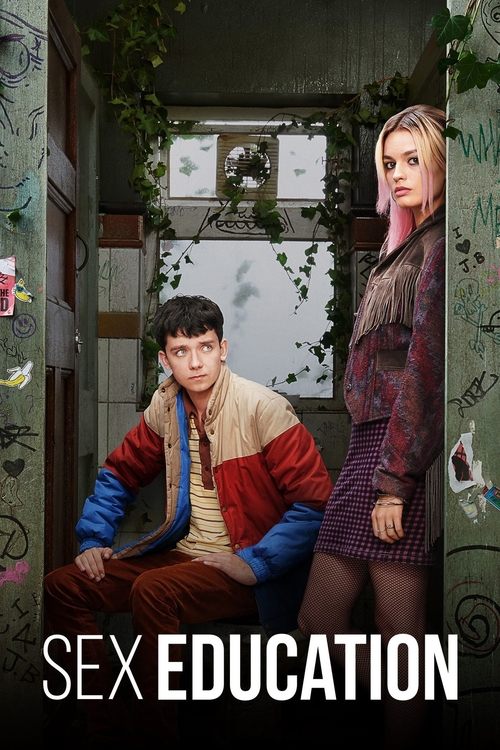



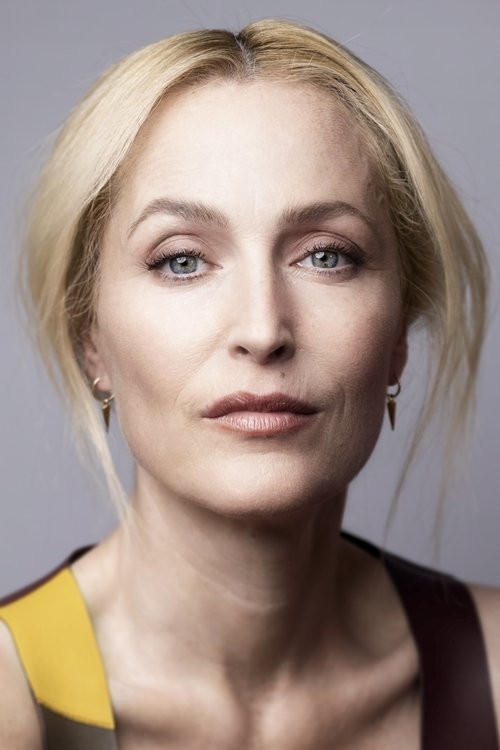





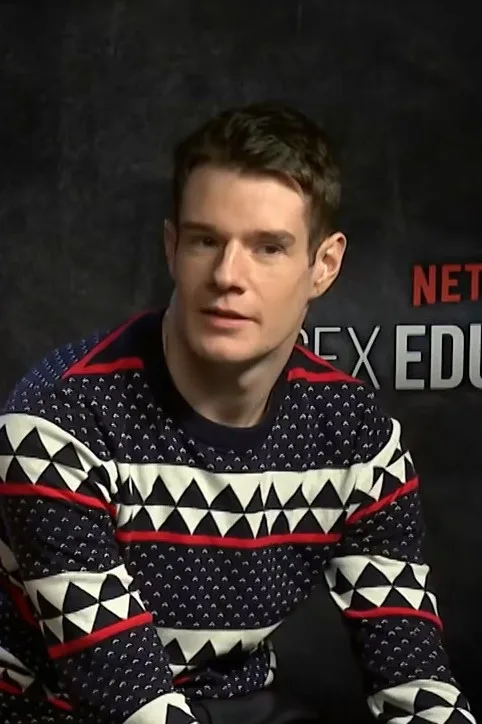




Sex Education is a British teen sex comedy drama television series created by Laurie Nunn for Netflix. It follows the lives of the teenagers and adults in the fictional town of Moordale as they contend with various personal dilemmas, often related to sexual intimacy. It stars an ensemble cast that includes Asa Butterfield, Gillian Anderson, Ncuti Gatwa, Emma Mackey, Connor Swindells, Kedar Williams-Stirling, Alistair Petrie, Mimi Keene, and Aimee Lou Wood.
The first series was released on Netflix on 11 January 2019. The second, third and fourth series followed in January 2020, September 2021 and September 2023, respectively. Sex Education has received critical acclaim for its performances, writing, directing, production value, and mature treatment of its themes. The programme has been a viewership success, with over 40 million viewers streaming the first series after its debut. Wood won the BAFTA TV Award for Best Female Comedy Performance for her role in the second series, and the third series won Best Comedy Series at the 50th International Emmy Awards.
Contents
Premise
Sex Education primarily follows Otis Milburn, a student at Moordale Secondary School. Otis begins the series ambivalent about sex, in part because his single mother, Jean Milburn, is a sex therapist who frequently has affairs with male suitors but does not maintain romantic relationships.
Other students at Moordale Secondary include Eric Effiong, Otis's best friend and the gay son of Ghanaian-Nigerian immigrants; Maeve Wiley, an intelligent and rebellious teen with a troubled family past; Adam Groff, headmaster Michael Groff's son who develops a bullying nature out of his own self-loathing; Jackson Marchetti, the head boy struggling to meet the high expectations set for him; Ruby Matthews, Anwar Bakshi, and Olivia Hanan, members of a popular clique known as "the Untouchables"; Aimee Gibbs, an Untouchable who secretly befriends Maeve; and Lily Iglehart, a writer of alien erotica determined to lose her virginity. The school is soon joined by Ola Nyman, whose widowed father, Jakob Nyman, begins a relationship with Jean. Otis's father, womaniser Remi Milburn, and Maeve's mother, drug addict Erin Wiley, later return to Moordale to reconnect with their children.
Plot outline
In the first series, Otis sets up a sex therapy clinic with Maeve to help the students of Moordale Secondary with their sexual problems. Their business becomes a success, but tension arises when Otis finds himself becoming attracted to Maeve.
In the second series, new students arrive at Moordale Secondary, including Ola, who becomes Otis's first girlfriend. Maeve struggles to confess her feelings for Otis, Eric helps his former bully Adam come to terms with his sexuality, and Jean becomes the school's resident sex therapist as a chlamydia outbreak highlights the teens' need for better sex education.
In the third series, a new school year begins as Otis is having casual sex with Ruby while Eric and Adam are made official. Maeve works with English teacher Emily Sands to apply for an exchange program in America, Jean expects a baby in the near future, and new headmistress Hope Haddon's plans to revamp Moordale Secondary creates conflict with the students.
In the fourth series, the students adjust to the new term at Cavendish Sixth Form College after Moordale Secondary is shut down. Otis competes with a rival sex therapist on campus while juggling his long-distance relationship with Maeve, who begins her studies at the prestigious Wallace University in the United States.
Cast and characters
Main
Asa Butterfield as Otis Milburn, a socially awkward teenager who gives sex advice to his peers
Gillian Anderson as Jean Milburn, Otis's mother and a well-known sex therapist
Ncuti Gatwa as Eric Effiong, Otis's openly gay best friend who comes from a religious Ghanaian-Nigerian family
Emma Mackey as Maeve Wiley, an intelligent but troubled teenager who runs a sex therapy clinic with Otis
Connor Swindells as Adam Groff, the headmaster's son and Eric's bully-turned-love interest
Kedar Williams-Stirling as Jackson Marchetti, the head boy at Moordale Secondary School and a swimming champion
Alistair Petrie as Michael Groff, the headmaster of Moordale Secondary School and Adam's strict father
Mimi Keene as Ruby Matthews, a popular girl at Moordale Secondary School and the leader of the Untouchables clique
Aimee Lou Wood as Aimee Gibbs, a former member of the Untouchables who becomes friends with Maeve
Chaneil Kular as Anwar Bakshi (series 1–3), a member of the Untouchables
Simone Ashley as Olivia Hanan (series 1–3), a member of the Untouchables
Tanya Reynolds as Lily Iglehart (series 1–3), a girl who writes alien erotica
Patricia Allison as Ola Nyman (series 1–3), a pansexual girl who joins Moordale Secondary School
Recurring
Jim Howick as Colin Hendricks (series 1–3; guest series 4), a science teacher at Moordale Secondary School who conducts the Swing Band
Samantha Spiro as Maureen Groff, the headmaster's wife and Adam's mother
Hannah Waddingham as Sofia Marchetti (series 1–2 and 4; guest series 3), one of Jackson's mothers
Sharon Duncan-Brewster as Roz Marchetti (series 1–2 and 4), Jackson's other mother
DeObia Oparei as Abeo Effiong (series 1), Eric's concerned and protective father
Doreene Blackstock as Beatrice Effiong, Eric's supportive mother
Chris Jenks as Steve Morley (series 1–3), a student at Moordale Secondary School, who becomes Aimee's boyfriend
Lisa Palfrey as Cynthia (series 1–3), the owner of the caravan park where Maeve lives
Daniel Ings as Dan (series 1, 3–4), Joy's real father
Joe Wilkinson as Jeffrey, Cynthia's husband
Jojo Macari as Kyle (series 1; guest series 2–3), one of Aimee's ex-boyfriends
Edward Bluemel as Sean Wiley (series 1 and 4), Maeve's absent older brother who raised her instead of their parents
Chinenye Ezeudu as Vivienne 'Viv' Odusanya (series 2–4), a girl who tutors Jackson and is a member of the quiz team
Guest
Toby Williams as Tim (series 1–2), one of Jean's patients
Lu Corfield as Sarah (series 1), a mother of three who befriends Maeve
Anjana Vasan as an anti-abortion activist (series 1)
Dominic Applewhite as Charlie (series 1), an anti-abortion activist
T'Nia Miller as Maxine (series 2), the chair of the school board
Thomas Atkinson as Nick (series 2–3), Anwar's boyfriend
Stephen Fry as himself (series 2), a quiz host
Sindhu Vee as Mrs Hanan (series 2), Olivia's mother
Susan Lynch as Tara Gibbs (series 2), Aimee's mother
Jack Bandeira as Eli (series 2), a student at Mountview Military Institution
David Layde as Roland Matthews (series 3–4), Ruby's father who has multiple sclerosis and is Jeffrey's friend
Miles Jupp as an obstetrician at Moordale community hospital
Sophie Thompson as Carol Iglehart (series 3), Lily's mother and a nurse
Jerry Iwu as Oba (series 3), a gay photographer from Nigeria
Reece Richards as Eugene (series 3), Viv's boyfriend
Jack Gleeson as Dodgy Mo (series 4), a friend of Sean's
Episodes
Production
Development
On 28 November 2017, it was announced that Netflix had given the production a series order. The series was created by Laurie Nunn, with Ben Taylor expected to direct. Executive producers were set to include Jamie Campbell and Joel Wilson via their production company Eleven Film. On 4 December 2018, it was announced that the series would premiere on 11 January 2019. On 1 February 2019, Netflix renewed the show for a second series which premiered on 17 January 2020. On 10 February 2020, Netflix renewed the show for a third series. As part of a video and letter to its shareholders in April 2021, Netflix's co-chief executive officer and chief content officer, Ted Sarandos, confirmed that the third series of Sex Education was expected to be released sometime in the second half of 2021. On 24 June 2021, it was announced that the third series would premiere on 17 September 2021. On 25 September 2021, eight days after the premiere of the third series, it was announced that Sex Education had been renewed for a fourth series. On 5 July 2023, it was announced that the fourth season would be the last.
Casting
On 17 May 2018, it was announced that Gillian Anderson, Emma Mackey, Asa Butterfield, Ncuti Gatwa, Connor Swindells, and Kedar Williams-Stirling had joined the show's main cast. On 16 July 2018, it was reported that James Purefoy had been cast in a recurring role. Dan Levy, Thaddea Graham, Lisa McGrillis and Eshaan Akbar joined the cast in series 4, while Simone Ashley, Tanya Reynolds and Patricia Allison did not return.
Filming
Filming for the first series took place at several locations in the Wye Valley in both Wales and England, including Llandogo, Tintern, Symonds Yat, Monmouth, and Redbrook. Filming was also progressed in Penarth, Vale of Glamorgan during 2018. The scenes set at Moordale Secondary School were filmed at the former Caerleon campus of the University of South Wales in Caerleon, Newport. Scenes set in the swimming pool were filmed at the Newport International Sports Village complex. Filming for the second series took place from May to September 2019, and included scenes filmed in the Forest of Dean.
In February 2021 during filming for the third series, production visited several locations in Kent. Filming took place at Shorncliffe Military Cemetery in Sandgate and the Hawthorne Trench, which both double as WWI locations in France for Episode 5. Production also visited the Harbour Arm in Folkestone Harbour to film a scene for Episode 7.
Setting and aesthetics
The setting of Sex Education appears to be modern-day Britain, in the fictional village of Moordale, with various elements that serve to place the show in an uncertain time and location. Modern technology, such as smartphones, exists, but the show features very few cars from after the 1990s, with most cars featured ranging from the 1970s to the 1990s. Police cars seen during the finale of series two appear to follow 1990s aesthetics rather than modern-day police cars. The show heavily features older technologies such as CRT televisions and dated household appliances. The décor of the Groffs' house is reminiscent of popular 1970s décor; Maeve's caravan is typical of the 1990s–2000s; and the Milburns' house is a more modern décor with a modern, "American-style" fridge. Moordale Secondary School shows some elements of UK secondary schools but also has a more American high school image. According to showrunner Laurie Nunn, the show's aesthetic is deliberate and an homage to the 1980s films of John Hughes.
Release
On 2 January 2019, the official trailer for the series was released.
Audience viewership
On 17 January 2019, Netflix announced that the series was on pace to have been streamed by over 40 million viewers within its first month of release. According to Netflix Top 10 global viewership, Sex Education was watched for over 447,750,000 hours between 12 September and 24 October 2021.
Manga adaptation
On 15 July 2022, a manga adaptation illustrated by John Tarachine began serialization in Kadokawa Corporation's Comic Bridge online manga magazine.
Reception
Critical response
Review aggregation website Rotten Tomatoes reports that 91% of 80 critic ratings were positive for the first series, with an average rating of 8.10/10. The website's critical consensus reads, "Bawdy, heartfelt, and surprisingly wise, Sex Education is a raucous romp through a group of teenagers whose sexual misadventures are so thoughtfully rendered, adults could learn a thing or two from them." Metacritic calculated a weighted average score of 79 out of 100 from 19 critics, indicating "generally favourable reviews".
On Rotten Tomatoes, the second series has an approval rating of 98% with an average rating of 8.30/10, based on 57 reviews. The critical consensus reads, "Sex Education's sophomore season definitely has more going on, but by treating each new subject with care and humour, it leaves plenty of space for its characters to grow." On Metacritic, the series has a score of 83 out of 100, based on reviews from 11 critics, indicating "universal acclaim".
On Rotten Tomatoes, the third series has an approval rating of 98% with an average rating of 8.50/10, based on 42 reviews. The critical consensus reads, "With a seemingly endless desire to dive deeper into its characters paired perfectly with its talented ensemble, Sex Education's third season is a masterclass in brutally honest, brilliantly heartfelt comedy." On Metacritic, the series has a score of 83 out of 100, based on reviews from 11 critics, indicating "universal acclaim". The third series won Best Comedy Series at the 50th International Emmy Awards.
On Rotten Tomatoes, the fourth series debuted with an approval rating of 91%, with an average of 7.5/10, based on 44 reviews. The critical consensus reads, "As sweetly empathetic and inclusive as ever, Sex Education's final season serves as a bittersweet – but largely satisfying – farewell." On Metacritic, the series has a score of 69 out of 100, based on reviews from 18 critics, indicating a "generally favorable" reception.
Legacy
The series was notable for its pioneering portrayal of sexual health, relationships and consent across a diverse range of characters and experiences, which was found to resonate strongly with its teenage audience.
The series also reflected wider changes in television production through its use of intimacy coordinators to choreograph intimate scenes, helping to establish practices focused on performer consent, communication and safety. As Netflix's first production to adopt this approach, the series has been cited in discussions of evolving industry standards for filming intimate content, alongside its broader contribution to conversations about sexuality and representation on screen.
Style
Sex Education is often noted for its unique visual language and aesthetics, which employs American teen culture tropes into a British setting. Inspired by the filmography of John Hughes and the teen comedies of the 1980s, the series incorporates several elements, motifs and designs evocative of those films, and American teen media in general, such as students idling around lockers, non-uniform school dress codes and students sporting letterman jackets. Series director Ben Taylor said: "When [Laurie Nunn] was writing the script and the world, they tended to be on the whole more American references to the school experience I've seen in film and TV than any British ones. There was a tone in the script that was about warmth and positivity. It was just a sort of rendering the school experience as a positive thing, which we tend not to do in this country. I think it also visually elevates it to a slightly more expansive canvas". Anderson said that the US cultural references were intended to appeal to American audiences. On the retrograde setting, notably reminiscent of the 1980s, Taylor explained: "It was always contemporary ... It was just something we chose not to foreground so much, so that it wasn't about a generation of kids who are obsessed with their phones."