Production
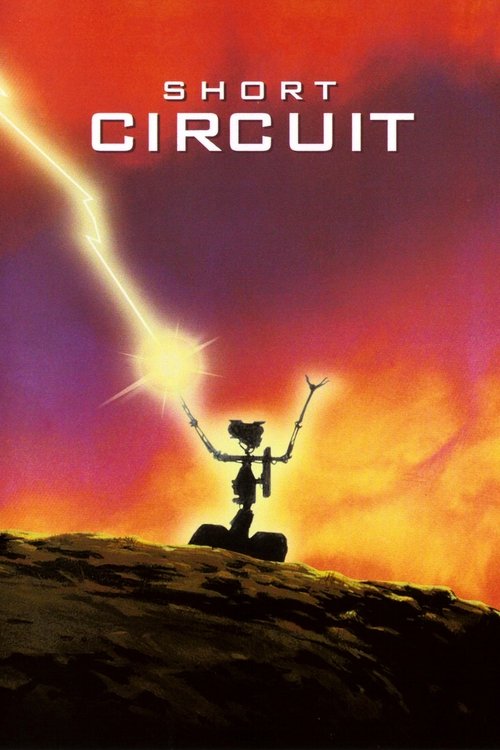
This film was conceived after the producers distributed an educational video about a robot to various colleges. Studying other films with a prominent robot cast (like the Star Wars series) for inspiration, they decided to question human reactions to a 'living' robot, on the premise that no one would initially believe its sentience. According to the DVD commentary, Number 5 was the most expensive part of the film, requiring several different versions to be made for different sequences. Almost everything else in the film was relatively inexpensive, allowing them to allocate as much money as they needed for the robot character.
The inspiration for the design of number 5 came from Douglas Trumbull's "Showscan" short entitled "LETS GO" which featured a robot named PAL that was designed by Eric Allard, Steven Spielberg saw the short and told Badham to contact Allard for the robot construction in the film.
Number 5 was designed by Syd Mead, the "visual futurist" famous for his work on Blade Runner and Tron. Although Mead's design was greatly influenced by the sketches of Allard, the Robotics Supervisor was credited for "realizing" the robots. Director John Badham named Allard "the most valuable player" on the film. Most of the arm movements of Number 5 were controlled by a "telemetry suit", carried on the puppeteer's upper torso. Each joint in the suit had a separate sensor, allowing the puppeteer's arm and hand movements to be transferred directly to the machine. He was also voiced in real-time by his puppeteer, the director believing that it provided for more realistic interaction between the robot and the other actors than putting in his voice in post-production, although a few of his lines were re-dubbed later.
During Stephanie's impromptu news interview, Badham makes a cameo appearance as the news cameraman. The sequence in the film depicting Number 5 watching the movie Saturday Night Fever (and imitating John Travolta's dance moves) is an in-joke, as Badham also directed Saturday Night Fever.
Fisher Stevens said that when he was originally hired to play Ben Jabituya, the character was not intended to be Indian. Stevens was fired and replaced by Bronson Pinchot at one point, but then Pinchot left to do the sitcom Perfect Strangers, and Stevens was rehired. To portray the role he had to grow a beard, dye his hair black, darken his skin with makeup, turn his blue eyes brown with contact lenses, speak with an East Indian accent and "walk hunched over like a cricket player". In 2015, Aziz Ansari had a cordial discussion with Stevens over the role, with Ansari saying he did not view Stevens as a bad guy or someone who played Ben as a tired stereotype, and Stevens saying (with Ansari's agreement) that a present-day version of the role would be played by an actor who had an Indian or a South Asian background.
In 2009, Austin Pendleton, who had gone to college with Badham, stated "some stuff was cut out of my part in [Short Circuit]. And also the two leading roles were cast with really talented, attractive people who were not right for the parts. [The] script was just 'heartbreakingly' beautiful to read. And now it's a nice little slightly bland kids' movie. Nothing exactly wrong with it. Those two people who are in the leads are good, very likable, easy-to-work-with people, and have done some good work; they just weren't those people that were written in the script. And I said to John when it was about to open, 'Why did you cast them?' And he said, 'That was what the studio insisted on'. And it sort of ended the discussion. I said, 'Okay'. The film kind of works, but again, it was going to have been quite a beautiful film". According to Pendleton, the role Guttenberg ended up playing "...was a person who could not relate to other human beings, so he poured all that into the creation of the robot. Well, Steve, he's a lovely guy, and I think he's talented. I think he has a real sharp—especially in those days when they were hiring him all the time—he had a wonderful kind of charisma. Very easy, but utterly social. He's just so very engaging and open with people. He's wonderful to be on a movie with. He's just a real colleague. But he's just that way with people. He does not bring onscreen with him the problem that the character in that movie has. So you hear that he's shy and everything, but it's more like a convention than anything else. The perfect person for the role, 20 years earlier, would have been Dustin Hoffman. That thing that Dustin brought to The Graduate that a more affable actor would not have."
Guttenberg and Bailey had previously worked together on the Police Academy series of films.