Early writing
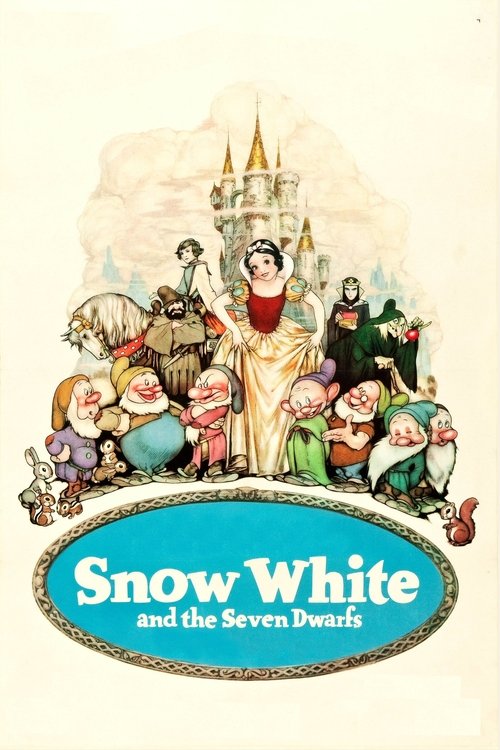
The earliest known story outline – titled "Manuscript" – was compiled by staff writer Richard Creedon on August 9, 1934, featuring twenty-one pages of suggestions for characters, scenes, and songs (including "Some Day My Prince Will Come"). At the time, Disney adopted a "wide-ranging approach", remaining open to any idea that could be proposed; notably, one of the suggestions included Snow White traveling through a series of enchanted sites – such as the Sleepy Valley, the Morass of Monsters, and the Valley of the Dragons – before arriving at the dwarfs' cottage. Snow White was originally envisioned to be more tomboyish, with the Queen described as "stately, beautiful in the way of a Benda mask ... a cool serene character who demonstrates her fury only in moments of great passion." One of the potential storylines developed for "Manuscript" involved the Queen imprisoning the Prince in her dungeon, after seeing his affection for Snow White, with the Prince later fighting his way out of her castle with "tricks that Doug Fairbanks would like to have thought." Other story suggestions included the Queen having a collection of her former enemies reduced to a few inches in size; a Gilbert and Sullivan-style musical number for the scene where the Queen orders the Huntsman to kill Snow White; and the sequence of the Queen trying to break the mirror upon learning that Snow White has survived, with the mirror detaching itself from the wall and smashing against the Queen after chasing her around the chamber. Disney also decided from the beginning that each of the Seven Dwarfs – whom he considered the "strongest lure" of the story because of their comedic potential – should have a distinctive personality, identified by a respective name; a pool of over fifty possibilities was compiled for "Manuscript" (with names such as Sleepy, Hoppy, Bashful, Happy, Sneezy-Wheezy, Biggo-Ego, and Awful as the top contenders).
In October 1934, Disney began holding weekly story meetings with a small unit of writers, which included Creedon, Larry Morey, Ted Sears, Albert Hurter, and Pinto Colvig. During the first meeting on October 3, several scenes were proposed: the "Soup Eating" (where Snow White has dinner with dwarfs) and "Bed Building" (where the dwarfs build a bed for Snow White) sequences; Snow White teaching the dwarfs to pray; and the climactic scene of the dwarfs chasing the disguised Queen, followed by her death from falling off a cliff. For the next meeting, held on October 9, a typed sheet was complied, featuring a redefined selection of names for the dwarfs – Wheezy, Jumpy, Baldy, Grumpy, Happy, Doc, and Sleepy – and their respective characteristics; several alternatives were also suggested, including Hickey, Sniffy, Stuffy, Shorty, Burpy, Tubby, Dizzy, and Dopey. From the outset, Disney decided to discard the part from the Grimms' original story where the Queen tries to kill Snow White with a tightly laced bodice, but considered retaining the other two attempts (with a poisoned comb and a poisoned apple), both of which were discussed at the meeting. The storyline of the Prince's imprisonment by the Queen, first introduced in "Manuscript", was also elaborated: after failing to kill Snow White with the comb, the Queen would throw the Prince into a dungeon and use magic to make the skeletons of her previous victims dance for him (identifying one skeleton as "Prince Oswald"). When the disguised Queen would have left for the dwarfs' cottage with the poisoned apple, Snow White's bird friends were to help the Prince escape from the dungeon, fight the Queen's guards, and find his horse; the Prince would then go after the Queen, taking the wrong road in the process. Other discussions included the dwarfs' discovery of Snow White in their cottage; two disguises for the Queen – a "fat, bulgy" peddler and a "thin, hawk-faced" witch – for each of her attempts to kill Snow White; and the scene of Snow White kissing the dwarfs goodbye before they leave for work. At the meeting, Disney also insisted that the writers refer to the dwarfs as "seven little men", which was maintained for the rest of the production.
Other examples of the more comical nature of the story at this point included suggestions for a "fat, batty, cartoon type, self-satisfied" Queen. The Prince was also more of a clown and was to serenade Snow White in a more comical fashion. Walt Disney encouraged all staff at the studio to contribute to the story, offering five dollars for every 'gag'; such gags included the dwarfs' noses popping over the foot of the bed when they first meet Snow White.
Disney became concerned that such a comical approach would lessen the plausibility of the characters and, sensing that more time was needed for the development of the Queen, advised in an outline circulated on November 6 that attention be paid exclusively to "scenes in which only Snow White, the Dwarfs, and their bird and animal friends appear". The names and personalities of the dwarfs, however, were still "open to change". A meeting on November 16 resulted in another outline entitled 'Dwarfs Discover Snowwhite', which introduced the character of Dopey, who would ultimately prove to be the most successful of the dwarf characterizations. In the original storyboard, Dopey was very talkative, but no suitable voice actors could be found. Mel Blanc was given a try without success. It was suggested to make him mute instead. For the rest of 1934, Disney further developed the story by himself, finding a dilemma in the characterization of the Queen, who he felt could no longer be "fat" and "batty", but a "stately beautiful type", a possibility already brought up in previous story meetings.








.jpg?width=400)