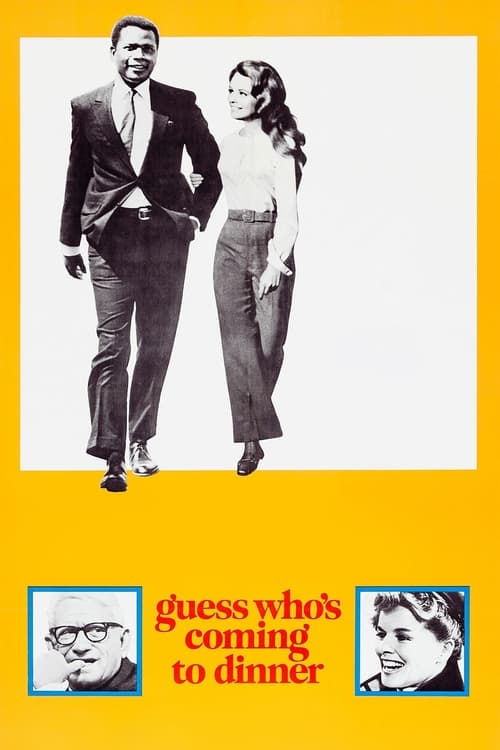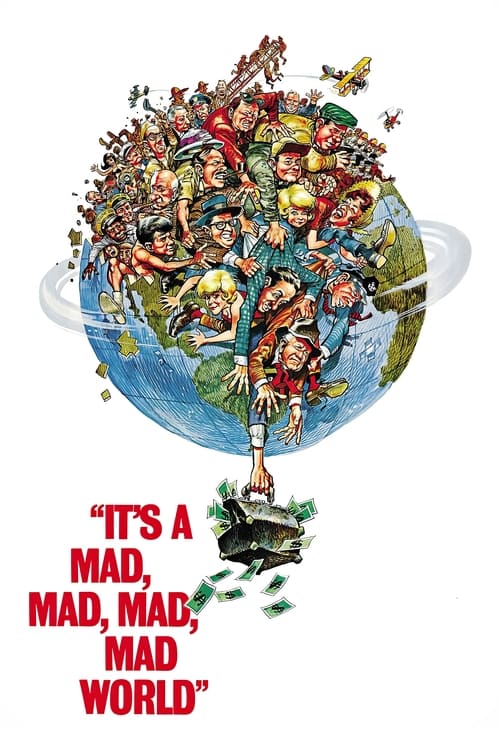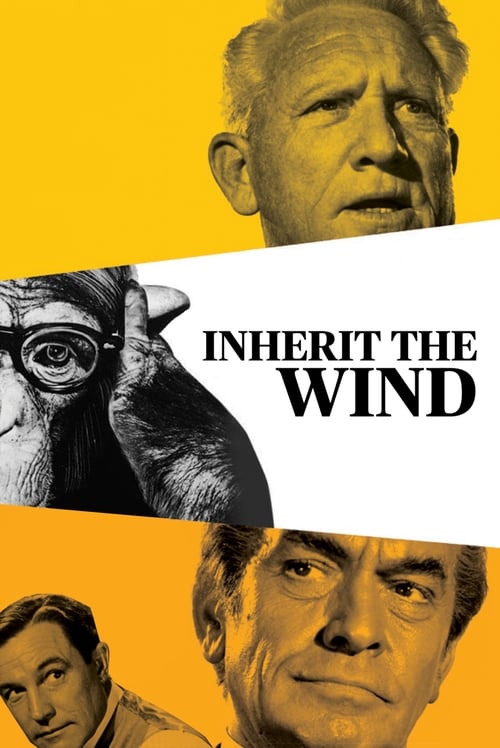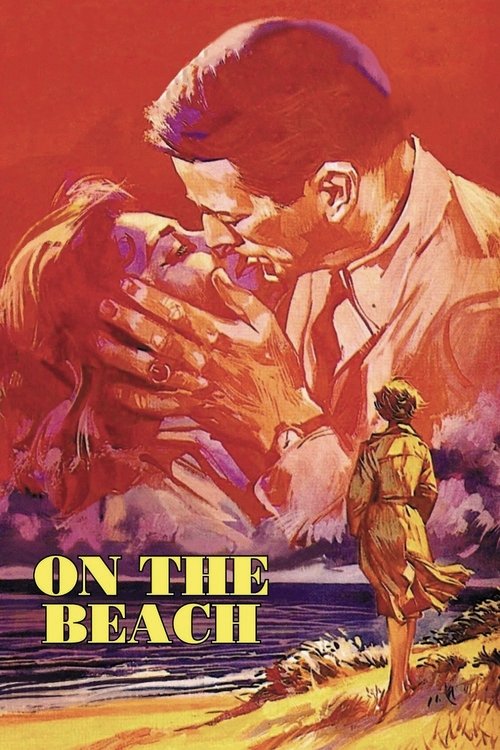




Stanley Earl Kramer (September 29, 1913 – February 19, 2001) was an American film director and producer, responsible for making many of Hollywood's most famous "message films" (he called his movies heavy dramas) and a liberal movie icon. As an independent producer and director, he brought attention to topical social issues that most studios avoided. Among the subjects covered in his films were racism (in The Defiant Ones and Guess Who's Coming to Dinner), nuclear war (in On the Beach), greed (in It's a Mad, Mad, Mad, Mad World), creationism vs. evolution (in Inherit the Wind), and the causes and effects of fascism (in Judgment at Nuremberg). His other films included High Noon (1952, as producer), The Caine Mutiny (1954, as producer), and Ship of Fools (1965).
Director Steven Spielberg described him as an "incredibly talented visionary" and "one of our great filmmakers, not just for the art and passion he put on screen, but for the impact he has made on the conscience of the world." Kramer was recognized for his fierce independence as a producer-director, with author Victor Navasky writing that "among the independents...none seemed more vocal, more liberal, more pugnacious than young Stanley Kramer." His friend Kevin Spacey honored him in his acceptance speech for the 2015 Golden Globe for Best Actor in a TV Drama, calling him "one of the great filmmakers of all time."
Despite uneven critical reception, both then and now, Kramer's body of work has received many awards, including 16 Academy Awards and 80 nominations, and he was nominated nine times as either producer or director. In 1961, he received the Irving G. Thalberg Memorial Award. In 1963, he was a member of the jury at the 3rd Moscow International Film Festival. In 1998, he was awarded the first NAACP Vanguard Award in recognition of "the strong social themes that ran through his body of work". In 2002, the Stanley Kramer Award was created, to be awarded to recipients whose work "dramatically illustrates provocative social issues".
Contents
Early life
Kramer was born in New York City. His parents were Jewish, and having separated when he was very young, he remembered little about his father. His mother worked at a New York office of Paramount Pictures, during which time his grandparents took care of him at home. His uncle, Earl Kramer, worked in distribution at Universal Pictures.
Kramer attended DeWitt Clinton High School in the Bronx, where he graduated at age fifteen. He then enrolled in New York University, where he became a member of the Pi Lambda Phi fraternity and wrote a weekly column for the Medley magazine. He graduated in 1933 at the age of nineteen with a degree in business administration. After developing a "zest for writing" with a newspaper, biographer Donald Spoto wrote, Kramer was offered a paid internship in the writing department of 20th Century Fox and moved to Hollywood. Until receiving that writing job, he had planned to enroll in law school.
Film career
Move to Hollywood
Over the following years, during the period of the Great Depression, Kramer took odd jobs in the film industry: He worked as a set furniture mover and film cutter at MGM, as writer and researcher for Columbia Pictures and Republic Pictures, and associate producer with Loew-Lewin productions. Those years as an apprentice writer and editor helped him acquire an "exceptional aptitude" in editing and develop the ability to understand the overall structure of the films he worked on. They enabled him to later compose and edit "in camera," as he shot scenes.
He was drafted into the U.S. Army in 1943 during World War II, where he helped make training films with the Signal Corps in New York, along with other Hollywood filmmakers including Frank Capra and Anatole Litvak. He left the army with the rank of first lieutenant.
After the war, Kramer soon discovered that there were no available jobs in Hollywood in 1947, so he created an independent production company, Screen Plays Inc. He partnered with writer Herbie Baker, publicist George Glass and producer Carl Foreman, an army friend from the film unit. Foreman justified the production company by noting that the big studios had become "dinosaurs," which, being shocked by the onrush of television, "jettisoned virtually everything to survive." But they failed to develop cadres of younger creative talent in their wake.
Producer
Kramer's new company was able to take advantage of unused production facilities by renting time, allowing him to create independent films for a fraction of the cost the larger studios had required, and he did so without studio control. Kramer also saw this as an opportunity to produce films dealing with subjects the studios previously avoided, especially those about controversial topics.
However, Kramer soon learned that financing such independent films was a major obstacle, as he was forced to approach banks or else take on private investors. He did both when necessary. But with studios no longer involved, rival independent companies were created which all competed for those limited funds. According to Byman, "there were no fewer than ninety-six" other companies in competition during that period, and included some of Hollywood's biggest names: Frank Capra, John Ford, William Wyler, Howard Hawks, Leo McCarey, and George Stevens. Kramer explained how he tried to differentiate his new company from the others, explaining he was less interested in the money than having the ability to make a statement through his films:
Instead of relying on star names, we pinned our faith in stories that had something to say. If it happened to be something that other movies hadn't said before, so much the better. The only basis of choice was personal taste.
The first movie produced under his production company was the comedy So This Is New York (1948), directed by Richard Fleischer, and based on Ring Lardner's The Big Town. It failed at the box office. It was followed with Champion (1949), another Lardner story, this one about an ambitious and unscrupulous boxer. Written by Foreman, it was tailored to the talents of Kirk Douglas, a former amateur wrestler who was now an actor. Filmed in only 23 days with a relatively small budget, it became an immense box-office success. It won an Academy Award for Best Editing, with four other nominations, including Douglas for best actor and Foreman as screenwriter.
Kramer next produced Home of the Brave (also 1949), again directed by Mark Robson, which became an even bigger success than Champion. The story was adapted from a play by Arthur Laurents, originally about anti-Semitism in the army, but revised and made into a film about the persecution of a black soldier. Byman notes that it was the "first sound film about antiblack racism." The subject matter was so sensitive at the time, that Kramer shot the film in "total secrecy" to avoid protests by various organizations. Critics generally liked the film, which, notes Nora Sayre, "had a flavoring of courage."
Director
After The Caine Mutiny, Kramer left Columbia and resumed his independent productions, this time in the role of the director. Over the next two decades, Kramer reestablished his reputation within the film industry by directing a continual series of often successful films dealing with social and controversial issues, such as racism, nuclear war, greed and the causes and effects of fascism. Critic Charles Champlin later described Kramer as "a guy who fought some hard battles. He took on social issues when it was not popular to do so in Hollywood."
Among some of those controversial films were Not as a Stranger (1955), The Pride and the Passion (1957), The Defiant Ones (1958), On the Beach (1959), Inherit the Wind (1960), Judgment at Nuremberg (1961), and Guess Who's Coming to Dinner (1967). In addition to dramas, he directed It's a Mad, Mad, Mad, Mad World (1963).
His first film as director was Not as a Stranger (1955), the story of medical students and their career, some of whom lose their idealism and succumb to blind ambition, adultery, and immoral behavior. The film was a "smash hit," but reviews were mixed. Pauline Kael claimed it "lacked rhythm and development."
The Pride and the Passion (1957) is an adaptation from The Gun, a novel by C. S. Forester. It portrays in detail how a dedicated group of Spanish guerrillas dragged a gigantic cannon across half the country in an effort to defeat Napoleon's advancing army. It stars Frank Sinatra, Cary Grant and Sophia Loren.
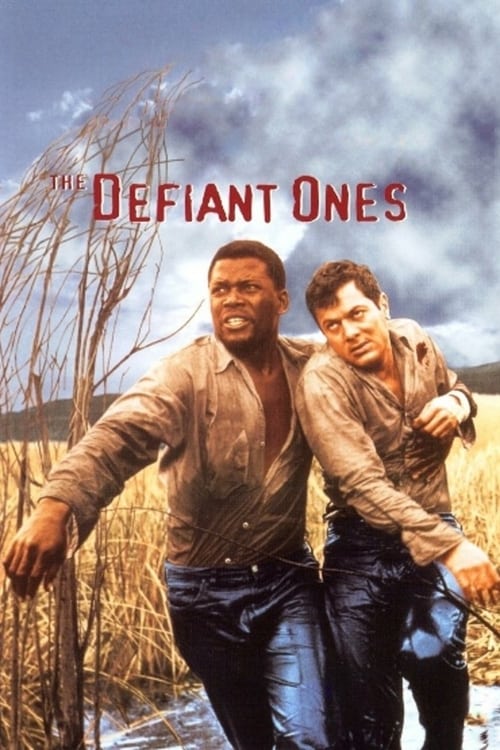
The following year, Kramer directed The Defiant Ones (1958), the story of two escaped convicts in the Deep South, one black, played by Sidney Poitier, and one white, Tony Curtis. To add to the intensity of the drama, both men are shackled together with chains, forcing them, despite their wishes, into a sense of brotherhood, suffering and fear.
New York Times film critic Bosley Crowther lauded the production and the acting in the film, calling it "a remarkably apt and dramatic visualization of a social idea—the idea of men of different races brought together to face misfortune in a bond of brotherhood — is achieved by producer Stanley Kramer in his new film." It was nominated for eight Academy Awards, winning two.
Retirement and death
In the 1980s, Kramer retired to Bellevue, Washington, and wrote a column on movies for The Seattle Times from 1980 to 1996. During this time, he hosted his own weekly movie show on then-independent television station KCPQ.
In 1986, he signed an agreement with Columbia Pictures to produce or direct two films, Chernobyl and Beirut, but the deal fell through when David Puttnam left Columbia. Three years later, he agreed to make ERN starring Robert Guillaume but the project stalled. In 1991, he signed a deal with Trimark to direct and produce Bubble Man, a project he had been working on since 1972, but it was not made.
In 1997, Kramer published his autobiography A Mad Mad Mad Mad World: A Life in Hollywood.
He died on February 19, 2001, in Woodland Hills, Los Angeles, aged 87, after contracting pneumonia. He was married three times and divorced twice. He was survived by his third wife, actress Karen Sharpe, and four children: Casey (1955–2023) and Larry (with Anne Pearce), and Katharine and Jennifer (with Karen Sharpe).
Legacy
Kramer has been called "a genuine original" as a filmmaker. He made movies that he believed in, and "straddled the fence between art and commerce for more than 30 years." Most of his films were noted for engaging the audience with political and social issues of the time. When asked why he gravitated to those kinds of themes, he stated, "emotionally I am drawn to these subjects," and thought that independent productions like his might help "return vitality to the motion picture industry...If our industry is to flourish, we must break away from formula thinking."
Film author Bill Nichols states that "Kramer's films continue a long-standing Hollywood tradition of marrying topical issues to dramatic form, a tradition in which we find many of Hollywood's more openly progressive films." Among his themes, Kramer was one of the few filmmakers to delve into subjects relating to civil rights, and according to his wife, Karen Kramer, "put his reputation and finances on the line to present subject matter that meant something." He gave up his salary to make sure that Guess Who's Coming to Dinner was completed. However, he has not had universal acclaim. Film critic David Thomson has written that Kramer's "films are middlebrow and overemphatic; at worst, they are among the most tedious and dispiriting productions the American cinema has to offer. Commercialism, of the most crass and confusing kind...devitalised all [of] his projects."
Critics have labeled Kramer's films as "message movies." Some, like Pauline Kael, were often critical of his subject matter for being "melodramas," and "irritatingly self-righteous," but she credits his films for their "redeeming social importance...[with] situations and settings nevertheless excitingly modern, relevant." Kramer, however, saw himself as "a storyteller with a point of view":
Maybe I'm out of step with the times, because a lot of movies are made today with no statement at all, just shock and sensation, or a motivationless kind of approach to a story, a senseless crime, a pointless love affair...Like lots of kids in the 1930s, I wanted to right all the wrongs of mankind...I'm not interested in changing anyone's opinion, just in telling a story.
In the 1960s Kramer blamed the growing "youth culture" with having changed the "artistic landscape" as he remembered it from his own youth. "No longer," he said, "were writers or filmmakers interested in creating the Great American Novel or the great American film, or indeed with exploring what it meant to be American."
The Stanley Kramer Award
The Producers Guild of America established the Stanley Kramer Award in 2002 to honor a production or individuals whose contribution illuminates and raises public awareness of important social issues.
Accolades for theatrical features directed by Kramer
Oscar-related performances
These actors have received numerous Oscar nominations for their respective performances in Kramer's motion pictures.