Syria, officially the Syrian Arab Republic, is a country in West Asia located in the Eastern Mediterranean and the Levant. It borders the Mediterranean Sea to the west, Turkey to the north and northwest, Iraq to the east and southeast, Jordan to the south, and Israel and Lebanon to the southwest. It is a republic under a provisional government and comprises 14 governorates. Damascus is Syria's capital and largest city. With a population of 26 million across an area of 185,180 square kilometres (71,500 sq mi), it is the 56th-most populous and 87th-largest country.
The name "Syria" historically referred to the region of Syria, or known as Greater Syria and Syria-Palestine. The modern state encompasses the sites of several ancient kingdoms and empires, including the Eblan civilization. Damascus was the capital of the Umayyad Empire and later became an important political and administrative center, alongside Aleppo, under the Ayyubid and Mamluk Sultanates and the Ottoman Empire. The modern Syrian state was established in the mid-20th century after centuries of Ottoman rule, as a French Mandate. The state represented the largest Arab state to emerge from the formerly Ottoman-ruled Syrian provinces. It gained de jure independence as a parliamentary republic in 1945 when the First Syrian Republic became a founding member of the United Nations, an act which legally ended the French Mandate. French troops withdrew in April 1946, granting the nation de facto independence. The post-independence period was tumultuous, with multiple coups and coup attempts between 1949 and 1971. In 1958, Syria entered a brief pan-Arab union with Egypt, which was terminated following a 1961 coup d'état. The 1963 coup d'état carried out by the military committee of the Ba'ath Party established a one-party state, which ran Syria under martial law from 1963 to 2011. Internal power-struggles within Ba'athist factions caused further coups in 1966 and 1970, the latter of which saw Hafez al-Assad come to power. Under Assad, Syria became a hereditary dictatorship. Assad died in 2000, and he was succeeded by his son, Bashar.
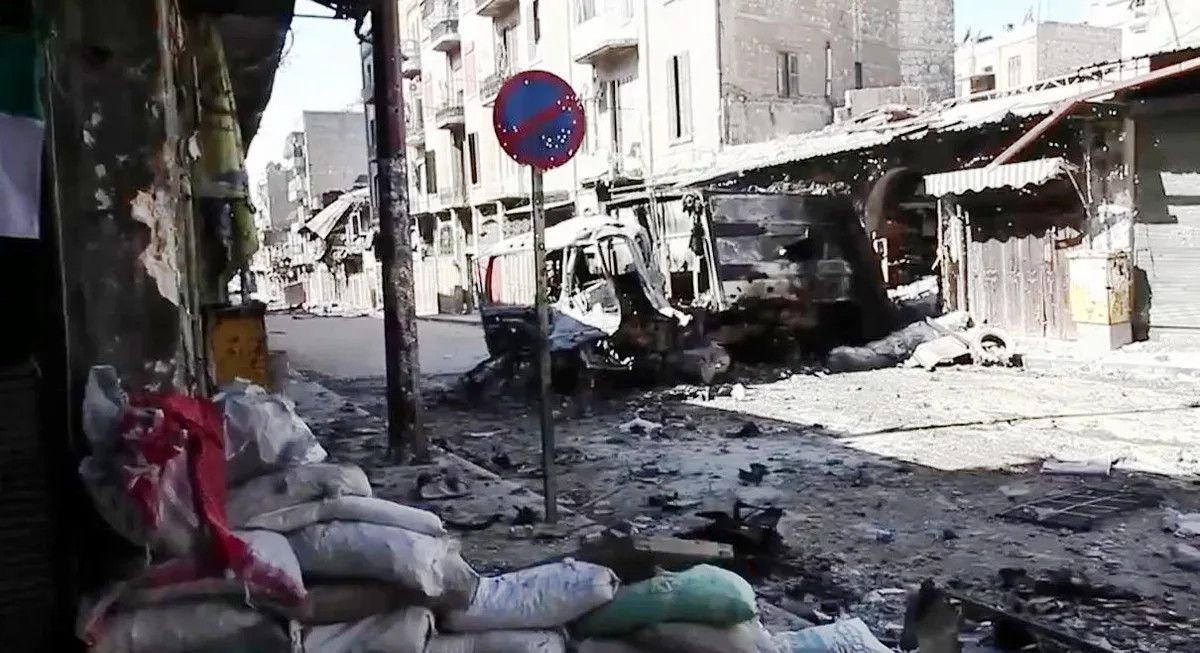
During the Arab Spring in 2011, members of the Syrian opposition organized protests against the Assad regime in what became known as the Syrian Revolution. After the government responded to protests with lethal violence, the Free Syrian Army was formed and the revolution descended into a multifaceted and destructive 13-year civil war that led to the involvement of several countries and a refugee crisis in which more than 6 million people were displaced. Rebel forces' progress was undone after the emergence of the Islamic State, which by May 2015 occupied two-thirds of the country. Alongside rebel and government counteroffensives, several countries led a campaign that resulted in the territorial defeat of the Islamic State in 2017. After defeat in the four-year Battle of Aleppo, the Free Syrian Army fragmented and struggled. Thereafter, three political entities—the Syrian Interim Government, Syrian Salvation Government, and the Democratic Autonomous Administration of North and East Syria—remained in Syrian territory to challenge Assad's rule. By 2020, the civil war became a frozen conflict, and Hay'at Tahrir al-Sham (HTS) consolidated the remaining rebel groups in its stronghold of controlled areas in the northwest. HTS then led a series of offensives alongside other opposition forces, culminating in the fall of Damascus and fall of the Assad regime on 8 December 2024.
By 2025, the Syrian civil war had killed over 600,000, left much of Syria's infrastructure in ruin, and its economy in a poor state following years of international sanctions that were later eased. In March 2025, the Syrian transitional government replaced the Syrian caretaker government under Ahmed al-Sharaa, the new president of Syria.
A country of fertile plains, high mountains, plateaus, and deserts, Syria is home to diverse ethnic and religious groups. Levantine Arabs are the largest ethnic group, and Sunni Muslims are the largest religious group.
Contents
Etymology
Several sources indicate that the name Syria is borrowed from the Ancient Greek name Σύριοι Sýrioi, or Σύροι Sýroi, which is in turn borrowed from Luwian sura/i- (attested in the 8th century BC), and ultimately derived from Aššūr (Assyria) in northern Mesopotamia (present-day Iraq and north-eastern Syria). However, from the Seleucid Empire (323–150 BC), this term was also applied to the Levant, and from this point the Greeks applied the term without distinction between the Assyrians of Mesopotamia and Arameans of the Levant. Mainstream modern academic opinion strongly favors the argument that the Greek word is related to Ἀσσυρία Assyria, ultimately borrowed from Akkadian Aššur. The Greek name appears to correspond to Phoenician ʾšr 'Assur', ʾšrym 'Assyrians', recorded in the Çineköy inscription (dated to the 8th century BC), where Luwian sura/i- is also attested.
The area designated by the word has changed over time. Classically, Syria lies at the eastern end of the Mediterranean, between Arabia to the south and Asia Minor to the north, stretching inland to include parts of Iraq, and having an uncertain border to the northeast that Pliny the Elder describes as including, from west to east, Commagene, Sophene, and Adiabene.
By Pliny's time, however, this larger Syria had been divided into a number of provinces under the Roman Empire (but politically independent from each other): Judaea, later renamed Palaestina in AD 135 (the region corresponding to modern-day Israel, the Palestinian territories, and Jordan) in the extreme southwest; Phoenice (established in 194) corresponding to modern Lebanon, Damascus and Homs regions; Coele-Syria (or "Hollow Syria") and south of the Eleutheris river.
History
Ancient antiquity
The Natufian culture was the first to become sedentary around the 11th millennium BC and became one of the centers of Neolithic culture (known as Pre-Pottery Neolithic A), where agriculture and cattle breeding first began to appear. The site of Tell Qaramel has several round stone towers dated to 10650 BC, making them the oldest structures of this kind in the world. The Neolithic period (Pre-Pottery Neolithic B) is represented by rectangular houses of Mureybet culture. At the time, people used containers made of stone, gyps, and burnt lime (Vaisselle blanche). The discovery of obsidian tools from Anatolia are evidence of early trade. The ancient cities of Hamoukar and Emar played an important role during the late Neolithic and Bronze Age. Archaeologists have demonstrated that civilization in Syria was one of the most ancient on earth, perhaps preceded by only that of Mesopotamia.
The earliest recorded indigenous civilization in the region was the Kingdom of Ebla near present-day Idlib, northern Syria. Ebla appears to have been founded around 3500 BC and gradually built its fortune through trade with the Mesopotamian states of Sumer, Assyria, and Akkad, as well as with the Hurrian and Hattian peoples to the northwest, in Asia Minor. Gifts from Pharaohs, found during excavations, confirm Ebla's contact with Egypt. One of the earliest written texts from Syria is a trading agreement between Vizier Ibrium of Ebla and an ambiguous kingdom called Abarsal c. 2300 BC. This is known as the Treaty between Ebla and Abarsal. Scholars believe the language of Ebla to be among the oldest known written Semitic languages after Akkadian. Recent classifications of the Eblaite language have shown that it was an East Semitic language, closely related to the Akkadian language. Ebla was weakened by a long war with Mari, and the whole of Syria became part of the Mesopotamian Akkadian Empire after Sargon of Akkad and his grandson Naram-Sin's conquests ended Eblan domination over Syria in the first half of the 23rd century BC.
By the 21st century BC, Hurrians settled in the northern east parts of Syria while the rest of the region was dominated by the Amorites. Syria was called the Land of the Amurru (Amorites) by their Assyro-Babylonian neighbors. The Northwest Semitic Amorite language is the earliest attested of the Canaanite languages. Mari reemerged during this period until conquered by Hammurabi of Babylon. Ugarit also arose during this time, circa 1800 BC, close to modern Latakia. Ugaritic was a Semitic language loosely related to the Canaanite languages and developed the Ugaritic alphabet, considered to be the world's earliest known alphabet. The Ugaritic kingdom survived until its destruction at the hands of the marauding Indo-European Sea Peoples in the 12th century BC in what was known as the Late Bronze Age collapse.
Classical antiquity
Lands that constitute modern-day Syria were part of the Neo-Babylonian Empire and had been annexed by the Achaemenid Empire in 539 BC. Led by Cyrus the Great, the Achaemenid Persians retained Imperial Aramaic as one of the diplomatic languages of their empire, as well as the Assyrian name for the new satrapy of Aram/Syria Eber-Nari. Syria was conquered by the Macedonian Empire which was ruled by Alexander the Great c. 330 BC and consequently became Coele-Syria province of the Seleucid Empire (323 BC – 64 BC), with the Seleucid kings styling themselves "King of Syria" and the city of Antioch being its capital starting from 240 BC. Thus, it was the Greeks who introduced the name "Syria" to the region. Originally an Indo-European corruption of "Assyria" in northern Mesopotamia (Iraq), the Greeks used this term to describe not only Assyria itself but also the lands to the west which had for centuries been under Assyrian dominion. Thus in the Greco-Roman world both the Arameans of Syria and the Assyrians of Mesopotamia (modern day Iraq) to the east were referred to as "Syrians" or "Syriacs", despite these being distinct peoples in their own right, a confusion which would continue into the modern world. Eventually parts of southern Seleucid Syria were taken by the Jewish Hasmonean dynasty upon the slow disintegration of the Hellenistic Empire.
Syria briefly came under Armenian control from 83 BC, with the conquests of the Armenian king Tigranes the Great, who was welcomed as a savior from the Seleucids and Romans by the Syrian people. However, Pompey the Great, a general of the Roman Empire, rode to Syria and captured Antioch and turned Syria into a Roman province in 64 BC, thus ending Armenian control over the region which had lasted two decades. Syria prospered under Roman rule, being strategically located on the Silk Road, which gave it massive wealth and importance, making it the battleground for the rivaling Romans and Persians. Palmyra, a rich and sometimes powerful native Aramaic-speaking kingdom, arose in northern Syria in the 2nd century; the Palmyrene established a trade network that made the city one of the richest in the Roman Empire. In the late 3rd century the Palmyrene king Odaenathus defeated the Persian emperor Shapur I and controlled the entirety of the Roman East while his successor and widow Zenobia established the Palmyrene Empire, which briefly conquered Egypt, Syria, Palestine, much of Asia Minor, Judah and Lebanon, before being finally brought under Roman control in 273.
The northern Mesopotamian Assyrian kingdom of Adiabene controlled areas of north east Syria between 10 and 117, before it was conquered by Rome. The Aramaic language has been found as far afield as Hadrian's Wall in Roman Britain, with an inscription written by a Palmyrene emigrant at the site of Fort Arbeia. Control of Syria eventually passed from the Romans to the Byzantines with the split in the Roman Empire. The largely Aramaic-speaking population of Syria during the heyday of the Byzantine Empire was probably not exceeded again until the 19th century. Prior to the Arab Islamic Conquest in the 7th century, the bulk of the population were Arameans, but Syria was also home to Greek and Roman ruling classes, Assyrians still dwelt in the north east, Phoenicians along the coasts, and Jewish and Armenian communities were also extant in major cities, with Nabateans and pre-Islamic Arabs such as the Lakhmids and Ghassanids dwelling in the deserts of southern Syria. Syriac Christianity had taken hold as the major religion, although others still followed Judaism, Mithraism, Manicheanism, Greco-Roman Religion, Canaanite Religion and Mesopotamian Religion. Syria's large and prosperous population made Syria one of the most important of the Roman and Byzantine provinces, particularly during the 2nd and 3rd centuries AD.
Middle Ages
Muhammad's first interaction with the people of Syria was during the invasion of Dumatul Jandal in July 626 where he ordered his followers to invade Duma, because Muhammad received intelligence that some tribes there were involved in highway robbery and were preparing to attack Medina. William Montgomery Watt claims that this was the most significant expedition Muhammad ordered at the time, even though it received little notice in the primary sources. Dumat Al-Jandal was 800 kilometres (500 mi) from Medina, and Watt says that there was no immediate threat to Muhammad, other than the possibility that his communications to Syria and supplies to Medina would be interrupted. Watt says "It is tempting to suppose that Muhammad was already envisaging something of the expansion which took place after his death", and that the rapid march of his troops must have "impressed all those who heard of it". William Muir also believes that the expedition was important as Muhammad followed by 1,000 men reached the confines of Syria, where distant tribes had learnt his name, while the political horizon of Muhammad was extended.
By 640, Syria was conquered by the Rashidun army led by Khalid ibn al-Walid. In the mid-7th century, the Umayyad dynasty placed the capital of the empire in Damascus. The country's power declined during later Umayyad rule; this was mainly through totalitarianism, corruption and the resulting revolutions. The Umayyad dynasty was overthrown in 750 by the Abbasid dynasty, which moved the capital of empire to Baghdad. Arabic – made official under Umayyad rule – became the dominant language, replacing Greek and Aramaic of the Byzantine era. In 887, the Egypt-based Tulunids annexed Syria from the Abbasids and were later replaced by the Egypt-based Ikhshidids and then by the Hamdanids originating in Aleppo founded by Sayf al-Dawla.Sections of Syria were held by French, English, Italian and German overlords between 1098 and 1189 during the Crusades and were known collectively as the Crusader states, among which the primary one in Syria was the Principality of Antioch. The coastal mountainous region was occupied in part by the Nizari Ismailis, the so-called Assassins, who had intermittent confrontations and truces with the Crusader States. Later in history when "the Nizaris faced renewed Frankish hostilities, they received timely assistance from the Ayyubids." After a century of Seljuk rule, Syria was largely conquered (1175–1185) by the Kurdish liberator Salah ad-Din, founder of the Ayyubid dynasty of Egypt. Aleppo fell to the Mongols of Hulegu in January 1260; Damascus fell in March, but then Hulegu was forced to break off his attack to return to China to deal with a succession dispute.
A few months later, the Mamluks arrived with an army from Egypt and defeated the Mongols in the Battle of Ain Jalut in Galilee. The Mamluk leader, Baibars, made Damascus a provincial capital. When he died, power was taken by Qalawun. In the meantime, an emir named Sunqur al-Ashqar had tried to declare himself ruler of Damascus, but he was defeated by Qalawun on 21 June 1280 and fled to northern Syria. Al-Ashqar, who had married a Mongol woman, appealed for help from the Mongols. The Mongols of the Ilkhanate took Aleppo in October 1280, but Qalawun persuaded Al-Ashqar to join him, and they fought against the Mongols on 29 October 1281 in the Second Battle of Homs, which was won by the Mamluks. In 1400, the Muslim Turco-Mongol conqueror Tamurlane invaded Syria, in which he sacked Aleppo and captured Damascus after defeating the Mamluk army. The city's inhabitants were massacred, except for the artisans who were deported to Samarkand. Tamurlane conducted massacres of the Assyrian Christian population, greatly reducing their numbers. By the end of the 15th century, the discovery of a sea route from Europe to the Far East ended the need for an overland trade route through Syria.
Ottoman Syria
In 1516, the Ottoman Empire invaded the Mamluk Sultanate of Egypt, conquering Syria and incorporating it into its empire. The Ottoman system was not burdensome to Syrians because the Turks respected Arabic as the language of the Quran and accepted the mantle of defenders of the faith. Damascus was made the major entrepot for Mecca, and as such it acquired a holy character to Muslims, because of the beneficial results of the countless pilgrims who passed through on the hajj.
Ottoman administration followed a system that led to peaceful coexistence. Each ethno-religious minority—Arab Shia Muslim, Arab Sunni Muslim, Syriac Orthodox, Greek Orthodox, Maronite Christians, Assyrian Christians, Armenians, Kurds and Jews—constituted a millet. The religious heads of each community administered all personal status laws and performed certain civil functions as well. In 1831, Ibrahim Pasha of Egypt renounced his loyalty to the empire and overran Ottoman Syria, capturing Damascus. His short-term rule over the domain attempted to change the demographics and social structure of the region: he brought thousands of Egyptian villagers to populate the plains of southern Syria, rebuilt Jaffa and settled it with veteran Egyptian soldiers aiming to turn it into a regional capital, and he crushed peasant and Druze rebellions and deported non-loyal tribesmen. By 1840, however, he had to surrender the area back to the Ottomans. From 1864, Tanzimat reforms were applied on Ottoman Syria, carving out the provinces (vilayets) of Aleppo, Zor, Beirut and Damascus Vilayet; Mutasarrifate of Mount Lebanon was created, and soon after the Mutasarrifate of Jerusalem was given a separate status.
During World War I, the Ottoman Empire entered the conflict as a Central Power. It ultimately suffered defeat and loss of control of the entire Near East to the British Empire and French Empire. During the conflict, genocide against indigenous Christian peoples was carried out by the Ottomans and their allies in the form of the Armenian genocide and Assyrian genocide, of which Deir ez-Zor in Ottoman Syria was the final destination of these death marches. In the midst of World War I, two Allied diplomats (Frenchman François Georges-Picot and Briton Mark Sykes) secretly agreed on the post-war division of the Ottoman Empire into respective zones of influence in the Sykes-Picot Agreement of 1916. Initially, the two territories were separated by a border that ran in an almost straight line from Jordan to Iran. However, the discovery of oil in the region of Mosul just before the end of the war led to yet another negotiation with France in 1918 to cede this region to the British zone of influence, which was to become Iraq. The fate of the intermediate province of Zor was left unclear; its occupation by Arab nationalists resulted in its attachment to Syria. This border was recognized internationally when Syria became a League of Nations mandate in 1920 and has not changed to date.
French Mandate
In 1920, a short-lived independent Kingdom of Syria was established under Faisal I of the Hashemite family. However, his rule over Syria ended after only a few months, following the Battle of Maysalun. French troops occupied Syria later that year after the San Remo conference proposed that the League of Nations put Syria under a French mandate. General Gouraud had according to his secretary de Caix two options: "Either build a Syrian nation that does not exist... by smoothing the rifts which still divide it" or "cultivate and maintain all the phenomena, which require our arbitration that these divisions give". De Caix added "I must say only the second option interests me". This is what Gouraud did.
In 1925, Sultan al-Atrash led a revolt that broke out in the Druze Mountain and spread to engulf the whole of Syria and parts of Lebanon. Al-Atrash won several battles against the French, notably the Battle of al-Kafr on 21 July 1925, the Battle of al-Mazraa on 2–3 August 1925, and the battles of Salkhad, al-Musayfirah and Sweida. France sent thousands of troops from Morocco and Senegal, leading the French to regain many cities, although resistance lasted until the spring of 1927. The French sentenced al-Atrash to death, but he had escaped with the rebels to Transjordan and was eventually pardoned. He returned to Syria in 1937 after the signing of the Syrian-French Treaty.
Syria and France negotiated a treaty of independence in September 1936, and Hashim al-Atassi was the first president to be elected under the first incarnation of the modern republic of Syria. However, the treaty never came into force because the French Legislature refused to ratify it. With the fall of France in 1940 during World War II, Syria came under the control of Vichy France until the British and Free French occupied the country in the Syria-Lebanon campaign in July 1941. Continuing pressure from Syrian nationalists and the British forced the French to evacuate their troops in April 1946, leaving the country in the hands of a republican government that had been formed during the mandate.
Independent Syrian Republic
Upheaval dominated Syrian politics from independence through the late 1960s. In May 1948, Syrian forces invaded Palestine, together with other Arab states, and immediately attacked Jewish settlements. President Shukri al-Quwatli instructed his troops in the front, "to destroy the Zionists". The invasion purpose was to prevent the establishment of the state of Israel. Toward this end, the Syrian government engaged in an active process of recruiting former Nazis, including several former members of the Schutzstaffel, to build up their armed forces and military intelligence capabilities. Defeat in this war was one of several trigger factors for the March 1949 Syrian coup d'état by Colonel Husni al-Za'im, described as the first military overthrow of the Arab World since the start of the Second World War. This was soon followed by another overthrow, by Colonel Sami al-Hinnawi, who was quickly deposed by Colonel Adib Shishakli, all within the same year.Shishakli would then later be overthrown in a 1954 coup, restoring the previous parliamentary system. However, by this time, power was increasingly concentrated in the military and security establishment. The weakness of parliamentary institutions and the mismanagement of the economy led to unrest and the rising influence of Nasserism and other ideologies. There was fertile ground for various Arab nationalist, Syrian nationalist, and socialist movements, which represented disaffected elements of society. Notably included were religious minorities, who demanded radical reform.
In November 1956, as a direct result of the Suez Crisis, Syria signed a pact with the Soviet Union. This gave a foothold for communist influence within the government in exchange for military equipment. Turkey then became worried about this increase in the strength of Syrian military technology, as it seemed feasible that Syria might attempt to retake İskenderun. Only heated debates in the United Nations lessened the threat of war.
United Arab Republic
On 1 February 1958, Syrian President Shukri al-Quwatli and Egypt's President Gamal Abdel Nasser announced the merging of Egypt and Syria, creating the United Arab Republic, and all Syrian political parties, as well as the communists therein, ceased overt activities. Meanwhile, a group of Syrian Ba'athist officers, alarmed by the party's poor position and the increasing fragility of the union, decided to form a secret Military Committee; its initial members were Lieutenant-Colonel Muhammad Umran, Major Salah Jadid and Captain Hafez al-Assad. Syria seceded from the union with Egypt on 28 September 1961, after a coup and terminated the political union.
Agrarian reform measures were introduced which consisted of three interrelated programs: legislation regulating the relationship between agriculture laborers and landowners; legislation governing the ownership and use of private and state domain land and directing the economic organization of peasants; and measures reorganizing agricultural production under state control. Despite high levels of inequality in land ownership these reforms allowed for more progress in redistribution of land from 1958 to 1961 than any other reforms in Syria's history, since independence.
The first law passed (Law 134; passed 4 September 1958) was in response to concern about peasant mobilization and expanding peasants' rights. This was designed to strengthen the position of sharecroppers and agricultural laborers in relation to land owners. This law led to the creation of the Ministry of Labor and Social Affairs, which announced the implementation of new laws that would allow the regulation of working condition especially for women and adolescents, set hours of work, and introduce the principle of minimum wage for paid laborers and an equitable division of harvest for sharecroppers. Furthermore, it obligated landlords to honor both written and oral contracts, established collective bargaining, contained provisions for workers' compensation, health, housing, and employment services. Law 134 was not designed strictly to protect workers. It also acknowledged the rights of landlords to form their own syndicates.
Ba'athist Syria
The instability which followed the 1961 coup culminated in the 8 March 1963 Ba'athist coup. The takeover was engineered by members of the Arab Socialist Ba'ath Party, led by Michel Aflaq and Salah al-Din al-Bitar. The new Syrian cabinet was dominated by Ba'ath members. From the 1963 seizure of power by its Military Committee to the fall of the regime in 2024, the Ba'ath party ruled Syria as a dictatorship which was frequently described as totalitarian, although some scholars rejected this description. Ba'athists took control over country's politics, education, culture, religion and surveilled all aspects of civil society through its powerful Mukhabarat (secret police). The Syrian Arab Armed Forces and secret police were integrated with the Ba'ath party apparatus; after the purging of traditional civilian and military elites by the regime.
The 1963 Ba'athist coup marked a "radical break" in modern Syrian history, after which Ba'ath party monopolised power in the country to establish a one-party state and shaped a socio-political order by enforcing its state ideology. On 23 February 1966, the neo-Ba'athist Military Committee carried out an intra-party rebellion against the Ba'athist Old Guard (Aflaq and Bitar), imprisoned President Amin al-Hafiz and designated a regionalist, civilian Ba'ath government on 1 March. Although Nureddin al-Atassi became the formal head of state, Salah Jadid was Syria's effective ruler from 1966 until November 1970, when he was deposed by Hafez al-Assad, who at the time was Minister of Defense.
The coup led to the schism within the original pan-Arab Ba'ath Party: one Iraqi-led ba'ath movement (ruled Iraq from 1968 to 2003) and one Syrian-led ba'ath movement was established. In the first half of 1967, a low-key state of war existed between Syria and Israel. Conflict over Israeli cultivation of land in the demilitarized zone led to 7 April pre-war aerial clashes between Israel and Syria. When the Six-Day War broke out between Egypt and Israel, Syria joined the war and attacked Israel as well. In the final days of the war, Israel turned its attention to Syria, capturing two-thirds of the Golan Heights in under 48 hours. The defeat caused a split between Jadid and Assad over what steps to take next. Disagreement developed between Jadid, who controlled the party apparatus, and Assad, who controlled the military. The 1970 retreat of Syrian forces sent to aid the Palestine Liberation Organization led by Yasser Arafat during the "Black September (also known as the Jordan Civil War of 1970)" hostilities with Jordan reflected this disagreement.The power struggle culminated in the November 1970 Syrian Corrective movement, a bloodless military coup that installed Hafez al-Assad as the strongman of the government. Assad transformed a Ba'athist party state into a dictatorship marked by his pervasive grip on the party, armed forces, secret police, media, education sector, religious and cultural spheres and all aspects of civil society. He assigned Alawite loyalists to key posts in the military forces, bureaucracy, intelligence and the ruling elite. A cult of personality revolving around Hafez and his family became a core tenet of Ba'athist ideology, which espoused that Assad dynasty was destined to rule perennially.
Post-Ba'athist and transitional period
Following the fall of the Assad regime, Assad's ninth prime minister Mohammad Ghazi al-Jalali, with support from the opposition and Ahmed al-Sharaa, remained at his post in a caretaker capacity until a caretaker government led by Mohammed al-Bashir was formed the following day. Al-Jalali called for fresh elections so that the Syrian people may choose their new leaders.
Prior to the fall of the Assad regime, Mohammed al-Bashir headed the Syrian Salvation Government (SSG) formed in the province of Idlib by Hay'at Tahrir al-Sham (HTS), the Islamist militant organization which led the overthrow of Assad in December 2024. In general, the formation of the Transitional Government was scaling of the SSG "to the whole of Syria", as the composition of the new government was almost the same as that of the SSG. According to a report by the Syrian Network for Human Rights, critics and opponents of the HTS were subject to repression in forms of enforced disappearances and tortures. Shortly after the fall of the Assad regime, Israel commenced a ground invasion of the Purple Line buffer zone near the Golan Heights, as well as commencing a series of airstrikes against Syrian military depots and naval bases. The Israeli Defense Forces claims that it is destroying Ba'athist military infrastructure, including chemical weapons plants, so that the rebels cannot use them.
Despite the collapse of the Assad regime, Turkish-backed Syrian National Army fighters in northern Syria continued their offensive against U.S.-backed Syrian Democratic Forces (SDF) forces until a ceasefire was reached on 11 December. In February 2025, the SDF, the Autonomous Administration, and the Syrian Democratic Council decided in a meeting that SDF would merge with the Syrian Armed Forces. The International Coalition against ISIS voiced support for continued dialogue between the SDF and the new Syrian government as well.
The prime minister of the transitional government, Mohammed al-Bashir, promised that Christians and other minorities would be permitted to continue practicing their religion without interference. However, this assurance was met with doubts, as many rebel forces had previous connections to al-Qaeda and the Islamic State. The use of a variation of the Tawhid flag by the new government alongside the opposition flag also raised worries, as it implied the new state may be less secular. Aisha al-Dibs was appointed as the Minister of Women's Affairs on 22 December 2024.
Geography
Syria is the twenty-fifth-largest country in Asia. It borders Turkey to the north; Iraq to the east and southeast; Jordan to the south; Israel and Lebanon to the southwest; and the Mediterranean Sea to the west. Syrian territory covers 185,180 km2 (71,500 sq mi). Elevation ranges from the coastal plains of the Mediterranean to the mountains of western Syria, with Mount Hermon being the country's highest point at 2,814 metres (9,232 feet). Much of central and eastern Syria consists of arid plateaus and desert regions, including parts of the Syrian desert, while the fertile valleys of the Euphrates, Orontes, and Khabur rivers support agriculture and settlement. Significant natural resources include petroleum, natural gas, phosphate rock, asphalt, marble, gypsum, and arable land.
Climate
Syria's climate varies from the humid Mediterranean coast, through a semi-arid steppe zone, to arid desert in the east. The country consists mostly of arid plateau, although the northwest part bordering the Mediterranean is fairly green. Al-Jazira in the northeast and Hauran in the south are important agricultural areas. The Euphrates, Syria's most important river, crosses the country in the east. Syria is one of the fifteen states that comprise the so-called "cradle of civilization". Its land straddles the northwest of the Arabian plate.
Petroleum in commercial quantities was first discovered in the northeast in 1956. The most important oil fields are those of al-Suwaydiyah, Karatchok, Rmelan near al-Hasakah, as well as al-Omar and al-Taym fields near Deir ez-Zor. The fields are a natural extension of the Iraqi fields of Mosul and Kirkuk. Petroleum became Syria's leading natural resource and chief export after 1974. Natural gas was discovered at the field of Jbessa in 1940.
Biodiversity
Syria contains four terrestrial ecoregions: Middle East steppe, Eastern Mediterranean conifer–sclerophyllous–broadleaf forests, Southern Anatolian montane conifer and deciduous forests, and Mesopotamian shrub desert. The country had a 2019 Forest Landscape Integrity Index mean score of 3.64/10, ranking it 144th globally out of 172 countries.
Politics and government
Ba'athist Syria (1963–2024)
The Syrian Arab Republic was a presidential state that nominally permitted the candidacy of individuals who were not part of the Ba'ath-controlled National Progressive Front. Despite this, Syria remained a one-party state with an extensive secret police apparatus that curtailed any independent political activity. The constitution introduced unilaterally by the Assad regime, without the participation of the Syrian opposition, had bolstered its authoritarian character by bestowing extraordinary powers on the presidency, and a Ba'athist political committee continued to be responsible for authorization of political parties.
The ruling Arab Socialist Ba'ath Party governed Syria as a police state through its control of the Syrian military and security apparatus; this system has frequently been described as totalitarian, although some scholars have preferred the term authoritarian. The 50th edition of Freedom in the World, published by Freedom House in 2023, designated Syria as "Worst of the Worst" among the "Not Free" countries and gave it the lowest score (1/100) alongside South Sudan.
According to the 2012 Syrian constitution, the President of Syria was the head of the Syrian state, while the Prime Minister of Syria was nominally the head of government, although real power in the system lay with the presidency. The legislature, the People's Assembly, was the body responsible for passing laws, approving government appropriations and debating policy. In the event of a vote of no confidence by a simple majority, the prime minister was required to tender the resignation of their government to the president. Since the rule of Hafez al-Assad, the Ba'athist political system was centered around a comprehensive cult of personality focused on the Assad family; with Alawite loyalists of the Ba'ath party dominating key positions in the military apparatus, secret police, and political establishment.
The executive branch consisted of the president, two vice presidents, the prime minister, and the Council of Ministers (cabinet). The constitution required the president to be a Muslim but did not make Islam the state religion. On 31 January 1973, Hafez al-Assad implemented a new constitution, which led to a national crisis. Unlike previous constitutions, this one did not require that the President of Syria be a Muslim, leading to fierce demonstrations in Hama, Homs, and Aleppo organized by the Muslim Brotherhood and the traditional ulama. They labelled Assad the "enemy of Allah" and called for a jihad against his rule. The government survived a series of armed revolts led mostly by Islamists of the Muslim Brotherhood, between 1976 and 1982, through a series of repressions and massacres. The constitution gave the president the right to appoint ministers, to declare war and state of emergency, to issue laws (which, except in the case of emergency, require ratification by the People's Council), to declare amnesty, to amend the constitution, and to appoint civil servants and military personnel. According to the 2012 constitution, the president was elected by Syrian citizens in a direct election. Syria's legislative branch was the unicameral People's Council. The People's Council primarily served as an institution to validate Syria's one-party system and re-affirm the legislative proceedings of the Arab Socialist Ba'ath party.
Post-Ba'athist Syria (2024–present)
Syria is currently undergoing a political transition following the fall of the Assad regime on 8 December 2024. A caretaker government led by prime minister Mohammed al-Bashir was then formed to govern the country. On 29 January 2025, during the Syrian Revolution Victory Conference in the Presidential Palace, the Syrian General Command appointed Ahmed al-Sharaa as president for the transitional period after he had served as the de facto leader following the fall of the Assad regime.
On 13 March 2025, al-Sharaa ratified the interim constitution, valid for a period of five years. The constitution established a presidential system and abolished the position of prime minister. The People's Assembly was also established to serve as an interim parliament during the five-year transition, overseeing the drafting of a new permanent constitution. On 29 March 2025, the Syrian transitional government was announced by al-Sharaa at a ceremony at the Presidential Palace in Damascus, in which the new ministers were sworn in and delivered speeches outlining their agendas. The government replaced the Syrian caretaker government, which was formed following the fall of the Assad regime on 8 December 2024.
Currently, Syria operates under a unitary system of government but there are proposals for a implementation of decentralisation.
Administrative divisions
Syria is divided into 14 governorates, which are subdivided into 61 districts, which are further divided into sub-districts.
Foreign relations
Ensuring national security, increasing influence among its Arab neighbors, and securing the return of the Golan Heights, have been the primary goals of Syria's foreign policy. At many points in its history, Syria has seen virulent tension with its geographically cultural neighbors, such as Turkey, Israel, Iraq, and Lebanon. Syria enjoyed an improvement in relations with several of the states in its region in the 21st century, prior to the Arab Spring and the Syrian civil war.
Since the civil war of 2011 and associated killings and human rights abuses, Syria has been increasingly isolated from the countries in the region and the wider international community. Diplomatic relations have been severed with several countries including: Britain, Canada, France, Italy, Germany, Tunisia, Egypt, Libya, United States, Belgium, Spain, and the Arab states of the Persian Gulf.
From the Arab league, Syria continues to maintain diplomatic relations with Algeria, Egypt, Iraq, Lebanon, Sudan and Yemen. Following its violent suppression of the Arab Spring protests of the 2011 Syrian revolution, the Syrian government was suspended from the Arab League in November 2011 for over 11 years, until its reinstatement in 2023. Syria also quit the Union for the Mediterranean. After 11 years, the Arab League readmitted Syria. The Organisation of Islamic Cooperation suspended Syria in August 2012, citing "deep concern at the massacres and inhuman acts" perpetrated by forces loyal to Bashar al-Assad.
After the fall of the Assad regime and the subsequent formation of the Syrian transitional government, Syria has begun to re-establish diplomatic ties with nations that previously broke ties with the Ba'athist-led Syrian government during the Syrian civil war, alongside the easing and removal of economic sanctions previously placed onto the Ba'athist government, including the Caesar Act by the United States.
The Syrian transitional government had also changed its stance on returning the Golan Heights to demand the withdrawal of Israel from areas beyond the border agreed upon in the 1974 Disengagement Agreement.
The United States has also announced plans to re-open its embassy in Damascus, which was closed during the Syrian civil war on 21 February 2026, with the process approximately taking 15 days according to the United States Department of State. Prior, Tom Barrack, the United States special envoy to Syria, had risen the American flag at the ambassador's residence in May 2025.
Military
The President of Syria is commander in chief of the Syrian Armed Forces, comprising some 100,000 troops upon mobilization. Until 2024, the military operated as a conscripted force, with males required to serve 30 months upon reaching the age of 18, though had slowly decreased over time, from in two and a half years to two years in 2005, to 21 months in 2008 and to year and a half in 2011. Since late 2024, compulsory military service has been inactive and is no longer enforced.
The breakup of the Soviet Union—long the principal source of training, material, and credit for the Syrian forces—may have slowed Syria's ability to acquire modern military equipment. It has an arsenal of surface-to-surface missiles. In the early 1990s, Scud-C missiles with a 500-kilometre (310-mile) range were procured from North Korea, and Scud-D, with a range of up to 700 kilometres (430 miles), is allegedly being developed by Syria with the help of North Korea and Iran, according to Zisser.
Syria received significant financial aid from Arab states of the Persian Gulf as a result of its participation in the Persian Gulf War, with a sizable portion of these funds earmarked for military spending. Iran and Russia were the biggest suppliers of military aid to the Assad-led Syrian Government.
Human rights
Prior to the fall of the Assad regime, the situation for human rights in Syria was a significant concern among independent organizations such as Human Rights Watch, who in 2010 referred to the country's record as "among the worst in the world." The 2011 Freedom House report ranked Syria "Not Free" in its annual Freedom in the World survey. The Ba'ath regime was a totalitarian dictatorship that has been internationally condemned for its domestic and political repression, including summary executions, massive censorship, forced disappearances, etc. as well as numerous crimes against Syrian civilians perpetrated during the civil war, such as massacres, barrel-bombings, chemical attacks, etc.
The authorities are accused of arresting democracy and human rights activists, censoring websites, detaining bloggers, and imposing travel bans. Arbitrary detention, torture, and disappearances are widespread. Although Syria's constitution guarantees gender equality, critics say that personal statutes laws and the penal code discriminate against women and girls. Moreover, it also grants leniency for so-called honour killing. As of 9 November 2011 during the uprising against President Bashar al-Assad, the United Nations reported that of the over 3,500 deaths, over 250 deaths were children as young as two years old, and that boys as young as 11 years old have been gang-raped by security services officers. Syrian opposition forces claimed that more than 200, mostly civilians, were massacred and about 300 injured in Hama as a result of shelling by government forces on 12 July 2012.
In August 2013, the government was suspected of using chemical weapons against its civilians. U.S. Secretary of State John Kerry said it was "undeniable" that chemical weapons had been used in the country and that al-Assad's forces had committed a "moral obscenity" against his own people. "Make no mistake," Kerry said. "President Obama believes there must be accountability for those who would use the world's most heinous weapon against the world's most vulnerable people. Nothing today is more serious, and nothing is receiving more serious scrutiny". The Emergency Law, effectively suspending most constitutional protections, was in effect from 1963 until 21 April 2011. It was justified by the government in the light of the continuing war with Israel over the Golan Heights.
In August 2014, UN Human Rights chief Navi Pillay criticized the international community over its "paralysis" in dealing with the civil war gripping the country, which by 2014 had resulted in 191,369 deaths with war crimes, according to Pillay, being committed with total impunity on all sides in the conflict. Minority Alawites and Christians were targeted by Islamists and other groups. Three years later in April 2017, the U.S. Navy carried out a missile attack against a Syrian air base which had allegedly been used to conduct a chemical weapons attack on Syrian civilians, according to the U.S. government. In November 2021, the U.S. Central Command called a 2019 airstrike that killed civilians in Syria "legitimate". The acknowledgement came after a New York Times investigation said the military had concealed the death of dozens of non-combatants.
Economy
Post-Ba'athist Syria
After the fall of the Assad regime, the subsequent formation of the Syrian transitional government and the lifting of sanctions placed onto the Ba'athist-led government, Syria's economy has begun to see significant growth, with Syrian news agency Levant24 claiming that the country's GDP had risen to $32 billion, experiencing a 30% to 35% growth in the GDP, alongside recording a budget surplus for the first time since the end of the Syrian civil war and expecting GDP to rise to $60 or $65 billion, around the same amount prior to the beginning of the civil war.
Alongside this, recent visits by president Ahmed al-Sharaa had also opened opportunities for investments in the country, as seen with his meeting with the Syrian-British Business Council during his visit to the United Kingdom, alongside other meetings during his visit to Germany, with al-Sharaa seeking to strengthen economic ties with the latter.
However, amidst the ongoing 2026 Iran war, food and other goods such as oil have also seen significant increases in their prices, exceeding 12% to 20% according to the Syrian Arab News Agency, the state-owned news agency.
Ba'athist Syria
The 2011 civil war left a negative impact on Syria's economy. However, Syria's economy began declining even before the beginning of the war. Syria's share in global exports has eroded gradually since 2001. The real per capita GDP growth was just 2.5% per year in the 2000–2008 period. Poverty rates increased from 11% in 2004 to 12.3% in 2007. In 2007, main exports included crude oil, refined products, raw cotton, clothing, fruits, and grains. The bulk of imports are raw materials essential for industry, vehicles, agricultural equipment, and heavy machinery. Earnings from oil exports as well as remittances from Syrian workers are the government's most important sources of foreign exchange.
Despite this, prior to the war, Syria was one of the most dynamic markets in the Middle East. The government envisioned a transition of Syria into a free market economy. The rising oil reserves triggered rapid growth in the economy, creating business opportunities for foreign firms and investments, as the booming oil and gas industry and infrastructure projects made Syria an attractive market. Prior to the war the government hoped to attract new investment in the tourism, natural gas, and service sectors to diversify its economy and reduce its dependence on oil and agriculture. The government began to institute economic reforms aimed at liberalizing most markets, but those reforms were slow and ad hoc, and were completely reversed since the outbreak of conflict. The UNDP announced in 2005 that 30% of the population lived in poverty, and 11.4% live below the subsistence level. At the outset of the civil war, Syria was classified by the World Bank as a "lower middle income country," though in 2010 Syria remained dependent on the oil and agriculture sectors. The oil sector provided about 40% of export earnings.
During the civil war, the Syrian economy relied upon dwindling customs and income taxes which are heavily bolstered by lines of credit from Iran, Russia and China. Iran is believed to have spent between $6 billion and US$20 billion per year on Syria during the first four years of the civil war. The Syrian pound lost 80% of its value, with the economy becoming part state-owned and part war economy. Proven offshore expeditions have indicated that large sums of oil exist on the Mediterranean Sea floor between Syria and Cyprus. The agriculture sector contributes to about 20% of GDP and 20% of employment. Oil reserves are expected to decrease in the coming years, and Syria has become a net oil importer. As of 2012, the value of overall exports was slashed by two-thirds, from the figure of US$12 billion in 2010 to only US$4 billion in 2012.
Transport
Syria has four international airports (Damascus, Aleppo, Latakia and Qamishli), which serve as hubs for Syrian Air and Fly Cham and are also served by a variety of foreign carriers.
Syria has 2,850 kilometres (1,770 mi) of railways, out of which 1,500 kilometres (930 mi) are out of operation in 2025 because of damage sustained during the civil war. The rolling stock is also in a state of disrepair. As of 2024 there are no international rail services, but high-speed rail in Turkey is being extended close to the border. The last train between Syria and Jordan operated in September 2011, and the transitional government plans to rebuild the Syrian section of the Hejaz Jordan Railway. The first trial run of a passenger train between Aleppo and Hama took place in August 2025 after months of renovation work, with plans to restore regular service between the two cities.
The road network in Syria is 69,873 kilometres (43,417 miles) long, including 1,103 kilometres (685 miles) of expressways. The country also has 900 kilometres (560 miles) of navigable but not economically significant waterways.
Internet and telecommunications
Telecommunications in Syria are overseen by the Ministry of Communications and Information Technology. In addition, Syrian Telecom plays an integral role in the distribution of internet access.
During the Syrian civil war, the Syrian Electronic Army, served as a Ba'athist-backed pro-Assad regime group in cyberspace, and according to Vice, were supposedly an enemy of the decentralized hacktivist collective Anonymous. Under Ba'athist rule, 13,000 internet activists were arrested in 2011 and 2012.
Water supply and sanitation
Syria is a semiarid country with scarce water resources. The largest water consuming sector in Syria is agriculture. Domestic water use stands at only about 9% of total water use. A big challenge for Syria before the civil war was its high population growth (in 2006 the growth rate was 2.7%), leading to rapidly increasing demand for urban and industrial water.
Demographics
Most people live in the Euphrates River valley and along the coastal plain, a fertile strip between the coastal mountains and the desert. Overall population density before the civil war was about 99 per square kilometre (258 per square mile). According to the World Refugee Survey 2008, published by the U.S. Committee for Refugees and Immigrants, Syria hosted a population of refugees and asylum seekers numbering approximately 1,852,300. The vast majority of this population was from Iraq (1,300,000), but sizeable populations from Palestine (543,400) and Somalia (5,200) also lived in the country.
In what the UN has described as "the biggest humanitarian emergency of our era", by 2014 about 9.5 million Syrians, half the population, had been displaced since March 2011; 4 million were outside the country as refugees. By 2020, the UN estimated that over 5.5 million Syrians were living as refugees in the region, and 6.1 million others were internally displaced.
Ethnic groups
Syrians are an overall indigenous Levantine people, closely related to their immediate neighbors, such as Lebanese, Palestinians, Jordanians and Jews. Syria has a population of approximately 26,000,000 (2025 estimate). Syrian Arabs, together with some 600,000 Palestinian not including the 6 million refugees outside the country make up roughly 74% of the population. The indigenous Assyrians and Western Aramaic-speakers number around 400,000 people, with the Western Aramaic-speakers living mainly in the villages of Maaloula, Jubb'adin and Bakh'a, while the Assyrians mainly reside in the north and northeast (Homs, Aleppo, Qamishli, Hasakah). Many (particularly the Assyrian group) still retain several Neo-Aramaic dialects as spoken and written languages.
The second-largest ethnic group in Syria are the Kurds. They constitute about 9% to 10% of the population, or approximately 2 million people (including 40,000 Yazidis). Most Kurds reside in the northeastern corner of Syria and most speak the Kurmanji variant of the Kurdish language. The third largest ethnic group are the Turkish-speaking Syrian Turkmen/Turkoman. There are no reliable estimates of their total population, with estimates ranging from several hundred thousand to 3.5 million. The fourth largest ethnic group are the Assyrians (3–4%), followed by the Circassians (1.5%) and the Armenians (1%), most of which are the descendants of refugees who arrived in Syria during the Armenian genocide. Syria holds the 7th largest Armenian population in the world. They are mainly gathered in Aleppo, Qamishli, Damascus and Kesab.
There are also smaller ethnic minority groups, such as the Albanians, Bosnians, Georgians, Greeks, Persians, Pashtuns and Russians. However, most of these ethnic minorities have become Arabized to some degree, particularly those who practice the Muslim faith. The largest concentration of the Syrian diaspora outside the Arab world is in Brazil, which has millions of people of Arab and other Near Eastern ancestries. Brazil is the first country in the Americas to offer humanitarian visas to Syrian refugees. The majority of Arab Argentines are from either Lebanese or Syrian background.
Languages
Arabic is the official language of the country. Several modern Arabic dialects are used in everyday life, most notably Levantine in the west and Mesopotamian in the northeast. According to The Encyclopedia of Arabic Language and Linguistics, in addition to Arabic, the following languages are spoken in the country, in order of the number of speakers: Kurdish (recognized in 2026 as a national language of Syria), Turkish, Neo-Aramaic (four dialects), Circassian, Chechen, Armenian, and finally Greek. Besides Kurdish, none of these minority languages have official status.
Many educated Syrians speak English, Russian, and French (especially among the bourgeoisie and the Christian community; there are fewer than 4,500 French speakers today), but English is more widely understood (between 650,000 and one million speakers, as a second language). Before the start of the Syrian civil war, around 8,000 students were enrolled in French-speaking Catholic schools.
Aramaic was the lingua franca of the region before the advent of Arabic, and is still spoken among Assyrians, and Classical Syriac is still used as the liturgical language of various Syriac Christian denominations. Most remarkably, Western Neo-Aramaic is still spoken in the village of Maaloula as well as two neighboring villages, 56 km (35 mi) northeast of Damascus. English and French are widely spoken as second languages, but English is more often used.
Religion
Islam is the largest and predominant religion in Syria, comprising 87% of the population. Sunni Muslims make up around 74% of the population and Sunni Arabs account for 59–60%. Most Kurds (8.5%) and most Turkmens (3%) are Sunni, while 3% of Syrians are Shia Muslims (particularly Ismailis, and Twelvers but there are also Arabs, Kurds and Turkmens), 10% are Alawites, 10% are Christians (the majority are Antiochian Greek Orthodox, the rest are Syriac Orthodox, Greek Catholic and other Catholic Rites, Armenian Orthodox, Assyrian Church of the East, Protestants and other denominations), and 3% Druzes. Druze number around 500,000 and concentrate mainly in the southern area of Jabal al-Druze. According to the Association of Religion Data Archives (ARDA), 94.17% of Syrians are Muslims–79.19% are Sunnis and 14.10% are Shias (including Alawites)–and 3.84% of Syrians are Christians as of 2020.
Because the Assad family is Alawite, Alawites have historically dominated key government and military positions.
Christians numbering 1.2 million, a sizable number of whom are found among Syria's population of Palestinian and Iraqi refugees, are divided into several denominations. The Greek Orthodox Church makes up 45.7% of the Christian population in Syria, whilst Syriac Orthodox make up 22.4%; the Armenian Orthodox make up 10.9% and Catholicism (including Greek Catholic, Syriac Catholic, Armenian Catholic, Maronite, Chaldean Catholic and Latin) make up 16.2%; Assyrian Church of the East and several smaller Christian denominations account for the remainder. Many Christian monasteries also exist. Many Christian Syrians belong to a high socio-economic class. As per one estimate, the count of Christians affiliated with established denominations in Syria has dropped from approximately 2.5 million prior to the civil war, to about 500,000 in 2023.
Syria was once home to a substantial population of Jews, with large communities in Damascus, Aleppo, and Qamishli. Due to a combination of persecution in Syria and opportunities elsewhere, the Jews began to emigrate in the second half of the 19th century to Great Britain, the United States, and Israel. The process was completed with the establishment of Israel in 1948. The remaining Jewish population dwindled as a result of the civil war. Today 100 Jews live in Syria. The United States is home to a large Syrian Jewish community, which is still considered as Syrian citizens by the Syrian government.
Education
Education is free and compulsory from ages 6 to 12. Schooling consists of six years of primary education followed by a three-year general or vocational training period and a three-year academic or vocational program. The second three-year period of academic training is required for university admission. Total enrollment at post-secondary schools is over 150,000. The literacy rate of Syrians aged 15 and older is 90.7% for males and 82.2% for females.
There are ten public universities in Syria and 39 private universities. The top two state universities are Damascus University (210,000 students as of 2014) and University of Aleppo. The top private universities in Syria are: Syrian Private University, Arab International University, University of Kalamoon and International University for Science and Technology. There are also many higher institutes in Syria, like the Higher Institute of Business Administration, which offer undergraduate and graduate programs in business.
Health
The Syrian civil war profoundly impacted the nation's health demographics and infrastructure. As of 2023, the World Health Organization (WHO) estimated Syria's population at approximately 23.6 million.
In 2021, the average life expectancy in Syria was 73.1 years. The infant mortality rate has seen a decline over recent years, with estimates indicating 12.1 deaths per 1,000 live births in 2022. The under-five mortality rate was reported at 21.4 deaths per 1,000 live births.
Prior to the conflict, Syria had a maternal mortality ratio of 52 deaths per 100,000 live births in 2009. However, the war disrupted maternal healthcare services, leading to increased risks for pregnant women.
The protracted conflict severely damaged Syria's healthcare infrastructure. In 2023 over half of the country's hospitals were non-functional, and approximately 15.3 million people were in need of health support, representing 72% of the population. This marked a 25% increase from 2022, highlighting the escalating health crisis.
Non-communicable diseases, particularly cardiovascular conditions, were leading causes of death before the conflict. However, during the war, conflict-related injuries and deaths surged, significantly altering the health landscape.
Culture
Syria is a traditional society with a long cultural history. Importance is placed on family, religion, education, self-discipline and respect. Syrians' taste for the traditional arts is expressed in dances such as the al-Samah, the Dabkeh in all their variations, and the sword dance. Marriage ceremonies and the births of children are occasions for the lively demonstration of folk customs.
Cuisine
Syrian cuisine is rich and varied in its ingredients, linked to the regions where a specific dish has originated. Syrian food mostly consists of southern Mediterranean, Greek, and Southwest Asian dishes. Some Syrian dishes also evolved from Turkish and French cooking: dishes like shish kebab, stuffed zucchini/courgette, and yabraʾ (stuffed grape leaves, the word yabraʾ deriving from the Turkish word yaprak, meaning leaf).
The main dishes are kibbeh, hummus, tabbouleh, fattoush, labneh, shawarma, mujaddara, shanklish, pastırma, sujuk and baklava. Baklava is made of filo pastry filled with chopped nuts and soaked in honey. Syrians often serve selections of appetizers, known as meze, before the main course. Za'atar, minced beef, and cheese manakish are popular hors d'œuvres. The Arabic flatbread khubz is always eaten together with meze.
Drinks vary, depending on the time of day and the occasion. Arabic coffee is the most well-known hot drink, usually prepared in the morning at breakfast or in the evening. It is usually served for guests or after food. Arak, an alcoholic drink, is a well-known beverage, served mostly on special occasions. Other Syrian beverages include ayran, jallab, white coffee, and a locally manufactured beer called Al Shark.
Literature
The literature of Syria has contributed to Arabic literature and has a proud tradition of oral and written poetry. Syrian writers, many of whom migrated to Egypt, played a crucial role in the nahda or Arab literary and cultural revival of the 19th century. Prominent contemporary Syrian writers include, among others, Adonis, Muhammad Maghout, Haidar Haidar, Ghada al-Samman, Nizar Qabbani and Zakariyya Tamer.
Ba'ath Party rule brought about renewed censorship. In this context, the genre of the historical novel, spearheaded by Nabil Sulayman, Fawwaz Haddad, Khyri al-Dhahabi and Nihad Siris, is sometimes used as a means of expressing dissent, critiquing the present through a depiction of the past. Syrian folk narrative, as a subgenre of historical fiction, is imbued with magical realism, and is also used as a means of veiled criticism of the present. Salim Barakat, a Syrian émigré living in Sweden, is one of the leading figures of the genre. Contemporary Syrian literature also encompasses science fiction and futuristic utopiae (Nuhad Sharif, Talib Umran), which may also serve as media of dissent.
Music
The Syrian music scene, in particular that of Damascus, has long been among the Arab world's most important, especially in the field of classical Arab music. Syria has produced several pan-Arab stars, including Asmahan, Farid al-Atrash and singer Lena Chamamyan. The city of Aleppo is known for its muwashshah, a form of Andalous sung poetry popularized by Sabri Moudallal, as well as for popular stars like Sabah Fakhri.
Media
Television was introduced to Syria and Egypt in 1960, when both were part of the United Arab Republic. It broadcast in black and white until 1976. Syrian soap operas have considerable market penetration throughout the eastern Arab world.
During Ba'athist Syria, nearly all of Syria's media outlets were state-owned. The authorities operated several intelligence agencies, among them Shu'bat al-Mukhabarat al-'Askariyya, employing many operatives. During the civil war many of Syria's artists, poets, writers and activists had been incarcerated, and some have been killed, including famed cartoonist Akram Raslan.
More than a year after Assad's fall, Syria's media landscape has opened considerably, with state outlets being restructured and exiled and opposition media returning. The authorities are preparing a new media law, while press freedom groups are calling for independent regulation, protection of sources and safeguards against the detention of journalists. Political instability, weak legal frameworks, poor infrastructure, limited funding and low public trust remain major challenges.