Differences
Differences from the book or other Peter Pan versions:
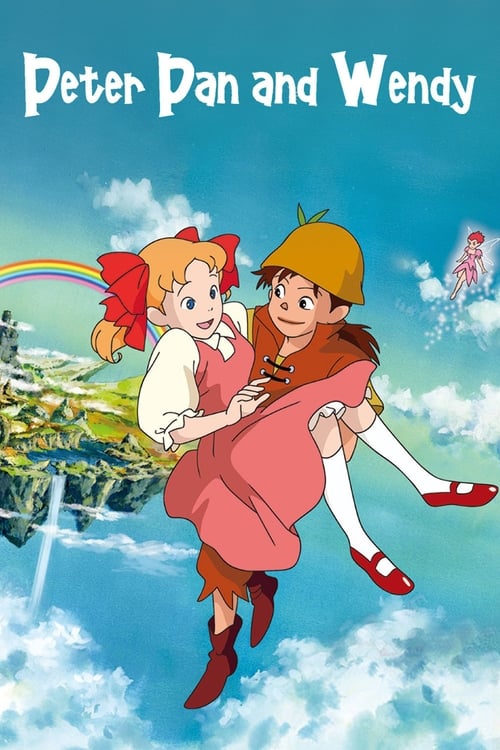
The setting of the time period of the series was changed from the Edwardian era to the late Victorian era.
The character of Mary Darling is renamed here as is the middle names of John Darling.
Rascal the Raccoon, a creation of Nippon Animation, appears occasionally throughout the series.
In most of the other versions of the story, Neverland is located on an island in one of the vast oceans, but in The Adventures of Peter Pan Neverland is located on a floating island hidden somewhere in the sky.
In all other versions, Hook lost his hand when Peter Pan cut it off, but in The Adventures of Peter Pan it was bitten off by the crocodile while Hook lost his first fight with Peter Pan. Also in The Adventures of Peter Pan Hook occasionally substitutes it for a crab pincer claw.
In all the other versions, Peter has a dagger, always worn close to himself to be ready for a duel all the time. In The Adventures of Peter Pan Peter uses a big shark tooth for his fights.
In the book and most of the other versions, the Darling children leave their home and go to Neverland in their pyjamas (Disney's version, the 2003 live-action film, Peter Pan Live! and Burbank Films Australia's version). Here, they first are wearing pyjamas when Peter visits them at night, but before leaving, they change into their normal day clothes, which they wear while in Neverland (as in some other versions like Fox's Peter Pan & the Pirates or The New Adventures of Peter Pan).
In the book and other versions, there is only one clock in Neverland, the one inside the crocodile's stomach, but in episode 8 of the series, "The Clock", it is shown that Hook also possesses another one on his ship.
In the book (and the 2003 film and Peter Pan Live!), at the end of the story, Hook gets eaten by the crocodile, but here, he remains alive.
In the book and other versions (Disney film, 2003 live-action film, Peter Pan Live!, Burbank Films Australia's film and Fox's Peter Pan & the Pirates), Peter and the others have their home in an underground house and as the name says, they live under the earth. Here, they first have a treehouse and live over the ground and later change it into a moving house on wheels.
In the book (and Fox's Peter Pan and the Pirates), the Lost Boys and John Darling share a big bed and Michael, being the youngest of them has his own bed, which is a big basket. In "The Adventures of Peter Pan" (or Peter Pan Live!), everybody has sleeps in their own bed, though Michael is occasionally seen sharing a bed with John.
In Barrie's novel (and the 2003 film and Burbank Films Australia's version), Peter and the boys build an extra house for Wendy, where only she lives and then regularly spends her time at the underground house. In this version (like in Peter Pan Live!), Wendy doesn't have her own house and lives in the same house as Peter and the others.
In the book and most of the other versions (Disney's version, the 2003 live-action film, Burbank Films Australia's version and Fox's Peter Pan & the Pirates), the gang of the Lost Boys includes six boys, but here there are only three.
At the end of the novel and some other versions (such as the 2003 live-action film and Peter Pan Live!), the Lost Boys leave Neverland, get adopted by the Darling family and grow up. In this series, they stay in Neverland and after Peter returns to Wendy's house, finds out she's grown up and has a daughter, while the lost boys are still children.
At the end of the last chapter from Barrie's novel, Peter, after several years visits the Darling house again and meets the grown-up Wendy (and this is shown in Peter Pan Live!). In this version, when Peter returns to London, the adult Wendy is not at home, but only her daughter, Jane, who explains to Peter that Wendy has grown up.
At the end of Barrie's story, when Peter visits Wendy in London, Tinker Bell is already dead, but in The Adventures of Peter Pan (and Disney's sequel to their version, Return to Never Land,) when Wendy is an adult, Tinker Bell is still alive and comes together with Peter to the Darling house.
Although the original Japanese script makes no reference to the crocodile's gender, the English dub of this series refers to the crocodile as "he". In The Pirate Fairy, the crocodile in the Disney version is referred to as "he", and the crocodile in Burbank Films Australia's version is also described as male, while in Barrie's original, the crocodile is described as female. This is followed by the animated television series Fox's Peter Pan & the Pirates and Geraldine McCaughrean's official sequel novel, Peter Pan in Scarlet.