Reception
Vincent Canby of The New York Times wrote that the film "is not, indeed, successful as baroque melodrama, and, towards the end, there are so many twists and turns of plot and character that everything that's gone before is neutralized. People who consider themselves discriminating moviegoers, but who are uncommitted to Mr. Siegel will be hard put to accept it, other than as a sensational, misogynistic nightmare." A negative review in Variety said that the film "doesn't come off, and the apparent attempt to mesh Charles Addams style with Tennessee Williams-type material cues audience laughter in all the wrong places." Gene Siskel of the Chicago Tribune gave the film two stars out of four and wrote that Siegel "unfortunately elects to tell his story with a broad and leering humor that at times is barely distinguishable from a sexploitation shocker." Kevin Thomas of the Los Angeles Times praised The Beguiled as "a film of psychological suspense laced with dark humor that is a triumph of style, totally engrossing and utterly convincing." Gary Arnold of The Washington Post slammed the film as "anything but beguiling. Weird, yes; trashy, yes; pathetic, yes; beguiling, no." Nigel Andrews of The Monthly Film Bulletin called it "a film that works best when it is most outrageous. Geraldine Page's piously neurotic Miss Martha and Elizabeth Hartman's sickly Edwina hover on the brink of self-parody for most of the film, and are pushed well over in Siegel's climactic dream sequence, which begins with multiple-exposure effects and triangular embraces and ends with a shot of the two women supporting a limply naked Eastwood in the pose of Van Der Weyden's 'Pieta' (which hangs ambiguously on Page's bedroom wall)."
The film received major recognition in France, and was proposed by Pierre Rissient to the Cannes Film Festival, and while agreed to by Eastwood and Siegel, the producers declined. It would be widely screened in France later and is considered one of Eastwood's finest works by the French. The film was poorly marketed and in the end grossed little over $1 million, earning less than a fourth of what Sweet Sweetback's Baadasssss Song did at the same time and falling to below 50 in the charts within two weeks of release.
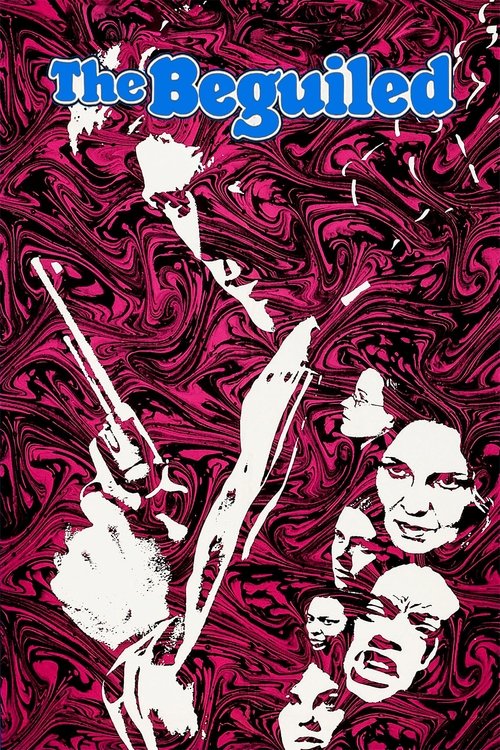
Made right before Dirty Harry, this was a bold early attempt by Eastwood to play against type. It was not a hit, likely due to uncertainty on Universal's part concerning how to market it, eventually leading them to advertise the film as a hothouse melodrama: "One man...seven women...in a strange house!" "His love... or his life..." According to Eastwood and Jennings Lang, the film, aside from being poorly publicized, flopped due to Eastwood's being "emasculated in the film". The film's poster, for example, shows him with a gun, suggesting an action movie, but the only action consists of a few seconds of flashback to Eastwood's character in battle before being wounded.
Quentin Tarantino later wrote the movie "was the closest Siegel ever came to making an art film... and truth be told, as good as it is, as its director, he's miscast. While the offbeat film is ultimately successful, it does bring out Siegel's worst stylistic impulses. His fondness for Freudian imagery, his literalness in a tale that screams for ambiguity (a dream sequence in the middle makes explicit everything that had only been suggested). However, once Siegel settles down and focuses on Eastwood, the film comes alive."
The Beguiled holds a 90% approval rating on review aggregator website Rotten Tomatoes, based on 21 reviews, with a weighted average of 7.3/10. Metacritic assigned the film a weighted average score of 66 out of 100, based on 6 critics, indicating "generally favourable reviews".