Critical response
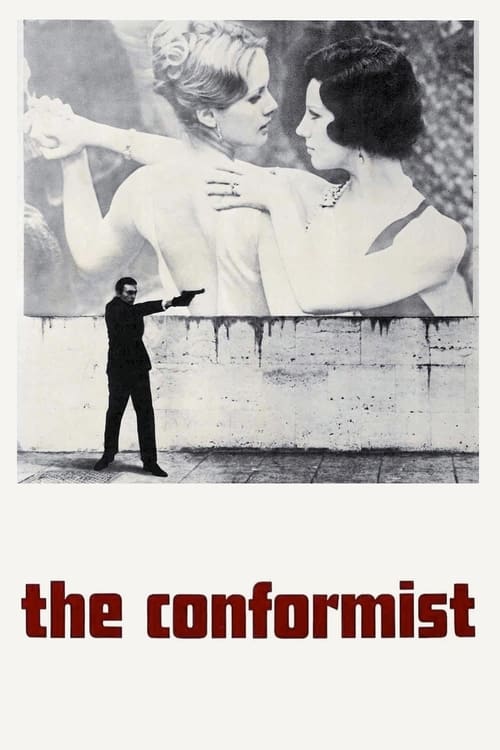
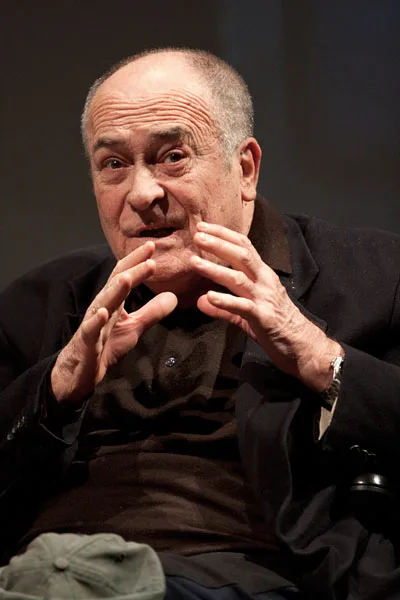
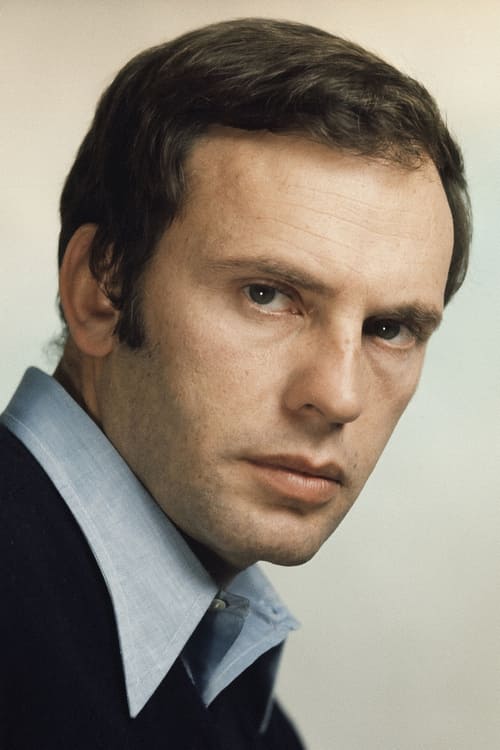
Vincent Canby, film critic for The New York Times, praised Bertolucci's screenplay and his directorial effort, and wrote, "Bernardo Bertolucci ... has at last made a very middle-class, almost conventional movie that turns out to be one of the elegant surprises of the current New York Film Festival ... It is also apparent in Bertolucci's cinematic style, which is so rich, poetic, and baroque that it is simply incapable of meaning only what it says ... The movie is perfectly cast, from Trintignant and on down, including Pierre Clementi, who appears briefly as the wicked young man who makes a play for the young Marcello. The Conformist is flawed, perhaps, but those very flaws may make it Bertolucci's first commercially popular film, at least in Europe where there always seems to be a market for intelligent, upper middle-class decadence."
Pauline Kael, film critic for The New Yorker, called the film a "sumptuous and emotionally charged experience."
A review in Variety stated, "For those who appreciate its subtleties, but also its subsurface power and great evocative qualities, it's a gem." Gene Siskel of the Chicago Tribune gave the film two-and-a-half stars out of four and called it "much more of a show than a story," with its narrative themes "all but lost amid Bertolucci's splendid recreation of the era. In other words, if you are looking for fashion and furnishing hints, this is the place." Kevin Thomas of the Los Angeles Times wrote that the film "places young Bernardo Bertolucci in the front ranks of Italian directors and among the finest film-makers working anywhere. In this dazzling film, Bertolucci, 30, manages to combine the bravura style of a Fellini, the acute sense of period of a Visconti and the fervent political commitment of an Elio Petri (Investigation of a Private Citizen) with complete individuality and, better still, a total lack of self-indulgence."
Gary Arnold of The Washington Post wrote that the film was "an extraordinarily beautiful and spellbinding picture," but "what's below the surface doesn't stand up to much analysis. I think this is true and that it amounts to a terrible flaw. The dramatic material, while intriguing, isn't adequately developed: many connecting or explanatory scenes appear to be missing (reading the original novel by Alberto Moravia restores some of these), the psychology of the most complex characters is murky, and the climactic and concluding scenes are positively trite." Jan Dawson of The Monthly Film Bulletin wrote, "In his screen adaptation of Moravia's novel, Bertolucci has eliminated all explanations or analysed motivations, as well as any allusions to Marcello's life before the moment he first sees Lino ... The effort of these changes, in purely psychological terms, is to reduce Marcello's story to a model Freudian case history."
In 1994, critic James Berardinelli wrote a review and heralded the film's look: "Storaro and Bertolucci have fashioned a visual masterpiece in The Conformist, with some of the best use of light and shadow ever in a motion picture. This isn't just photography, it's art – powerful, beautiful, and effective. There's a scene in the woods, with sunlight streaming between trees, that's breathtaking to behold – and all the more stunning because of the brutal events that take place before this background."
In a 2012 article in The Guardian, John Patterson defined the film as an "expressionist masterpiece", which "offered a blueprint for a new kind of Hollywood film", inspiring New Hollywood filmmakers.
On the review aggregator website Rotten Tomatoes, 98% of 60 critics' reviews are positive, with an average rating of 8.9/10. The website's consensus reads: "A commentary on fascism and beauty alike, Bernardo Bertolucci's The Conformist is acclaimed for its sumptuous visuals and extravagant, artful cinematography." Metacritic, which uses a weighted average, assigned the film a score of 100 out of 100, based on 11 critics, indicating "universal acclaim".
Trintignant considered The Conformist one of the best films he acted in.