Production
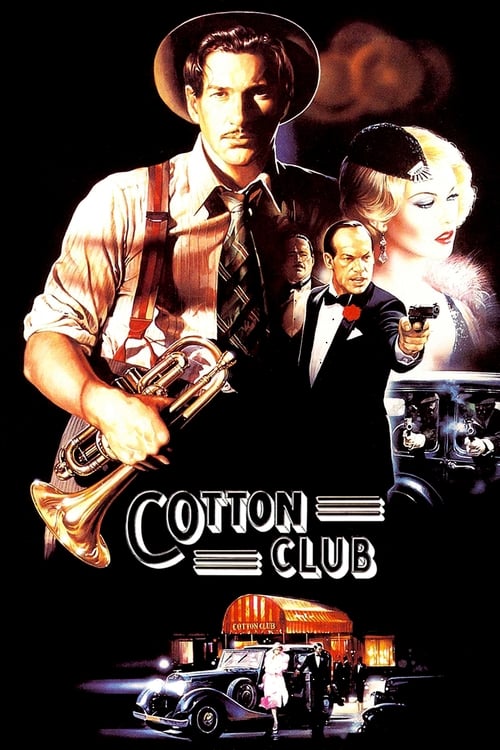
Inspired to make The Cotton Club by a picture-book history of the nightclub by James Haskins, Robert Evans was the film's original producer. Evans hoped the film would bring public attention to African-American history in a similar way that Gone with the Wind did for the American Civil War and the Reconstruction era. On December 12, 1980, it was announced that Evans and Paramount Pictures would serve as co-producers of the film while Robert Altman would direct and Mario Puzo would write. However, Evans and Altman's film Popeye premiering that day became a box-office flop. Although Evans secured $12 million worth of financing from Saudi business tycoon Adnan Khashoggi, Paramount Pictures withdrew from the film in 1981. Evans worked to secure sole ownership of the film negative to recoup his losses from recent poor stock-market investments and a cocaine trafficking arrest. However, this action alienated potential investors who would be unable to profit from television and home video distribution rights. The production was finally delayed when Evans reached a plea bargain to produce an advertising campaign of anti-drug public service announcements in exchange for an expungement of his record.
In 1984, Evans, who intended to direct the film himself after Altman departed, hired William Kennedy and Francis Ford Coppola to re-write Puzo's story and screenplay. Evans eventually decided that he did not want to direct the film and asked Coppola at the last minute. Evans and Coppola had an adversarial relationship from the production of the Godfather films but Coppola accepted the jobs as screenwriter and then director because he needed the money – he was deeply in debt from making One from the Heart with his own money and his studio Zoetrope Studios went bankrupt. Richard Sylbert said that he told Evans not to hire Coppola because "he resents being in the commercial, narrative, Hollywood movie business". Coppola said that he had letters from Sylbert asking him to work on the film because Evans was crazy. Coppola also said that "Evans set the tone for the level of extravagance long before I got there".
By the time Evans decided not to direct and brought in Coppola, at least $13 million had already been committed. Las Vegas casino owners Edward and Fred Doumani, along with businessman Victor L. Sayyah, put $30 million into the film in exchange for a fifty-percent ownership stake in the film. Evans received further loans by mortgaging his mansion in Beverly Hills and stock in Gulf + Western as collateral. Other financial backers included Arab arms dealer Adnan Khashoggi and vaudeville promoter Roy Radin, who was murdered in May 1983. The killers later alleged that they had been hired by Evans and Radin's girlfriend Karen Greenberger, a drug dealer who felt she was cut out of profits from the film. In the 1989 "Cotton Club Trial", Evans invoked his Fifth Amendment right against self-incrimination and refused to testify.
According to William Kennedy in an interview with Vanity Fair, the budget of the film was $47 million. However, Coppola told the head of Gaumont Film Company, Europe's largest distribution and production company, that he thought the film might cost $65 million.
Evans cast Al Pacino, Sylvester Stallone, and Harrison Ford to portray Michael "Dixie" Dwyer before Gere was hired. Richard Pryor was considered for the role of Delbert "Sandman" Williams. Robert Evans wanted to cast his friend Alain Delon in a two-scene role as Lucky Luciano but this did not occur. The role of Luciano was instead portrayed by Joe Dallesandro, starting the dramatic film career for the former Warhol Superstar.
Author Mario Puzo was the original screenwriter and was eventually replaced by William Kennedy, who wrote a rehearsal script in eight days which the cast used for three weeks prior to shooting. According to actor Gregory Hines, a three-hour film was shot during rehearsals. From July 15 to August 22, 1983, twelve scripts were produced, including five during one 48-hour non-stop weekend. Kennedy estimates that between 30 and 40 scripts were turned out. Production began on August 22, 1983, at Kaufman Astoria Studios in Queens. Over 600 people built sets, created costumes and arranged music at a reported $250,000 a day. During the production many crew members were abruptly fired. Within several weeks the film was already over budget, allowing Evans to deduct from the $4 million salary of Coppola, who had not yet been fully paid because the script was still being rewritten and thus incomplete. Coppola reacted by walking off set and refusing to continue directing the film until he was fully paid.
As costs on the film continued to rise, the Doumani brothers convinced Orion Pictures to advance costs for the film on the condition that Evans step down as producer and hired mobster Joseph Cusamano to intimidate Evans into giving up his share of the partnership. Evans initially agreed but stopped them by filing a restraining order against them after learning Sayyah was not involved in the deal. On June 7, 1984, Sayyah filed a lawsuit against the Doumani brothers, their lawyer David Hurwitz, Evans and Orion Pictures for fraud and breach of contract. Sayyah invested $5 million and said that he had little chance of recouping his money because the budget escalated from $25 to $58 million. He accused the Doumanis of forcing out Evans and said that an Orion loan to the film of $15 million unnecessarily increased the budget. Evans, in turn, sued Edward Doumani to keep from acting as general partner on the film. The court ruled in favor of Evans but also gave Coppola's close associate Barrie M. Osborne full control over post-production, essentially barring Evans from the completion of the film. Sayyah and the Doumani brothers would also be uncredited as producers.