Critical response
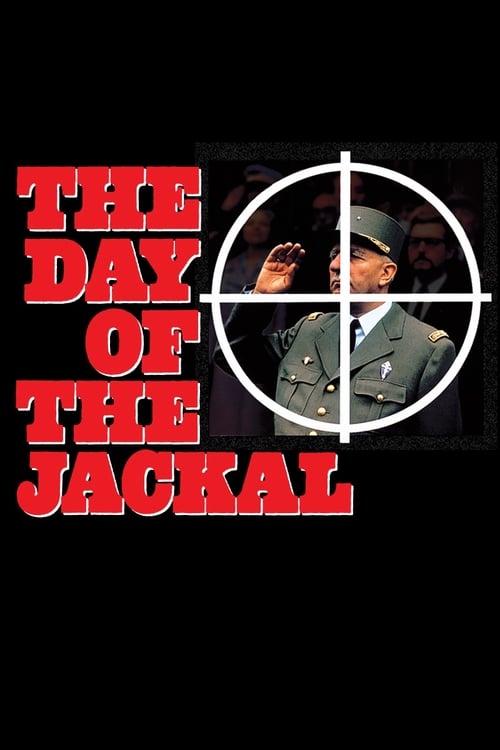
The film holds a 91% score on Rotten Tomatoes, based on 35 reviews with an average rating of 8.1/10. The critics consensus reads, "The Day of the Jackal is a meticulously constructed thriller with surprising irreverence and taut direction." Metacritic, which uses a weighted average, assigned the film a score of 80 out of 100, based on 8 critics, indicating "generally favorable" reviews
Critics of the period were generally impressed with the film. Among those was Roger Ebert of the Chicago Sun-Times, who gave it his highest rating of four stars:
"Fred Zinnemann’s The Day of the Jackal is one hell of an exciting movie. I wasn’t prepared for how good it really is: it’s not just a suspense classic, but a beautifully executed example of filmmaking. It’s put together like a fine watch. The screenplay meticulously assembles an incredible array of material, and then Zinnemann choreographs it so that the story—complicated as it is—unfolds in almost documentary starkness. The Day of the Jackal is two and a half hours long and seems over in about fifteen minutes."
Ebert concluded: "Zinnemann has mastered every detail ... There are some words you hesitate to use in a review, because they sound so much like advertising copy, but in this case I can truthfully say that the movie is spellbinding." Ebert included the film at No. 7 on his list of the Top 10 films of the year for 1973.
The Time film critic applauded the transition from novel to film:
"The Day of the Jackal makes one appreciate anew the wonderful narrative efficiency of the movies. Frederick Forsyth's bestselling novel — essentially what mystery buffs call a police procedural, but blown up to international proportions — kept losing its basically simple storyline in the forest of words. The writer required paragraphs to detail the procedures of an international manhunt, not to mention the procedures of the Jackal himself, a hired gun employed by disaffected French army officers to assassinate Charles de Gaulle. This is the kind of material that a good director can give us in the wink of a panning camera's eye."
The review continued, that due to the talents of director Fred Zinnemann, "what might have been just another expensive entertainment becomes, on a technical level, a textbook on reels in the near-forgotten subject of concise moviemaking. In short, as so often happens, a second-rate fiction has been transformed into a first-rate screen entertainment."
A few critics were less effusive. For example, William B. Collins wrote in The Philadelphia Inquirer:
"The picture cuts between The Jackal, carefully making his preparations, to the police taking their counter-measures. It is all detail work and not very exciting. The pace picks up noticeably when the assassin, all preliminaries behind him, motors across the Franco-Italian border
and learns that his cover has been blown."
In a MacLeans Magazine review, John Hofsess wrote:"The Jackal is not a great film, but it's a damn good one, one of the very few films released this year that is worth all the trouble and expense of going out to the movies. Zinnemann has a self-effacing directorial style; give him a good yarn and he tells it without any personal intrusions and attention-getting tics." Hofsess added that it is "an authentically detailed suspense story with ingenious twists." Other critics used similar language, praising The Day of the Jackal as an intricate and detailed maze, entertaining and never tedious.
Critic Matt Brunson of Film Frenzy appreciated how the film did justice to the novel it was based on:
"Author Frederick Forsyth struck gold right out of the gate with his first fictional work, the 1971 international bestseller The Day of the Jackal, and then had the good fortune to watch it transformed into a motion picture that (unlike too many page-to-screen efforts) steadfastly avoided botching the source material. A largely faithful adaptation of Forsyth’s novel ... Fred Zinnemann, scripter Kenneth Ross, and editor Ralph Kemplen (earning this film’s sole Oscar nomination) all deserve high marks for ratcheting up the tension in a movie whose outcome is never in doubt (after all, de Gaulle died years later at home, at the age of 79)."
Likewise, the film critic for The Spectator opined:"All of this the cinema is properly and effectively equipped to handle. Zinnemann, with the help of an excellent script from Kenneth Ross, has transferred the novel lock, stock, barrel and silencer to the screen. Nothing important has been left out. The added visual dimension means that Forsyth's lengthy descriptions of the Jackal's movements and equipment can be quickly expanded, and the extensive location shooting brings out the documentary aspect of the story to the full.... In other words, for those of you who have read the novel, going to The Day of the Jackal will be curiously like the experience of seeing the same film a second time round or seeing the filmed version of a stage play. For anyone who hasn't read Forsyth's book, the film can be recommended wholeheartedly."
As Empire magazine observed, Forsyth's scrupulously researched "pulp thriller" provided "the perfect template for this exhaustive procedural. In many ways, this outstanding piece of filmmaking marks the apotheosis of a certain style of thriller that has since fallen out of fashion—the mind game. [It is] built with the minutiae of a Swiss watch", without blandishments. The linear plot "is made infinitely complex by the portrayal of this empty vessel of a killer by Fox..." An irresistible force is pitted against an immovable object — a conflict facilitated by the script. TV Guide noted, "We watch his [the Jackal's] preparations which are so thorough we wonder how he could possibly fail even as we watch the French police attempt to pick up his trail."
Gannett news service critic Bernard Drew had both compliments and criticisms: "This is not a bad movie, it races by and entertains, after a fashion. It simply is not as good as it should have been. One wonders what Hitchcock or Costa-Gavras would have done with it. They would have cast it differently, cut down on the elaborate detailing, so much of which comes down to nothing, and the huge dramatis personae, and possibly might have made a better movie—more humorous, passionate, and credible—and then again, quite possibly not."
A list of the 100 favorite movies of Japanese filmmaker Akira Kurosawa included The Day of the Jackal.