Filming
Fincher and Zaillian's central objective was to maintain the novel's setting. To portray Larsson's vision of Sweden, and the interaction of light on its landscape, Fincher cooperated with an artistic team that included cinematographer Jeff Cronenweth and production designer Donald Graham Burt. The film was wholly shot using Red Digital Cinema Camera Company's RED MX digital camera, chosen to help evoke Larsson's tone. The idea, according to Cronenweth, was to employ unorthodox light sources and maintain a realistic perspective. "So there may be shadows, there may be flaws, but its reality. You allow silhouettes and darkness, but at the same time we also wanted shots to counter that, so it would not all be one continuous dramatic image." Sweden's climate was a crucial element in enhancing the mood. Cronenweth commented, "It's always an element in the background and it was very important that you feel it as an audience member. The winter becomes like a silent character in the film giving everything a low, cool-colored light that is super soft and non-direct." To get acquainted with Swedish culture, Burt set out on a month-long expedition across the country. He said of the process, "It takes time to start really taking in the nuances of a culture, to start seeing the themes that recur in the architecture, the landscape, the layouts of the cities and the habits of the people. I felt I had to really integrate myself into this world to develop a true sense of place for the film. It was not just about understanding the physicality of the locations, but the metaphysics of them, and how the way people live comes out through design."
Principal photography began in Stockholm, Sweden in September 2010. Production mostly took place at multiple locations in the city's central business district, including at the Stockholm Court House. One challenge was realizing the Vanger estate. They picked an eighteenth-century French architecture mansion, Hofsta, located approximately 60 miles (97 km) southwest of Stockholm. Filmmakers wanted to use a typical "manor from Småland" that was solemn, formal, and "very Old Money". "The Swedish are very good at the modern and the minimal but they also have these wonderful country homes that can be juxtaposed against the modern city—yet both speak to money." Principal photography relocated in October to Uppsala. On Queen Street, the facade of the area was renovated to mimic the Hotel Alder, after an old photograph of a building obtained by Fincher. From December onward, production moved to Zurich, Switzerland, where locations were established at Dolder Grand Hotel and the Zurich Airport. Because of the "beautiful" environment of the city, Fincher found it difficult to film in the area. Principal photography concluded in Oslo, Norway, where production took place at Oslo Airport, Gardermoen. Recorded for over fifteen hours, twelve extras were sought for background roles. Filming also took place in London, United Kingdom.
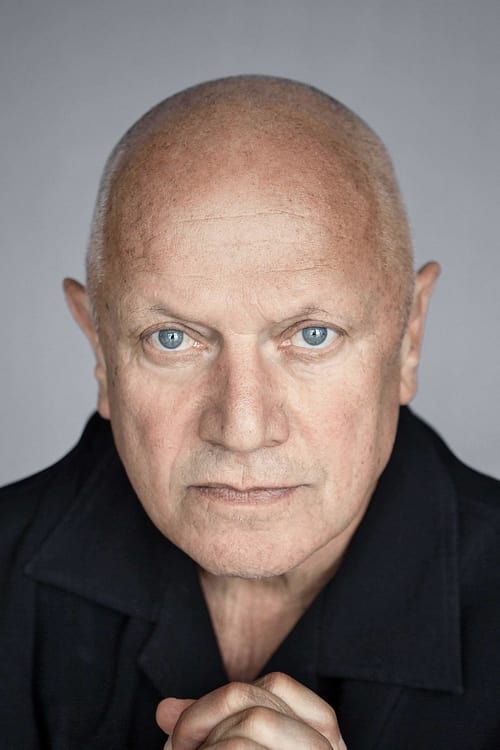
In one sequence the character Martin Vanger (Stellan Skarsgård) plays the song "Orinoco Flow" by Enya before beginning his torture of Mikael Blomkvist. David Fincher, the director, said that he believed that Martin "doesn't like to kill, he doesn't like to hear the screams, without hearing his favorite music" so therefore the character should play a song during the scene. Daniel Craig, the actor who played Blomkvist, selected "Orinoco Flow" on his iPod as a candidate song. Fincher said "And we all almost pissed ourselves, we were laughing so hard. No, actually, it's worse than that. He said, ‘Orinoco Flow!’ Everybody looked at each other, like, what is he talking about? And he said, ‘You know, "Sail away, sail away..."’ And I thought, this guy is going to make Blomkvist as metro as we need."
Tim Miller, creative director for the title sequence, wanted to develop an abstract narrative that reflected the pivotal moments in the novel, as well as the character development of Lisbeth Salander. It was arduous for Miller to conceptualize the sequence abstractly, given that Salander's occupation was a distinctive part of her personality. His initial ideas were modeled after a keyboard. "We were going to treat the keyboard like this giant city with massive fingers pressing down on the keys," Miller explained, "Then we transitioned to the liquid going through the giant obelisks of the keys." Among Miller's many vignettes was "The Hacker Inside", which revealed the character's inner disposition and melted them away. The futuristic qualities in the original designs provided for a much more cyberpunk appearance than the final product. In creating the "cyber" look for Salander, Miller said, "Every time I would show David a design he would say, 'More Tandy!' It's the shitty little computers from Radio Shack, the Tandy computers. They probably had vacuum tubes in them, really old technology. And David would go 'More Tandy', until we ended up with something that looked like we glued a bunch of computer parts found at a junkyard together."
Fincher wanted the vignette to be a "personal nightmare" for Salander, replaying her darkest moments. "Early on, we knew it was supposed to feel like a nightmare," Miller professed, who commented that early on in the process, Fincher wanted to use an artwork as a template for the sequence. After browsing through various paintings to no avail, Fincher chose a painting that depicted the artist, covered in black paint, standing in the middle of a gallery. Many of Miller's sketches contained a liquid-like component, and were rewritten to produce the "gooey" element that was so desired. "David said let's just put liquid in all of them and it will be this primordial dream ooze that's a part of every vignette," Miller recalled. "It ties everything together other than the black on black."
The title sequence includes abundant references to the novel, and exposes several political themes. Salander's tattoos, such as her phoenix and dragon tattoos, were incorporated. The multiple flower representations signified the biological life cycle, as well as Henrik, who received a pressed flower each year on his birthday. "One had flowers coming out of this black ooze," said Fincher, "it blossoms, and then it dies. And then a different flower, as that one is dying is rising from the middle of it. It was supposed to represent this cycle of the killer sending flowers." Ultimately, the vignette becomes very conceptual because Miller and his team took "a whole thought, and cut it up into multiple different shots that are mixed in with other shots". In one instance, Blomkvist is strangled by strips of newspaper, a metaphor for the establishment squelching his exposes.
In the "Hot Hands" vignette, a pair of rough, distorted hands that embrace Salander's face and melt it represent all that's bad in men. The hands that embrace Blomkvist's face and shatter it, represent wealth and power. Themes of domestic violence become apparent as a woman's face shatters after a merciless beating; this also ties in the brutal beating of Salander's mother Agneta Salander by her father Alexander Zalachenko, an event revealed in the sequel, The Girl Who Played with Fire (2006).
A cover of Led Zeppelin's "Immigrant Song" (1970) plays throughout the title sequence. The rendition was produced by soundtrack composers Atticus Ross and Nine Inch Nails member Trent Reznor, and features vocals from Yeah Yeah Yeahs lead singer Karen O. Fincher suggested the song, but Reznor agreed only at his request. Led Zeppelin licensed the song only for use in the film's trailer and title sequence. Fincher stated that he sees title sequences as an opportunity to set the stage for the film, or to get an audience to let go of its preconceptions.
Software packages that were primarily used are 3ds Max (for modeling, lighting, rendering), Softimage (for rigging and animation), Digital Fusion (for compositing), Real Flow (for fluid dynamics), Sony Vegas (for editorial), ZBrush and Mudbox (for organic modeling), and VRAY (for rendering).