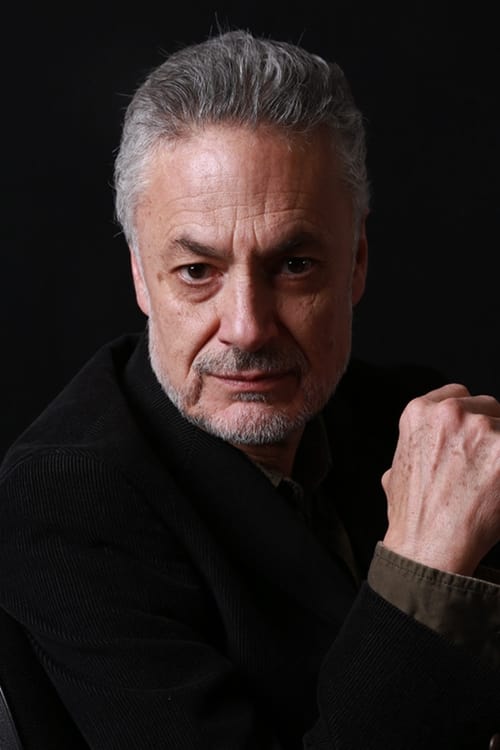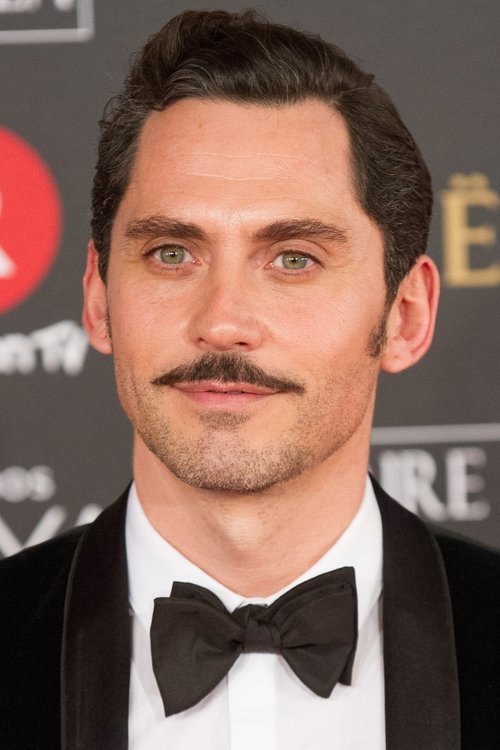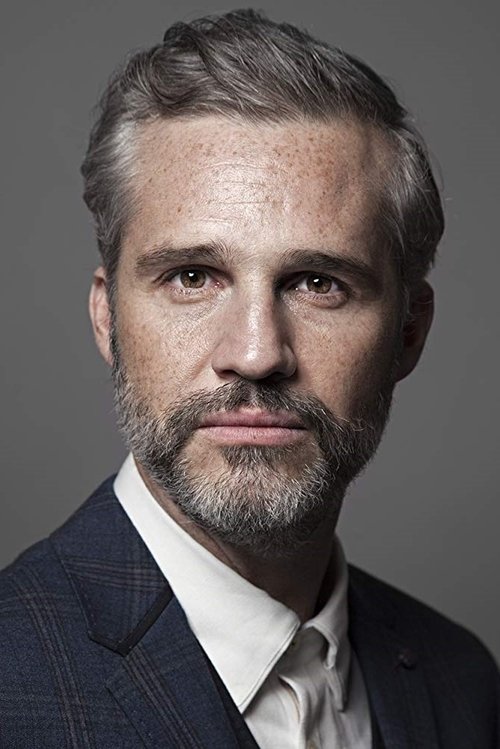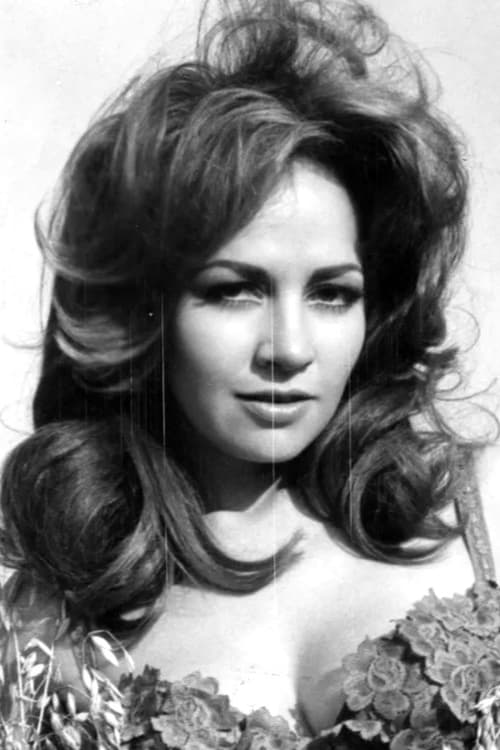




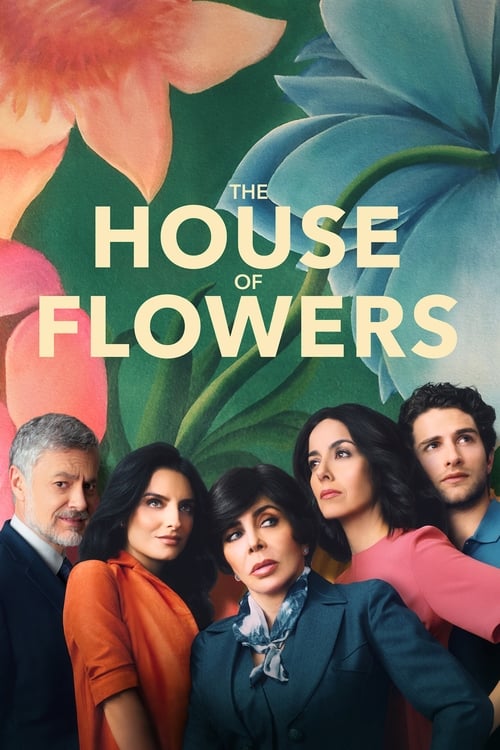
The House of Flowers (Spanish: La Casa de las Flores) is a Mexican dark comedy drama television series created by Manolo Caro for Netflix. It depicts a dysfunctional upper-class Mexican family that owns a prestigious floristry shop and a struggling cabaret, both called 'The House of Flowers'. The series, almost entirely written and directed by its creator, stars Verónica Castro, Cecilia Suárez, Aislinn Derbez, Darío Yazbek Bernal, Arturo Ríos, Paco León, Juan Pablo Medina, Luis de la Rosa, María León, and Isela Vega.
The 13-episode first season was released on August 10, 2018. A second and third season of the series were announced in October 2018; Verónica Castro had left the cast before the show was renewed and does not appear in later seasons. Season 2 premiered on October 18, 2019, and the final season was released on April 23, 2020. A short film special called The House of Flowers Presents: The Funeral premiered on November 1, 2019, and a YouTube TV special was released on April 20, 2020. The first season is exclusively set in Mexico, while the second and third seasons also feature scenes in Madrid, and the funeral special has a scene set at the Texas-Mexico border.
It contains several LGBT+ main characters, with plots that look at homophobia and transphobia. Seen as satirizing the telenovela genre that it maintains elements of, it also subverts stereotypical presentations of race, class, sexuality, and morality in Mexico. Its genre has been described as a new creation, the "millennial telenovela", a label supported by Caro and Suárez.
The show was generally critically well-received, also winning several accolades. Cecilia Suárez and her character, Paulina de la Mora, have been particularly praised; described as a Mexican pop icon, the character's voice has been the subject of popularity and discussion, leading into its use for the show's marketing. Aspects of the show have been compared to the work of Pedro Almodóvar, and it has been analyzed by various scholars, including Paul Julian Smith and Ramon Lobato.
A feature length film continuation, The House of Flowers: The Movie, premiered on Netflix on 23 June 2021.
Contents
Synopsis
Season 1
At the start of season 1, Ernesto de la Mora's mistress Roberta hangs herself; shortly afterwards, Ernesto is sent to prison because of fraud she committed in his name. The eldest de la Mora child, control freak Paulina, takes over their cabaret, butting heads with Roberta's son Claudio. The rest of the family had been kept in the dark for years, with matriarch Virginia shocked to find out about the cabaret, which bears the same name, 'La Casa de las Flores' ('The House of Flowers'), as her successful florists. Though keeping Ernesto's arrest a secret, the family's accounts are frozen and reputation damaged when youngest child, son Julián, chooses to come out as bisexual; all the while, middle daughter Elena has been awkwardly keeping her African-American fiancé Dominique away from the mess. Virginia caves and asks Paulina to call her lawyer ex-husband María José, who had been banished from the family for coming out as transgender.
Jealousy and anger cause Julián's boyfriend, family accountant Diego, to break up with him; Elena, scared of settling down, begins a relationship with Claudio and breaks up with Dominique just after their impromptu wedding. Paulina is told that Dr. Cohen, her childhood therapist, is her biological father, and starts visiting him and his sockpuppet assistant Chuy again. She also starts to fall for María José again. Meanwhile, Virginia has started selling homegrown marijuana, and Julián proposes introducing strippers to the cabaret, to raise money. Having finally raised enough money at the end of the season, it goes missing and it appears that Diego stole it. However, Ernesto is freed in time for the party. Virginia reveals she sold the florists to their rivals, the Chiquis, and tells Paulina to go after María José, before mysteriously leaving.
Season 2
Eight months before the outset of season 2, shortly after the events of season 1, Virginia dies. After her funeral, the children part ways. Ernesto, overcome by grief, has joined a Scientology-esque scam cult, and a challenge to Virginia's long-awaited will brings the family back together, Paulina returning from Spain to take care of business. She wants to honor her mother, support her siblings, and get revenge on Diego; to do all three, she has to re-purchase the florists from the Chiquis. Diego reappears and buys the cabaret to earn her trust, also paying for the bills associated with the birth of Julián's child with ex Lucía. Paulina makes a sketchy deal with Julián's escort agency for the cabaret, pinning the deal to Diego. She also meets a mysterious Catalan man called Alejo, who says he was a friend to her mother while both were receiving cancer treatment, and gets close to him.
Julián reignites his relationship with Diego, and works a rentboy hustle in secret. Ernesto rises the ranks in his cult, and Micaéla enters the TV competition Talento México, taking Bruno as her guardian; Bruno has set his eyes on Rosita, a pretty teenage contestant. Elena is trying to manage her position as a senior architect while being increasingly distracted by men, and realizes she has a relationship addiction. María José finds happiness supporting the trans women and drag queens at the cabaret, though her relationship with Paulina fractures and she returns to Spain, being hounded by her overbearing sister Purificación. Paulina eventually accepts Diego's innocence and loyalty to her family, handing herself in to the police for the soliciting at the cabaret.
Season 3
Paulina is threatened by different gangs in prison, including one led by the mysterious Chiva, and though Purificación has been sent as her attorney to work with local lawyer Kim, she wants to keep Paulina in prison. Elena is pregnant with Diego's child as a surrogate, and in a coma after her car wreck. Their grandmother, Victoria Aguirre, arrives to take over. Micaéla loses the final of Talento México to Rosita, but is invited to be part of a lip-sync group with her and Bruno. Alejo senses something wrong with Puri and calls María José, who comes to Mexico and has Paulina freed. Ernesto gives the cabaret to the drag queens. Diego is persuaded by his family to attend gay conversion therapy, to fulfill his dream of being a parent – when Julián realizes he wants children, he gets him out of therapy. When Elena wakes from her coma, Victoria tries to push the siblings apart, but they resist; Elena starts a relationship with former colleague Pablo. María José starts a relationship with Kim, while helping Paulina find out about Chiva.
In 1979, Virginia runs away to celebrate her birthday in Acapulco, taking LSD with Ernesto, Salomón, and gay best friend Pato. Salomón fails to perform when Virginia wants to lose her virginity, and she turns to Pato. At a drag bar, new neighbor Carmelita gets close to Ernesto, and Pato becomes a drag queen called Paulina. Virginia realizes she is pregnant and confides in Chiva, the nurse for her mysteriously ill father, who Victoria soon kills. She has Chiva sent to prison for a fake theft: Chiva told Pato about the murder. Pato and Virginia grow distant as he acts out, due to a secret relationship with the closeted Agustín, whom Victoria wants Virginia to marry. At the engagement party Agustín and his friends gay bash Pato, killing him. Virginia is distraught; Ernesto, not wanting his friend to be trapped with Agustín, breaks up with Carmelita and proposes to Virginia.
In 2019, Puri gets committed after becoming completely delusional, while Paulina and María José get close again as they interrogate the good and bad in their past relationships; Alejo leaves when he see them kiss. Ernesto tells Paulina that her real father was Pato, and the women learn about Pato before telling Chiva and being able to free her. She warns them to get Victoria away from the family. Victoria's rudeness makes Delia turn antagonistic through the season, resulting in a confrontation where Victoria falls and dies just after Chiva's warning. Julián, Diego, Elena, and Pablo decide to share the new baby, whom they name Pato. Paulina proposes to María José; with Puri seeming to improve, they tell her about the wedding, but she breaks out of hospital to kill Paulina. However, the spirit of Virginia stops her just in time.
Cast
Several cast lists have been published by both Netflix and media outlets; cast lists are also found in the credits of each episode.
The show revolves around the de la Mora family. Matriarch Virginia de la Mora, the face of the shop, is played by Verónica Castro in season 1 and by Isabel Burr in season 3. Cecilia Suárez plays Paulina de la Mora, Virginia's eldest daughter, a neurotic type with a distinctive speech pattern who becomes the main character after season 1, and Paco León plays her partner María José Riquelme, a passionate Spanish trans woman who is also the family lawyer. The other children are Aislinn Derbez as Elena de la Mora, the middle child who returns home from New York at the start of the show and gets wrapped back up in the family mess, and Darío Yazbek Bernal as Julián de la Mora, the beloved but dependent youngest child, who is bisexual and dating family accountant Diego, played by Juan Pablo Medina.
Arturo Ríos plays their quiet father, Ernesto de la Mora (also portrayed by Tiago Correa in season 3), who has been keeping a semi-secret second family with lover Roberta, played by Claudette Maillé. Roberta has an adult son from a previous relationship, the simple Claudio, played by Lucas Velázquez. The next generation of the family includes Roberta and Ernesto's young daughter, Micaéla, played by Alexa de Landa, and Paulina and María José's teenage son Bruno, played by Luis de la Rosa. Crazy aunt Purificación Riquelme is played by María León. The family psychiatrist, and Virginia's ex, Salomón Cohen, is played by David Ostrosky and Javier Jattin, and Paulina's gay drag queen father Patricio is played by Christian Chávez. Family maid and confidante Delia is played by Norma Angélica and Maya Mazariegos, while their nosy but kind-hearted neighbor Carmelita is played by Verónica Langer and Ximena Sariñana. Virginia's own manipulative and murderous mother, Victoria Aguirre, is played by Isela Vega and Rebecca Jones.
Production
Development and themes
A new Netflix original series to be created by Caro was announced in October 2016, with the title and the principal cast being announced in January 2017. The House of Flowers was the third Mexican Netflix original series, after Club de Cuervos and Ingobernable, and the first television series that Caro has made. A second and third season of the series were announced in October 2018. On May 9, 2019, Caro signed an exclusive deal with Netflix, signing on to create more shows for the streaming service; he became only the second Spanish-speaking showrunner to receive such a deal. Caro has said that the show is something "that can only exist on Netflix", noting the themes and plots of contemporaneous telenovelas produced for Mexican television as being homophobic, macho, and perpetuating violence against women. The show has been described as "a deconstruction or satire of Latin American telenovelas", and Catenacci notes that, in comparison to some telenovela episodes that contain over 300 references to domestic abuse, this series' episodes are named for flowers.
Thematically, the show explores some cultural issues within Mexican society, including casual racism and homophobia and the country's class diversity, with the contrasting House of Flowers establishments used to illustrate the socio-economic and racial divides in modern-day Mexico City, and to introduce discussions of the ethics behind money. Beyond these themes, the show is driven by the overarching concept of family, with actress Suárez describing it as the main focus. Juego de series has suggested the show also focuses on the idea that things kept secret are not necessarily as bad as the secret-keeper thinks they are. On the theme of social facade, Suárez has said that "lies are a recurrent element in all of Manolo [Caro]'s work right from his first short. The idea of pretending to be one thing and saying another is something that obsesses him". The second season also includes more complex discussions around sex, and the third season features more prominent themes of transgender and bisexual identities. Romero says that the central theme of the final season is "forgiving, and celebrating, the complicated character of Virginia de la Mora".
In August 2018, Castro announced that she would not reprise the role of Virginia for potential future seasons because she felt that her "character's journey is over", with Caro later confirming the amicable departure and explaining that should the show be renewed, it would focus on the de la Mora children. As the second season began releasing promotional materials, Castro confirmed that her likeness was used, but she had not been involved. Without Castro as the lead, reviewers saw that "the closest thing the wildly entertaining comedy has to a central character now" was Cecilia Suárez's Paulina, who steps up to take control of things and who was already a fan favorite.
Casting and characterization
The casting of Verónica Castro, referred to as "Mexican telenovela royalty", was seen by Manuel Betancourt to be a real achievement on the part of creator Manolo Caro, who in effect was "getting her out of retirement" to make the show. Castro has said that getting back into acting with the show helped her mental health.
Cecilia Suárez had acted in numerous other works created by Caro before playing Paulina. The character has been critiqued as a perfect fit for the show because she has "a personality that justifies going from drama to involuntary comedy", with the same review suggesting that Suárez had to "leave her comfort zone" to play Paulina, but does so successfully. Caro has said that he thought Paulina would be "polarizing" when he wrote her, that people would either love her or hate her, not expecting the popularity she received. The concept of second chances is the "backbone" of Paulina's character, according to Suárez, who said in 2019 that Caro had concerned himself with this concept through the first two seasons. Going into the show's sophomore season, Vogue described Suárez as "the new queen of the telenovela".
Cisgender actor Paco León, who plays trans woman María José Riquelme, said that the production wanted to create a non-stereotypical trans character in his role, with Caro saying that he thinks media needs to "demystify" real people from LGBT+ stereotypes. León mentioned in interviews that he did not know why a trans actress was not cast, and that he understood the controversy of his casting; Caro explained that he wanted León for the role because of the actor's own work to create more visibility and opportunities for LGBT+ people in entertainment. After the show aired, it was reported that trans people had warmed to the character, and particularly her line: "I had a change of sex, not of heart". Though León's portrayal was accepted, the actor said that he will not accept more trans roles so as to promote more trans actors, but would continue as María José in the show.
León also commented on the use of María José's characterization, with her being a trans woman, as part of the show's narrative arc, saying that "[she] goes by the rejection she receives, but throughout the series you realize that she is the most sane and focused, is emotionally more stable, her mental balance is greater than the rest of the family's. This is how you discover that the characters that apparently have a perfect life and are socially accepted are the ones with the most emotional problems."
Filming
Principal photography for the series began on July 24, 2017. The main House of Flowers and de la Mora house sets are in San Andrés Totoltepec, a small town in the Tlalpan region near the edge of Mexico City. Filming for season 1 was halted for several weeks in September and October 2017 after the 2017 Puebla earthquake. The show was filming in Condesa as the quake happened and production stopped while waiting for the filming locations to be stabilized. Suárez was also injured in the earthquake and could not return to set for a month after production resumed. Season 1 finished filming at the end of November 2017.
Season 2 filming began in early February 2019, with production in Spain from February 5, and ended on July 9, 2019. Parts of the second season were filmed on location in Madrid in February 2019. Season 2 filming in Mexico largely took place in a nineteenth-century house in Condesa. The second and third seasons were filmed at the same time. Some of season 3 had been filmed in April 2019, while main photography for it began in June 2019. In October 2019, Caro announced that the third season had already wrapped up production.
Music
The series' music supervisor was Lynn Fainchtein and the composer was Yamil Rezc; both previously worked with Caro on Tales of an Immoral Couple. Fainchtein explained that since a lot of teamwork is involved with film and television music production, she tries to only work with people she knows, having produced music for Caro for many years. Caro told iHeartRadio that "music became an important part of The House of Flowers, because, what is a funeral without Pau singing 'muévelo, muévelo, qué sabroso'?"
Rezc composed the series' theme, also called "La Casa de las Flores", as well as its incidental music. Working closely with Caro for the show, Rezc has been described as "the specialist who identifies [from Caro's story] the best cues to dress the scene or sequence". Rezc's opening theme was described by music critic Julián Téllez as a "magnificent opening curtain that is like the introduction to a tale", which was Caro's intention; the director said that "the story had to have a certain amount of fantasy" so that it could still be intense with its blend of realistic aspects.
Caro uses a lot of eighties hits in his works, with much of the background music used in The House of Flowers coming from this era. There are also songs across different eras and genres, curated by Caro, Fainchtein, and Rezc, including ballads and dance tracks by Selena, Yuri, Mecano, and Gloria Trevi; a Christian Castro song is also used, being sung over by Virginia – who is played by Verónica Castro, Christian's mother. Additionally, Fainchtein and Rezc looked into new and emerging musical talent for their selections. One of the music choices led to an accidental tribute; in the season 2 finale, Alexa de Landa as Micaéla performs a cover of the José José song "El Triste", with José having died shortly before the season's release, in September 2019.
In the third season, more music from the seventies, thanks to part of the story being set in 1979, was used. Described as "unforgettable" and "memorable", the music includes María Daniela y su Sonido Lasser, Baccara, Boney M., and Leo Dan. Billboard's Griselda Flores said the third season's song choices "capture the zeitgeist of the 1970s in Mexico". Fainchtein said that acquiring some of the music was difficult because not all Spanish music from the seventies is easily cleared for use, and some is not well registered to allow this. She told Billboard how the team had to be creative when they found songs that were perfect for scenes but could not be used, though she had already done a lot of research into seventies Spanish music when serving as the music supervisor for Roma, which was also set in this decade. As well as adding the seventies music to the third season, Fainchtein explained that the music team tried to create a continuity by re-using background music from the earlier seasons.
Family portraits
The large portraits of the de la Mora family that hang in the atrium of the house are used as plot points in the show, and versions of the artwork for each season are animated in their respective title sequences. The oil-on-canvas portraits were created by the Mexican-American surrealist painter Roberta Lobeira. The portrait for the first season is a work called Retrato de una familia normal (English: Portrait of a Normal Family), the art for the second season is called La vida después de ti (English: Life After You), and the portrait for the final season is called El final del cuento (English: The End of the Tale). Caro kept the third season's portrait and producer Rafael Ley kept the second season's, despite a collector wanting to buy it from them.
Vogue's Eugenia González de Henn writes that the portraits contain elements of magical realism, a consistent theme in Lobeira's work. Lobeira has known Suárez "all [her] life" and had worked with Caro and Ley before, on the film No sé si cortarme las venas o dejármelas largas; she said that she had been told before the commission that they may ask to use some of her work in a Netflix show, and she was moved by this but did not understand the reach and power of the platform at the time. In terms of inspiration, Lobeira said that she "likes to follow a wave, that [she] gets caught up in a character and then expresses it in a magical world", and so she got to know the characters to "capture [their] essence": before she designed the first portrait, she was sent character descriptions and a synopsis of the story. She said that the third portrait is her favorite, because by the time she made it she already knew the characters very well and could take more inspiration from them, and because the poses were fun.
With Retrato de una familia normal, González asserted that Lobeira "facilitated the illusion" of a perfect family but also revealed a double life; she notes the imagery of Paulina having blue blood and Virginia being dressed in gold with a crown, and Julián having a double face while Ernesto's is ripped in two. Lobeira said that the piece was inspired by Alice in Wonderland, and also pointed out that every character but Virginia is dressed in black. The portrait was her largest work at the time, measuring 1.9 m × 3 m (6.2 ft × 9.8 ft), and was completed in less than a month. Lobeira would work for up to sixteen hours a day on it. According to her, the image of Julián – intentionally in black and white – was the hardest to paint, because each reference photo she was sent of Yazbek Bernal had a different expression, while Ernesto was a challenge because Ríos had not yet been cast when she started work.
Release and marketing
Broadcast
The full 13-episode first season was released on Netflix on August 10, 2018. Season 2 premiered on October 18, 2019, and season 3 was released on April 23, 2020. La Verdad wrote that the release date of the third season was earlier than expected, and suggested this may be due to the COVID-19 pandemic lockdowns. On Día de Muertos (November 1) 2019, a surprise special episode was released showing the funeral of Virginia, after references to the event through season 2 were popular among viewers. This episode also connects other plot points from the second season. The funeral episode was released as a special separate to the main series collection on Netflix, listed as a film. On April 10, 2020, Netflix announced that a TV special starring the cast as well as critics would be released on YouTube on 420 (April 20); Mexican TV critic Álvaro Cueva described the TV special as "a parody of what the big telenovela finale specials of yesteryear had been".
In its first week of broadcast, the second season was watched by 6,219,547 accounts, from across the world; it became the top viewed show on Netflix in several Spanish-speaking countries and broke a Mexican record for viewership of a second season. The series ended 2019 as the second most-watched show on Netflix in Mexico. Scholar Paul Julian Smith, though, was worried about the international and streaming success distorting the views of its importance, suggesting that nationally-broadcast telenovelas play a more important role in everyday Mexican life, especially noting that many Mexican homes cannot regularly access the internet to view Netflix.
Interviewed in early 2020, between the release of the second and third seasons, Paco León said that he thought the show's second season was "inconsistent", but had its good moments, while saying that the third season will be "acojonante" ("fucking amazing"). By April 2020, before the premiere of the final season, the show was the eighth most-watched Netflix series in Mexico. Within hours of the final season's release, the series was the number one most-watched on Netflix in Mexico.
Multimedia marketing
Before the first season was released, a trailer for the series debuted on June 12, 2018.
The release date of season 2 was announced on August 15, 2019, in a tweet that also showed the new family portrait; the season's marketing had begun earlier in the month with videos using Paulina's voice. These included Paulina leaving a threatening voicemail in the style of Taken; a WhatsApp voice note where she announced the character of Virginia had died, with the hashtag "#QDEPVirginiaDeLaMora" ("RIP Virginia de la Mora"); and an ASMR video recap made by the character. The first official trailer was released on September 23, showing scenes from the first episode in both Madrid and Mexico City. A press tour for season 2 was held a few weeks before it was released to Netflix.
Shortly before the second season aired, promotional posters were launched in a campaign mocking those of conservative Mexican groups, particularly the National Front for the Family, which has criticized the show. The posters feature slogans which satirize homophobic and transphobic ones, including an image of trans character María José and her partner Paulina accompanied by "This is not natural ... we are obviously wearing make-up", among others. This campaign was run with the hashtag "#NoTeMetasConMiFamilia" ("Don't Mess With My Family"), playing on the National Front's own campaign. Ana Carolina, writing for UniCable, noted that the campaign was embraced by fans but also prompted surprise across Mexico because of how explicitly it attacked the intolerance of the National Front. The posters were discussed at the 2019 Huelva International Film Festival in relation to social media and marketing influencing the public view of films, particularly in terms of social criticism.
The only marketing for the surprise funeral episode came shortly after its release to the platform, in a tweet from Manolo Caro; it also has its own Netflix poster. The third and final season's first teaser trailer was released on March 6, 2020, set in 1979. On March 17, 2020, Netflix shared the opening title sequence for the final season, and announced the release date as April 23, 2020. The final trailer was released on April 2, 2020, picking back up with the original main cast from the end of the second season. Ashley Falls of Clio Entertainment examined the marketing for the third season, writing that the "bold typography[,] floral full-frame graphics [and] groovy music" of the trailer made every second of it work, and that the "color scheme and floral pattern" of the poster matched graphics with the video. She also noted that the combination of these poster graphics with its "family portrait and mural-like illustration" made it "remarkable".
Soundtrack
A soundtrack for the series, called "La Música Que Inspiró La Serie Original De Netflix, La Casa De Las Flores (Creada por Manolo Caro)" (English: "The Music That Inspired The Original Netflix Series, La Casa De Las Flores (Created by Manolo Caro)"), was released on April 24, 2020, by Universal Music Mexico, available for digital download on Apple Music and iTunes, Spotify, YouTube Music and Deezer.
Two of the songs on the soundtrack are original to the series: the main theme by Yamil Rezc, and the "El Triste" cover by Alexa de Landa, which she performed as character Micaéla in the second season.
Líder Informativo said that the soundtrack compilation was a greatest hits list, including tracks from the eighties through to contemporary music and covers.
Analysis
Smith notes that beyond merely being an openly transgressive telenovela, the show "boasted a self-conscious and ironic reference" to the tradition it was leaving behind by taking the veteran actress Verónica Castro as its star. However, he does note that the three main areas of novelty within the show's production had already been shown by indie producers Argos in the 1990s, some preceding even the new wave of Mexican cinema; he particularly looks at the show Mirada de mujer, a successful late-90s "avowedly feminist telenovela" that he considers the predecessor of The House of Flowers based on their renovations to the genre and, in content, many similarities. As Smith's Film Quarterly editor on the subject, B. Ruby Rich commented that The House of Flowers owes "a big debt" to Mirada de mujer. Despite such similarities, Smith concedes that "the tone of Netflix's series is much more playful", that it makes use of color where Argos' telenovelas did not, and is less harsh to the bourgeois family at its heart.
Raciel D. Martínez Gómez also notes one similarity that the show bears with traditional telenovelas, being that it uses Mexico City and its elite neighborhoods to express a lightness within the story; Martínez Gómez suggests that of recent popular Mexican output the only work to use the city in a more social-realist way was Alfonso Cuarón's Roma. In terms of color, Grosso Cortes et al. note that the temperature of the series is between neutral and cold (in the 5000K to 7000K range), which they suggest shows a work as being "hostile" but also "everyday", by not being too cold. They also note that, in The House of Flowers, the cold temperature makes the show more colorful, "due to the combination of colors present in the flowers": the cold tone is "embellished by the different colors of the flowers that appear".
Jacqueline Avila looks at the use of music in the show, comparing it to the inherently musical form of telenovelas, saying that it "plays a significant and meaningful role in the developing narratives, highlighting and magnifying elements that reflect both the local and the global and incorporating past practices into a new format for a new generation of audience members who attempt to transcend borders"; she also examines the relationship of Spanish-language broadcasting with the Netflix digital platform, viewing habits, and their influences on the form of the telenovela. Noting that the use of music in streaming series is necessarily different from films and scheduled television because of unpredictable viewing habits, and interacting with Rick Altman's theory of flow, Avila writes that The House of Flowers uses music to underscore the narrative and to help signify aspects of the Mexican telenovela in the show. She gives the example of the diegetic music used during Roberta's funeral in the second episode, as it provides campy elements of telenovelas while reflecting the grief, pain, and character relationships. Despite having connected the show with the telenovela, and noting that the music selection taps into Mexico's popular culture, Avila ultimately concludes that "the strategic use of music [...] provides a more cinematic approach" than "older traditions", saying that this "encourages a more prolonged and attentive listening strategy rather than relying on shorter episodes and pauses for commercials".
Status as a telenovela
The show has been described as a telenovela, a typical Mexican genre characterized by melodrama and exaggerated plot twists, though the Ibero-American Observatory of Television Fiction considers it a series, rather than a telenovela. In 2018, Caro said that people had been worried about using the term 'telenovela', because "they thought it would make [him] angry"; he says that labeling the show as melodramatic is quite accurate, and it did not bother him. Also in 2018, Netflix created a campaign called 'No es una telenovela' in response to various popular comments about the streaming service becoming like the network Televisa, known in Mexico for its telenovelas. For the campaign, a parody video called La Rosa de la Virgin was shared on social media; in it, characters from The House of Flowers played by Suárez, Derbez, and Castro appear in a scene in the style of a traditional telenovela, highlighting the differences – it specifically compares the series with the style of Mexican telenovela La Rosa de Guadalupe. At one point, Verónica Castro as Virginia says "esto no es una telenovela" ("this is not a telenovela"), but then closes the video with a suggestive wink to the camera.
Netflix had previously created a telenovela-esque spoof of Orange Is the New Black, during a time when it had a deal with Televisa in 2016, borrowing the character Soraya Montenegro, who had become an Internet meme representing the excesses of melodrama. Scholar Elia Cornelio-Marí suggests that the two contrasting parodies show "the love-hate relationship that Netflix has with melodrama, making fun of the genre but promoting it at the same time".
The series has also been called a "millennial telenovela". The term has been discussed in relation to several series that have kept elements of the telenovela but have been targeted towards the millennial market in style, tone, and content. Caro and Suárez have said they are proud for The House of Flowers to be called a millennial telenovela. Caro has also been described as the re-inventor of the telenovela. He has referred to the traditional mode as "obsolete", criticizing other creators for "not knowing how to evolve"; Suárez has added that a key to the show is still to connect with the "sentimental" response that Mexicans have to a telenovela, part of their culture from childhood. Arturo Aguilar and Primitivo Olvera for W Radio México agree, saying that it borrows a lot from the telenovela and is "enormously built out of nostalgia".
Cornelio-Marí writes extensively on the telenovela and melodramatic elements of The House of Flowers, saying that it "is catalogued as a comedy, but in fact is a self-conscious melodrama with an ironic twist", noting several elements that contribute to this. She explores the same 'nostalgic' references that Suárez, Aguilar and Olvera noted, writing that the series "is using melodrama as a repository of shared references that create emotional attachment in Mexican audiences, exploiting nostalgia for the media culture of past decades"; she additionally suggests that this nostalgia is the reason for the inclusion of the drag queens as famous pop divas. Other ways in which Cornelio-Marí suggests the show is reflective of the telenovela are the inclusion of Verónica Castro as "a seemingly traditional housewife"; the series' focus on family, characters, and plot twists that are distinctly melodramatic, particularly having a paternity dilemma as a main plot point; a focus on morals and gender roles; and "its exaggerated mise-en-scène", said to be reflective of melodramatic tradition.
Reception
Critical reception
Reviews of the show were generally positive, and Cecilia Suárez has been repeatedly singled out and praised for her performance as Paulina; her role on the show was reverently described by Javier Zurro as: "And here she entered, Cecilia Suárez, a whirlwind discovered in La casa de las flores who took everything. She was the star. Her Paulina de la Mora is a revelation, a poster girl buried to the eyebrows in meds who, however, was the most modern and determined character in the story."
Kayla Cobb of Decider called The House of Flowers "the Mexican Desperate Housewives", and praised "its willingness to be seedy." Cobb's review looks positively on the melodrama and the characterizations of Paulina and Virginia, but concedes that while exciting and fun to watch, it is "not great television". Brenden Gallagher of The Daily Dot similarly called the series light-hearted and adventurous, but he noted that character development was lacking and that the show could have gone further to challenge the usual parameters of the telenovela genre; Greg Wheeler of The Review Geek agrees that it does not do much different from other shows, but conversely thinks that it has "a good amount of character development". In terms of pushing generic conventions, David Lopez of Instinct wrote that the show, especially considering season 2, marked a turning point in Mexican television and its approach to modernity, keeping the telenovela classics but embracing more open topics both intelligently and humorously. Guillermo Espinosa of Mujer Hoy said that the show "has shaken the foundations of the telenovela genre".
José Antonio Martínez of Juego de series celebrates that the show gives "a very different image of Mexico to that offered by U.S. cinema", and noted in particular that Elena's story in the second season is similar to one from the British comedy Fleabag. Writing about the series in 2020, Variety's John Hopewell said that it confirms Caro's ability "to transfer his auteurist personality from big to small screen", with the series being "one of the first premium series from Mexico to break out internationally". Hopewell writes that the series has become a cult hit in Spain. Going the other way, María Alba said that the show has made Paco and María León household names in Mexico.
Several reviews also comment on the show's Spanish-language nature, suggesting that rather than watch the available dubbed version, which has been described as "truly horrendous", the show is better in Spanish anyway, with subtitles if necessary. Suárez, Yazbek Bernal, and Medina all dub their own characters into English for the show, with Medina also providing other voices. Jonathon Wilson of Ready Steady Cut argued that the show's dub was at least better than that of Welcome to the Family, a similar Catalan-language show picked up by Netflix.
Popular response
The show has been popular internationally, including in non-Spanish-speaking countries, and is said to be most watched by millennials. British daily newspaper Manchester Evening News singled it out above all other Netflix shows as a valuable language-learning tool because of how it "switches between English and Spanish and [is] not too fast paced". Balán's season 2 review said that some viewers saw this season as more boring and forced than the first. Regarding the show in general, Pere Solà Gimferrer for La Vanguardia wrote that it "works because it's like a meme on legs", saying that, likely by design, Caro has made each scene feature something that people immediately want to start talking about on social media. Solà says that it is either a good black comedy, or a "Sharknado telenovela" spoof. In early 2020, the de la Moras were described as "one of the most recognized families in Mexico". During the 2020 COVID-19 pandemic, Falls suggested people could watch the series if they were "not getting enough family drama in quarantine".
The unusual speech pattern of Paulina became popular, spawning the '#PaulinaDeLaMoraChallenge' on social media, where fans imitate the slow, enunciated, way of speaking, often with some of the character's lines. The challenge was started by Mexican actor Roberto Carlo, with the stars of Cable Girls taking it up. When Netflix and Suárez responded with their own version of the challenge on Twitter, it became a trending event on the website, based on popularity and coverage; until March 2020, this was the only time that Suárez had spoken in Paulina's voice outside of the show, which she says is due to Netflix restrictions. She has clarified this as being "a suggestion" that she follows to not break the magic of the fiction. By the time Suárez responded, over 69,000 fan videos had been shared; only a few days after the first season was released, a petition had been started to include Paulina's voice as an option on the GPS navigation app Waze. Suárez posted another social media video in character during the COVID-19 pandemic from quarantine in Madrid, telling everyone in Mexico to stay at home and reminding them that male relatives can also look after elderly family members (comparing this to Julián and their grandmother on the show) – she followed the post with one of her own, where she reiterated the request and said that the situation in Madrid was "really scary".
In response to Paulina saying in one episode that she is "addicted to Tafil", the BBC ran an article explaining what Tafil is, also suggesting that the anti-anxiety medication is the cause of Paulina's slow speech as this is one of the more severe side effects of overuse of the drug. It noted, however, that the character's voice and Tafil use are creatively coincidental as they were conceived of separately during the show's development: Suárez said that the voice came through a process of improvisation during filming, with Caro liking it and having her re-record some of the early scenes to match. Verónica Calderón of Vogue also notes that Paulina's voice is demarcating of the fresa stereotype ("yuppie") that her character plays with, and is not unusual in upper-class neighborhoods like Las Lomas, suggesting that it could be used as part of the show's socio-economic commentary. Clarín's Pablo Raimondi said that the style of diction establishes her as a "daddy's girl" and a character who can know everyone's secrets.
Comparisons to Almodóvar
The style of the show has been widely compared to that of Spanish filmmaker Pedro Almodóvar; creator Manolo Caro is said to be a "shameless admirer" of him, and has taken influence from him in his own works. Espinosa refers to Caro as a "young Mexican Almodóvar".
When asked why he thinks the show is successful, actor Paco León said that the characters and style drove it, and "it's like, all of a sudden Almodóvar had made a television series in the eighties", while Manuel Betancourt, in a write-up before the show premiered, described it as "what would happen if Almodóvar finally caved and wrote a TV show, sprinkled some of Las Aparicio family melodrama in, and decided that it needed some of the queer vibe that Paco León's own films have been mining".
Critic Nader notes that these Almodóvar "aesthetics" may annoy some viewers, but that he enjoyed "[t]he colors, the faces and mouths, the absurd situations, the masculine nudes, the obviously tacky costumes and scenery" that make it this style. Mariana Motta said that the satirical takes on telenovela tropes allowed comparison to Almodóvar, herself comparing the show's handling of topics that traditional society sees as perversion to The Skin I Live In and saying that "the use of angles and colors that express more than dialogue can, and the use of music and intertextuality, translate for the Mexican experience what the acclaimed director does with Spanish society". Writing for Fuera de series, Marina Such said that the darkly comedic melodrama and the contrasting settings of the two House of Flowers establishments give the show its Almodóvar feel from the outset, noting that the character María José could be from Todo sobre mi madre (All About My Mother); Carlos Aguilar suggested that the "Almodóvar-esque drama" may be an aspect that endears the show to English speakers, while Andrew Pulver of The Guardian compared the aesthetics, writing that since the show is "heavily influenced by Pedro Almodóvar, it's a visual treat".
In his scathing review, Pavel Gaona negatively compared the two, saying that "there is a huge difference between taking something [Almodóvar] as a reference and another in practically making a carbon copy and doing it wrong", and that Manolo Caro should "seek his own voice and aesthetics" rather than emulate Almodóvar's techniques without the same naturalness. Smith refers to the series as showcasing an innovation in aesthetics through "the appeal to a lush 'Almodóvarian' style". However, he writes that "the series' tone comes too close to early Almodóvar for comfort" with the inclusion of a drag bar, particularly one featuring campy eighties Spanish pop.
Accolades
At the 2019 Platino Awards, the main international film and television awards for Ibero-American media, the show was nominated in two categories. Also co-hosting the ceremony, Cecilia Suárez was nominated as Best Actress in the television category, which she won. In the Best Miniseries or Television Series category, The House of Flowers was nominated but lost to the Paco León-created Arde Madrid. At the 2019 (XXVIII) Spanish Actors Union Awards, Paco León was nominated in the Best Actor in an International Production category for The House of Flowers, though he did not win; he was notably not nominated for his role as Manolo in his own show, Arde Madrid, which won in each category it was nominated.
For the 2018/19 PRODU Awards, the show was nominated in five categories, with three nominations for Manolo Caro, and won in two. Verónica Castro won as Best Actress and Caro as Best Director.
In 2020, the show received nominations for the XXIX Spanish Actors Union Awards for both León siblings; Caro was also nominated in these awards, but for acting in Brigada Costa del Sol. For the 2020 Platino Awards, the show received the third-most television acting nominations (three), including two for Mariana Treviño and Juan Pablo Medina in the new Supporting categories; only Suárez won, repeating her Best Actress win from 2019. At the 2021 Platino Awards, Suárez was the show's only nominee, in the same category, with Caro's second Netflix show also being in contention. Suárez won the IB Public Choice award for TV actress but not the main award.
The show has made two 'best-of' lists created by The Hollywood Reporter. In 2018, it was listed in its own entry (separate to the entry for Spanish-language Netflix originals in general) on the list of the top 10 international television moments of the year, being celebrated for "[putting] a racy and decidedly more contemporary spin on the telenovela genre" to save it from "losing viewers to melodramatic, action-packed narco series". In 2019, Caro was included on their list of the best showrunners for creating, writing, and directing it, with Scott Roxborough saying that he "has a knack for [mixing] telenovela plots with a sharp ear for dialogue and a stand-up's sense of timing".
Suárez and her role as Paulina in The House of Flowers were included in an Entertainment Tonight list in December 2018 as the only Spanish-language star and show of the thirteen shows said to have contributed to the "rise of the Latinx TV Star" in the US that year. In February 2019, Screen Rant listed it as the eighth best Spanish-language show available on Netflix in its top 10, saying "there is absolutely no going wrong with [it]".