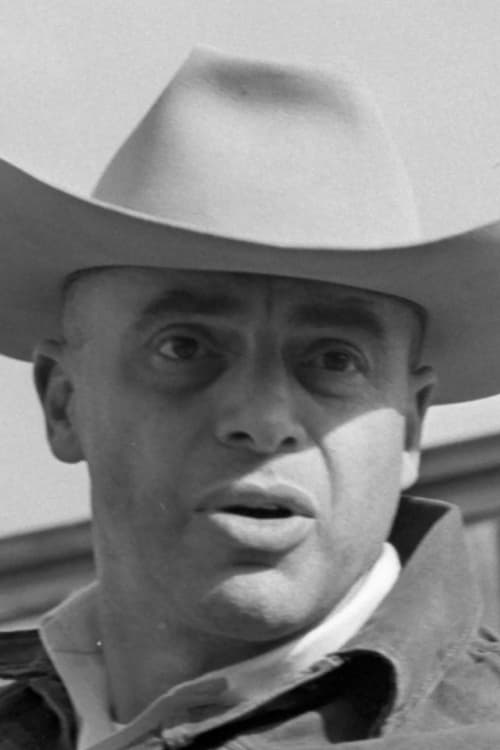
Thomas Stephen Gries (December 20, 1922 – January 3, 1977) was American film and television director, screenwriter, and producer. He was a two-time Primetime Emmy Award winner (out of seven total nominations), and a three-time Directors Guild of America Award nominee.
Contents
Early life and education
Gries was born in Chicago, Illinois, the son of Jewish parents Ruth Marie (née Gluck), an actress and advertising copywriter, and Joseph Charles Gries. His mother later remarried to jazz musician Muggsy Spanier, who became stepfather to Ruth's sons. His brother, Charles Joseph Gries was a pop and jazz vocalist and pianist, better known as 'Buddy Charles'.
Gries was educated at the Loyola Academy and Georgetown University. He served in U.S. Marine Corps during World War II. He worked as a reporter for the Herald American and Variety, and as a talent agent, prior to his directing career.
Career
Television
Gries began working in TV in the 1950s as a writer and director. His work can be seen on such popular programs as Bronco, Wanted: Dead or Alive, The Westerner, The Rifleman, Checkmate, Cain's Hundred, East Side/West Side, Route 66, Stoney Burke, Combat!, The Man from U.N.C.L.E., Honey West, I Spy, Mission: Impossible, and Batman among many others. Gries won Emmy Awards for his direction on East Side West Side in 1964 and The Glass House in 1972.
In 1966, Gries created the popular action-adventure series The Rat Patrol. Gries wrote and directed the pilot episode, "The Chase of Fire Raid." The 1966–68 series boasts 56 thirty-minute, color episodes produced over the span of its two-season run on ABC. The series focused on the oft-overlooked North African Campaign and episodes invariably pit the ragtag Rat Patrol — a four-man Allied force led by Christopher George as Sgt. Sam Troy — against the German Afrika Korps led by Captain Hans Dietrich, played by Eric Braeden (then still using his original name Hans Gudegast).
The most successful of his later projects was Helter Skelter, a 1976 TV movie based on Vincent Bugliosi's 1974 true-crime book detailing the crimes and trials of the notorious Charles Manson Family.
Film
In the cinema, Gries both wrote and directed the adventure film Serpent Island (1954) starring Sonny Tufts, and the Korean War film Hell's Horizon (1955) starring John Ireland. Between television directing gigs, Gries helmed Girl in the Woods, a 1958 drama starring Forrest Tucker and Barton MacLane.
Gries both wrote the screenplay and directed the 1959 Jack Buetel western Mustang! before concentrating his efforts exclusively on television for almost a decade. In a triumphant return to cinema, Gries wrote and directed what is generally acknowledged to be his masterpiece in either medium, the 1968 western Will Penny, which starred Charlton Heston in the title role. It was based on an episode of the TV series The Westerner that Gries wrote and directed in 1960, entitled "Line Camp".
Gries subsequently made two other films with Heston: the 1969 gridiron drama Number One and the 1970 drama The Hawaiians, which was based on James Michener's sprawling 1959 novel, Hawaii (not to be confused with the 1966 film based on a section of the same book). In 1969, Gries co-wrote and directed Jim Brown, Burt Reynolds, and Raquel Welch in the controversial western 100 Rifles.
In the early 1970s Gries directed a variety of films, from the 1970 Jason Robards and Katharine Ross May–December romance drama Fools to the 1971 science-fiction telefilm Earth II starring Gary Lockwood and Anthony Franciosa. In 1973, Gries directed the crime-thriller Lady Ice, which starred Donald Sutherland, Jennifer O'Neill, Robert Duvall and Eric Braeden. Gries, who had directed Charles Bronson in a 1961 episode of Cain's Hundred ("Dead Weight: Dave Braddock"), helmed two back-to-back Bronson films in 1975: Breakout and Breakheart Pass. Gries' 1970s work failed, however, to earn the critical acclaim that welcomed Will Penny.
His final film was The Greatest (1977), a biography of boxer Muhammad Ali (in which Ali also played himself).
Assessment
FilmInk cited Gries as an "unsung auteur", calling him "not just a rock-solid craftsman, but also a director drawn to material that allowed him to explore themes obviously important to him. A fine purveyor of the western and the telemovie, Tom Gries was also a frequent collaborator of 1970s superstars Charlton Heston and Charles Bronson, directing some of the their more interesting efforts."
Personal life
Gries was married three times and four children. Three of his children went on to work in the film industry: actor and director Jon Gries (who appeared under the name Jon Francis Will Penny as a child), editor Cary Gries, and assistant director Peter Gries.
Death
During post-production on The Greatest, Gries collapsed and died of a heart attack while playing tennis in the Pacific Palisades area of Los Angeles. He was 54 years old. The film was dedicated to his memory.
Filmography
Television
Your Favorite Story (1953) - Production supervisor
The Cisco Kid (1953) - Production supervisor