




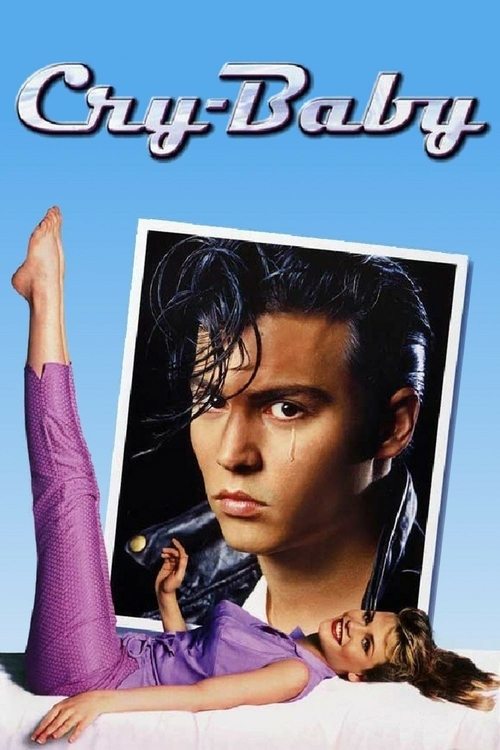
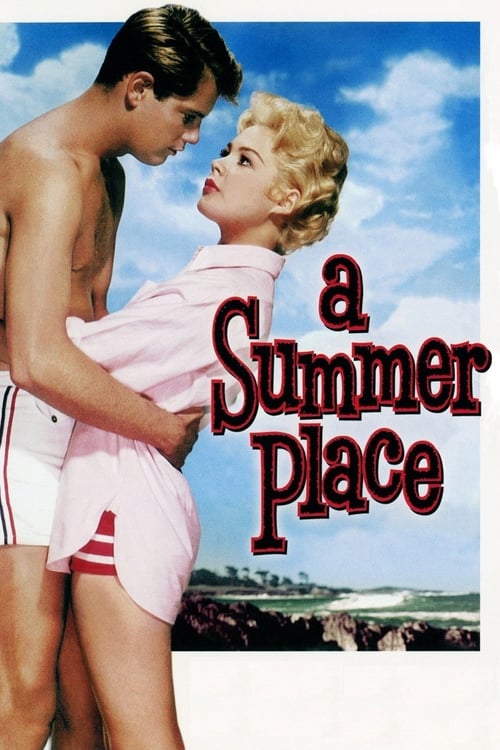
Troy Donahue (born Merle Johnson, Jr., January 27, 1936 – September 2, 2001) was an American film and television actor, best known for his role as Johnny Hunter in the film A Summer Place. He was a popular sex symbol in the late 1950s and early 1960s.
Contents
Biography
Early years
Merle Johnson Jr., later known as Troy Donahue, was born on January 27, 1936, in New York General Hospital. His father was Frederick Merle Johnson, the Production Chief of promotional motion pictures of General Motors. His mother, Edith "Dede" Johnson (née Frederickson), was a Swedish retired stage actress. Donahue stated in a 1959 interview:
Acting is all I ever wanted. Ever since I can remember, I've studied and read plays. My mother would help me, but my parents didn't want me to become an actor. They preferred something more stable—doctor, lawyer, Indian chief, anything."I can remember always being exposed to Broadway and theater people", he added in 1984. "I can remember sitting with Gertrude Lawrence while she read her reviews in The King and I."
When he was six years old, he contracted pneumonia and was confined to bed for six weeks. Donahue's parents decided it would be better to move out of the city for his recovery. They purchased a five-acre estate in Middle Road, in Bayport, Suffolk County on Long Island. The family acquired a variety of farm animals. His sister, Eve, was born a year after the move.
Frederick was diagnosed with amyotrophic lateral sclerosis when Donahue was young. As his father's health declined over two years, Donahue began to exhibit behavior issues, including drinking alcohol in excess. On December 5, 1950, Frederick died in St. Alban's Hospital in New York City when Donahue was 14 years old. Following his death, Donahue's relationship with his mother became strained.
After Donahue dropped out of high school in his sophomore year, his mother enrolled him into the New York Military Academy, where he roomed with English actor Owen Orr. There he met Francis Ford Coppola after casting him in school plays. He was to attend West Point, but suffered a knee injury at a track meet, knocking it out of the joint and tearing the cartilage. The injury ruined the chance for a sports scholarship. He volunteered for the United States Army, but was rejected due to his permanently damaged knee.
After Donahue was left unable to participate in sports, he turned to writing and acting. He also wrote for the school paper, eventually ending up as the editor. He graduated from the academy in June 1954.
Career
1956–1958: Early career
In February 1956, Donahue moved to Calabasas, California and stayed in Brady's home. He worked cutting film at Brady's company. He would later rent a garage apartment in Malibu, near his mother and sister's new home.
In spring that same year, producer William Asher and director James Sheldon spotted Donahue in a diner in Malibu and arranged for a screen test with Columbia Pictures. The weekend before the big meeting, Donahue suffered a near-fatal auto accident, plummeting 40 feet down into a canyon and smashing into a tree. He was hospitalized for various injuries, missing the test.
Later that year, Donahue was introduced to actress Fran Bennett. Bennett introduced him to her agent Henry Willson, who also represented movie heart-throbs Rock Hudson, Robert Wagner, Tab Hunter, and Chad Everett. Willson signed him and changed his name to Troy Donahue:At first they had Paris, the lover of Helen of Troy, in mind. But I guess they thought they couldn't name me Paris Donahue because there was already a Paris, France, and Paris, Illinois. It took me five minutes to get used to the new name.Donahue signed a six-month contract, including extension options, with Universal Studios in October 1956. He earned a $125 weekly salary and with that, moved to North Hollywood. Donahue started off in small roles in films such as Man Afraid, Man of a Thousand Faces, The Tarnished Angels, Above All Things, and The Monolith Monsters (all 1957).
In 1958, he appeared in Charles F. Haas' Summer Love and Paul Henreid's Live Fast, Die Young.
Due to Donahue's heavy drinking and a 1958 arrest for speeding, his contract with Universal was at its end. He had spent all his money and had no work, leaving him unable to pay for his apartment. Willson was able to secure guest starring roles in several western shows, allowing Donahue to rent a slightly smaller apartment in Hollywood.
Donahue began appearing on TV in a guest part in Man Without a Gun. This was followed by parts in This Happy Feeling, Wild Heritage, Voice in the Mirror, The Perfect Furlough, and Monster on the Campus. He often had better roles on TV, guest-starring in episodes of The Californians, Rawhide, Wagon Train, Tales of Wells Fargo, and The Virginian.
1959–1964: A Summer Place and Warner Bros.
The big break of Donahue's career came when he was cast opposite Sandra Dee in the 1959 Warner Bros' film A Summer Place, directed by Delmer Daves. The movie was released to mixed critical reception, however still managed to gain widespread popularity and became a box-office hit. The film was No. 1 at the US box-office for two weeks. The film and its soundtrack have been continuously noted in popular culture since the film's release, the first being in another Donahue film, The Crowded Sky (1960), between Donahue's character and co-star Efrem Zimbalist Jr.; the popular "Theme from A Summer Place" is heard on the restaurant sound system.
Donahue became a celebrity overnight, especially among teenage audiences. In John L. Scott's Los Angeles Times review, he wrote simply of him, "Donahue reveals promise." In 1960, he was named by The Film Daily as one of the five "finds" of the year. He would later receive the Golden Globe Award for "Most Promising Newcomer – Male" at the 17th Annual awards. Following the success, Warner's signed him to a long-term contract in 1959, with a beginning salary of $400 weekly ($4,300 weekly in 2024). Warner Bros. immediately sent Donahue on a cross-country tour to promote the film.
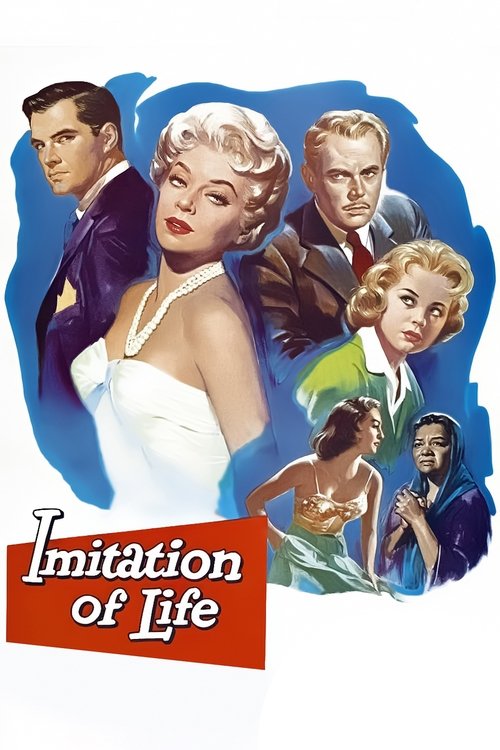
Journalist Joan Beck wrote in the Chicago Tribune on October 22, 1959:To plug the movie – and sell himself, too – Troy is touring the country with press agents and studio representatives from Warner Bros., to whom he is under contract. He's lionized by reporters for high school newspapers at special teen press conferences. He talks on disk jockey radio programs, women's television shows and teenage TV dancing parties. And for a dash of glamour, he's being seen at posh restaurants and celebrity gathering spots. He's interviewed by columnists and photographed by fan magazines – which appeal almost totally to teens these days. Along with the publicity build-up, Troy has acquired several other accoutrements of a successful star. He has a top Hollywood agent. A business manager who keeps him on a $35 weekly allowance. A bachelor apartment. A Porsche. And a circle of friends which includes many of the other rising young teen favorites of the movie colony. Now that all the proper stops have been pulled out, Hollywood's star makers expect teenagers to respond with a chorus of enthusiasm loud enough to sweep Troy into real movie stardom. They don't doubt that the tall, blue-eyed actor has what it takes to capture the all-important high school audience.He guest starred in a variety of their western television series, including Colt .45 (1959), Maverick (1959), Sugarfoot (1959), The Alaskans (1960), and Lawman (1960). He also had a support part in a disaster movie, The Crowded Sky (1960). Donahue achieved good reviews for a brief, but effective part in Douglas Sirk's Imitation of Life (1959), playing Frankie, a young white man who beats his new girlfriend after he discovers she is black.
1965–1968: Leaving Warner Bros. and bankruptcy
In 1965, Donahue was cast as a psychopathic killer opposite Joey Heatherton in William Conrad's My Blood Runs Cold. While Donahue was happy to break type and play a different type of role, it was not well received by the public. His contract with Warner Bros. ended shortly thereafter—although it ran until early 1968, Donahue asked to be released from it in January 1966. Donahue later claimed:
Jack Warner called every studio I used to work for and used his muscle to keep me busted. I was blackballed and everyone in the business knew it. Please print that. I made one film in Europe playing a Victorian astronaut [1967's Jules Verne's Rocket to the Moon, better known by its American title, Those Fantastic Flying Fools] but no one ever saw it. Then by the time I could get work again, it was too late because my type was already out of fashion.
Reflecting on this period, he recalled: They pumped me til the well went dry. My image came out of Warner Bros. and it was one that was on its way out. I think I'm a little deeper than the roles I was given to play. I did get great exposure at Warner Bros. [but] now I'm free to call my own shots. I've made more money in two years on my own than the whole time I was under contract.Donahue appeared in a variety of smaller projects, including a spy spoof, Come Spy with Me (1967); and a western for Albert Zugsmith, The Phantom Gunslinger (1970).
From 1966 to 1967, Donahue co-starred in an onstage production of The Owl and the Pussycat on tour with his then-wife, Valerie Allen. The show had great success, resulting from Donahue's dedicated fanbase. In 1967, Donahue was slated to co-star in a Poor Richard production with Allen at the Pheasant Run Playhouse. In the week before, Donahue was drunk and could not focus on his lines. A few days before opening, he walked from the show, despite Allen begging him to stay. Terry Moore was brought in at the last minute to replace him. Donahue was sued for $200,000.
On February 22, 1968, Donahue signed a long-term contract with Universal Studios for films and TV. This lasted a year and saw him get four roles: guest shots on Ironside (1968), The Name of the Game (1968), and The Virginian (1969), and an appearance in the TV movie The Lonely Profession (1969).
1969–1974: New York, video nasties and The Godfather Part II
In 1969, he married executive secretary Alma Sharpe and moved from Los Angeles to Sharpe's Manhattan apartment. While in New York, Donahue appeared in the daytime CBS drama The Secret Storm for six months.
Donahue was interviewed by Carol Kramer for New York Today in May 1970. Kramer noted key differences in Donahue's appearance and demeanor, reporting that he was not the heartthrob that fans once knew and loved. She noted his love for astrology, belief in God and reincarnation, and that he had tried psychoanalysis. By 1971, Donahue blamed his inability to find work on the outdated image created for him a decade before by the studio. At the same time his agent Henry Willson retired, leaving him without representation.
He starred in the Robert L. Robert's 1971 film Sweet Savior as a Charles Manson-esque cult leader. The movie received criticism for being a video nasty exploitation film, being credited as a "blood-gushing shocker!" Donahue shocked the public when he assumed the Manson-like appearance, from clothing to hair. He defended the film, stating that:I play Moon, a religious creep who murders a lot of people, a real heavy trip. But I don't want anyone to think I'm playing it in some phony exploitation flick that takes advantage of the Manson case to make a fast buck. I don't like many things, man, but I dig this picture... We're trying to show both sides of the problem. The Hollywood glamour society is as guilty as the depraved hippie cults. They pick up people on Sunset Boulevard and tease them. When they made fun of Manson they picked on the wrong guy. I was up at the Tate house. It was a freaky scene. Sure, I met Manson, at the beach playing volleyball.He also had roles in low-budget films such as The Last Stop (1972), and Seizure (1974), Oliver Stone's directorial debut.
By this time, Donahue's drug addiction and alcoholism had ruined him financially. After splitting from Sharpe, Donahue claimed he was homeless and lived in a bush in Central Park. To survive, he depended on friends and even fans. Donahue stated, "I went home with fans for a hot meal or a shower. And a couch or bed to sleep in. I did what I had to do."
In November 1971, Donahue chopped his hair, shedding his new look, and moved to Atlanta, Georgia to play a cop in Michael Meola's independent film Without Last Rites. However, the project was never completed after the funds ran out in just a few weeks. Donahue and the rest of the cast and crew were never paid.
1974–2000: Final years
He made his first television appearance in years as a guest star on The Merv Griffin Show in August 1974. Donahue moved back to Los Angeles the same year.
On March 15, 1975, he participated in the Easter Benefit Ball in San Francisco. The proceeds from the event benefited the Easter Seals Society for Crippled Children and Adults of San Francisco. Donahue led the celebrity judge panel that included film stars Jane Withers, Janet Blair, and Terry Moore.
Without a studio to promote him, with no money to afford a publicist, and news agencies uninterested in covering his every move, he found it difficult to keep his name in the public eye. In the summer of 1975, he licensed his name and likeness to a marketing company called First Seen, Inc. in New York. For $5.98, the company sent a specially recorded LP album featuring Donahue explaining how to get into show business. Advertisements appeared in tabloids around the country.
A new agent found him occasional television guest spots, such as Ellery Queen, The Hardy Boys, and CHiPs. Donahue also appeared as himself in the 1950s-themed sitcom Laverne and Shirley. Donahue appeared in a variety of whiskey commercials for the Japanese television market. Donahue said in 1978:After eight years at Warners, I did a few independent pictures that never went anyplace. I traveled, played stickball, had a few marriages and many affairs. I just totally enjoyed myself and did the things I didn't get to do when I was a kid. Now I've decided I wanna go back to work again, and I've been encouraged by a lot of people who feel that I have the talent and everything that goes with it.
Following his 1981 divorce from fourth wife, Vicki Taylor, he fell off the grid and lost contact with most of his friends – many of whom had lost patience with him long before. His agent had let him go, professionals were not calling him, and they didn't return his calls. One friend warned him, that in his current physical state, he was uninsurable for producers. He spent months at the beach, often spending the night there in his car.
Former actor turned producer Aaron Spelling paved the way for Troy Donahue's return to television, casting him in episodes of Vega$, Fantasy Island, The Love Boat, and Matt Houston. Donahue appeared in a supporting role in the 1984 feature film Grandview, U.S.A.
Personal life
In 1956, Donahue was in a near-fatal accident. While under the influence, he skidded off Malibu Canyon Road and plummeted 40 feet into the canyon below. The car crashed into a tree, stopping the vehicle from falling the remaining 250 feet. He managed to escape from the car and crawl back up to the road, meeting his friend who had been flung from the car and onto the road. The two were found by a passing motorist and taken to the hospital.
Donahue slipped in and out of consciousness for two days. He suffered two cracked ribs, a bruised spinal cord, a concussion, a cracked kneecap, and a crushed kidney. In addition, he had forty stitches and lost a tooth.
Relationships and abuse allegations
In 1956, Donahue met actress Judi Meredith and the two began dating. The studio encouraged the romance and sent them on "publicity dates". The couple separated in 1958 due to her claims of Donahue being "too rough and too possessive". Meredith would go on to allege that Donahue "stormed into [her] place ... and pushed [her] face into a glass-covered picture" upon learning (after their breakup) that she was dating a mutual friend.
In 1957, he began a relationship with Nan Morris. They were engaged at one point during the two-year relationship, however Donahue continued to see other women. Morris attempted to salvage the relationship, despite his infidelity and heavy drinking. Donahue allegedly became physically abusive with Morris during arguments, including, at one point, throwing her into the pool.
Donahue first met Swedish actress and model Lili Kardell at a Halloween party in 1956. The two reconnected in 1960 and began a romance. They became engaged in January 1961. The engagement was ended the same year after an alleged domestic abuse incident. Kardell claimed that she had gone to Donahue's home on August 16 to pick up her dog and found him with another woman. According to her, Donahue charged at her and she slapped him in defense. The two got into a fistsfight and he punched her in the face, knocking her to the floor. Donahue denied Kardell's version of the events; however, he agreed that the argument did become physical.
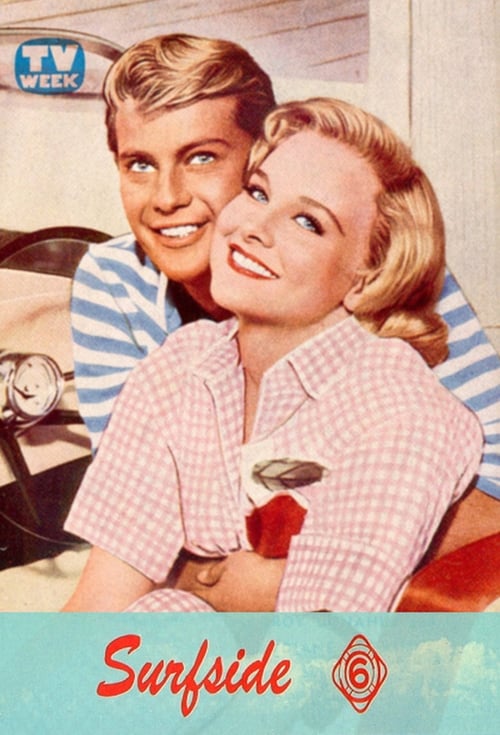
Diane McBain, Donahue's Surfside 6 co-star, admitted to having an affair with him at this time as well; however, she claimed that she was unaware he had a serious girlfriend.
In December 1960, Donahue met actress Suzanne Pleshette in New York, while dating Kardell. They would later be cast as on-screen lovers in Rome Adventure (1962), where they began their relationship. They announced their engagement on December 2, 1963, and wed on January 5, 1964, in Beverly Hills, California.
Pleshette filed for divorce in June 1964 on the grounds of mental cruelty from Donahue. She was awarded the divorce by the Superior court in Santa Monica, California. She would later state that Donahue was a "sweet, good man... [They] just were never destined to be married [and] didn't have the same values."
Children
In 1982, Donahue learned he had a son, Sean, by a woman with whom he had a brief relationship in 1969. As he recalled in 1984:
She walked over and introduced herself and I remembered that we had been together four or five times in L.A. in 1969. Nothing serious. Just fun and games. She said, "I'm glad I saw you. I've always wanted to tell you about something. Look over there, Troy." I looked and across the room I saw a 13 year-old, spitting image of what I looked like when I was young. "This is your son, Sean", she said. "He's known all his life that you are his father." ... I see him every couple of weeks now.
In early 1987, Donahue learned that he had another child: He was contacted by Janene Curtis, a woman claiming to be his daughter. Curtis was born in 1964 to an unidentified woman and was put up for adoption at birth. Upon finding her birthmother, she was told that Donahue was her biological father. Curtis reached out to Donahue, and the two later met. They remained close until Donahue's death.
Alcoholism and drug addiction
Donahue began drinking in the seventh grade, as a result of his father's health decline and later death. Donahue stated:
I think I was mad at my father for dying. A kid doesn't know how to process those things. I liked being by myself whenever I could. Even though I played sports, participated in school functions, and was always around kids. It was hard. I used to go and sit by myself. Funny, I liked being alone. It gave me a chance to think and read. But then I'd cut loose.
Donahue stated he did not blame the Hollywood lifestyle for his drinking habit. However, he would later state that he "never went before the cameras without having a buzz on." He admitted to getting drunk with Julie London on the way to film Voice in the Mirror, falling out of the limo and trying to sober up. Donahue claimed that he was "drinking half a pint of vodka mixed with codeine". Donahue admitted that he began abusing drugs and alcohol at the peak of his career and increased use after his career began to wane:
I was loaded all the time ... I'd wake up about 6:30 in the morning, take three aspirins mixed with codeine, slug down half a pint of vodka, and then do four lines of cocaine. That was just so I could get the front door open to peek out and see if I could face the day ... I would lie, steal, and cheat, all those wonderful things that drunks do. I was crafty. Nobody knew how much I drank then. If a bottle was out on the counter, I'd take a swig when I passed it and quickly put it back.
As his career progressed and Warner Bros. pushed for Donahue to star in more television, his drinking habit increased. Donahue was unhappy with the trajectory of his career, fueling frustration and further drinking. While he was often drunk on set, former co-star Diane McBain could never recall smelling alcohol on his breath during shoots.
In 1968, while performing for troops in Vietnam with the USO, Donahue had been obtaining "mind-numbing" drugs from the nurses. He later admitted that he went "partly because I had nowhere else to go, but mostly because I was into drugs, and I knew Vietnam was one big medicine chest". When Special Services became aware of this, he was dismissed and sent back to the United States. The Department of Defense still awarded Donahue a Certificate of Appreciation in February 1969.
Legal issues
In 1958, Donahue received five speeding tickets that all went ignored. After his sixth ticket, it was revealed he had five warrants. On April 17, he was sentenced to 15 days in Los Angeles County Jail. This caused him to miss a promotional tour for the film This Happy Feeling (1958).
On August 9, 1968, the U.S. Tax Court ruled in favor of the Internal Revenue Service to collect $5,138.90 (equivalent to $45,500 in 2024) in back taxes from Donahue. His accountant had prepared the actor's 1964 income tax return. At the time, Donahue was involved in his divorce from Suzanne Pleshette. The court decided his filing status had been incorrectly reported, which resulted in a delinquent tax bill.
Lili Kardell civil suit
In 1961, Kardell sued him for $60,450 in damages, claiming he had hit her without provocation. Kardell claimed that she had gone to Donahue's home on August 16, 1961, to pick up her dog and found him with another woman. According to her, Donahue charged at her and she slapped him. The two got into a fistfight and he punched her in the face, knocking her to the floor.
Donahue recounted the story differently, but agreed that blows were exchanged between the two.
In an attempt to suppress the news, Warner Bros. president Jack L. Warner settled the case out of court for $3,000 ($31,300 in 2024) for medical and legal expenses, as well as a new two-piece suit for Kardell, to replace her ripped one. In return, Kardell was banned from the Warner lot and she disappeared from Hollywood.
Modern Screen Magazine lawsuit
On January 16, 1963, Donahue filed a $200,000 lawsuit in Santa Monica against Modern Screen magazine, Dell Publishing Co., and 17-year-old Joyce Becker, a self-described actress and writer, who wrote an inflammatory article the magazine published titled, "The First Time Troy Made Love to Me".
Donahue protested that the article described them as better friends than they really were. His lawyer said they were only casually acquainted and had met only once, when Becker interviewed Donahue for a teen magazine. Donahue's action claimed that the story violated privacy and said the statements in the article were "unjustified and untrue". Eventually, Dell Publishing Co. printed a retraction, and paid Donahue an undisclosed settlement.
Arbua Productions lawsuit
On February 22, 1968, Arbua Productions, the talent hiring agency for the Pheasant Run Playhouse in Illinois, won a default judgement against him in the amount of $100,000 (equivalent to $925,837 in 2025). The actor was accused of inducing his wife, Valerie Allen, to break a contract with the theater, and walk out with him days before the production, Poor Richard, was scheduled to open. Donahue did not appear at the pleadings, and Allen was not named in the suit.
Death
On August 30, 2001, Donahue suffered a heart attack and was admitted to Saint John's Health Center in Santa Monica, California. An emergency angioplasty was performed successfully; however, Donahue suffered a second heart attack. He underwent bypass surgery on September 1.
Donahue died on September 2, 2001 at the age of 65.
Vioxx case and the estate
In 2005, Donahue's daughter, Janene Curtis, hired a New York law firm to represent her in a class-action suit against Merck & Co. Curtis and Donahue's close friend, Jane Nunez, believed the prescription painkiller Vioxx was the cause behind her father's death. Donahue's sister and estate executor, Eve O'Neill, assisted in signing Curtis as an administrator of the estate to pursue the lawsuit. In September 2009, Curtis directed the lawyers to accept a settlement of $300,000, without the knowledge of executor O'Neill. However, Curtis' lawyers learned that she had been adopted at birth, leaving her no right to the estate and therefore, they could not accept the settlement without O'Neill's approval.
Curtis petitioned the court to restore her rights on the basis that Donahue had openly accepted her as his daughter before his death. The trial court ruled in Curtis's favor, finding that O'Neill was negligent in failing to learn legal impediments against Curtis, in addition to her previously stating she did not want the recovered funds, believing Donahue would want Curtis to have it. Curtis was awarded the full Vioxx settlement by the court.
Discography
Live Young (1963)
Somebody Loves Me (1963)
Filmography
Box-office ranking
1960: voted 5th most likely star of Tomorrow
1961: 24th most popular star in the US
1963: 20th most popular star in the US
In popular culture
Donahue and Doug McClure served as inspiration for the name and certain character aspects of the character of Troy McClure on The Simpsons.
Donahue is mentioned in the song "Look at Me, I'm Sandra Dee", from the 1971 musical Grease, reflecting his status as a teen idol at the time in which the action is set. The line, which is performed by Stockard Channing in the 1978 film version, is as follows: "As for you, Troy Donahue, I know what you want to do."
Donahue is mentioned in the 1981 Ruben Blades song "Ligia Elena." In one part of the song, a wealthy white mother laments that her daughter, Ligia Elena, has run off with a lower class trumpet player of color, saying, "Yo pensaba que me iba a dar un nietecito con los cabellos rubios y los ojos rubios y los dientes rubios, así como Troy Donahue" ('I thought she was going to give me a little grandson with blonde hair and blonde eyes and blonde teeth, like Troy Donahue').
Donahue is also mentioned in the song "Mother" in the musical A Chorus Line, when the character Bobby sings, "If Troy Donahue could be a movie star, then I could be a movie star."