











Ultraman, also known as the Ultra Series (ウルトラシリーズ, Urutora Shirīzu), is a Japanese science fiction media franchise owned and produced by Tsuburaya Productions, which began with the television series Ultra Q in 1966. The franchise has expanded into many television shows, films, comic books, and other media publications, becoming one of the most prominent productions in the Japanese tokusatsu and kaiju genres and pioneering the Kyodai Hero subgenre. The Ultraman series is centered on a fictional alien race of superheroes who often combat kaiju or other aliens.
In Japan, the Ultraman brand generated $7.4 billion US dollars in merchandising revenue from 1966 to 1987. This makes it one of the highest-grossing media franchises of all time. Ultraman was the world's third top-selling licensed character in the 1980s, largely due to his popularity in Asia. References to Ultraman are abundant in Japanese popular culture, much like references to Superman in Western culture.
Contents
The Ultras
The franchise is centered on the "Ultras" (Japanese: ウルトラ一族, Hepburn: Urutora Ichizoku), a collective term for the fictional extraterrestrial races spread across its multiverse, with multiple origins given for them. The warriors of these continuities gather at a planet within the M78 nebula (M78星雲, Emu-Nanajūhachi seiun), (not to be confused with the real Messier 78)—also called the Land of Light (光の国, Hikari no Kuni). Of the 18 billion populating it, 1 million are part of the Inter Galactic Defence Force (宇宙警備隊, Uchū Keibitai) who maintain peace in the universe from alien invaders and monsters. The Ultras that are sent to other worlds are given Color Timers, or "warning lights", which blink with increasing frequency if an Ultra's energy dwindles. They can thus remain active for only a limited span of minutes before its energy is depleted, although it can be replenished afterwards. The main protagonists of each installment end up on Earth and bond with humans or have a human incarnation, their hosts using devices to summon their Ultra's unique power.
The Ultraman phenomenon
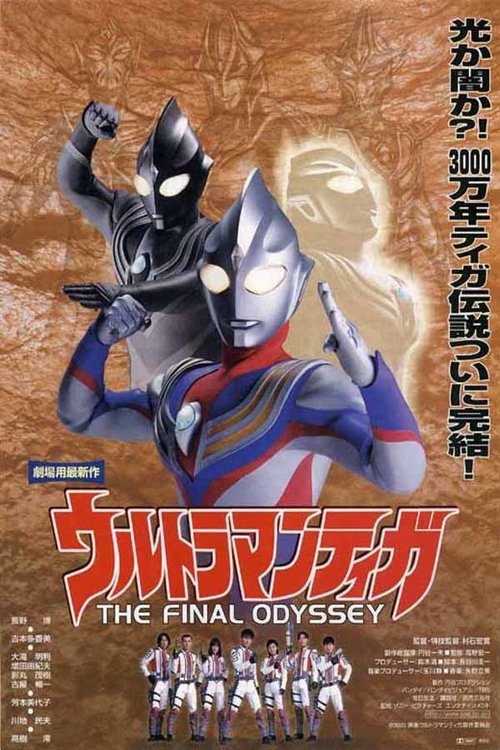
The show Ultraman was followed by many other series. Successors during the Shōwa era are: Ultraseven (1967), Return of Ultraman (1971), Ultraman Ace (1972), Ultraman Taro (1973), Ultraman Leo (1974), The Japanese Animated Television Series, The Ultraman (1979), and Ultraman 80 (1980). A second generation began during the Heisei era in 1996 with Ultraman Tiga, and the franchise continued, on and off, until its current (third) generation. This began with Ultraman Ginga in 2013.
English-language productions include the 1987 animated movie Ultraman: The Adventure Begins (known as Ultraman USA in Japan) which was produced by Hanna-Barbera; 1990 TV series Ultraman: Towards the Future (Ultraman Great in Japan) which was filmed in Australia; 1993 TV series Ultraman: The Ultimate Hero (Ultraman Powered in Japan) which was filmed in the United States; and 2024 animated film Ultraman: Rising which was produced by Netflix.
In 1993, Tsuburaya Productions and Toei Company co-produced Ultraman vs. Kamen Rider, a crossover with the original Ultraman and Toei's Kamen Rider. This direct-to-video feature is co-copyrighted by both Toei (and its subordinates, Toei Video and Ishinomori Productions) and Tsuburaya Productions.
As of 2025, Tsuburaya Productions accepts 51 Ultras as official. In 2013, the Ultra Series was cited in the Guinness Book of World Records as the record-holder for the most spin-off shows. The Ultraman brand generated $7.4 billion in merchandising revenue from 1966 to 1987, equivalent to more than $21 billion adjusted for inflation. Ultraman was the world's third top-selling licensed character in the 1980s, largely due to his popularity in Asia.
The Ultraman manga, which began in 2011, has sold more than 2.8 million copies as of 2018. At the Tokyo Comic Con on 7 December 2017, Tsuburaya Productions revealed that an anime adaptation of the manga was planned for release in 2019. It was released by Netflix.
Ultraman content, products and services have been distributed in more than 100 countries worldwide,as of March 2018. Tsuburaya has officially made their Ultraman and non-Ultraman content widely available on their YouTube channel, even simulcasting several of their series with English subtitles, the channel has reached over 2 million subscribers. In China, an Ultraman television series received 1.8 billion views on over-the-top media services between July 2017 and March 2018.
Controversies
Licensing rights dispute
Ultraman's licensing rights outside Japan have been the subject of a prolonged legal dispute between Tsuburaya Productions and Chaiyo Productions based in Thailand. Tsuburaya had previously collaborated with Chaiyo on the production of two movies, The 6 Ultra Brothers vs. the Monster Army and Jumborg Ace & Giant—the latter of which featured another Tsuburaya superhero, Jumborg Ace—in 1974. Sompote Saengduenchai, founder/president of Chaiyo Productions, claimed and maintained that, in 1976, Noboru Tsuburaya, the son of the late Eiji Tsuburaya, had given him and his company a contract which had given him rights to everything Ultraman outside Japanese territories.
In spite of the fact that the document failed to state clearly and specifically exactly what had been given to Tsuburaya in exchange for these rights, Japanese and Thai courts accepted this contract as real and binding because of the supposed hanko of the late Noboru Tsuburaya, who had died in 1995, in the document. Tsuburaya Productions insisted and maintained that the contract was a forgery and repeatedly contested the issue.
After an eight-year battle in the courts of both countries, Sompote Saengduenchai was awarded a favorable decision in 2004. Though the Supreme Court of Japan ruled that he owned the international rights to the first six instalments, he would later create three new Ultras: Ultraman Millennium, Dark Ultraman and Ultraman Elite. On 23 August 2006, Tsuburaya Productions filed a new lawsuit against Chaiyo for copyright infringement and plagiarism (concerning the characters), and the court case was taken to China. The Chinese courts in Beijing opened "The Ultraman Copyright Study Group" in response to the lawsuit. In April 2007, the Thailand Intellectual Property Court ruled in favor of Tsuburaya Productions, ordering Chaiyo to cease and desist making commercial profits from them. The defendants were also fined THB 15,000,000 (approx. JPY 50,904,959 or US$428,673.50 c. April 2007) plus interest and attorneys' fees.
On 5 February 2008, Thailand's Supreme Court ruled in favor of Tsuburaya Productions of Japan after they made an appeal to the initial ruling. The ruling ended the long legal battle by finding Sompote Saengduenchai was not a co-creator of Ultraman. The decision ended Sompote's bid to continue his enterprise, and the court gave Sompote 30 days to stop profiteering from Ultraman. The final ruling saw Tsuburaya Productions as the sole copyright owner. Sompote was also required to pay THB 10,700,000 plus interest at the rate of 7.5 percent a year starting from 16 December 1997, when the original lawsuit was filed.
Malaysian book ban
On 6 March 2014, the Malaysian Ministry of Home Affairs announced that it had banned the publication of an Ultraman comic book Ultraman: The Ultra Power" due to contents that were detrimental to public order". Social media users later noticed that a page in the book described the character of Ultraman King (from the film Mega Monster Battle: Ultra Galaxy) as a god, which in the Malaysian language is the Arabic word Allah. The Home Ministry later confirmed that the use of Allah was indeed the reason for the ban, claiming that the comparison may "confuse Muslim children and damage their faith". This highlighted the larger ban to prevent non-Muslims in Malaysia from using the word Allah, as well as a suit from the Catholic Church of Malaysia over its usage.
Television series
Main series
English-language series
Miniseries
Andro Melos (1983)
Ultraman Kids Proverb Stories (1986, anime)
Ultraman Graffiti (1990, anime)
Ultraman Nice (1999)
Ultraman Gaia Again (2001)
Ultra Zero Fight (2012)
Ultra Fight Victory (2015)
Ultra Fight Orb (2017)
Ultra Galaxy Fight: New Generation Heroes (2019)
Ultra Galaxy Fight: The Absolute Conspiracy (2020)
Sevenger Fight (2021)
Ultra Galaxy Fight: The Destined Crossroad (2022)
Films
Short films
1969: Ultraman & Ultraseven: Great Violent Monster Fight — 15 minutes
1971: Return of Ultraman (compilation) — 45 minutes
1971: Return of Ultraman: Fear of the Tornado Monsters (compilation) — 45 minutes
1984: Ultraman Kids: The Pleasant Friends of Planet M7.8 (anime) — 24 minutes
1996: Ultraman Zearth: Parody Chapter — 18 minutes
1996: Ultraman: Super Fighter Legend (anime) — 39 minutes
2005: Ultraman Nexus: Lost Memories — 45 minutes
2013: Ultraman Ginga Theater Special — 45 minutes
2014: Ultraman Ginga: Ultra Monster Hero Battle Royal — 45 minutes
Biography series and variety shows
Ultra Fight (1970)
Ultra Super Fight (1994)
Ultraman Boy's Ultra Coliseum (2003)
Ultra Zone (2011)
Ultraman Retsuden (2011–2013)
New Ultraman Retsuden (2013–2016)
Ultraman Zero: The Chronicle (2017)
Ultraman: The Prime (2017)
Ultraman Orb: The Chronicle (2018)
Ultraman New Generation Chronicle (2019)
Ultraman Chronicle Zero & Geed (2020)
Ultraman Chronicle Z: Heroes' Odyssey (2021)
Ultraman Chronicle D (2022)
Ultraman New Generation Stars (2023)
Books
Comics
Between 1993 and 1994, Harvey Comics published two comic book series based on the 1966 Ultraman television series.
In 2003, Dark Horse Comics published a comic book based on Ultraman Tiga.
Marvel Comics started publishing an initial Ultraman comic book limited series titled The Rise of Ultraman, written by Kyle Higgins & Matt Groom with art by Francesco Manna. It debuted in September 2020 and concluded in January 2021.
A second series titled The Trials of Ultraman premiered in March 2021, with Higgins, Groom and Manna returning and concluded in August of the same year.
A third series titled The Mystery of Ultraseven, once again written by Higgins and Groom, and drawn by Davide Tinto, David Lopez, and Gurihiru, was released on August 17, 2022.
During Anime Expo 2022, Groom teased a crossover event between the current Ultraman comics with the Marvel Universe for 2023. In May 2024, Marvel and Tsubaraya officially announced the Ultraman x Avengers limited series to debut for release on August 14, 2024.