Critical response
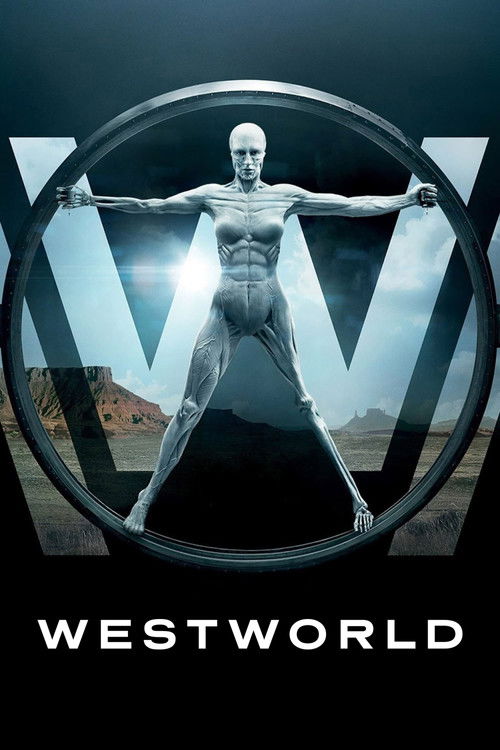
The first season was acclaimed, with particular praise for its visuals, story, world-building, themes, and acting. On review aggregation website Rotten Tomatoes, the first season has an approval rating of 87% based on 384 reviews, with an average rating of 8.15/10. The site's consensus reads "With an impressive level of quality that honors its source material, the brilliantly addictive Westworld balances intelligent, enthralling drama against outright insanity." On Metacritic, the first season has a score of 74 out of 100, based on reviews from 43 critics, indicating "generally favorable reviews".
The editors of TV Guide placed Westworld fifth among the top ten picks for the most anticipated new shows of the 2016–17 season. In writer Tim Surette's overall review, he notes the perfect concept of blending the Western premise into a futuristic setting, saying, "Well, Westworld has both, ensuring that it will be an exciting mashup of genres that will disrupt a television landscape that typically says we can only have one or the other." He also added, "The look of the show and its fine cast swing open the saloon doors, but the real treat will be the intelligent discussion of whether or not robots will eventually kill us all. Thankfully, creator Jonathan Nolan already showed us he's the go-to guy for A.I. with Person of Interest." Mary McNamara of Los Angeles Times wrote in a laudatory review, "It isn't just great television, it's vivid, thought-provoking television that entertains even as it examines the darker side of entertainment." For the San Francisco Chronicle, David Wiegand wrote, "Westworld isn't easy to understand at first, but you will be hooked nonetheless by unusually intelligent storytelling, powerful visuals and exceptionally nuanced performances." Time's chief critic Daniel D'Addario wrote, "Its carefully chosen details add up to a pulp spectacular that's more thoughtful than any other of this fall's new dramas."
Jeff Jensen of Entertainment Weekly also lauded the series and said, "The depth of Westworld lies not in asking questions about memory, free will, and what makes us human, but in whether we can become more human than what we let ourselves to be, whether our stories can be richer and more meaningful than what the culture allows." Matthew Gilbert of The Boston Globe quipped, "Westworld has fewer heroes than Game of Thrones, which makes it a bit harder to warm up to, but like a good, thought-provoking puzzle, it is compelling and addictive." In a brief review from The Hollywood Reporter, Tim Goodman said, "Where Westworld is at its best is in the deeper issues that will unspool slowly, like a good mystery. Early episodes are adept at getting at the base attractions of the park and why people would come, but also in setting up a sense of confusion about motives. ... The series benefits from a number of standout performances." Robert Bianco of USA Today wrote, "The reward, beyond the visual splendors you've come to expect from big-budget HBO productions, is a set of characters who grow ever more complex." Several other publications wrote positive reviews, including Indiewire, The A.V. Club, RogerEbert.com, The New Yorker, and The Atlantic.
In a mixed review for The New York Times, chief critic James Poniewozik said, "It's an ambitious, if not entirely coherent, sci-fi shoot-'em-up that questions nihilistic entertainment impulses while indulging them." Hank Stuever of The Washington Post also joins Poniewozik saying, "I'm ... hesitant to write Westworld off as a dreary trot from start to finish; parts of it are as imaginative and intriguing as anything that's been on TV recently, particularly in the sci-fi realm," and further said, "It's definitely not the cyborg Deadwood, that some HBO fans were actively wishing for, nor does it roll out the welcome mat as a riveting, accessible adventure." Chief journalist Rob Owen of Pittsburgh Post-Gazette critiqued the series less favorably saying, "It is the definition of a slow-burn series, a program that should be exciting rendered as kind of dull." In a less enthusiastic review for Variety, Maureen Ryan said, "Westworld looks terrific; its directors have shot its Western locations to stunning effect. But its warmly saturated outdoor scenes and its surface slickness aren't enough to mask the indecision, condescension, and hollowness at its core."
The second season also received positive reviews from critics, with praise for the performances, visuals, its soundtrack, and themes. However, the plot and narrative was criticized for being confusing and inconsistent. On Rotten Tomatoes, the season has an approval rating of 85% based on 472 reviews, with an average rating of 7.95/10. The site's consensus reads "Westworld builds on its experimental first season, diving deeper into the human side of AI without losing any of its stylish, bloody glory." On Metacritic, the season has a score of 76 out of 100, based on reviews from 29 critics, indicating "generally favorable reviews".
In April 2018, after the second-season premiere, Variety published an article concerning the series' complicated narrative. Andrew Wallenstein wrote, "Westworld seems to have too much faith viewers will be willing to absorb storylines that can border on the incomprehensible." He also commented about the possible future success of the series, stating, "There will be a very vocal core fan base willing to do the homework of piecing together the show's many mysteries, but that's not broad enough a base to be the kind of flagship series HBO wants." At the press tour of the Television Critics Association, when the president of HBO programming Casey Bloys was asked about the complexity of the series and the negative response it had generated, he admitted that Westworld is not for "casual viewers".
The third season received a positive reception from critics, though reviews became more mixed during the second half. While the visuals, acting, score, and setting expansion were praised, the script, dialogue, pacing, and narrative received polarizing responses; the plot was considered to be barely possible to understand, with many believing Westworld had departed too far from the main plot. On Rotten Tomatoes, the season has an approval rating of 73% based on 223 reviews, with an average rating of 7.05/10. The site's critics consensus reads: "Westworld succeeds in rebooting itself by broadening its scope beyond the titular amusement park while tightening its storytelling clarity – although some may feel that the soul has been stripped from this machine in the process." On Metacritic, the season has a weighted average score of 64 out of 100, based on reviews from 23 critics, indicating "generally favorable reviews".
CNN's Brian Lowry wrote that "the show has become increasingly incomprehensible, at least for anyone not willing to put in the work trying to remember all the assorted connections, further complicated by the fact that dying in Westworld is often not a permanent state of affairs, amid the questions about who's truly human and who actually isn't." Writing for Entertainment Weekly, Kristen Baldwin gave the series a "B−" and said: "After spending three seasons struggling through maddeningly complicated time-loops, it's time the writers let Dolores, Maeve, and Bernard control-alt-delete themselves", while Darren Franich wrote that series had "lost its way" and gave the season a "C". Reviewing the season finale for IndieWire, Ben Travers said: "Season 3 made a point of stripping away the rest of Westworld's building blocks: The park? Left behind. The maze? Gone. But the moral questions meant to keep you invested in the characters largely disappear, too. Season 3 doesn't bother developing its characters because it refuses to let them question the nature of their own reality."
The fourth season received mixed reviews, with praise for the performances, soundtrack, and visuals, but criticism for the script and its incomprehensible plot. A few critics, however, found it a slight improvement to the third season. On Rotten Tomatoes, the season has an approval rating of 74% based on 58 reviews, with an average rating of 5.9/10. The website's critical consensus reads: "Westworld's continued reliance on mystery will frustrate just as much as it intrigues, but this fourth season still offers plenty of gleaming and menacing insight into a brave new world." Metacritic assigned a score of 64 out of 100 based on 18 critics, indicating "generally favorable reviews".