Overview
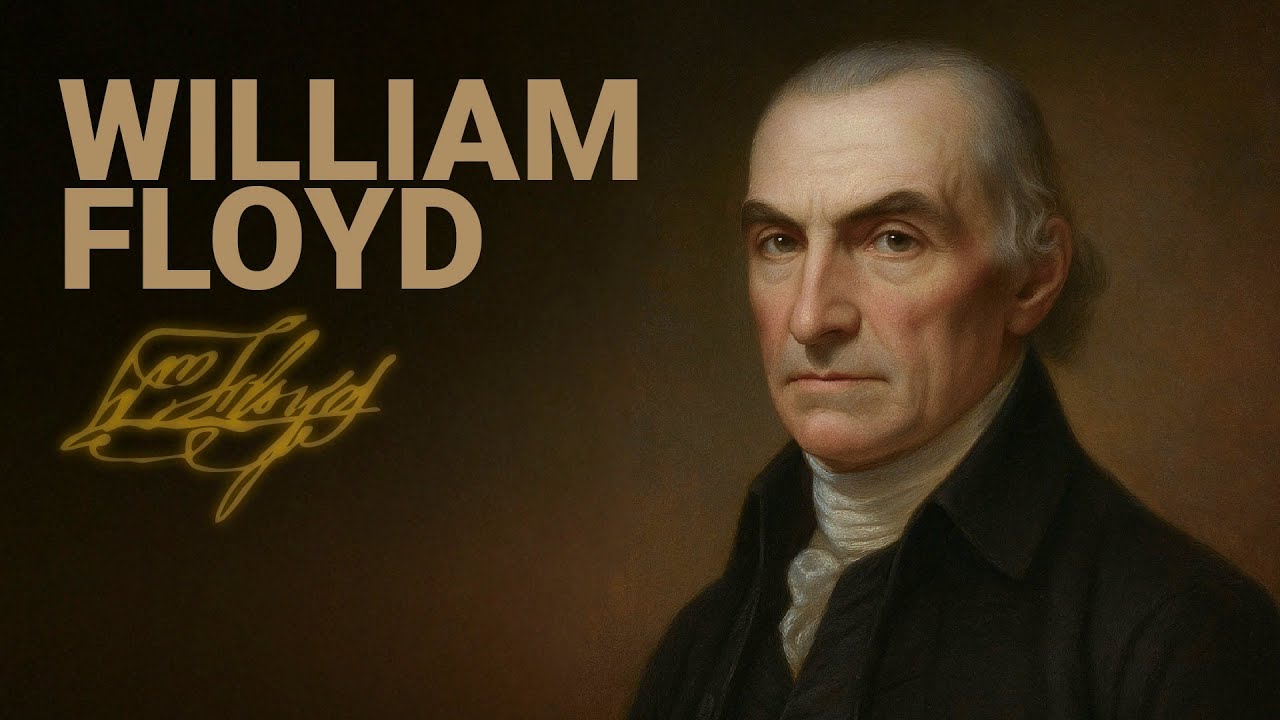
William Floyd (December 17, 1734 – August 4, 1821) was an American Founding Father, wealthy farmer, and political leader from New York. Floyd served as a delegate to the Continental Congress and was a signer of the Continental Association and Declaration of Independence. In August 1776, a few weeks after the Declaration was signed, the British Army overran Long Island, confiscated Floyd's house and estate, and used the property as a base for its cavalry over the next seven years. Floyd remained active in politics throughout the Revolutionary Era, served as a major general in the New York State militia, and was elected to the first U.S. Congress in 1789.
Early life
Floyd was born on December 17, 1734, in Brookhaven, Province of New York, on Long Island into a family of English and Welsh origins. He was the son of Tabitha (née Smith) Floyd and Nicholl Floyd (1705–1755). Among his siblings was sister Ruth Floyd, who married Brigadier General Nathaniel Woodhull; sister Charity Floyd, who married Continental Congressmen Ezra L'Hommedieu; and brother Charles Floyd, who married Margaret Thomas in 1761.
William's great-grandfather was Richard Floyd, who was born in Brecknockshire, Wales, in about 1620 and was the last of his brothers to leave England, first visiting Jamestown, Virginia, before settling in the Province of New York around 1640 where he practiced law. Around 1688, his grandfather purchased 4,400 acres from Tangier Smith's family in the Mastic Neck of the Town of Brookhaven. William's father Nicoll built a house there in 1723 where William was born.
Career
After his father's death in 1755, William took over the family farm. He became a member of the Suffolk County Militia in the early stages of the American Revolutionary War, becoming Major General. He was a delegate from New York to the Continental Congress from 1774 to 1776. He was a member of the New York State Senate (Southern District) from 1777 to 1788.
From Wikipedia (CC BY-SA 4.0).