Overview
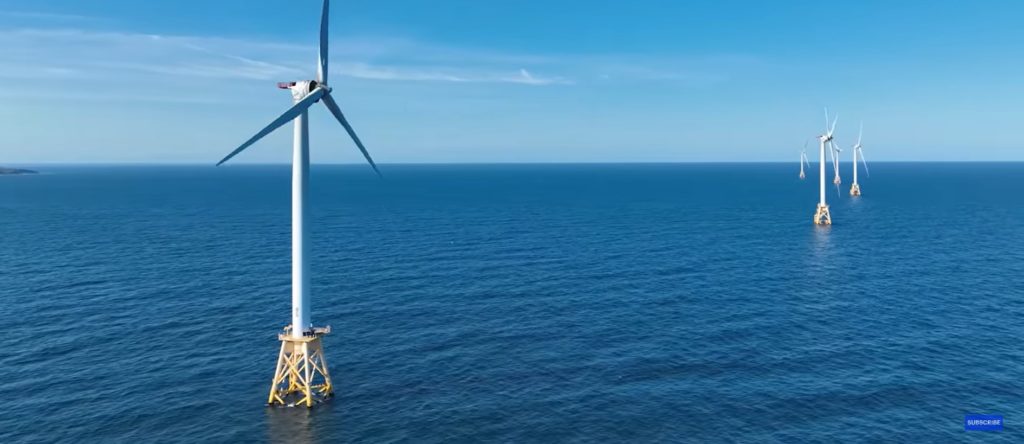
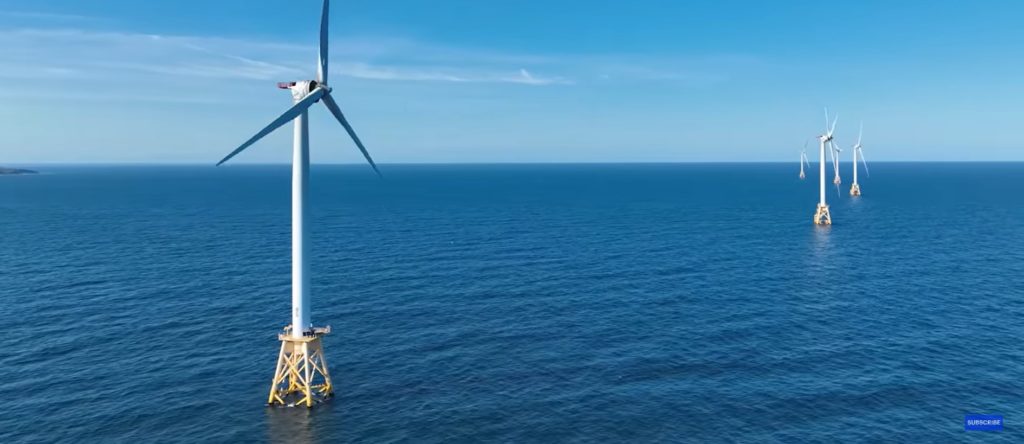
The U.S. state of Massachusetts has vast wind energy resources offshore, as well as significant resources onshore. The 2016 update to the states's Clean Energy and Climate Plan had a goal of reducing 1990 baseline greenhouse gas emissions levels by 25% by 2020. Current goals include installing 3,500 megawatts (MW) of offshore wind power in the state by 2035. However, as of Q4 2021 the state had only 120 MW of wind powered electricity generating capacity, responsible for generating 0.9% of in-state electricity production. The state has awarded contracts to two offshore projects, the 800 MW Vineyard Wind project and 804 MW Mayflower Wind project. Construction began on the Vineyard Wind 1 project on November 18, 2021, after a long fight for approval.
Commonwealth Wind was selected for development in 2021, but the developer has attempted to cancel the project due to increased costs. There are eight projects planned for off the southern coast of Massachusetts, though some will deliver power to Rhode Island, Connecticut, and New York.
Notable onshore projects
Installed in 2005, the International Brotherhood of Electrical Workers (IBEW) 100 kW wind turbine along I-93 south of Boston drew attention to wind power to tens of thousands of commuters. In 2009, a similar wind turbine was installed along I93 north of Boston, in Medford, expected to generate 170,000 kWh/year.
A GE Wind Energy 1.5 MW turbine was the first wind turbine to be installed at a ski resort in the United States of America at Jiminy Peak in Hancock, MA. The turbine, installed in 2007, is visible from many of the slopes on the mountain and it produces 4,600 MWh annually, about one third of the facilities electricity demands.
At the Joint Base Cape Cod three turbines generate power for the base and construction is underway for two additional 1.68 MW turbines to power the radar unit. The three, soon to be five, turbines are highly visible from both the Bourne Bridge and the Sagamore Bridge looking to the East. The turbines have resulted in significant savings for the base, the turbines also do not generate any controversy because they are located well within the base boundaries far from civilian homes.
From Wikipedia (CC BY-SA 4.0).