

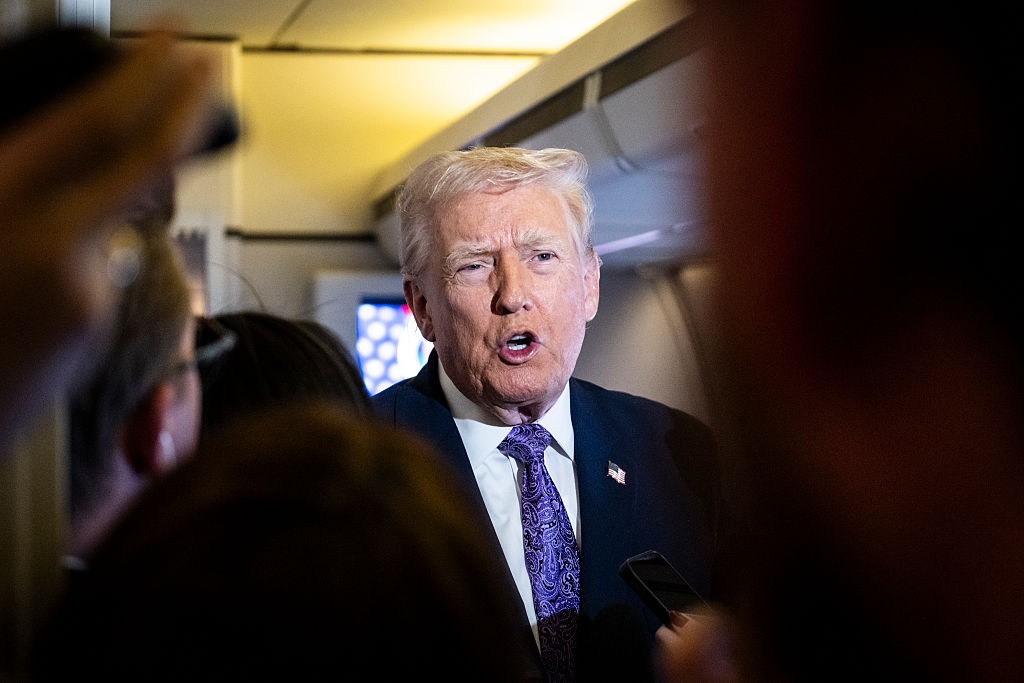
President Donald Trump issued an uncompromising warning to Venezuelan strongman Nicolás Maduro, demanding he leave the country immediately before the U.S. declared Venezuela’s airspace closed.
According to Fox News, the Miami Herald reported that the ultimatum reportedly came during a phone call in which Washington offered guaranteed evacuation for Maduro, his wife Cilia Flores, and their son, but only if he resigned on the spot.
U.S. officials said the conversation quickly bogged down.
A source told the outlet the standoff hinged on three demands from Maduro. First, he wanted “global amnesty for any crimes he and his group had committed, and that was rejected.”
“Second, they asked to retain control of the armed forces — similar to what happened in Nicaragua in ’91 with Violeta Chamorro. In return, they would allow free elections.”
The final sticking point was timing. Washington insisted that Maduro step aside immediately. Caracas refused.
Within hours, Trump announced that Venezuela’s airspace would be considered “closed in its entirety.”
The Herald reported that Maduro’s government attempted to arrange another call, but Washington did not reply.
According to former Venezuelan diplomat Vanessa Neumann, the regime may now be facing its gravest threat.
“I think the operations will start imminently,” Neumann told Fox News Digital.
She said the airspace closure signals far more than diplomatic pressure.
“The clearing of the airspace is an indication and a very clear public warning that missiles might be coming to take out command and control infrastructure or retaliatory infrastructure,” she said. “This will not be like breaking a jar into a thousand pieces; this is where you can lift the concentration of power, and it’s easier to manage.”
Neumann added that targets have already been mapped.
“The targets have been identified through covert operations over the last several years by people on the ground,” she said. “So they’re well-mapped. This is a capture-or-kill scenario, but there’s a limit to how many people you can remove quickly.”
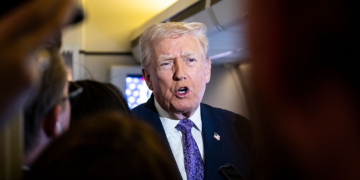
Aboard Air Force One on Sunday, Trump told reporters not to “read anything into” the airspace declaration when asked if a strike was imminent.
But Neumann warned that Maduro has few options left.
“Maduro also doesn’t have that many options, and his military is very weak,” she said. “You can’t go after 30 people simultaneously, who are spread all around, but certainly high on the list would be Maduro himself.”
She described Venezuela’s armed forces as hollowed out after years of corruption, sanctions, and neglect.
“Their material is extremely old, decayed, and has not been serviced,” Neumann said. “They’ve got junk from the Russians. The stuff they originally had from the Americans is decades old and has not been serviced. So, they have neither the personnel, foreign support, nor the material.”
Before closing the airspace, the U.S. formally designated the Cartel de los Soles — a group allegedly tied to Venezuela’s government — as a foreign terrorist organization.
“This cartel turned Venezuela’s main oil company into a narcotics trafficking money laundering operation,” Neumann said. “They were using Venezuelan military jets to bring in cocaine from Colombia, process it in Venezuela, and then move it into Central America and then into Europe.”
She said cartel-linked military pilots “made a lot of money off that” and used violence to protect the network.
“They’re now one of the prime drug trafficking networks into the United States and Europe,” she added.
She also noted the cartel’s ties to Hezbollah, pointing out that European lawmakers voted in September to designate the group a terrorist organization.
The U.S. has since intensified operations against drug-trafficking networks linked to the Maduro regime, including strikes on suspected narcotics boats.
“The decision is President Trump’s because when he says, ‘Go’, we go,” Neumann said. “He has mobilized so many assets down there now. But what President Trump is doing now is long overdue.”
She argued the geopolitical moment is favorable.
“The timing is right now,” she said. “Because even Maduro’s biggest backers, Russia and Iran, are both on the back foot, and China will not go that far in backing Maduro as it has bigger and broader interests throughout the region.”
Neumann identified top regime figures who could be targeted, including Vice President Delcy Rodríguez; Diosdado Cabello; and Alexander Granko Arteaga, the head of the DGCIM, Venezuela’s counterintelligence agency.
“One of the reasons Granko is an important figure is that he’s one of the reasons why they haven’t capitulated and why there has not been a military uprising,” she said. “It’s because of the brutality of the counter-intelligence that they do to their own military, and hundreds of soldiers are tortured.”
Neumann emphasized that Venezuelans have long taken peaceful, democratic steps to remove the regime.
“They voted in elections, protested peacefully, lobbied for sanctions, and lobbied for international support,” she said.